
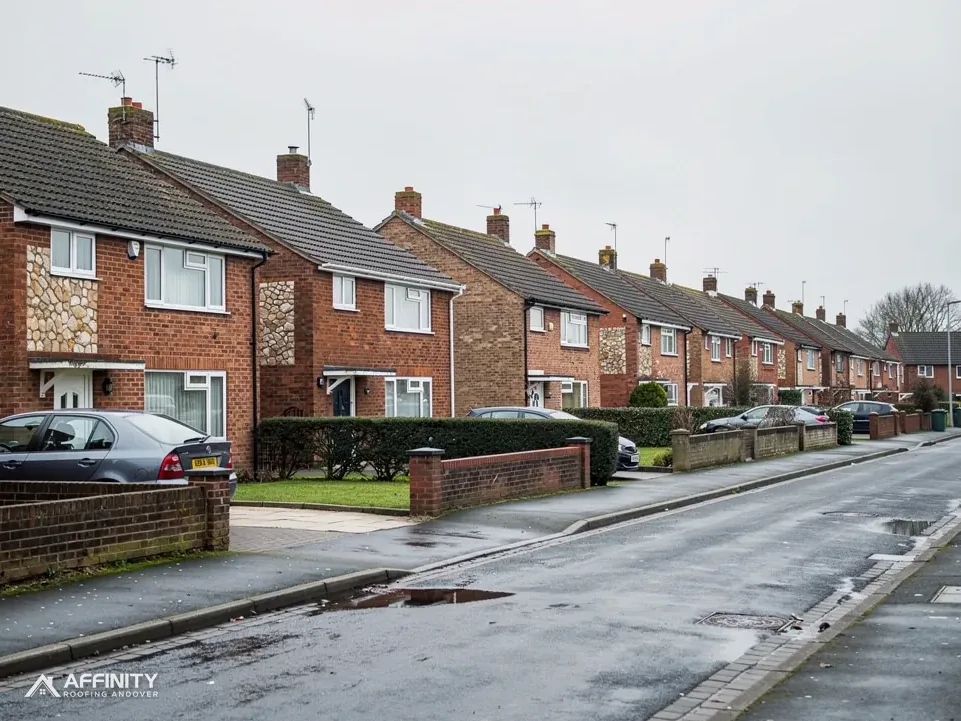
Roofers in Winchfield
South Lodge, a Grade II milestone and Hart's chimney rules
Winchfield is a parish of 713 people with two Grade II listings and a conservation area within about 0.75 km of its centre. Nothing is repaired before it has been surveyed.
Winchfield roofs, lodge to milestone
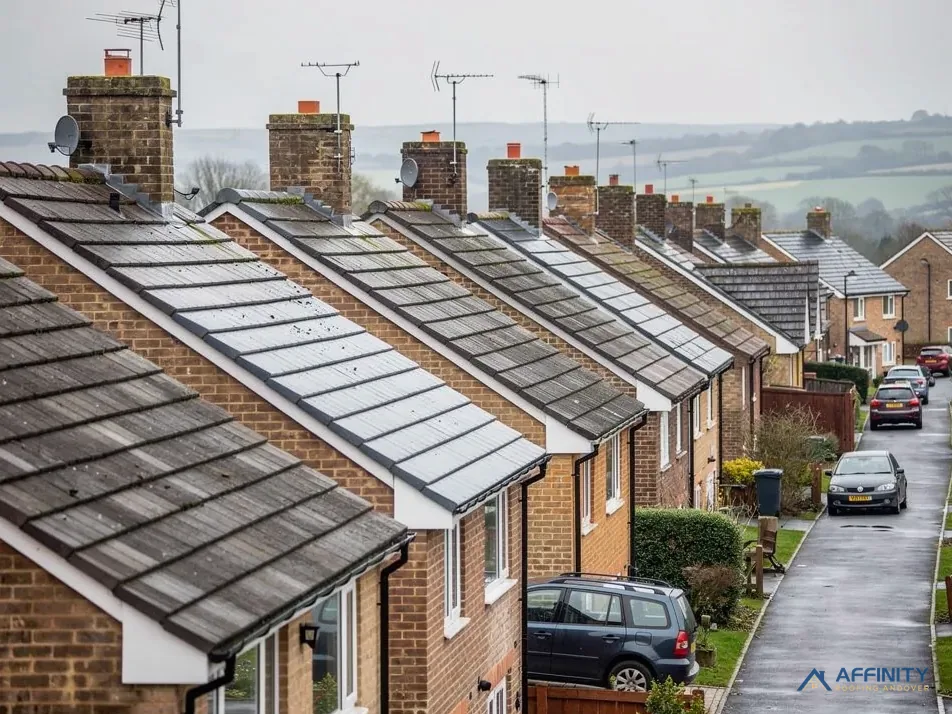
South Lodge
Grade II, listed on 26 June 1987, so a change of covering starts with the consent question.
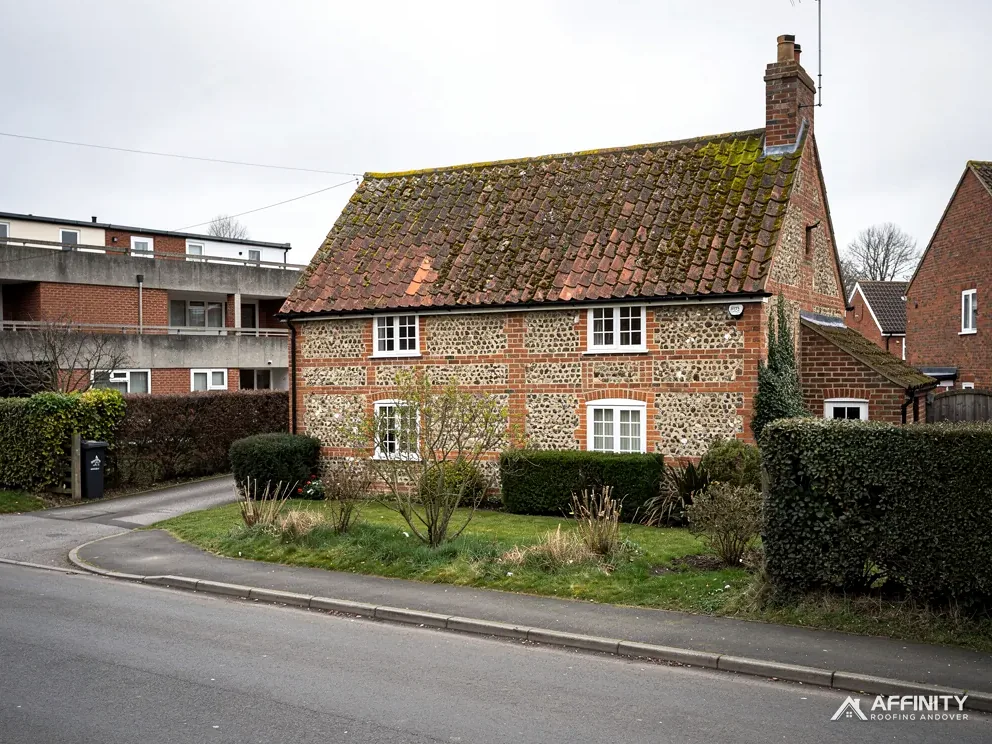
Houses near Hartley Wintney
Homes within about 0.75 km of the Hartley Wintney, Church House conservation area, where the roof's street view counts.
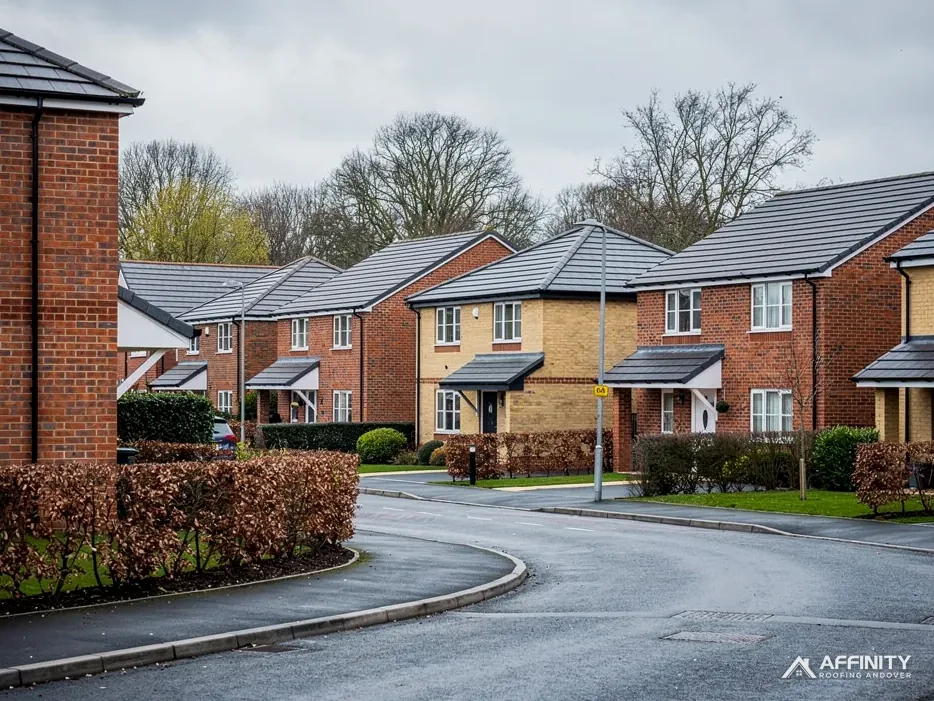
Frontage slopes and chimneys
In the conservation areas they cover, Hart's 1998 Article 4 directions include frontage roof slopes and chimneys.
Winchfield between Hook and Odiham
Hook lies to the west, Odiham and North Warnborough to the south-west, with Sherfield on Loddon further off to the north-west. Our surveys cover all of them.
- Distance
- 29.6 road miles east of Andover
- Planning
- Hart District Council
- Council
- Hart District Council and Hampshire County Council
The Winchfield roof report
Local editionWinchfield, HampshireA Hart district village
Winchfield belongs to Hart: three authorities, one chimney rule and a small village's listings
Winchfield sits east of Andover, 29.6 miles by road, in a different district from the Test Valley. The report names the councils that matter, explains the listings and the nearby conservation area, and sets out the scaffold licence.
Hart, Rushmoor and Hampshire County
A roofer driving east from Andover crosses more than one district line, and Winchfield is on the far side of them. The village sits in Hart District Council's area, which makes Hart the local planning authority. Hampshire County Council remains the highway authority, as it is for every Hampshire district. In 2021 the parish of Winchfield recorded 713 usual residents.
The building control arrangement is the surprise. Hart's building control is a shared service run with Rushmoor Borough Council, whose Farnborough offices house the team Hart uses. A Winchfield re-roof that needs an application therefore goes to a team in a neighbouring borough, working on Hart's behalf. We name that arrangement in the paperwork so there is no confusion over who inspects what.
Whether building control needs to hear about a re-roof at all depends on the Planning Portal's pair of thresholds, 25 per cent of the building envelope and 50 per cent of the roof. Staying beneath both usually means no application is needed. Repairing a valley, replacing a run of ridge tiles or renewing the slipped tiles above a porch all sit well below. Re-covering both slopes of a bungalow does not. Nor does a strip of the whole roof on a detached house, which is where we ask the shared team before anything is priced.
Weight is judged separately. If the replacement covering carries 15 per cent or more extra weight, Building Regulations approval follows, and the Planning Portal says that a structural opinion should be obtained first. The standard worry is concrete tile laid on a frame designed for natural slate, and the survey is the time to raise it, not delivery day.
Another choice is private: a registered building control approver, regulated since April 2024, can take the application instead of the council team. We set out both routes, say which body covers your address, and attach the survey pictures to the written answer.
Hampshire's two-tier arrangement is worth a word. District councils such as Hart decide planning and, here, run building control through the shared team, while the county looks after roads, bridges and the licences for things that stand on them. A homeowner can find that confusing when a scaffold, a skip and a planning question all seem to come from the same roof job. We tell you which body each belongs to, so each phone call goes to the right place, and both answers reach you before the scaffold is booked.
On planning, our guide to planning permission for roof work covers the position of houses, flats and listed homes. Read it before you choose a new shape or new materials.
A small village, two listings and a neighbouring conservation area
Winchfield's listings are few, and that is part of the picture. South Lodge to Winchfield House is Grade II (National Heritage List entry 1244743), and a milestone on the road, recorded as Milestone at Ngr 759547, is Grade II too (entry 1244710). Both were first listed on 26 June 1987. Each has its own list entry, with its own description of what was listed and why. Historic England's list shows two listed buildings in a 500 metre radius of the village point; a listing is an exception here, though a real one for the owners it touches.
Where a listing does apply, the rule is clear. Anyone proposing work that alters a listed building's character must obtain listed building consent from Hart District Council, alongside any ordinary permission. Our opening move is a matching repair: tiles of the original size and tone, hung in the original pattern, flashed in the metal that was there. We photograph the roof before and after, so the planning officer and the owner both have a record.
The Hartley Wintney, Church House conservation area lies within about 0.75 km of the centre, as mapped in the boundary Hart District Council sends to the national planning data. Inside an area like that the street appearance of a roof is protected more strictly, and changes to its shape deserve a call to the planning team first. Hart's map says whether your road falls within the area.
Hart's Article 4 page lists Church House Farm (Hartley Wintney) among the conservation areas covered by its 1998 directions, which include works affecting a frontage roof slope and the erection, alteration or removal of a chimney on a dwelling. They bear directly on the jobs we do. Replacing a chimney stack or altering a frontage slope may need an application where it would not elsewhere. Check with Hart if a direction reaches your address before ordering anything.
The milestone is a useful reminder that listing is not only for houses. Boundary features, lodges, walls and small roadside structures can all be on the list, and a lodge roof is exactly the sort of small covering where a wrong tile or a modern ridge stands out. On a lodge or an outbuilding we study the hips and the verge closely. Small roofs leave little margin: a few slipped tiles near a chimney can let in a surprising amount of water, and the repair has to match closely because there is so little else to hide it.
A Winchfield survey ends with a short list of questions for the council, and nothing is ordered until the answers are in.
“Winchfield's roof questions go to Hart, and its building control goes to Farnborough.”
Hampshire scaffold licences and the work
A scaffold that stands in the road or on the pavement falls under section 169 of the Highways Act 1980. For Winchfield the licensing body is Hampshire County Council, and Hart does not issue it. The county's page names the scaffolding firm as the applicant, working for its customer, so no form reaches the householder. Hampshire County Council's fee is £211.90 on application for the first 2 weeks of a licence, then £72 for each further 2-week period.
It expects an application ten clear working days ahead of the intended start date. Tacit consent does not apply, and the council does not offer extensions. Plans, signing and guarding proposals go with the application. All of that is the scaffolder's work, but the dates are ours to plan around, which is why we do not fix a start until consents are settled.
Poles that stand wholly on private ground, such as a long drive, need no licence. A house set well back from the road may fall into that group, and the survey notes which case yours is.
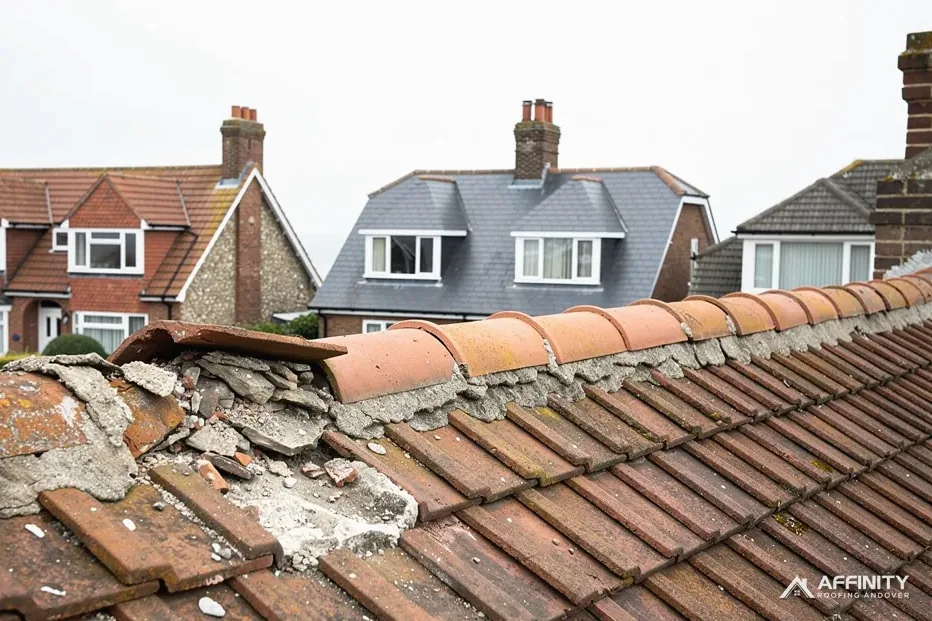
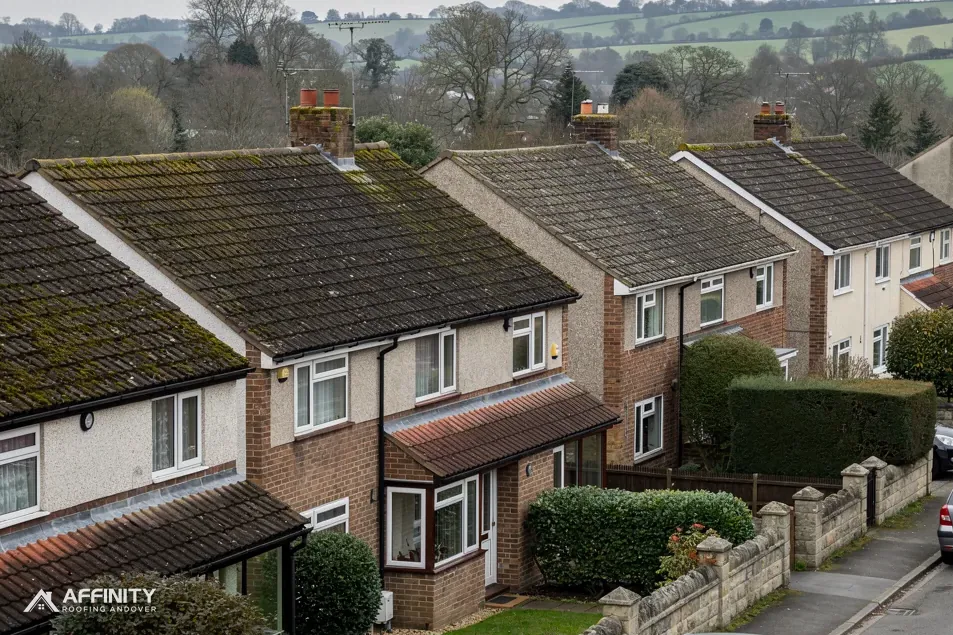
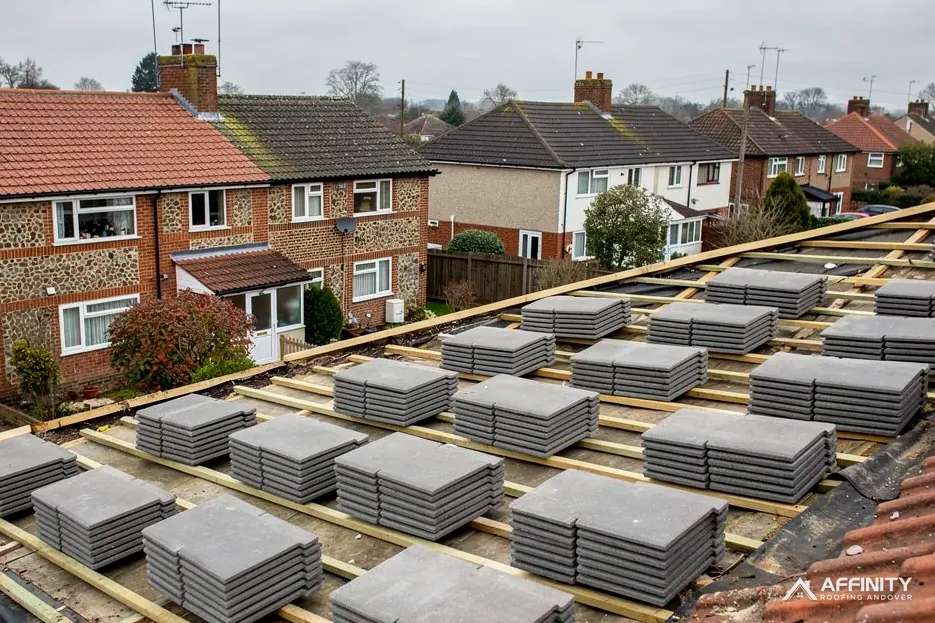
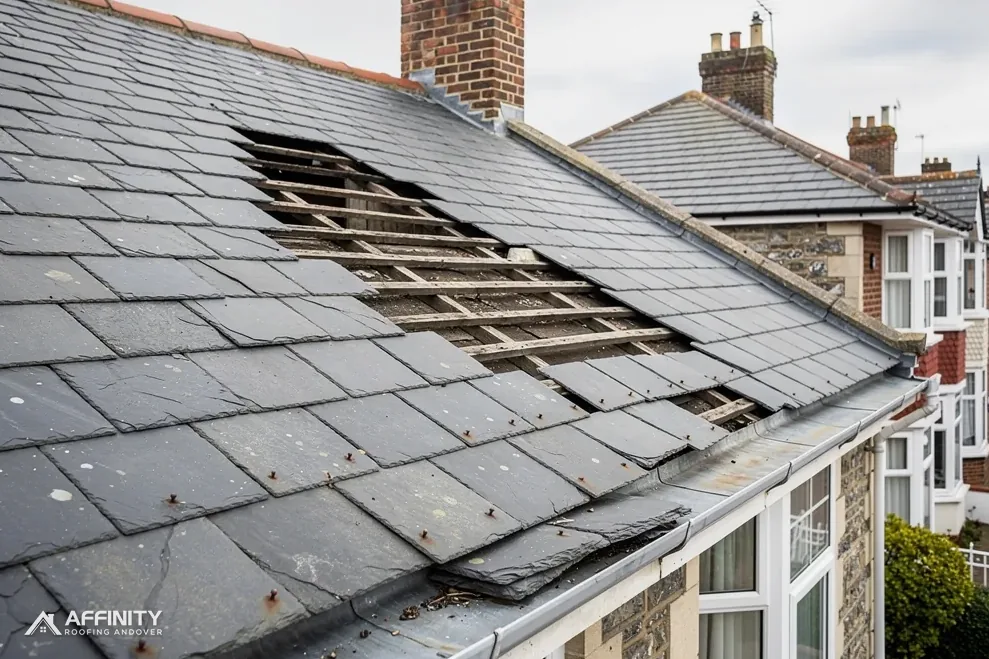
The jobs are the ordinary run for a village house. Roof repairs come first: slipped tiles, cracked ridge pointing, valleys that have lost their lining. Chimney repairs follow close behind, because stacks take the weather from all sides and lose flashing and pointing early. Larger jobs, such as re-covering a slope, start from a survey and a set of pictures too, and finish with one price in writing.
Chimneys deserve a word of their own here. A stack takes rain on every face, and the joint between brick and roof, the flashing, is a point to check closely. Lead flashing can last for over 80 years (MyJobQuote, September 2026), so a failed one on an older house often traces back to movement, poor fixing or crumbling mortar around it. We look at the stack from the roof and photograph the brickwork, the pointing and the flashing before we suggest repointing, relaying lead or taking the stack down. Where a stack comes down or is cut back, Hart's 1998 chimney direction is the first thing we ask about.
We say clearly when a repair will do. A roof with sound battens and a few failed tiles does not need stripping, and the pictures show whether that is your roof. When the underlay has gone brittle or the battens have rotted, the evidence shows that as well.
Waste is hauled off and the site is left clean, and you are told what the next day holds before the crew arrives, so a neighbour never wonders why a van is in the lane.
Where we can help in Winchfield

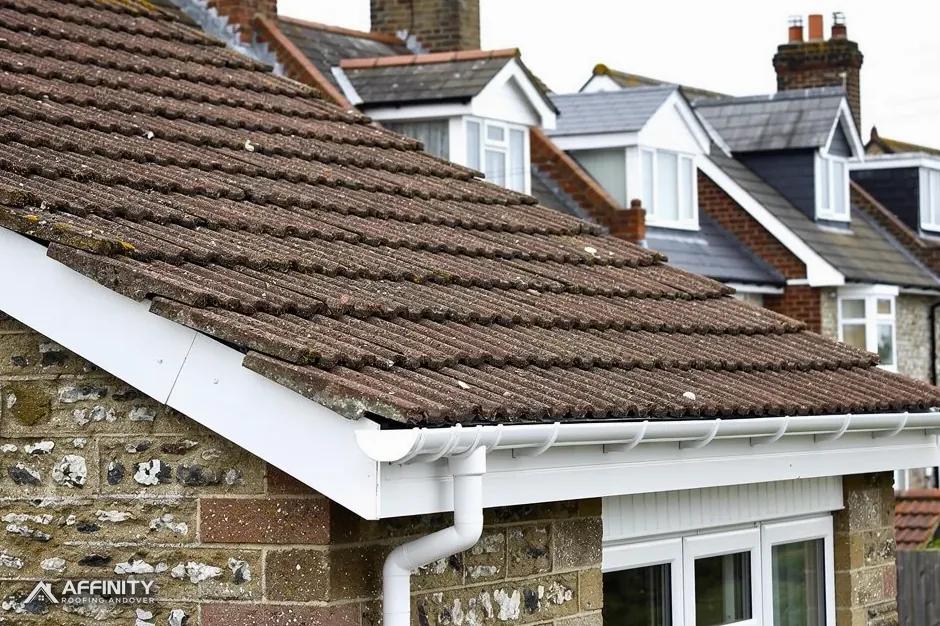
Winchfield roofs: Hart, listings and the county licence
Can I replace my Winchfield chimney stack without asking Hart?
Possibly not. Hart District Council's 1998 Article 4 directions cover chimneys and frontage roof slopes in the conservation areas they apply to, and they can remove rights you would otherwise have. Put the question to the council before work is booked. We photograph the stack and send the council a plain description of what you propose.
Who inspects a re-roof for building control in Winchfield?
Rushmoor Borough Council Building Control, acting for Hart District Council. The two councils share one team, which works from the Rushmoor offices in Farnborough. A re-roof within the Planning Portal's 25 and 50 per cent limits normally needs no building control application. The shared team can answer questions about those thresholds, and we pass its reply on to you in writing.
Is a scaffold on a Winchfield road licensed by Hart?
No. The licence is Hampshire County Council's to grant, and the scaffolding company files the application, ten clear working days before the start date. Hampshire County Council charges £211.90 on application for the first 2 weeks, then £72 for each further 2-week period. Scaffolding on your own private drive needs no licence.
Does the South Lodge listing mean my neighbouring house is listed?
Not necessarily. Historic England records two listed buildings within 500 metres of the village point, South Lodge to Winchfield House and a milestone, both Grade II. Your house counts as listed only if the National Heritage List has an entry for it; the council's planning team can confirm that in a short reply.
Between Hook and Odiham
Get a Winchfield roof survey
Send us a postcode and a photo. We survey, ask Hart about chimney rules, then quote one written total.
10-year workmanship guarantee, in writing.