
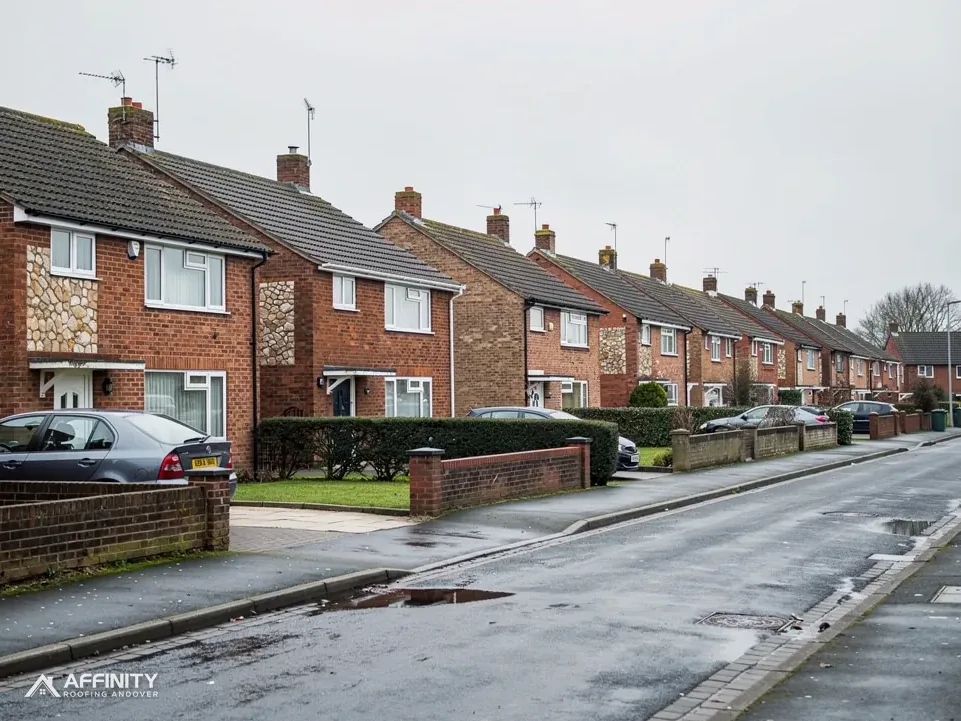
Roofers in Old Basing
Brick from Basing House, a Grade I church and the long street
Old Basing has 50 listed buildings within 500 metres of the centre, including a Grade I church. The roof is surveyed and photographed before anything is priced.
Old Basing roofs, from The Street to the canal
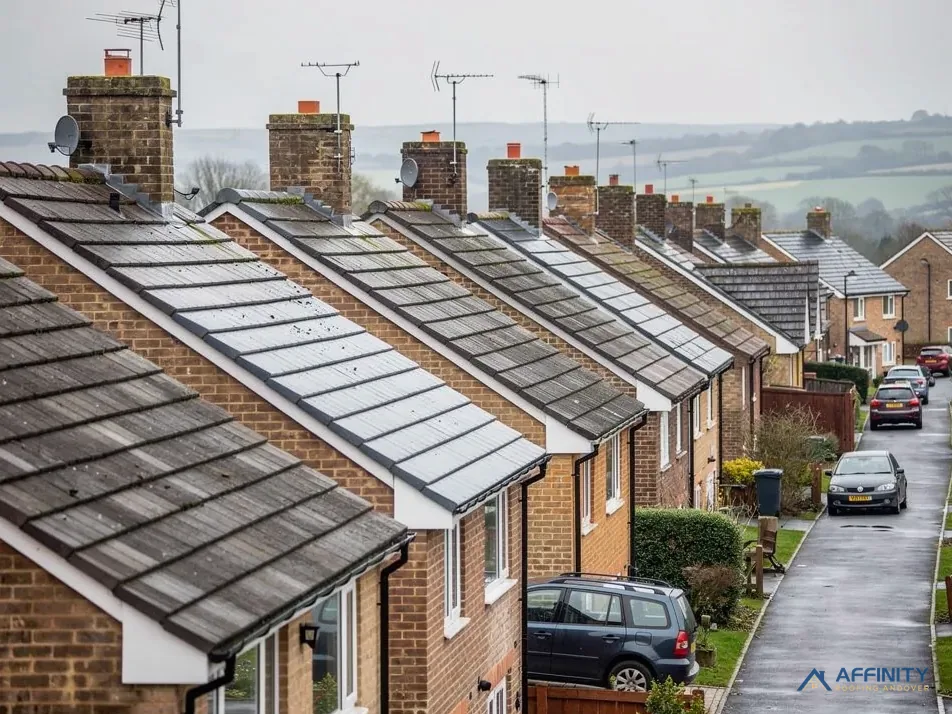
The parish church
Listed Grade I on 26 April 1957 and in use for worship, so roof repairs follow the faculty system.
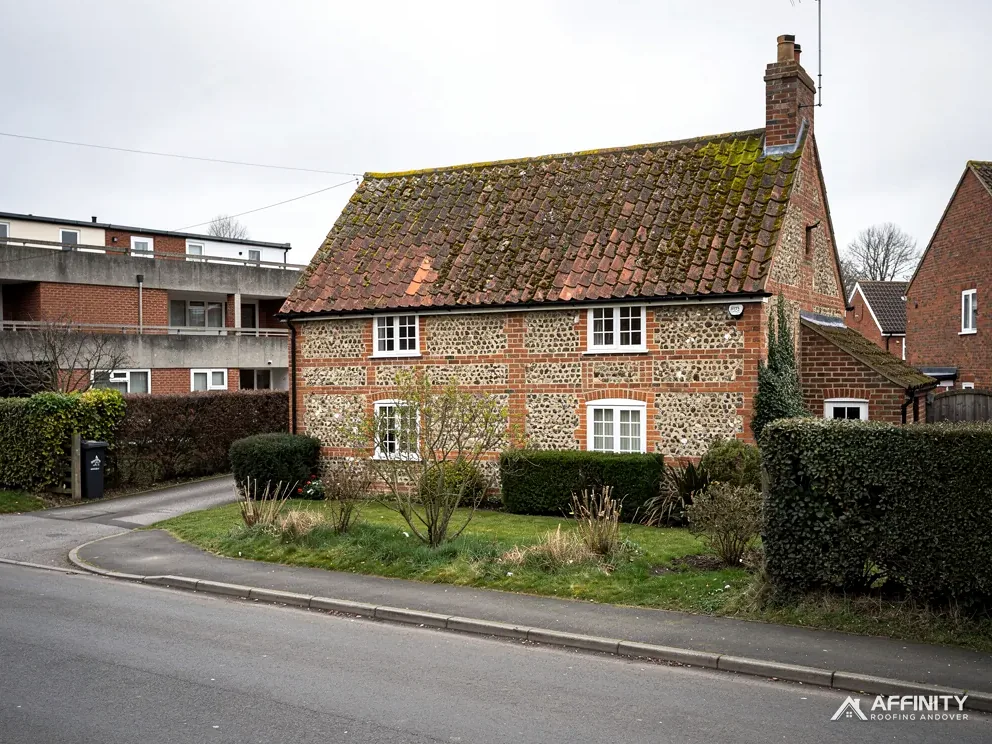
Houses on The Street
10 and 12 The Street are listed Grade II, so changes to what makes them special need consent.
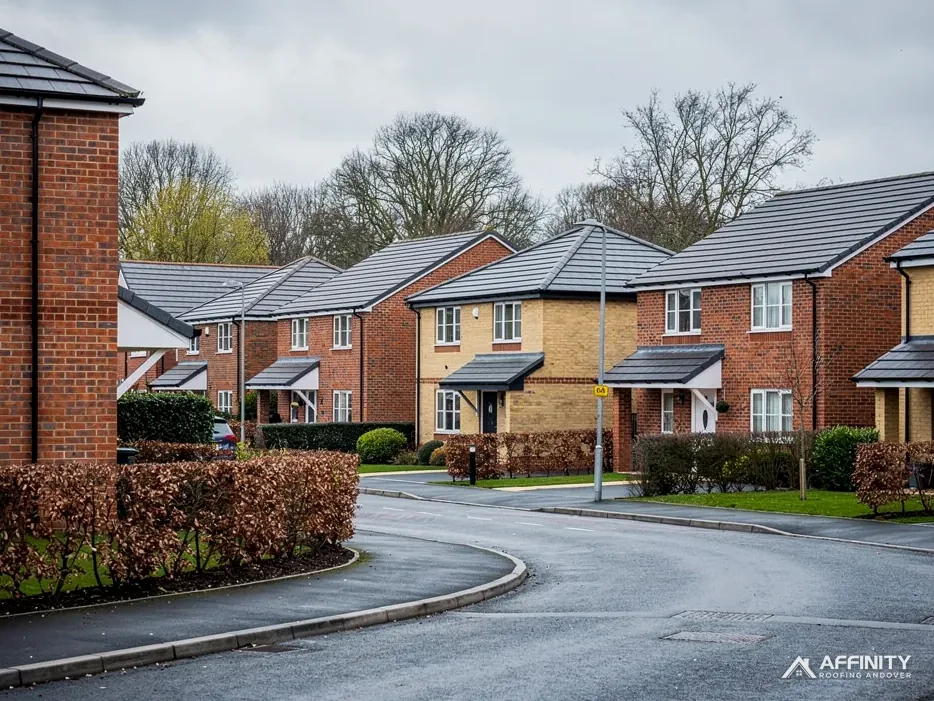
Brick built from Basing House
Many 17th-century buildings in the village were built with bricks taken from the ruins of Basing House.
Old Basing between Basingstoke and Chineham
Basingstoke lies west of the village, Chineham to the north, Sherborne St John north-west and Sherfield on Loddon north. Each gets the same survey.
- Distance
- 22.6 road miles east of Andover
- Planning
- Basingstoke and Deane Borough Council
- Council
- Basingstoke and Deane Borough Council and Hampshire County Council
The Old Basing roof report
Local editionOld Basing, HampshireA siege, a church and a long street
Old Basing's roofs: a borough to answer to, a siege behind the bricks and 50 listings
Old Basing is a Hampshire village of 7,140 people on the River Loddon, east of Basingstoke. This report covers who decides on its roofs, how the Basing House story reaches the brickwork, and what the listed church and houses change.
A Loddon-side village answering to the borough
The parish of Old Basing and Lychpit counted 7,140 usual residents at the 2021 Census. Its name sits beside the town's, but for roof questions it is a village in its own right, with a conservation area of its own, and the answers still come from the same borough. Basingstoke and Deane Borough Council decides planning questions and employs the Building Control team that inspects (01256 844844). Hampshire County Council is the county council, and the highway authority behind any scaffold licence.
On a re-roof we start from the Planning Portal's test. Put another way, a re-roof normally needs no building control application below 25 per cent of the building envelope and 50 per cent of the roof. The borough adds a hint of its own: its building control page includes re-roofing, on pitched and flat roofs alike, in a list of alteration projects that "might also need" approval. A hint is not a rule, so for anything bigger than a patch we ask the Building Control team a direct question and record its answer.
Weight is a second filter. A swap that leaves the covering 15 per cent or more heavier than before brings in Building Regulations approval, and the Planning Portal says to have the structure looked at beforehand. Before recommending any new covering we measure the rafters, which are the timbers under each slope, and note their spacing and condition.
Old Basing does appear on the borough's Article 4 list, for a reason that has nothing to do with roofs: a direction about turning family houses into shared homes covers conversions in Basingstoke itself, in Chineham, and in Oakley, Sherborne St John and Old Basing. The roof-specific Article 4 wording that the borough publishes belongs to four conservation areas in Basingstoke itself. For an Old Basing address we ask the planning team whether anything applies, and we keep the reply with your papers.
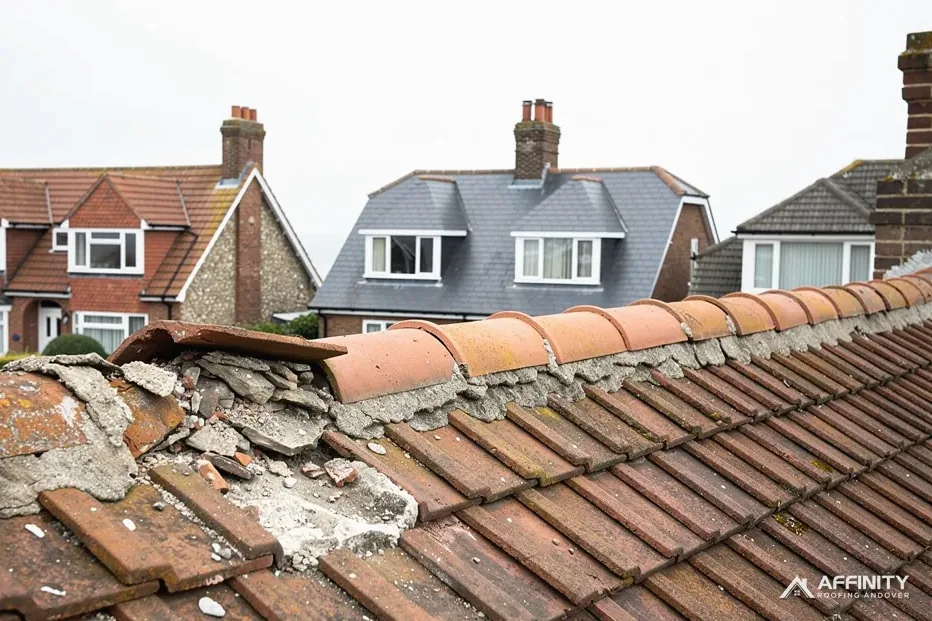
Each survey runs in the same order. We read the covering slope by slope, then the valleys (the channels where two slopes meet), the lead at chimneys and abutting walls, and the eaves. Where access allows, a tile or two comes up and the timbers and underlay beneath are photographed. A minor repair rarely meets any of these tests: a cracked ridge tile is simply a repair, and the report notes it in a line. Where a job does reach them, you get the council's answer, the survey photographs and the price together.
A registered building control approver can stand in for the borough's team. Whichever you pick, the route is put on paper before a date is chosen.
Basing House, the Great Barn and St Mary's
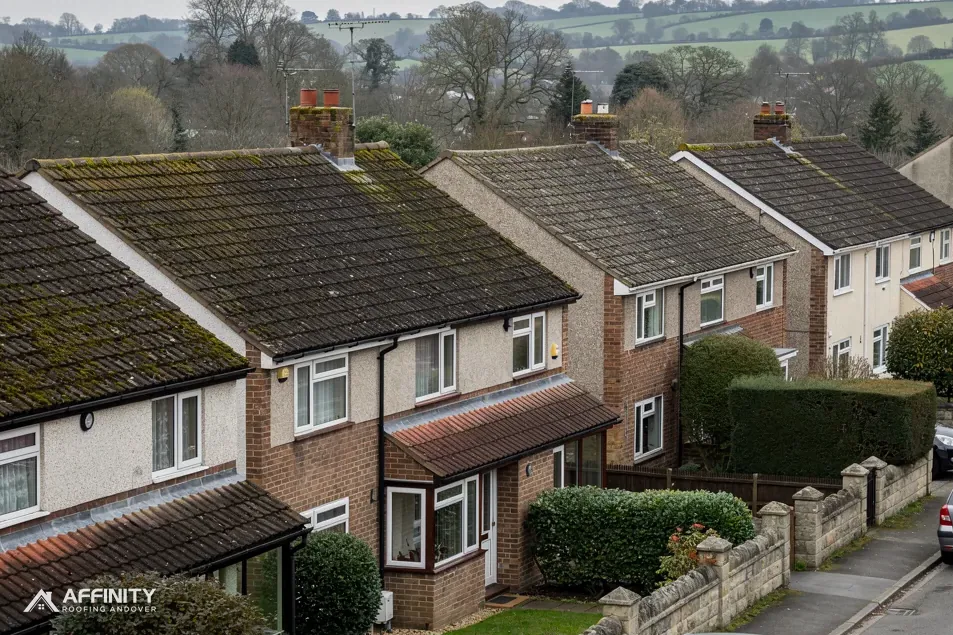
Basing House stood at the south end of the village within a curve of the Basingstoke Canal. According to the VCH in 1911, Parliamentary armies besieged it for many months, Oliver Cromwell stormed it in 1645, and an order followed that it be totally slighted and demolished. The story has a practical echo for owners of old houses nearby. Many 17th-century buildings in the village were built from bricks taken from the wreck, which helps when we match old brickwork around a chimney or a gable. In 1911 the VCH noted that many village cottages and small houses were of narrow red bricks with gabled tiled roofs.
St Mary's church is Grade I (list entry 1339555, first listed on 26 April 1957). The mapped record shows it as an Anglican church in use, which puts its repairs under the Church of England's faculty system, with listed building consent set aside. The Great Barn at Grange Farm is Grade I too, and is described as dating from 1535. The Great Barn forms part of the Basing House Ruins scheduled monument, so works to it need scheduled monument consent.
Houses take the ordinary listing route. 1 and 3 Milking Pen Lane (1301310, first listed on 17 October 1984), 1 Crown Lane (1166390) and 10 and 12 The Street (1339553) are Grade II. Historic England's list holds 50 listed buildings within 500 metres of the centre, so checking the list for your own address comes first. A repair that could alter a listed house's character calls for listed building consent and, where relevant, planning permission, and we begin with matching materials.
The Old Basing conservation area adds a question for unlisted homes, because any change to the roof that people passing can see goes to the borough before work. Our guide to planning permission for roof work shows how dormers and similar changes are judged.
Some houses along The Street are thatched. Thatching is a specialist thatcher's trade, and we point owners there. The tiled and slated roofs, the stacks and the gutters beside them are the work we survey.
With so many old buildings, the close photographs of mortar, brick bond and tile edge become a record worth keeping. A later buyer, surveyor or conservation officer can see what the roof was and what was done. When a gable or chimney is built from mixed brick, we photograph the courses, note where the mortar has gone soft and describe the bond, so that the repair follows the pattern already there and uses mortar matched to the old.
“In Old Basing the bricks may come from a siege, and the paperwork from a borough.”
Scaffold on the long street, and our jobs
The village is a long street lying between the River Loddon and the Basingstoke Canal, and a house on it may front the road directly. Scaffold on the footway or carriageway requires a licence under section 169 of the Highways Act 1980. For Old Basing, that licence is Hampshire County Council's to give, and the borough council has no part in it.
Hampshire County Council's rules make the scaffolding firm the applicant as its customer's agent, so the form never reaches you. The county wants a 10 clear working days lead, and allows no extensions. Hampshire County Council charges £211.90 on application for the first 2 weeks and £72 for each further 2-week period. A scaffold standing wholly within your own boundary falls outside the licence, which we confirm for your house at survey.
Frontages differ, from a deep drive to a front door on the pavement, so the scaffold and licence change from house to house. We measure the frontage, note the width of the footway and ask where a skip and deliveries can stand without blocking the street. Those answers go into the plan, which you see before you agree the price.
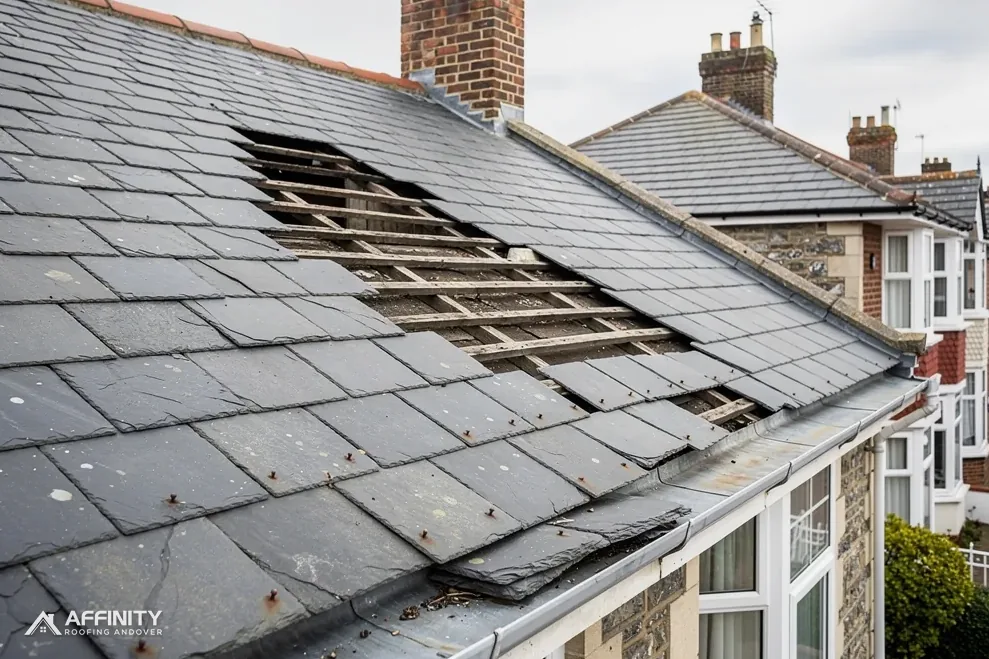
The work covers the usual range. Roof repairs deal with cracked ridge pieces, slipped tiles and flashing that has lifted. Slate roofing suits the 19th-century buildings that carry it. Chimney repairs cover a stack with tired pointing or worn flashing.
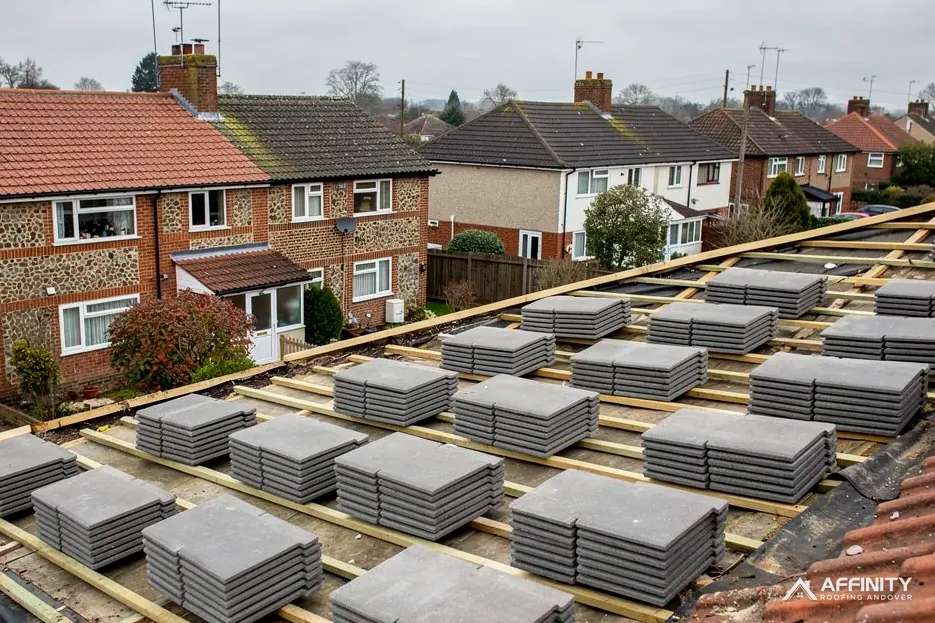
On an older roof the real question is repair or replace. With sound battens and a fault in one spot, repair is the right call. If the fixings have failed across a slope, replacement is the better spend, and the photographs make the case. The decision is yours, and you can take as long as you like over it. Citizens Advice advises getting at least 3 written quotes, and we would rather you compared like with like.
Basingstoke, Chineham, Sherborne St John and Sherfield on Loddon are all close by. Each sits in Basingstoke and Deane, yet each address is checked separately against the borough's conservation area map and the heritage list, because designations do not follow parish lines. The check is short, and its result sits with your survey pictures, so a later owner can trace what was agreed and why.
A party wall surveyor can advise if the job affects the wall between you and next door, and we flag it early, well before the scaffold date. We also ask whether a side passage or rear access can carry materials, because that can spare the street frontage a good deal of clutter.
Repairs and re-roofs across Old Basing

Old Basing roofs: listings, the church and the licence
Can an Old Basing house built with reused Basing House brick have its roof re-covered?
Yes, though brickwork around chimneys and gables needs care. We photograph the old brick and mortar before touching the roof, match any repointing to what is there and check whether the house is listed. If it is, consent is required where the work changes its character, and a repair that matches the existing materials is the natural place to start.
Does Old Basing's HMO Article 4 direction affect a roof repair?
No. The direction on shared homes concerns the conversion of family houses, not roof work, so a repair or re-covering is not caught by it. The roof-specific Article 4 wording that the borough publishes belongs to four conservation areas in Basingstoke town. The borough's planning team confirms the position for your address, and the reply sits in your file beside the roof photographs.
How does a church roof in Old Basing differ from a house roof for consent?
St Mary's is Grade I and in Anglican use, so its repairs need a faculty from the diocese's consistory court, Old Basing's church being no exception. A listed house goes to Basingstoke and Deane for listed building consent. Either way, the survey records the existing covering first, and the application describes what is there today, including the tiles, ridge pieces and flashings.
How much lead time does a scaffold licence need on The Street?
Hampshire County Council wants a lead time of 10 clear working days, and allows no extensions. Hampshire County Council charges £211.90 for the first 2 weeks and £72 for each further 2-week period. The county looks to the scaffolding firm as applicant, so the dates are set at survey and the cost is folded into one price. Scaffold kept inside your boundary needs none.
Start with an Old Basing survey
Send the address and describe the fault. We visit first, and one written price follows.
10-year workmanship guarantee, in writing.