
Roofers in Hook
From railway-era villas to the cul-de-sacs of the 1960s and 1980s
Hook has 9,069 residents and 14 listed buildings within 900 metres of its centre. Each roof is dated first, then surveyed and photographed, before advice is given.
Hook roofs, from railway cottages to the estates
Railway-era cottages
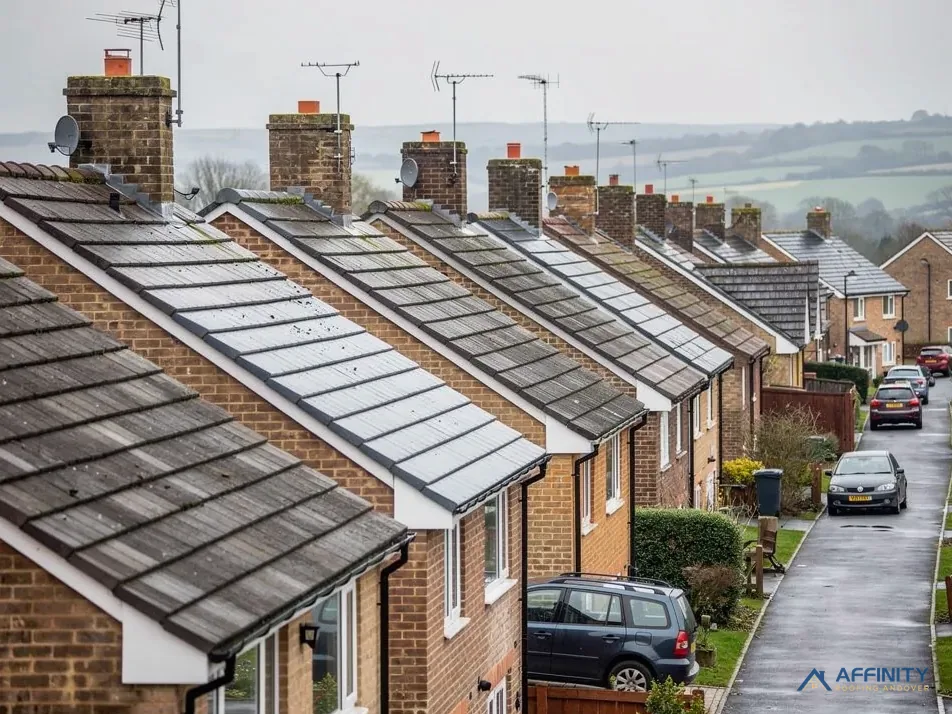
Cottages and villas went up on Newnham, Sheldons and Dorchester Roads between the 1880s and 1900s.
1960s and 1970s cul-de-sacs
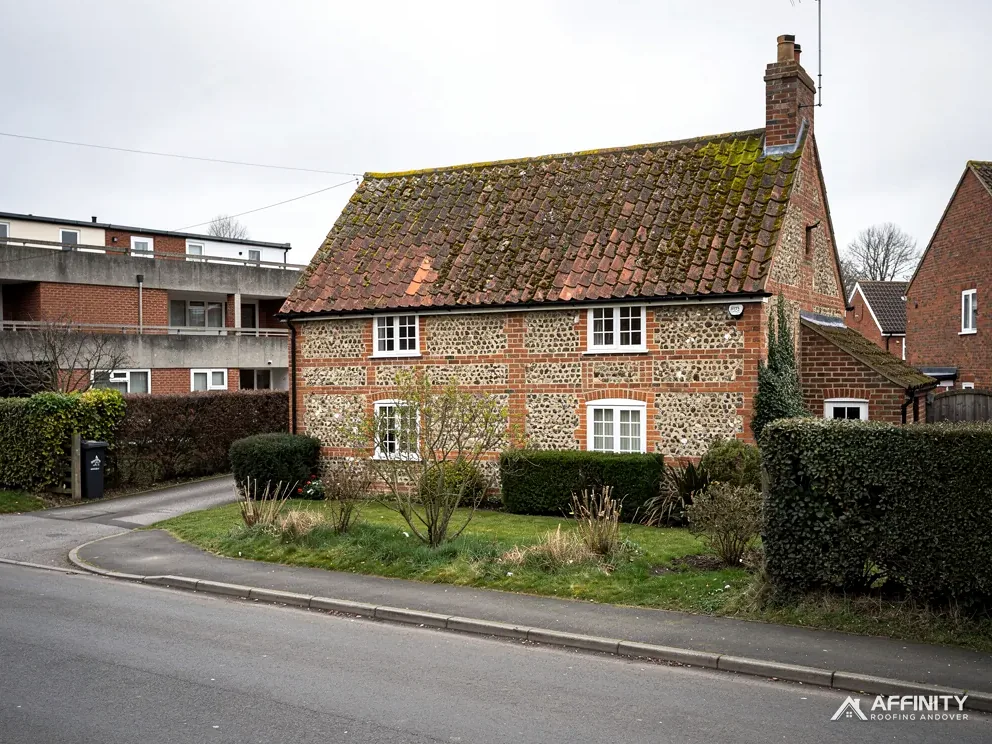
Hart's 2010 study describes yellow and brown brick, tile-hanging or weatherboarding and concrete tile roofs.
The 1980s estate
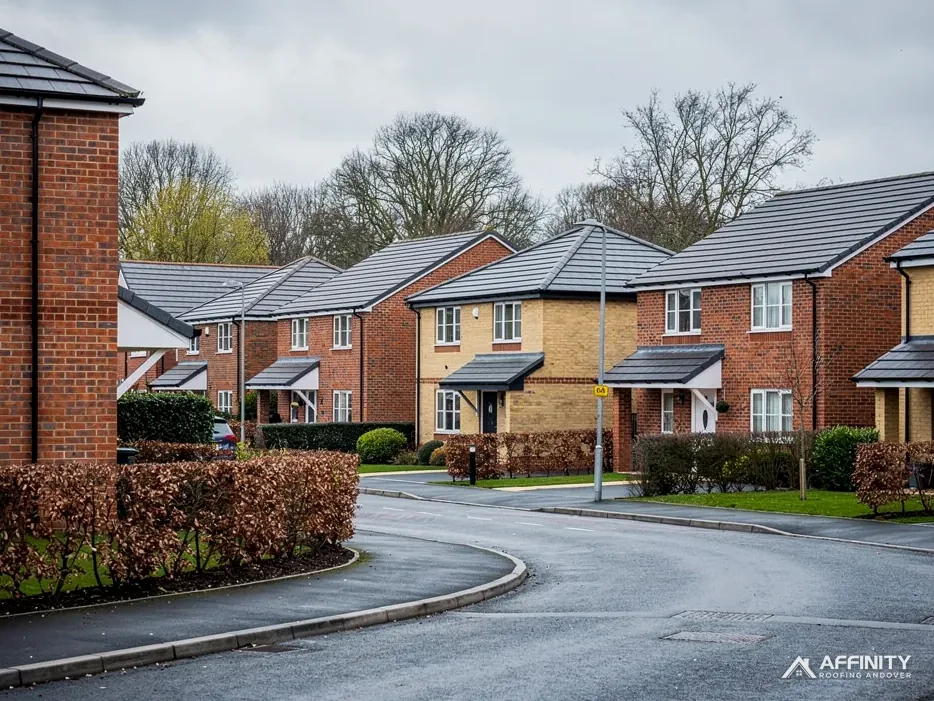
The Alderwood Drive and Oak Tree Drive estate followed in the early 1980s.
Hook between North Warnborough and Odiham
North Warnborough lies to the south, Odiham to the south-east, Winchfield to the east and Sherfield on Loddon to the north-west, with Old Basing further out.
- Distance
- 26.6 road miles east of Andover
- Planning
- Hart District Council
- Council
- Hart District Council and Hampshire County Council
The Hook roof report
Local editionHook, HampshireHow a village's age shapes its roofs
Railway cottages to 1980s estates: how the age of a Hook house shapes its roof job
Hook is 26.6 road miles east of Andover, a large village beside the M3 under Hart District Council. This report follows its building history from railway cottages to 1980s estates, then covers Hart's conservation areas, building control and the county scaffold licence.
Railway cottages, cul-de-sacs and an estate of the 1980s
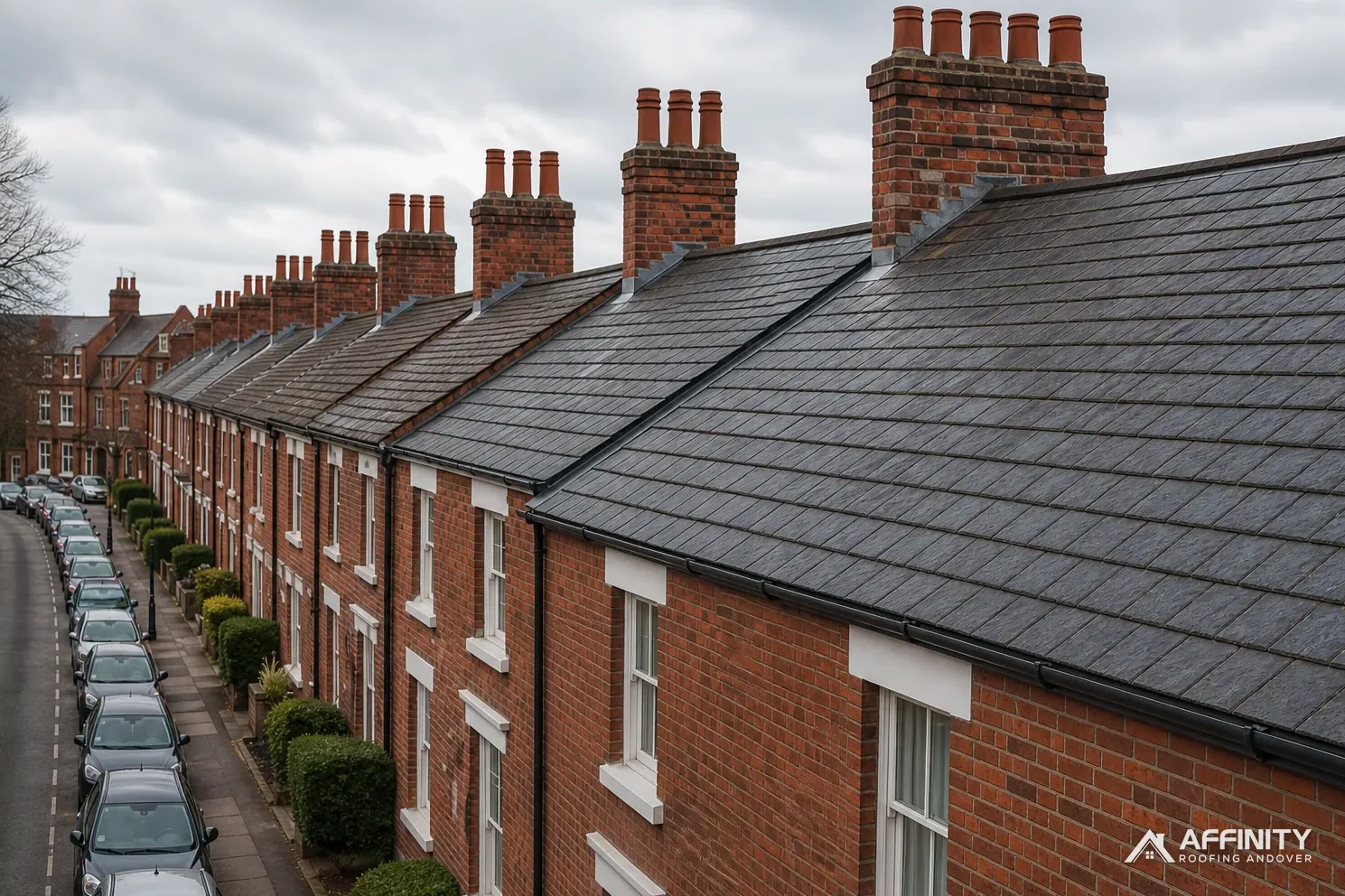
Hook is a large village on the A30 and the main railway, west of Hartley Wintney and beside the M3. Hart's 2010 study records that the London and South Western Railway opened through Hook in 1839, that a station followed in 1883, and that cottages and villas were built on Newnham, Sheldons and Dorchester Roads between the 1880s and 1900s. The 2021 Census counted 9,069 usual residents in the civil parish, and its streets show clearly how a roof's age decides the job.
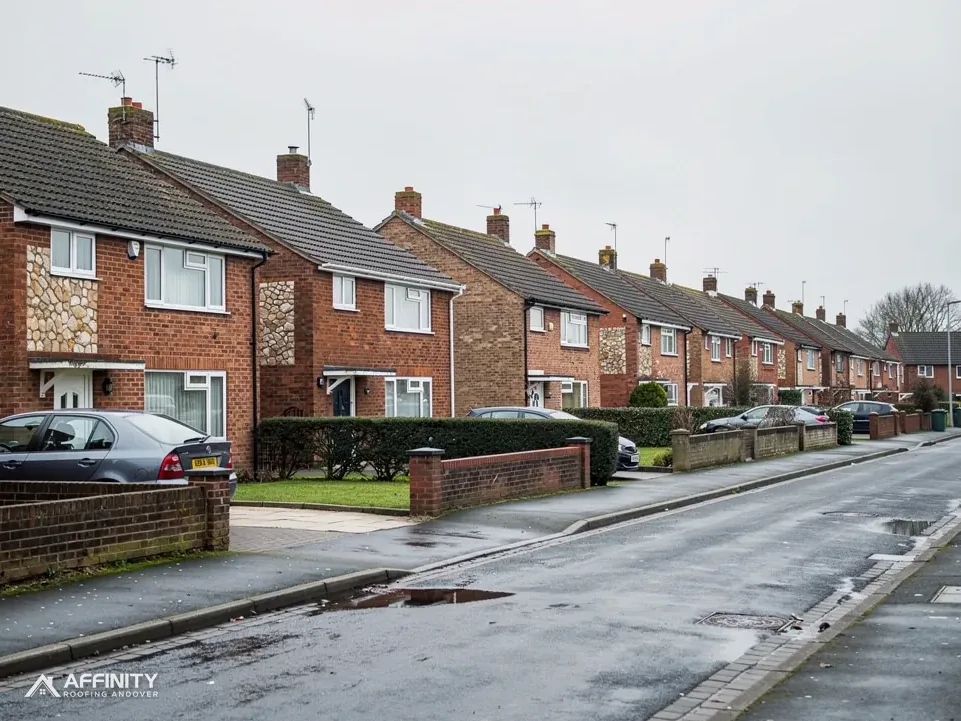
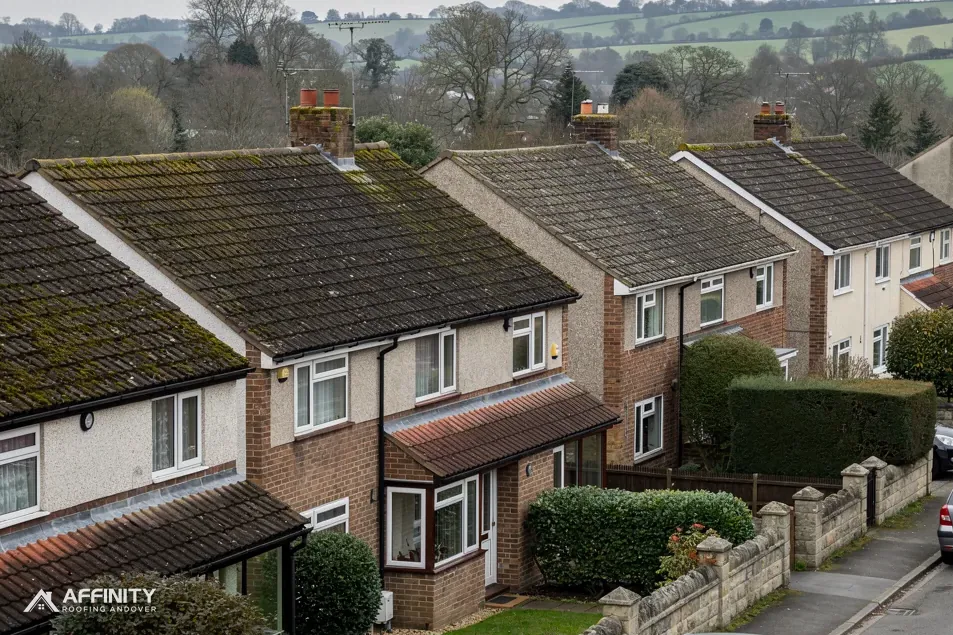
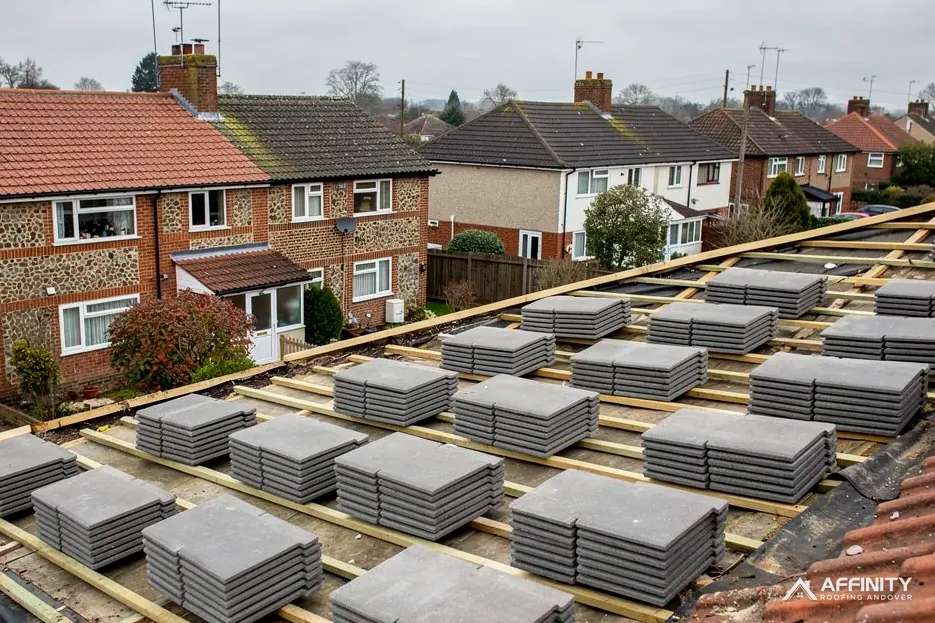
The same study says cul-de-sacs of houses and bungalows were built in the 1940s and 1960s, first as council housing and later privately, and that the large Alderwood Drive and Oak Tree Drive estate followed in the early 1980s. It describes the 1960s and 1970s cul-de-sacs as yellow and brown brick with tile-hanging or weatherboarding and concrete tile roofs. That is the study's description of those streets, and it is not a claim about every Hook roof, but it points to the question that matters: how long has a given covering been up?
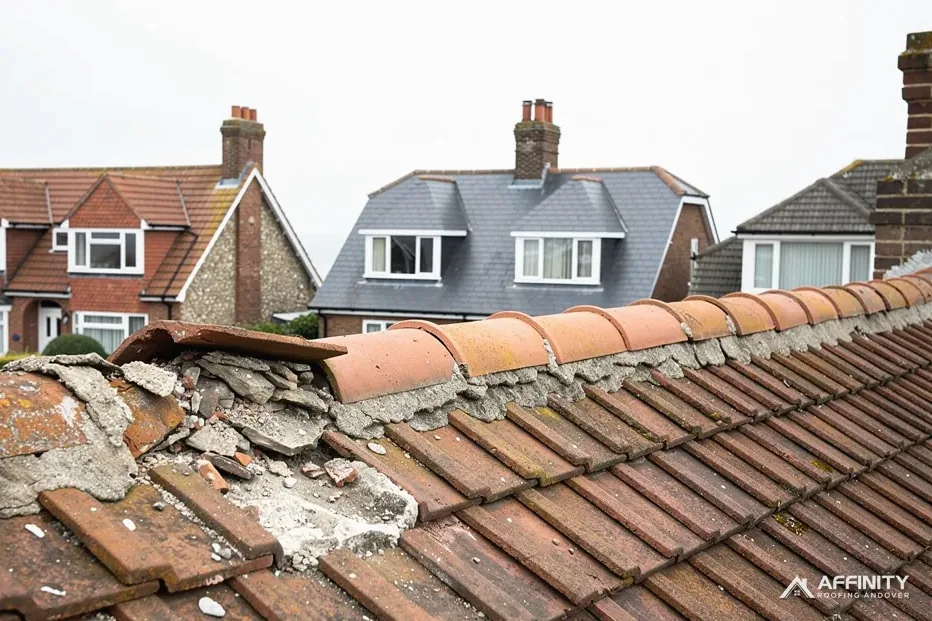
Marley's view is that roof tiles should last around 60 years, though it stresses that this is no promise. HomeBuilding (September 2025) puts plain concrete tile at 40 to 50 years. The two differ, so we quote both, as typical lives. An original concrete tile roof from the 1960s is at or past those figures, which is why condition matters more than the date. We look for tiles that have lost their surface, ridge tiles that have lost their bedding, and battens that have softened beneath. Where a tile can be lifted safely, we photograph the underlay beneath it too.
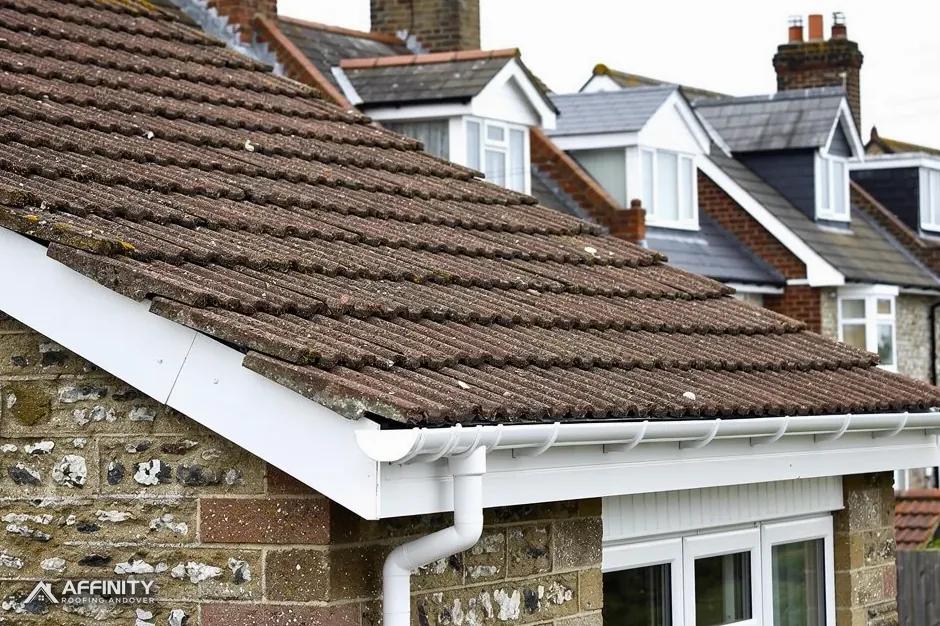
Weatherboarding and tile-hanging, in the study's description, finish the walls of those streets. Where either meets the roof there is a flashing, and where there is a flashing there can be a leak. Our guttering, soffits and fascias page covers the roofline that frames those walls, which on a boarded house is as much a part of the weather barrier as the tiles, and where a leaking joint can rot a board unseen.
The verge at a gable end deserves a look too. Older verges may be bedded in mortar alone, and modern guidance does not rely on mortar by itself: BS 8612 now tests dry-fixed verge systems, and MyJobQuote (October 2026) gives a dry verge as usually between £500 and £2,000, a typical UK range. A verge that has cracked or lost its bedding can let rain into the loft, and the cracking can be seen from the ground.
Holt Farm, Hook House and Hart's conservation areas
Hook also has listed buildings near its centre. Historic England's list holds 14 listed buildings within 900 metres of the village point. The barn at Holt Farm, north-east of the farmhouse (list entry 1244351), was first listed on 26 June 1987 and is Grade II, as are Holt Farmhouse (1244350) and Hook House (1273214). A listed building keeps the permitted development rights of any house, but a change that affects its character needs listed building consent from Hart District Council as well. Matching repair is where the discussion starts, and close photographs of the existing roof accompany any request.
The nearest conservation areas, eight of them, lie within about 2.5 km: Basingstoke Canal, Basingstoke Canal 1, Greywell, Newnham, North Warnborough, Odiham, Rotherwick and West Green. Hart's own list includes a 1998 Article 4 direction for the North Warnborough conservation area covering frontage alterations, among them work that affects a roof slope facing the frontage, and putting up, altering or taking down a chimney on a dwelling. That is not a Hook rule, but it shows how Hart uses the tool, so the council is asked whether any direction touches an address near a boundary.
An Article 4 direction takes named permitted development rights away across an area. It is why a householder in one conservation area can need permission for a change that a neighbour a mile away does not. Our planning permission for roof work guide explains where the lines fall, including how a dormer is treated in a conservation area.
A straightforward repair in Hook raises no consent question, on the railway-era roads and the later estates alike, unless a house is listed or near a boundary. A slipped tile, a lifted ridge or a failed chimney flashing is simply mended, with photographs first, and the explanation of what failed follows in plain words. For the chimneys on older houses, chimney repairs sets out the pointing, flaunching and flashing we look at, and how a leak at a stack can show indoors.
Estate houses often share a party wall, and chimney work then raises a point of law. Under the Party Wall etc. Act 1996 an owner may cut a projecting chimney breast, jamb or flue out of a party wall, but must serve notice two months or more ahead of starting. The Planning Portal adds that Building Regulations are always engaged when a breast is removed, since it is structural. Party wall questions go to a party wall surveyor, structural ones to building control, and the survey flags it if your house is one of them.
“In Hook the age of the house decides the roof job, and three offices decide the paperwork.”
Three offices behind a Hook re-roof
A roof job in Hook touches three offices. Planning belongs to Hart District Council. The road belongs to Hampshire County Council. And building control is delivered by Rushmoor Borough Council on behalf of Hart: Hart's own page says it shares Building Control with Rushmoor, and that the team is based in Rushmoor Borough Council's offices in Farnborough. A registered approver is the private alternative. We establish which route applies when we survey, and you hear the answer in writing.
The Planning Portal draws the national line at 25 per cent of the building envelope and 50 per cent of the roof, under which no application is normally required. Approval does come in for a covering whose weight exceeds the old one's by 15 per cent or more, or that would respond differently if a fire reached it. Putting concrete tile back where concrete tile was keeps the weight question simple, and the survey measurements settle the area question.
On the road, a scaffold is licensed by Hampshire County Council under section 169 of the Highways Act 1980. Under Hampshire County Council's scheme the scaffolding company applies, ten clear working days must pass first, and the charge is £211.90 for the first 2 weeks and £72 for each further 2 weeks, with hoarding extra. Hampshire County Council also asks for £10 million of public liability cover and a scaffold built to recognised standards, and gives no extensions. Hart is not a highway authority. Nor is Rushmoor, so neither council can be asked for a scaffold licence on a Hook road.
Many cul-de-sac houses have a drive, and a tower standing on private land needs no licence. That can shorten a job and remove the notice period. Where the road is needed, the licence cost is part of your single total, and dates are fixed with you before anyone applies, with a margin for weather because the county gives no extensions. For general repairs, roof repairs is where a simple Hook job starts.
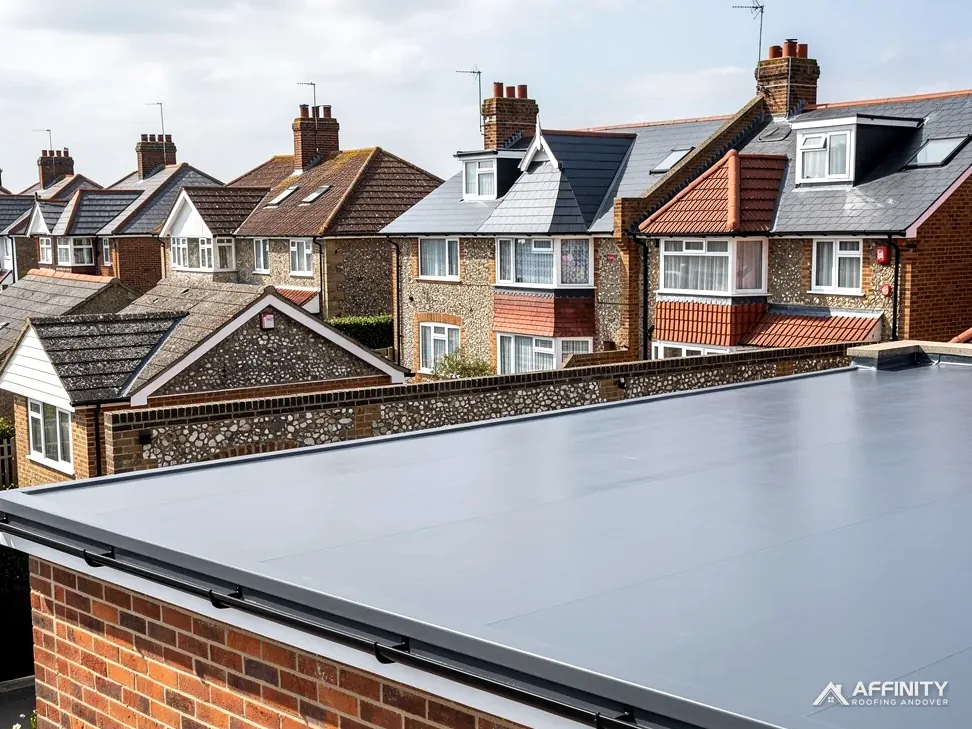
A full re-cover brings in energy rules. Approved Document L treats replacing a layer of a roof as renovation, and for a retained roof the threshold is 0.35 W/(m²·K), improved to 0.16 where feasible, or to the strongest standard that repays itself within 15 years where it is not. A flat-roof membrane renewal counts as well. The 2021 edition applies until 24 March 2027, when the 2026 edition takes over. A survey that measures the roof at the same visit lets us say whether a re-cover triggers it. If it does, the insulation work and its approval are settled before the price is written.
Roof, roofline and chimney work in Hook
Hook roofs: age, concrete tile and Hart's rules
Are the concrete tiles on a 1960s Hook house due for replacement?
Not necessarily. Marley expects roof tiles to last about 60 years, and HomeBuilding gives plain concrete tile 40 to 50 years. An original roof from the 1960s is at or past those typical lives, but condition decides. We survey the tiles, battens and underlay, photograph what we find and say plainly whether repair or replacement is the sound choice.
Who does building control in Hook, Hart or Rushmoor?
Rushmoor Borough Council delivers Hart's building control, so a Hook enquiry goes to Farnborough and not to Hart's own offices. Hart's own page says it shares Building Control with Rushmoor, with the team based in Rushmoor's offices in Farnborough. Many small repairs need neither route, and we confirm which applies when we measure the job.
Does Hart have Article 4 rules about roofs near Hook?
Hart's list includes a 1998 direction for the North Warnborough conservation area covering frontage roof slopes and chimneys on dwellings, so roofs and stacks can come under Hart's directions. The nearest conservation areas lie within about 2.5 km of Hook, and we ask Hart about any address near a boundary and pass the reply on.
Who licenses a scaffold on a Hook road?
Hampshire County Council, not Hart. Under Hampshire County Council's rule the scaffolding company applies on your behalf, with ten clear working days' notice, at £211.90 for the first 2 weeks and £72 for each further 2 weeks. A tower on your own drive sits outside the licence. We settle dates with you first, and the licence cost is part of your one total.
From North Warnborough to Winchfield, around Hook
Book a survey of your Hook roof
Send the address with a clear photograph. We survey, find the approvals needed and set one written price.
10-year workmanship guarantee, in writing.