
Roofers in Sherborne St John
Brick, clay tile and a Grade I church beside the Wey Brook
Nine listed buildings stand near the middle of Sherborne St John, one a Grade I church. A roof is photographed and surveyed before we say what it needs.
Sherborne St John roofs, from church to Vyne Road
Grade I church
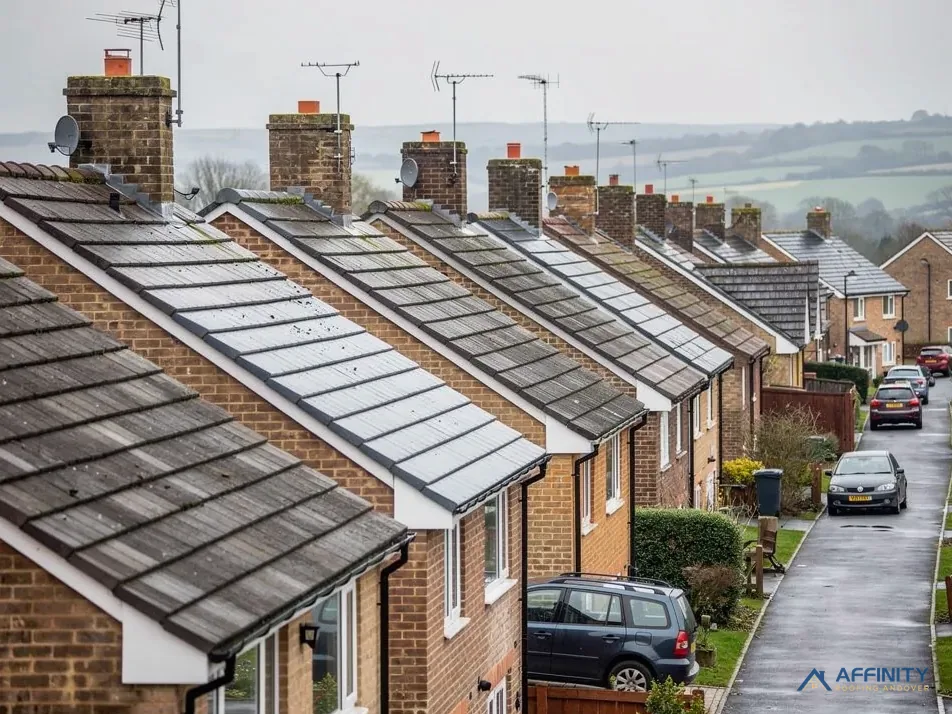
St Andrew's church is Grade I listed, and was first entered on the list on 26 April 1957.
Vyne Road cottages
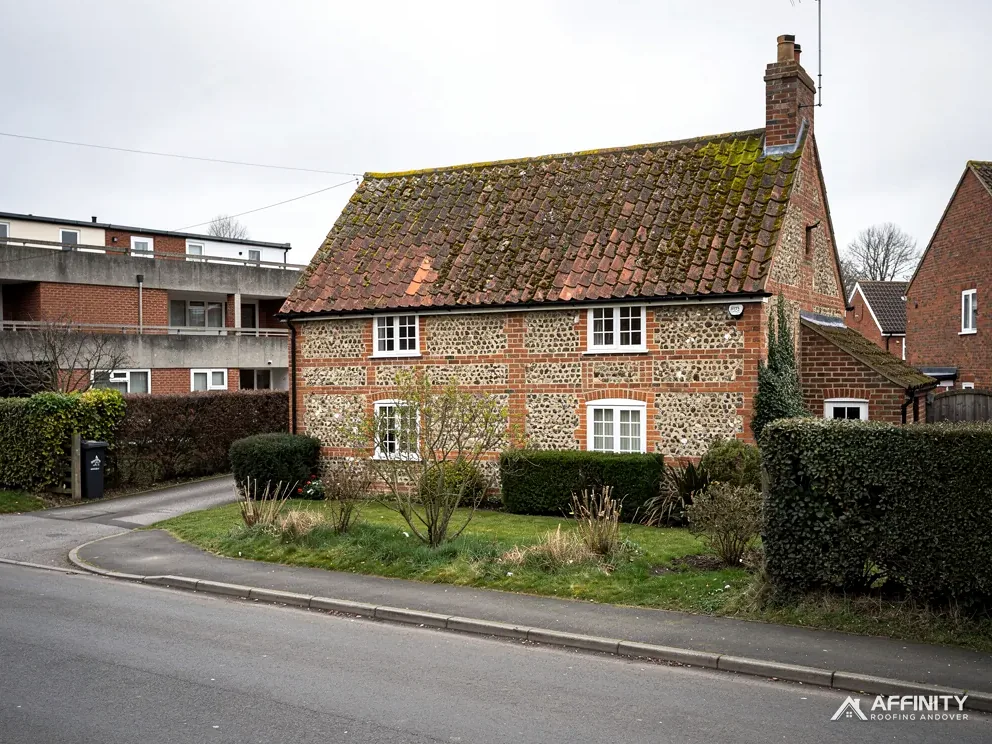
18 and 20, Vyne Road and 6 and 8, Vyne Road are listed Grade II, as is April Cottage.
Brick and clay-tile streets
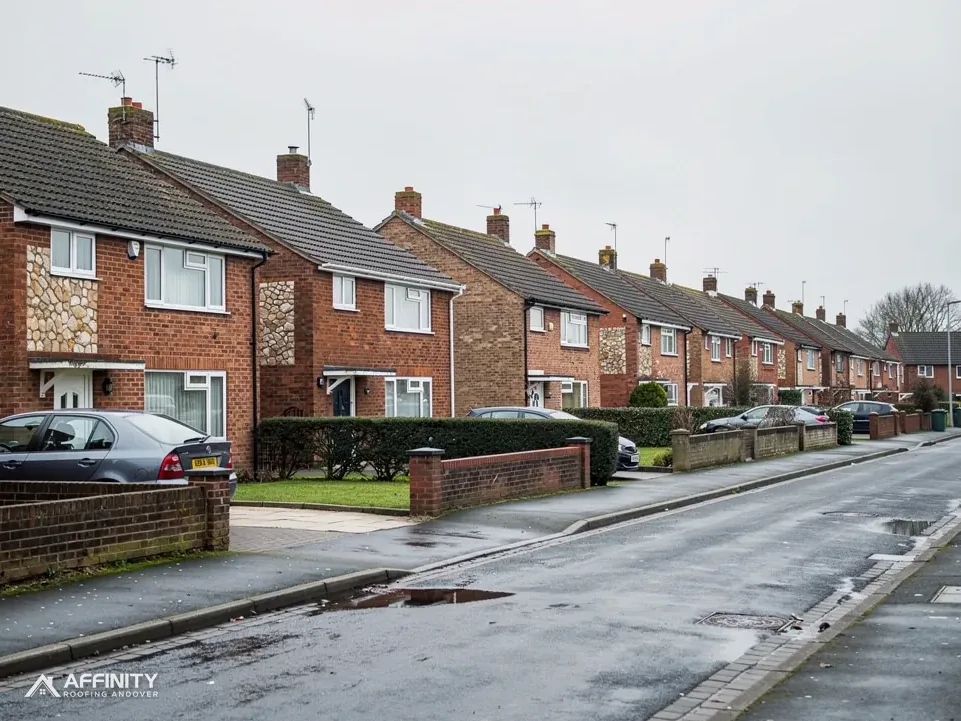
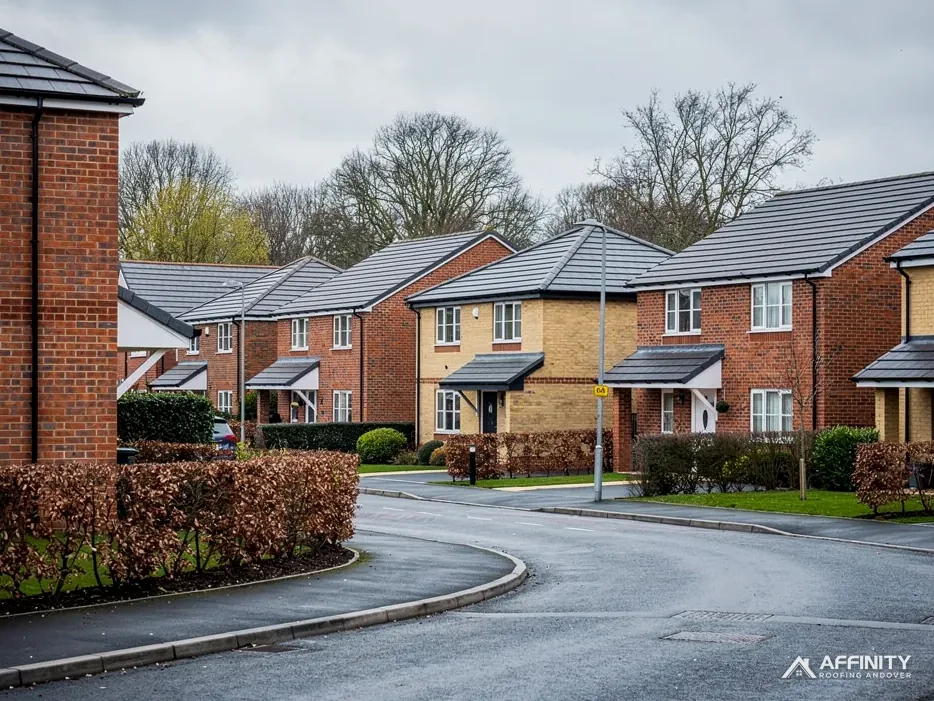
The council's appraisal names brick and clay tile among the local building materials, alongside timber framing.
Sherborne St John between Chineham and Basingstoke
Chineham lies to the east, Basingstoke to the south, Old Basing to the south-east and Bramley to the north-east. Silchester is a little further north.
- Distance
- 25.3 road miles east of Andover
- Planning
- Basingstoke and Deane Borough Council
- Council
- Basingstoke and Deane Borough Council and Hampshire County Council
The Sherborne St John roof report
Local editionSherborne St John, HampshireLocal materials, listings and a county licence
Brick, clay tile and a Grade I church: how roof work is read in Sherborne St John
Sherborne St John is 25.3 road miles east of Andover and two miles north of Basingstoke. This report sets out what the council's appraisal says about local materials, the listed buildings on Vyne Road and the church, and the Hampshire scaffold licence.
Brick, clay tile, timber frame and a little slate
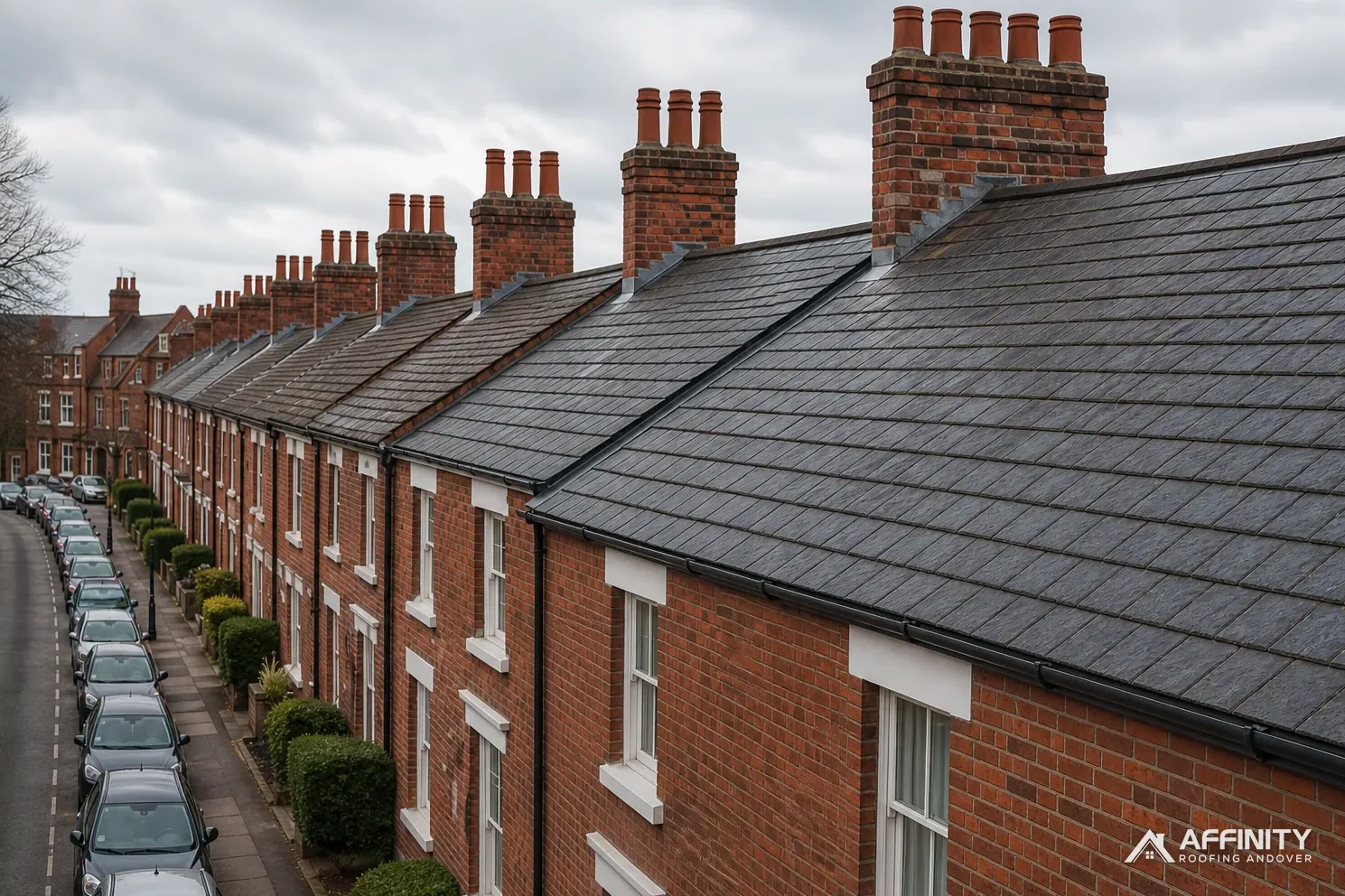
The council's conservation appraisal for Sherborne St John is unusually specific about materials, and it is the clearest guide to what a repair here should match. It says the predominant local building materials are brick and clay tile, reflecting the proximity of the local clay fields. Other vernacular materials include timber-framing, often with later brick infill, and thatch, while slate is limited to 19th-century buildings. The village stands two miles north of Basingstoke on the Wey Brook, where chalk meets clay, and the 2021 Census counted 2,494 usual residents in the parish.
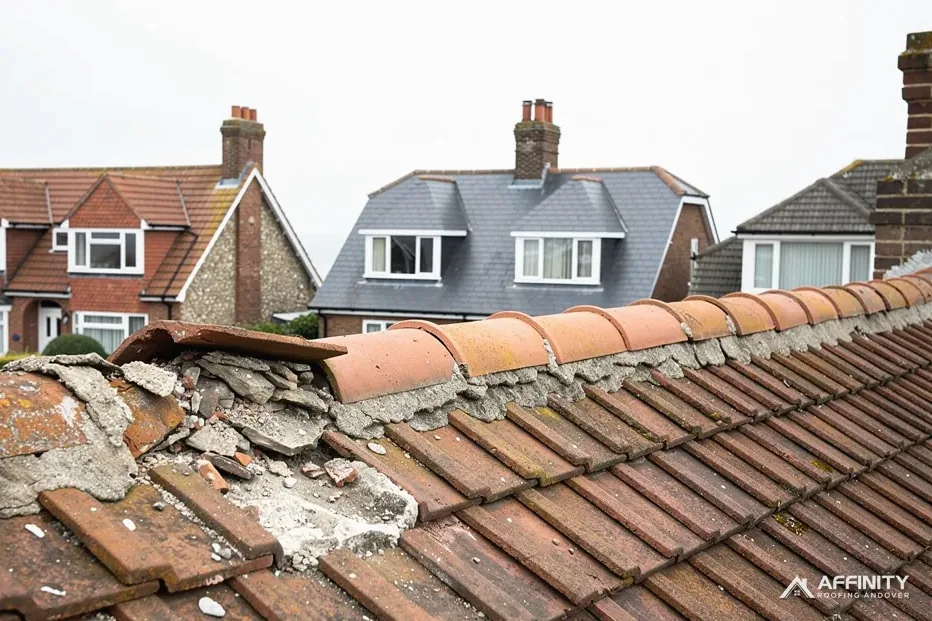
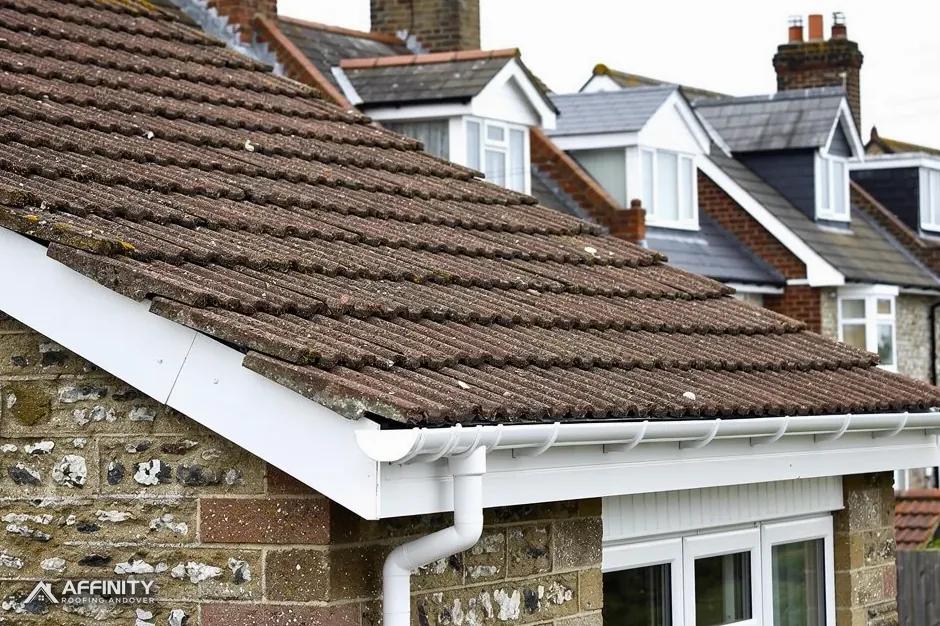
Those lines shape how we survey. A clay tile is not just red: it has a texture, a camber and a range of colour that a pressed tile copies badly, and a repair in the wrong tile is visible from the lane for years. So we photograph the tiles beside a ruler, record their size and hanging, and hunt for reclaimed clay of matching character before a new tile is considered. Clay lasts: HomeBuilding (September 2025) gives clay tile 60 to 80 years, and Marley cites the BRE's 60-year minimum for clay alone. Those are typical lives, never promises, and a sound clay roof with a few failed tiles is often better repaired than replaced. On an older brick cottage the aim is a repair that disappears.
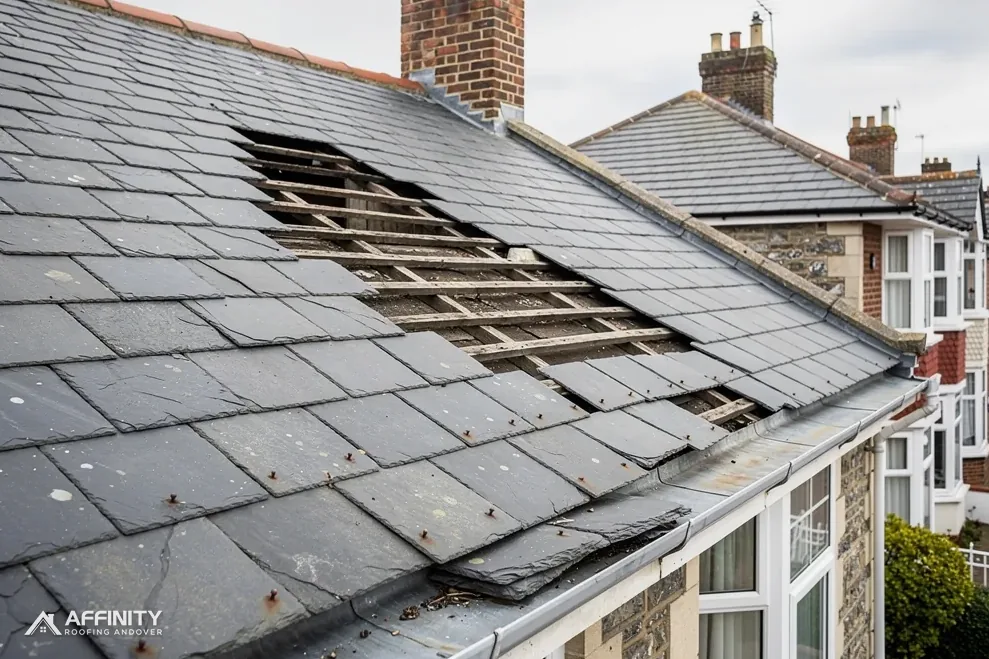
Slate is the exception that proves the rule. The appraisal limits it to 19th-century buildings, so a slated roof in the village is a clue to a house's age, and it deserves slate in return. Our slate roofing page explains the approach. Thatch is a specialist craft; the appraisal lists it among the village's vernacular materials, and an owner of a thatched house should call in a specialist thatcher for that part of the roof. The tiled and leaded parts of such a house, and its chimney, are another matter.
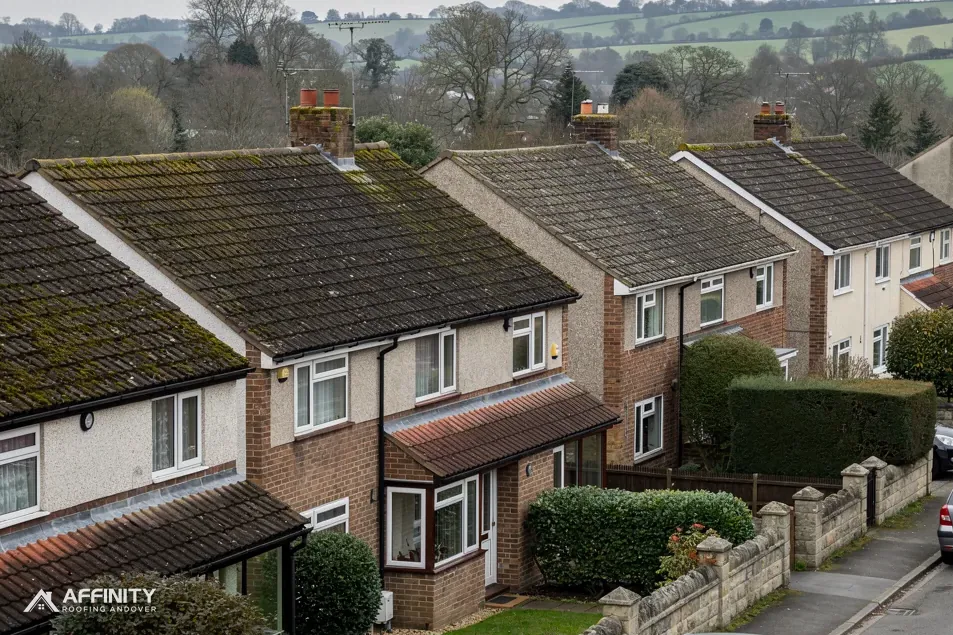
The appraisal also notes post-war development in the central and southern parts of the village. Newer houses and extensions have their own coverings and their own ages, so we treat them as separate roofs, not as an extension of the old core. A bungalow roof built in a later decade can need quite different work from the cottage next door, and the survey records which is which. Battens, underlay and fixings differ with age, and so does the way a roof breathes, so one repair method is never applied to the whole village.
None of this is a rule about what you may use. It is a description of the village, and the planning team decides what applies to a given house.
Church of St Andrew, Vyne Road and The Vyne
St Andrew's is Grade I listed (list entry 1339594), first entered on 26 April 1957. It is recorded as an Anglican parish church still used for services, which puts repairs under the faculty system the Church runs for itself, in place of the council's consent process. On Vyne Road, 18 and 20 (1092832) were listed Grade II on 17 October 1984, and 6 and 8 (1092831) and April Cottage (1339571) are Grade II as well. Historic England's list holds 9 listed buildings within 500 metres of the village point, so listed roofs sit close together, and a neighbour's roof is often a listed one. When two houses share a wall, a roof job may engage the Party Wall etc. Act, and a party wall surveyor answers that, not us or Building Control.
The Vyne lies a short distance north-east of the village, and it frames the village's history. In 1911 the Victoria County History described its park of about 100 acres as holding fine old oaks and a large lake formed by widening the Wey Brook. That is history rather than a roofing fact, and it says nothing about the roof over your own house, which the survey reads afresh. A roof that has been repaired many times often contains several generations of tile, nail and mortar, and the survey looks for each of them.
Listing does not remove a house's ordinary permitted development rights, yet a change to its character needs listed building consent from Basingstoke and Deane Borough Council. The route starts with a close photographic record of the roof and a plain description of the change proposed, and the work waits on the decision. Sherborne St John also has its own conservation area, so the council's own map is checked against your house number before we advise. A dormer in a conservation area is a planning question, and a loft room in your plans is worth mentioning at the survey; the guide to planning permission for roof work covers the other limits.
The council's list of Article 4 directions names Sherborne St John in its direction on HMO conversions, which concerns a change of use and not a roof. The wording that touches roofs belongs to four conservation areas in Basingstoke town, and Sherborne St John is not among them. For your own address the planning team gives the answer, and we do not presume it. Our request goes with photographs, and the reply stays on your file. A short note of the answer also goes to you, so the record is yours as well.
“Sherborne St John's roofs are read against its own materials: brick, clay tile and a little slate.”
Building Control, then the county licence
Basingstoke and Deane Borough Council runs its own Building Control team, on 01256 844844. On its building regulations page, re-covering a roof, pitched or flat, appears among alterations that might call for approval, and might is the word to remember. That wording is the reason a Sherborne St John re-roof starts with a call to the team before work is booked, and it does not mean that every job needs approval. You may instead appoint a registered approver. The Planning Portal's national test keeps work below 25 per cent of the building envelope and below 50 per cent of the roof clear of an application as a rule, though a covering 15 per cent or more heavier needs one regardless. If the answer is yes, the application goes to the Building Control team with the photographs and a note of both coverings, old and new, and the work starts only when the route is clear.
On a through road the scaffold stands on the highway, so the highway authority, Hampshire County Council, licenses it under section 169 of the Highways Act 1980. Hampshire County Council's scheme hands the application to the scaffolding company, acting for you. Hampshire County Council needs a gap of ten clear working days ahead of any licence, which matters on a narrow lane, and it charges £211.90 for the first 2 weeks and £72 for each further 2 weeks. The county also asks that company for a 1:500 plan, signing and guarding proposals and £10 million of public liability insurance to cover the scaffold, and no extension is available once a licence is issued.
Village lanes make that last point matter, because a licence that lapses mid-job sends everyone back to the start of the process. A narrow lane with no space off the road has no alternative to a highway scaffold, and a licence that runs out before the job is finished means starting again. We therefore agree the dates and a sensible margin with you, and with the scaffolding firm, before anything is submitted. Where the house has a drive, a tower or low scaffold standing on it is outside the licence altogether.
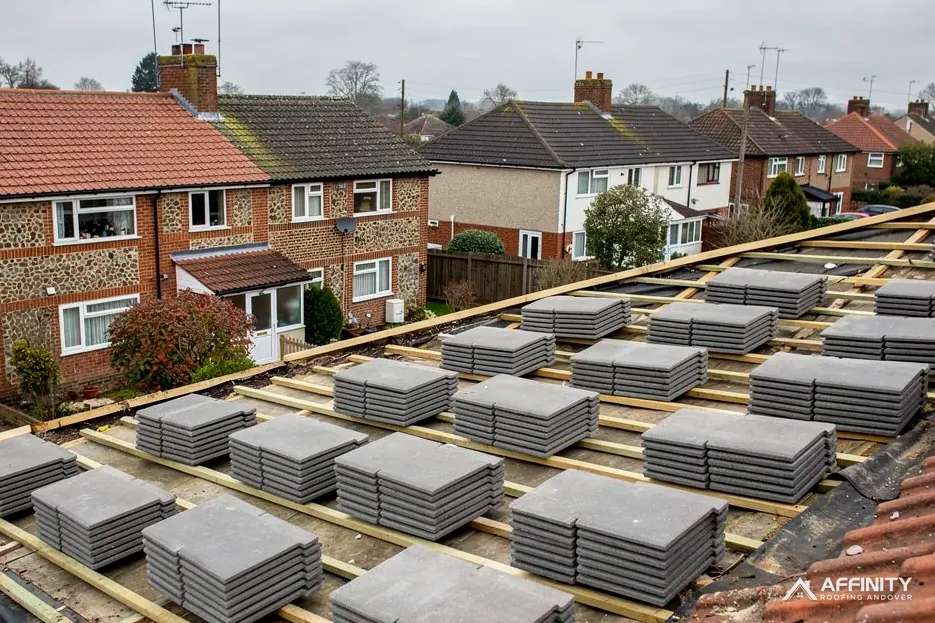
Day-to-day work here means roof repairs after slipped clay tiles, flashing faults at a chimney or a wall, and gutters that have pulled away. Every job opens with a survey and photographs and a plain explanation, and one written price comes later. Where the clay is sound and only a flashing or a handful of tiles has failed, that is the repair proposed, and a full re-roof arises only when the whole roof has run its course.
Getting a Sherborne St John roof sorted
Sherborne St John roofs: tiles, church and county road
Does the council's appraisal mean I must use clay tile on a Sherborne St John house?
The appraisal describes the village's building materials; it does not set a rule for your roof. What applies depends on whether the house is listed or in the conservation area, and the borough's planning team can say. We match clay tile in size, camber and colour wherever the roof is clay, and ask the council before we change a material.
Who should repair a thatched roof in Sherborne St John?
A specialist thatcher. The council's appraisal lists thatch among the village's vernacular materials, and thatch is a craft of its own. The tiled, slated and leaded parts of a thatched house, its chimney and its gutters are a different matter, and we will survey those, photograph them and say what they need, with the photographs set out in order.
Which Article 4 directions touch roofs near Sherborne St John?
The roof wording in Basingstoke and Deane's Article 4 material belongs to four conservation areas in Basingstoke town, and Sherborne St John is not one of them. The HMO direction names the village, but it is about conversions. Your house number goes to the planning team, and its reply is passed on in writing.
How does a scaffold licence work on a Sherborne St John lane?
Hampshire County Council is the licensing body, and the scaffolding company applies for you, leaving the full notice period. Hampshire County Council charges £211.90 for the first 2 weeks and £72 for each further 2 weeks, with no extensions, so we agree dates and a margin first. Your own drive needs no licence.
From Chineham to Old Basing and Bramley, close to the village of Sherborne St John
Book a survey of your Sherborne St John roof
Give the house number and send a photograph. We survey, check with the council and quote one written price.
10-year workmanship guarantee, in writing.