
Roofers in Silchester
Roofs around The Pound and the Roman walls of Calleva
Nine listed buildings stand within 500 metres of Silchester's centre. We survey the roof, show you the photographs and match the repair to how it was built.
Silchester roofs, from The Pound to the common

Houses around The Pound
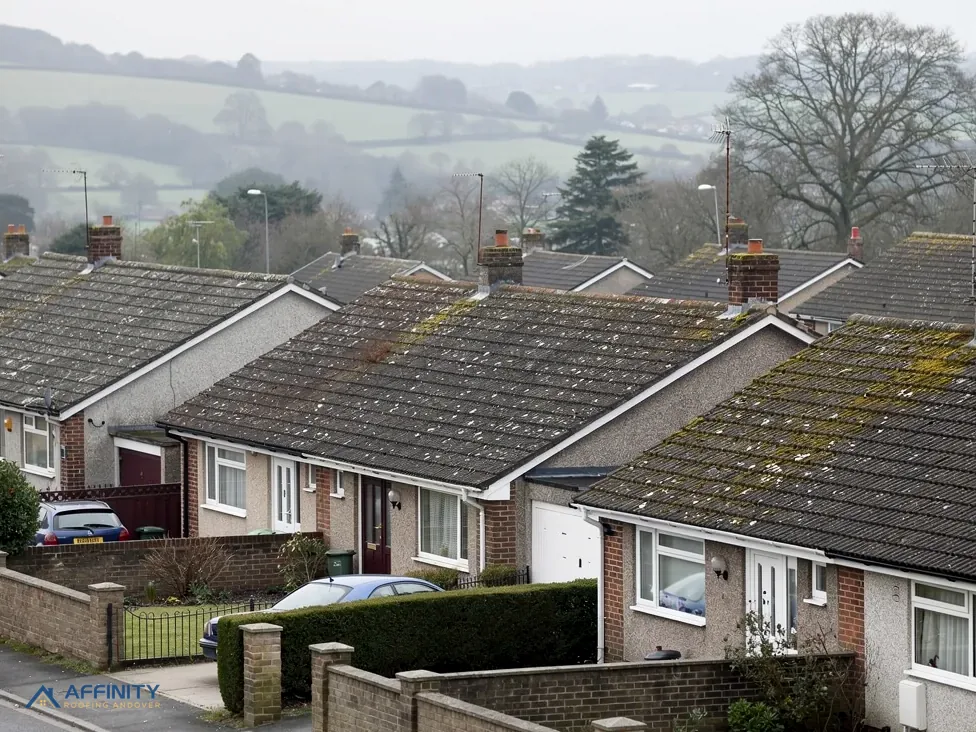
Homes in the conservation area around the centre and The Pound, where roof changes go to the council.

Listed farmhouses and cottages
Culhams Farmhouse, Dial Cottage and Holly House each hold a Grade II listing, which brings consent into any roof change.

Tudor Gothic and older brick
Silchester House dates from about 1840, and the conservation appraisal also describes timber frames, thatch and 18th-century brickwork.
Silchester, Pamber Heath and Mortimer
Pamber Heath and Tadley sit west of the village, with Mortimer north-east and Bramley south-east. Roofs in all four are within reach of our surveys.
- Distance
- 22 road miles north-east of Andover
- Planning
- Basingstoke and Deane Borough Council
- Council
- Basingstoke and Deane Borough Council and Hampshire County Council
The Silchester roof report
Local editionSilchester, HampshireCouncils, listings and the county line
Silchester's county-line roofs: which council decides, and what the listings change
Silchester is a Hampshire village of 944 people beside the Berkshire border. Our report explains which councils decide on roof work here, what its listed buildings and conservation area change, and what a scaffold on the road involves.
Basingstoke and Deane, with West Berkshire next door
Silchester is a Hampshire parish of 944 usual residents at the 2021 Census, and it sits on the Hampshire and Berkshire border. That turns the question of which council to ask into a real one. The village lies in Basingstoke and Deane Borough, so Basingstoke and Deane Borough Council settles planning questions for a Silchester roof and runs its own Building Control team. Hampshire County Council is the county council and the highway authority.
Cross to Mortimer, under three miles to the north-east as the crow flies, and the answer changes. Mortimer belongs to West Berkshire Council, and its building control is supplied by Building Control Solutions (0300 790 0580), a service shared with Wokingham Borough Council. A roofer who crosses the line needs two separate sets of paperwork. We note which council holds your address before a scaffold is booked.
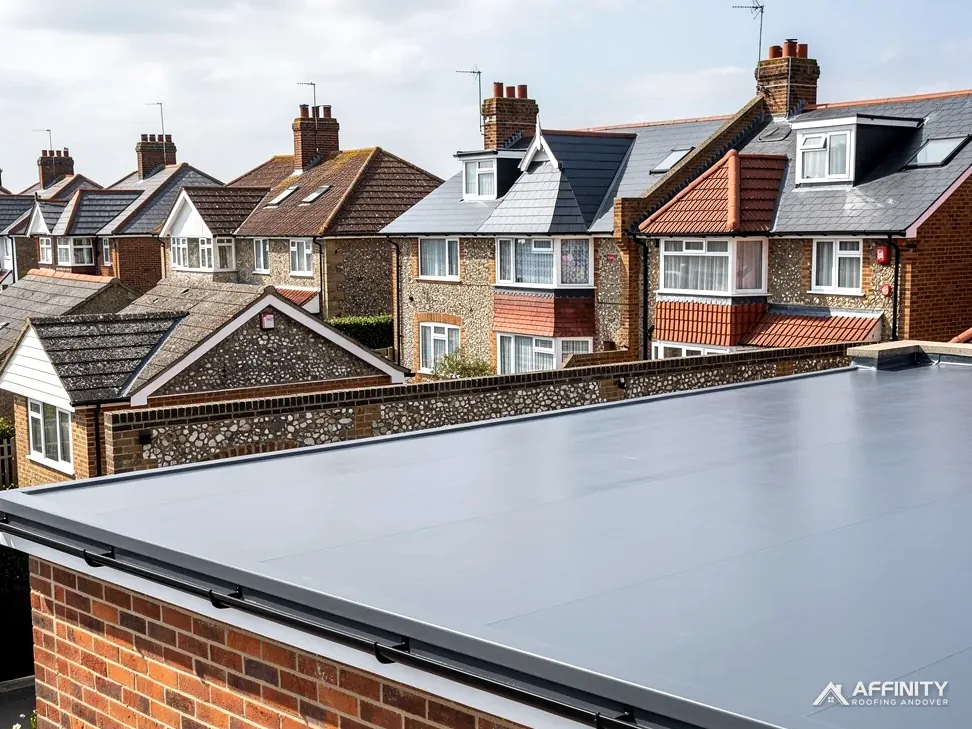
The Planning Portal's yardstick for a re-roof is 25 per cent of the building envelope and 50 per cent of the roof; below both, a building control application is not normally required. Basingstoke and Deane adds a note of its own. On its building control page the borough warns that new roof coverings, on pitched and flat roofs alike, might also need approval. Treat that as a signal to ask, so for a Silchester re-roof the question goes to the Building Control team (01256 844844) before the job is fixed.
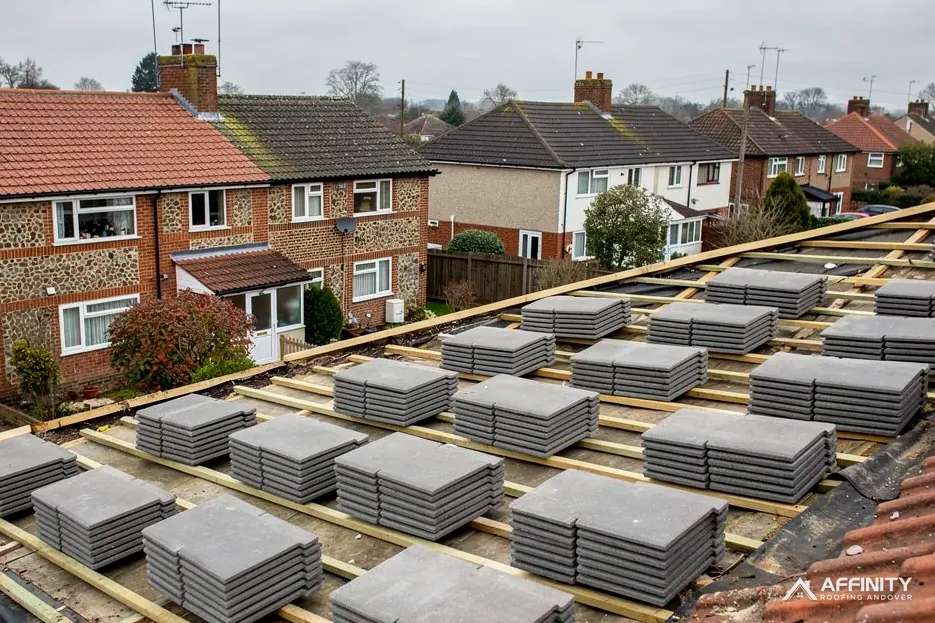
Weight is a separate matter. A replacement covering that adds 15 per cent or more in weight brings in Building Regulations approval, and the Planning Portal says to ask someone qualified, a structural engineer or a surveyor, to look at the rafters before the work. Heavy concrete tile over a roof built for light slate would raise it. The route there is the building control one, never a planning application.
Plenty of jobs never reach any threshold. A loose tile, a cracked hip (the sloping ridge between two roof planes) or a flashing that has come away (the metal that seals a junction) counts as a repair. For each we go slope by slope and photograph the battens (the timber strips the tiles hang on) and the underlay (the membrane that backs up the covering) wherever a tile is lifted. You see those pictures before you decide anything.
A registered building control approver can do the inspecting if you prefer not to use the council. Whichever you pick, the route is agreed and written down before work starts, with the survey photographs beside it, so nobody is guessing later which rules were followed.
The Pound, Culhams Farmhouse and the Calleva walls
Basingstoke and Deane Borough Council first designated the Silchester conservation area in 1992, covering the village centre and The Pound, and the borough draws its boundary. Inside it, any change to how the roof looks is discussed with the council first, and booked with us afterwards. A new dormer is where the rules tighten, and our guide to planning permission for roof work maps the limits. Whether an Article 4 direction reaches your road is for the borough's planners to answer, and we put that question to them.
Historic England's list holds 9 listed buildings within 500 metres of the village centre. Culhams Farmhouse is Grade II, first listed on 15 December 1972 (list entry 1296837), and Dial Cottage and Holly House are Grade II too. Silchester House is a listed Tudor Gothic house dating from about 1840. A change to a listed house's character brings in listed building consent over and above the usual planning questions, and matching the original materials is the sensible course.
The conservation appraisal describes a village whose materials run from early timber frames and thatch to 18th-century brickwork, and says the survival of thatch reinforces its rural character. For a roofer that spread matters, because a timber-framed cottage and a brick farmhouse carry their roofs in different ways and fail in different ways. Thatch belongs to a specialist thatcher, and we point owners there. The surveys we carry out take in the tiled and slated coverings, the chimney stacks and the roofline.
Beside the village, the walls of the Romano-British city of Calleva enclose a circuit of nearly 2 miles. The VCH in 1911 recorded the south-east stretch as the most intact, in places nearly 12 ft high. The walls are history rather than roofing, though they show how long this place has been written about, and a dated file of photographs belongs in that tradition. Nothing in the roof survey touches the ruins themselves; the questions that matter on a house are the conservation area, the listing and the borough's planning rules.
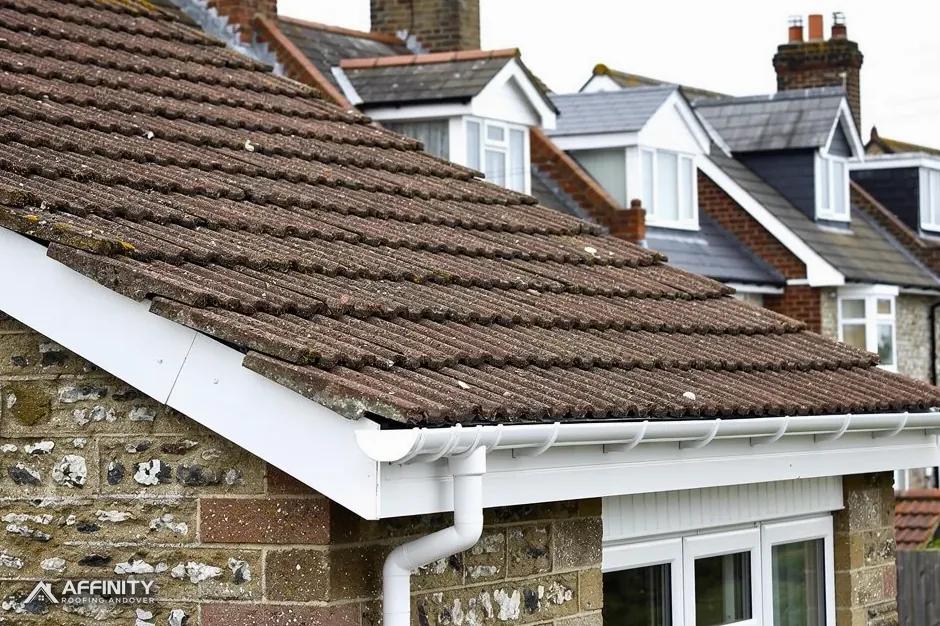
A Silchester survey includes close-ups of the roof covering, its ridge, the verge (the tiled edge along a gable wall) and the chimney. We record how the tiles or slates are held and which metal the flashings use. The set helps us find matching material for an older roof, and it hands the planning team a clear picture if they ask a question. Reclaimed tile and slate often make the closest match for a roof like this, and the photographs let us order them against the sizes and colours already on the building.
“A short drive from Silchester, another council and another building control team take over.”
Scaffold on Silchester roads, and what we price
Where a Silchester house fronts a public road, the scaffold can end up on the highway, and that calls for a licence under section 169 of the Highways Act 1980. For Silchester, Hampshire County Council grants it as highway authority, not the borough. Hampshire County Council's licence page lists the scaffolding firm as the applicant on a customer's behalf, so you are not left filling in a council form.
Hampshire County Council wants 10 clear working days in hand ahead of the start, grants no extensions, and charges £211.90 on application for the first 2 weeks and £72 for each further 2-week period. Scaffold that stays inside your boundary is outside the licence. Hampshire County Council's rules mean the scaffolding firm sends in the application, so we pass the dates to you and promise a start day only once the licence is secured. A job with a long frontage or a kerbside stack of materials is the one most likely to need it, and the survey flags that early. We also ask where skips and deliveries can stand, because those can need a decision from the highway authority too.
Timing needs most care where a consent decision is outstanding. If a listed building application is still with the council, we delay the scaffold booking until the decision lands. With no extensions on offer, a scaffold left standing while a decision is awaited is paid for all the same.
Day to day, the jobs here are modest ones, and a survey sorts each into the right category. Roof repairs respond to a loose tile or a failed ridge, and the survey checks whether the remainder of the slope is sound. Chimney repairs look after a stack with failing pointing or flashing. Guttering, soffits and fascias take in the edge of the roof, meaning the gutters and the boards that close in the underside of the eaves.
Silchester's older houses add one question the newer streets do not: what is under the covering. An old roof may hold hand-cut timbers, wide batten spacing or no underlay at all, and the repair has to suit what is found rather than what a catalogue assumes. That is why the photographs are taken before a price is written, and why the price covers the roof as it really is.
The same approach carries to the neighbouring villages: Pamber Heath and Tadley on the west side, with Mortimer and Bramley across to the north-east and south-east. For each address we establish which council applies, since the Hampshire and Berkshire boundary lies so near.
Roof jobs we handle in Silchester



Silchester roofs: consent, borders and scaffold
Can a roof in the Silchester conservation area keep its existing tiles?
For an older roof that is usually the aim. Check with the borough's planning team before changing the colour, size or material of a covering that shows from the road. We photograph the tiles already there, count which can be reused and source close matches for the rest, so the council can see what stays and what changes.
Does Silchester's position by the Berkshire border change which building control team checks my roof?
No. Silchester is in Basingstoke and Deane, so that borough's own Building Control team deals with it and the West Berkshire partnership does not. The border matters for neighbours: Mortimer, a short drive north-east, answers to West Berkshire Council. We confirm which council holds your address in the survey notes, and mention it again when we send the price.
Do I have to apply for the scaffold licence myself in Silchester?
No. Hampshire County Council expects the contractor putting up the scaffold to apply, giving 10 clear working days' notice ahead of the start date. Hampshire County Council's fee is £211.90 for the first 2 weeks and £72 for every further 2-week period. A scaffold that stays on your plot needs no licence, and any cost is folded into your single price, with nothing billed separately.
Does work next to a listed neighbour in Silchester need consent?
Consent attaches to the listed building itself, not to the house beside it. A scaffold can still touch a shared wall or a neighbour's land, so we agree access first and photograph the junction. If your own house is listed, listed building consent comes before any work begins, and we describe the existing covering for the application.
Send us your Silchester address
Message us the address plus a photo. We will book the survey and follow it with one written price.
10-year workmanship guarantee, in writing.