
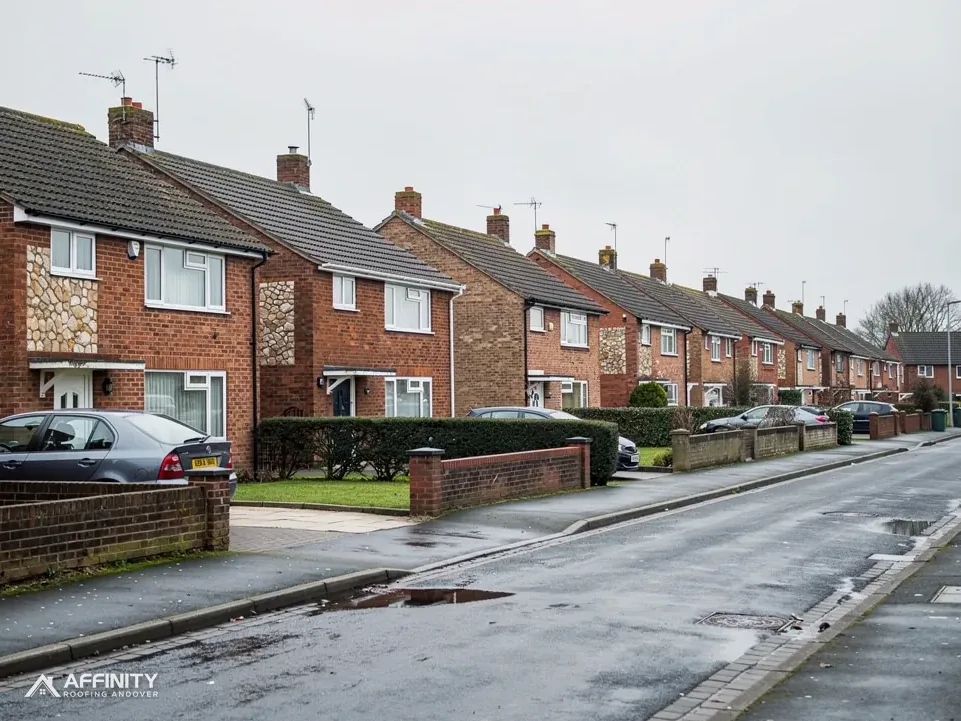
Roofers in Whiteparish
A Wiltshire village at the edge of the New Forest
Whiteparish has 14 listed buildings near its centre, a conservation area and a small part of the New Forest National Park nearby. Each roof is examined before a price.
Whiteparish roofs, from the church to the farms
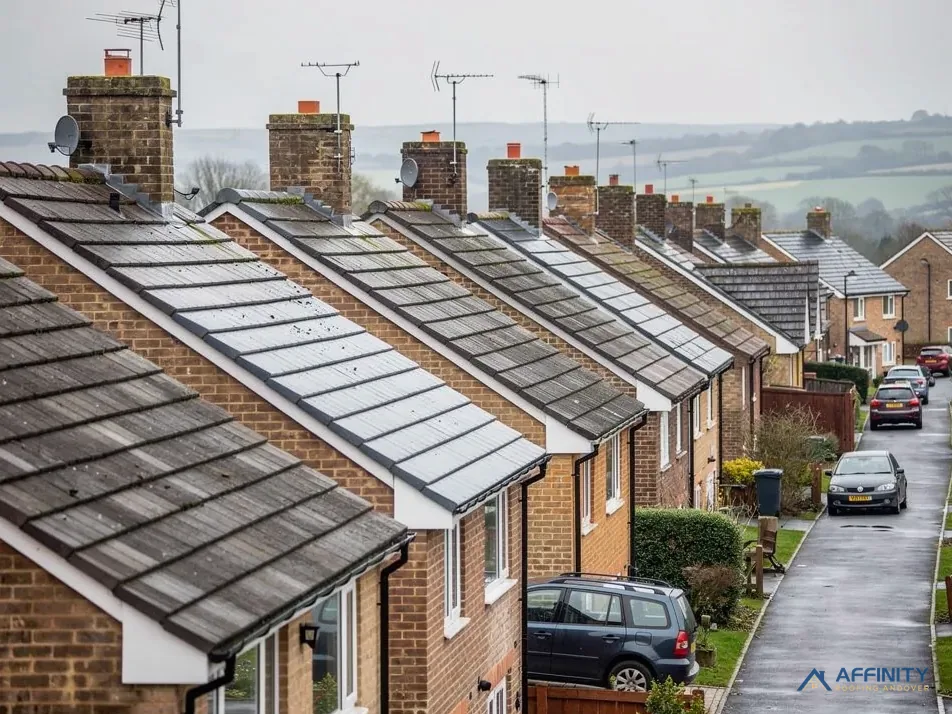
All Saints and its neighbours
The Church of All Saints, listed Grade II* on 23 March 1960, with older houses close by.
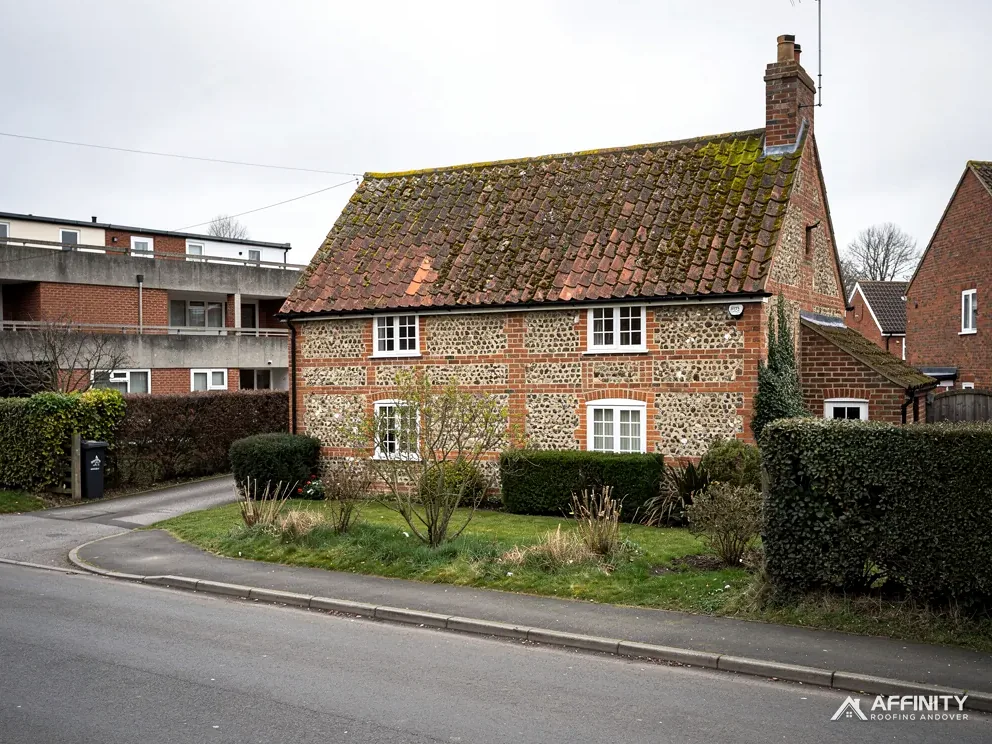
Youngs Farm and farm buildings
Youngs Farm, listed Grade II, and the barns and outbuildings that go with old farmhouses.
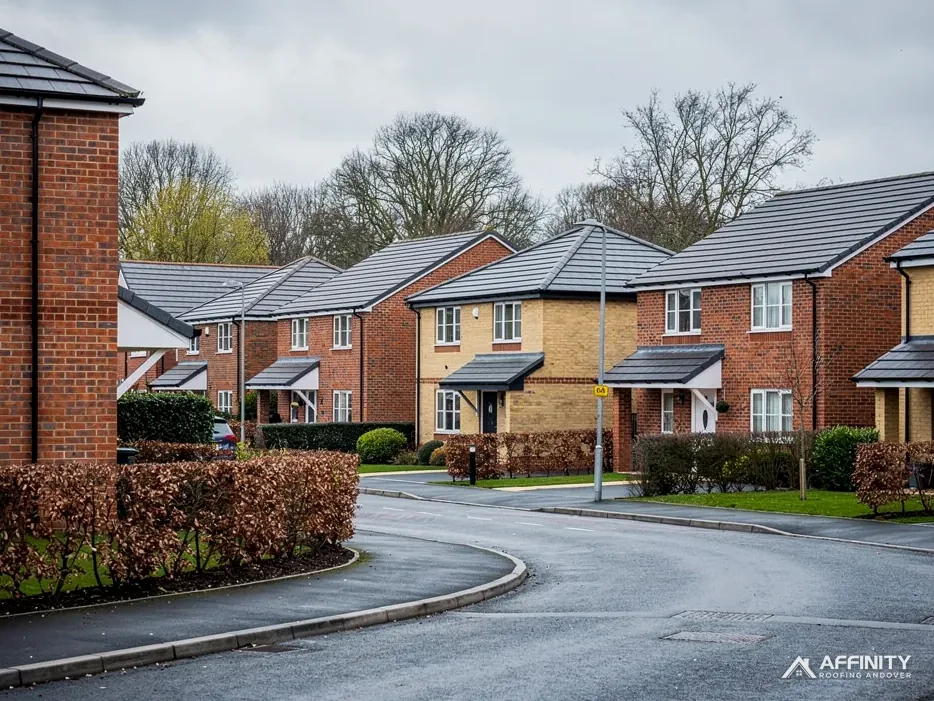
Houses at the Forest edge
Homes near the edge of the New Forest National Park, where the planning body is decided by the address.
Whiteparish between Salisbury and Romsey
Landford lies to the south and Redlynch to the south-west. Sherfield English and Lockerley are east and north-east, West Wellow south-east, and Alderbury north-west.
- Distance
- 21.9 road miles south-west of Andover
- Planning
- Wiltshire Council
The Whiteparish roof report
Local editionWhiteparish, WiltshireA Wiltshire village beside the New Forest
Wiltshire's rules, Hampshire a few miles off: who decides a Whiteparish roof
Whiteparish is 21.9 road miles from Andover, in Wiltshire, close to the New Forest National Park. Here is who signs off a roof, what a Grade II* church and 14 listed neighbours change, and how Wiltshire and Hampshire price a scaffold.
A Wiltshire village with the Forest at its edge
A few miles south-east of Whiteparish lies West Wellow, in Hampshire. The two villages lie in different counties, answer to different councils and follow different scaffold rules, which is why a roofer working across the border keeps the paperwork for each strictly apart. Whiteparish answers to Wiltshire Council. It covers planning, the road licence and building control in a single organisation, and the 2021 Census counted 1,549 usual residents in the parish.
A thin slice of the New Forest National Park comes close to the village. The mapping puts 4 per cent of the area measured around the centre inside the Park, and the centre itself outside. The planning file for a Whiteparish house is therefore held by Wiltshire Council, unless the house stands inside the Park, in which case the Park Authority takes it. The address settles it, and the boundary map is read beside the property.
The Park Authority handles planning and nothing more. Building control remains with the council, so a re-roof that needs a technical check goes to Wiltshire Building Control on 0300 456 0113, answered from 9am to 4:30pm on weekdays and based at Monkton Park in Chippenham. This holds for houses inside the Park as well as outside it.
Insulation belongs to that conversation. Approved Document L, in the 2021 edition with 2023 amendments, counts replacing a layer in a roof as renovation. Its Table 4.3 sets 0.35 as the threshold for an existing roof and 0.16 as the improved figure in W/(m2.K), and para 4.13 allows a smaller upgrade where the full figure cannot practically be reached or would not repay itself within 15 years. A new edition takes effect on 24 March 2027.
Some owners choose the private alternative. A registered building control approver may be appointed in the council's place, a private route regulated since 6 April 2024, and our notes then travel to the approver. Whichever body replies, the answer reaches you before the scaffold is booked, together with the pictures that explain the question.
On the planning side, Wiltshire Council's officers rule on changes of covering, shape or opening. Only the council can say whether an Article 4 direction touches your address. We put the question to it, with the address, before pricing. Its answer goes in your folder beside the pictures.
Inside the Park, altering a roof's shape meets stricter rules than outside. Repairs and straightforward re-covering carry on as usual.
All Saints, Youngs Farm and the rest of the list
The National Heritage List records 14 listed buildings within about 500 metres of the centre of Whiteparish. The Church of All Saints is listed Grade II* (list entry 1300179, first listed on 23 March 1960), and Youngs Farm is Grade II (1024016, the same date). Welsteads Cottage is Grade II too (1184523). Fewer than sixteen hundred people live in the parish, yet fourteen entries cluster near its centre, so there is a good deal of protected roof to look after.
A church roof follows the church's own route, set by denomination and use. All Saints is in regular use for Church of England worship, so the faculty system governs its roof, not listed building consent. A chapel that had closed, or one of a denomination without its own scheme, would need listed building consent instead.
Youngs Farm and Welsteads Cottage are houses, so listed building consent is the route for any change to what makes them special: a different covering, a changed pitch, a new opening. Our guide to listed building roof repairs sets out the steps. Like-for-like repair is the opening position, and Wiltshire Council's planners decide the rest.
Published lives help when you are weighing a patch against a new covering, so long as they are read as typical and never as promises. HomeBuilding (September 2025) gives clay tile as 60 to 80 years and Welsh slate as 100 years or more. For plain concrete tile it gives 40 to 50 years, where Marley says around 60 years, with no guarantee implied. An old roof past its typical life is not condemned by that alone, and the survey looks at the state of the fixings and battens.
Farm roofs have their own habits. A farmhouse may carry a main roof, a lean-to dairy, an outshut and a run of outbuildings, each covered differently and repaired by a different method. We survey them as separate roofs on one property, by tower or scaffold, noting the covering, the fixings and the timbers of each.
The Whiteparish conservation area is mapped within about 0.75 km of the centre. Within it, how a roof looks from the road is judged more strictly. The council's map shows whether your house lies inside, and an unlisted owner should telephone before any change of colour or material.
Old corrugated sheeting on barns and sheds may be asbestos cement. It is identified before anything is cut, lifted or broken, because breaking it up alters the rules for the work and for the waste, which has to be double-wrapped and sent with a consignment note.
“Whiteparish sits in Wiltshire, a few miles from Hampshire, and its roof rules follow the county.”
Two counties, two scaffold fees
With Hampshire close by, a Whiteparish homeowner may hear two different scaffold prices from the two sides of the border. They are built differently. Wiltshire Council prices by how soon you ask: £143.80 when the application is made with notice beyond 3 working days, £164.70 for less, with each licence lasting 28 days. Hampshire County Council charges £211.90 on application for the first 2 weeks and £72 for every further 2-week period.
Nobody should compare those figures as though the units matched. A Whiteparish job buys a 28-day licence through Wiltshire Council's MiPermit portal, applied for by whoever supplies the scaffolding. Scaffolding and hoarding need separate licences, and a bay with road markings has to be suspended separately. A scaffold standing clear of the public highway, as in a farmyard, needs no licence.
Twenty-eight days is short for a big farmhouse and generous for a repair of a few days, so the plan fits the job to the licence. Strip and make good first, then the lead and the ridge, then the gutters. If a second licence looks likely, the plan says so at the start, since a second application brings a second fee and a second wait. The licence is bought only once the date is fixed, so none of the 28 days is spent waiting for a delivery.
The work we do in the village follows whatever the survey finds. Roof repairs tackle displaced tiles, cracked slates and lifted flashings. Chimney repairs cover the pointing, flaunching and lead at a stack. Pitched roofing is the answer when a slope has served out its working life.
Trees close to a roof drop leaves into valleys and gutters, where they hold water against the covering. Those places are inspected first, because a cleared valley can cure what looks like a failed roof. Where it cannot, the photographs say so plainly. Moss on a shaded slope does the same, holding damp against the tiles.
A leak that is running gets a cover at once, and the repair follows. Dated pictures from the visit are useful when you contact your insurer, who decides the claim. Where stock or machinery stands beneath a farm roof, the cover goes on quickly and the repair is planned around the farm's calendar.
When you compare quotes, look at VAT as well as scaffold and waste. Roof repairs carry the standard rate of 20 per cent. The energy-saving relief covers only qualifying materials, which are zero-rated until 31 March 2027 and 5 per cent after that, so a low figure that leaves VAT out is not directly comparable with one that includes it.
Which service does your Whiteparish roof need?
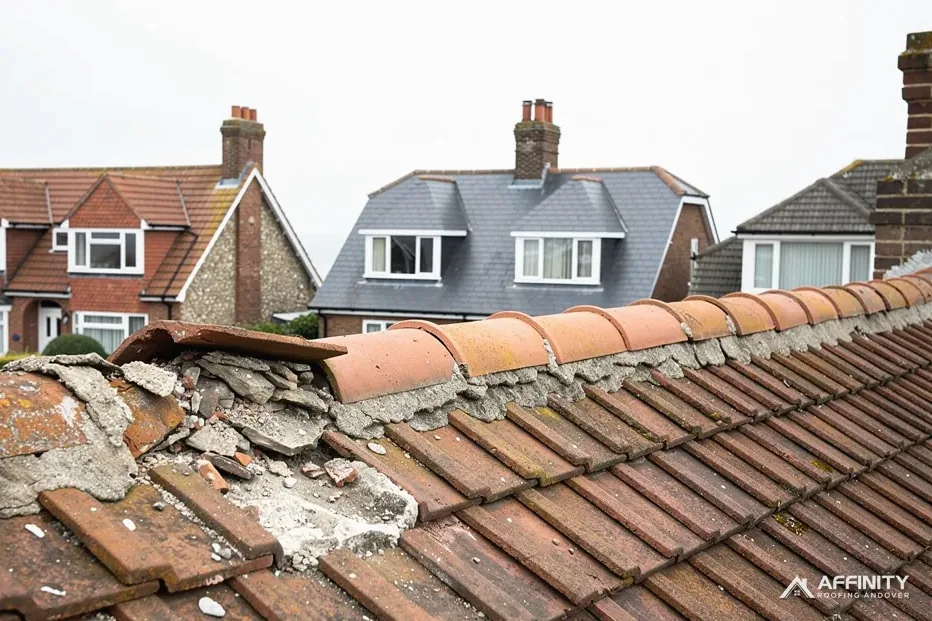
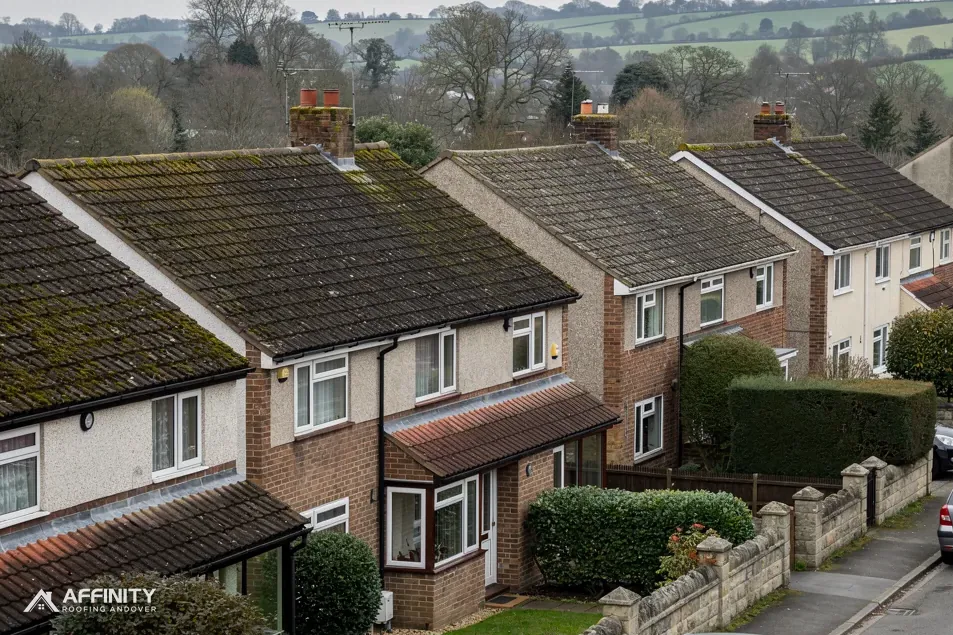
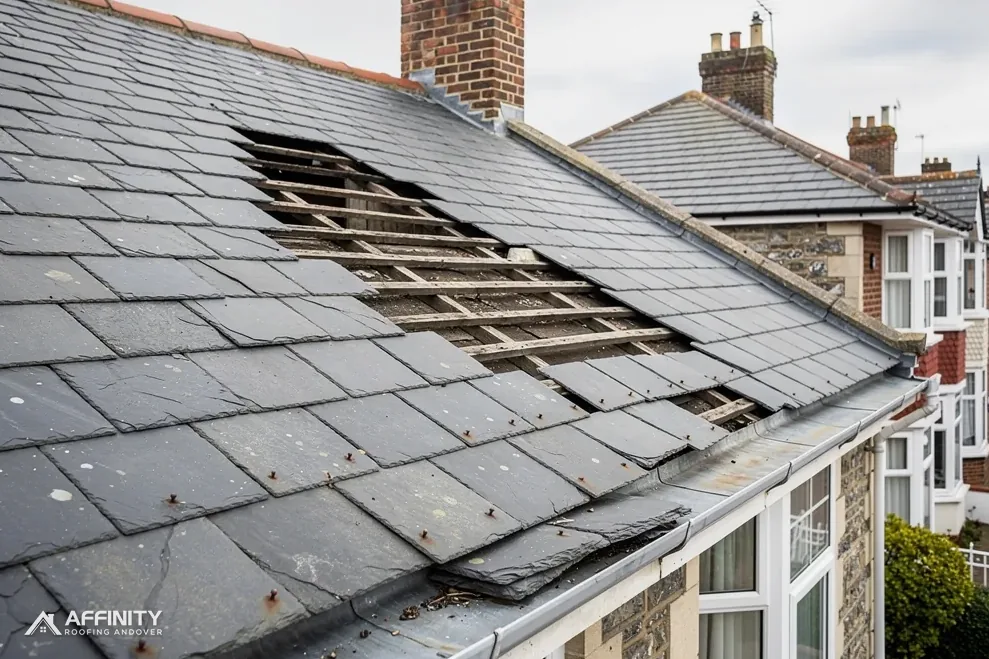

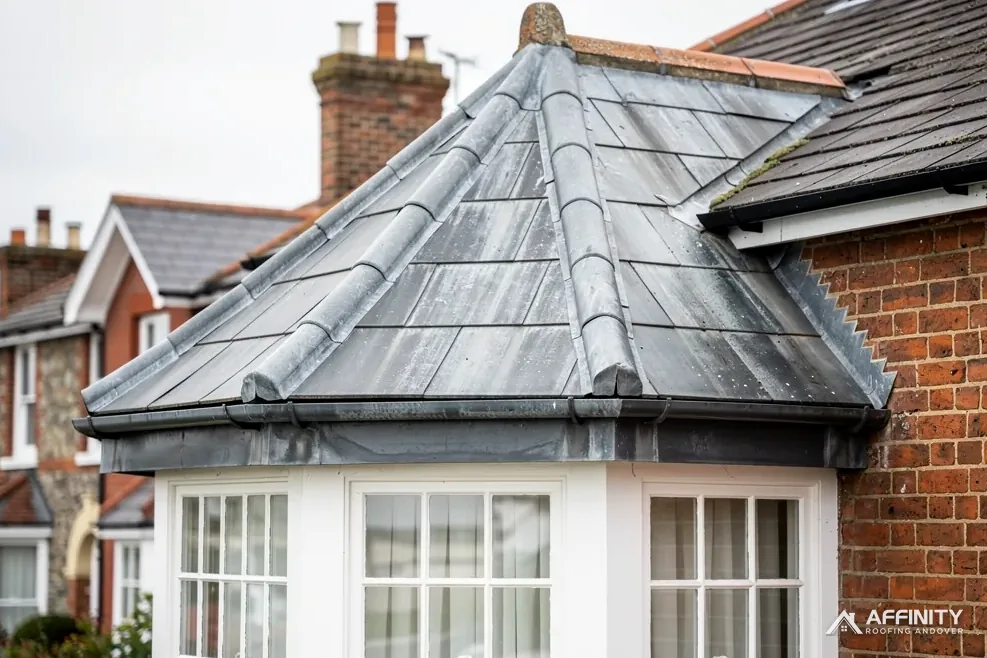
Whiteparish roofs: the Forest edge, the church and two fees
Is a Whiteparish house inside the New Forest National Park for planning?
The village centre is outside it, and Wiltshire Council holds the planning file there. A small share of the area around the centre, 4 per cent, lies inside the Park, where the Park Authority takes over. Your address decides, so check the boundary map. Technical building checks remain with the council in every case, and we keep a copy of its reply.
What consent does the roof of Youngs Farm in Whiteparish need?
Youngs Farm is listed Grade II, so a different covering or pitch would need listed building consent. Matching materials open the discussion. Ask Wiltshire Council's planning team in good time and file the answer with the roof pictures, so any later decision can be traced back to the evidence we gathered on the roof itself.
How does a Wiltshire scaffold licence differ from Hampshire's?
Wiltshire Council's price depends on notice: £143.80 for more than 3 working days, £164.70 for fewer, with each licence lasting 28 days. Hampshire County Council charges £211.90 for the first 2 weeks and £72 for each further 2-week period. The units differ, so the totals cannot be compared like for like. Private ground needs neither.
Could a barn roof in Whiteparish contain asbestos?
It is possible. Old corrugated sheeting might be asbestos cement, so the first step is to identify it. Lifting it with care is non-licensed work, whereas smashing it makes the job notifiable, and the waste goes away double-wrapped under a consignment note, never in an open skip. The survey settles the question before any sheet is touched.
Whiteparish's neighbours on both sides of the border
Arrange a Whiteparish roof survey
Share your address and a roof photo. Park and Wiltshire questions come first, with a single written total after them.
10-year workmanship guarantee, in writing.