
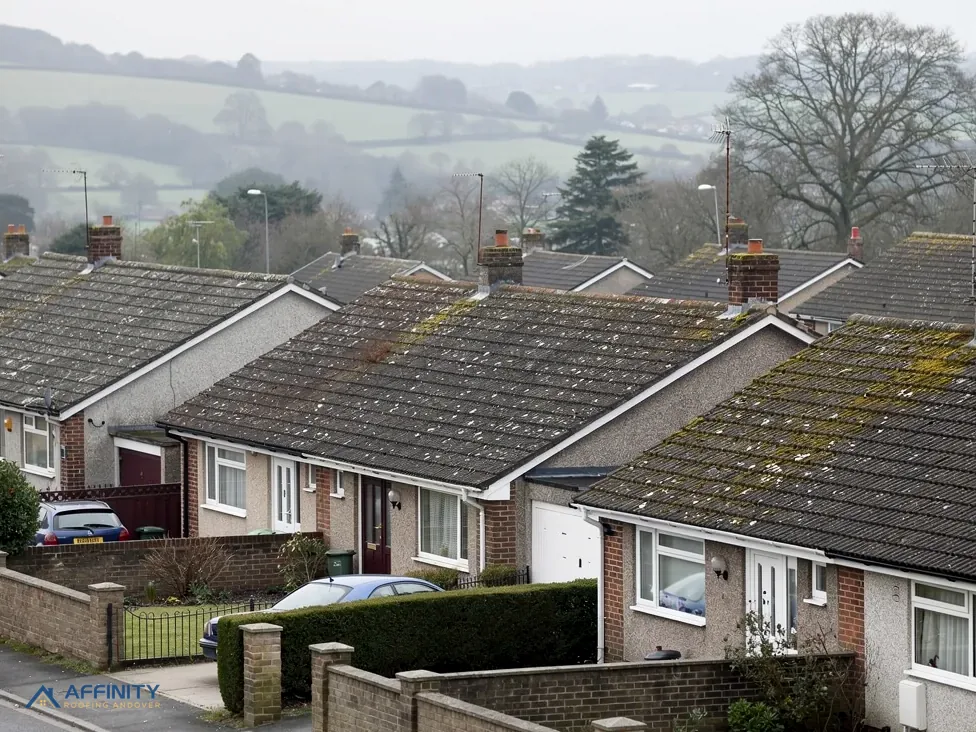
Roofers in Amesbury
Two Grade I buildings and a scheduled bridge, in a Wiltshire town
Amesbury has 65 listed buildings within about 900 metres of its centre, two of them Grade I. We survey each roof, photograph the faults and write one price.
Amesbury roofs, from the Abbey to the town streets
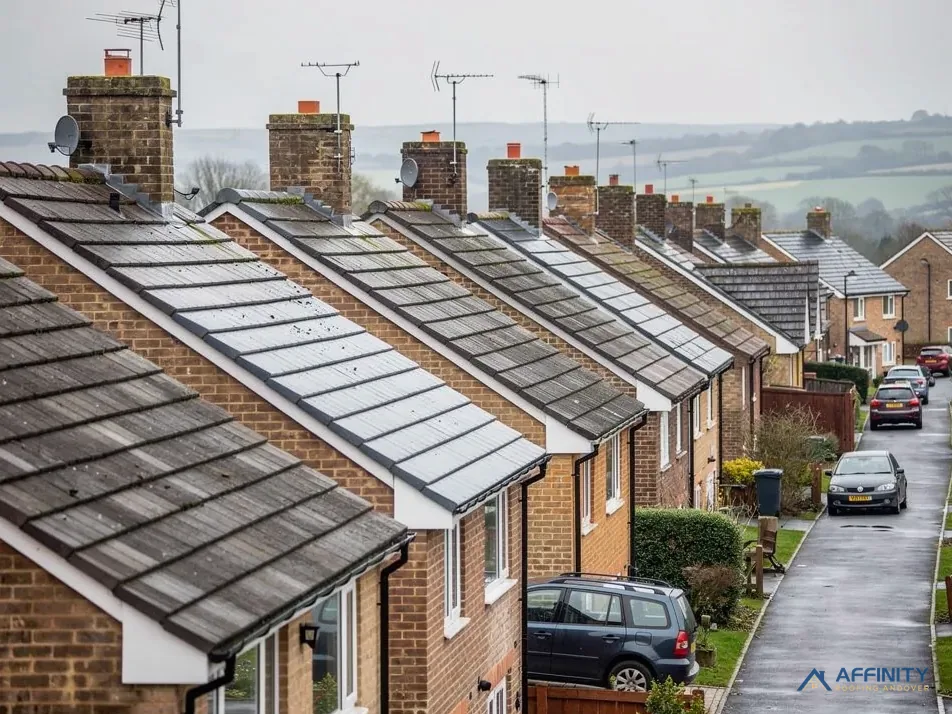
Amesbury Abbey
Grade I listed since 10 January 1953, with Diana's House and the Chinese Temple listed Grade II*.
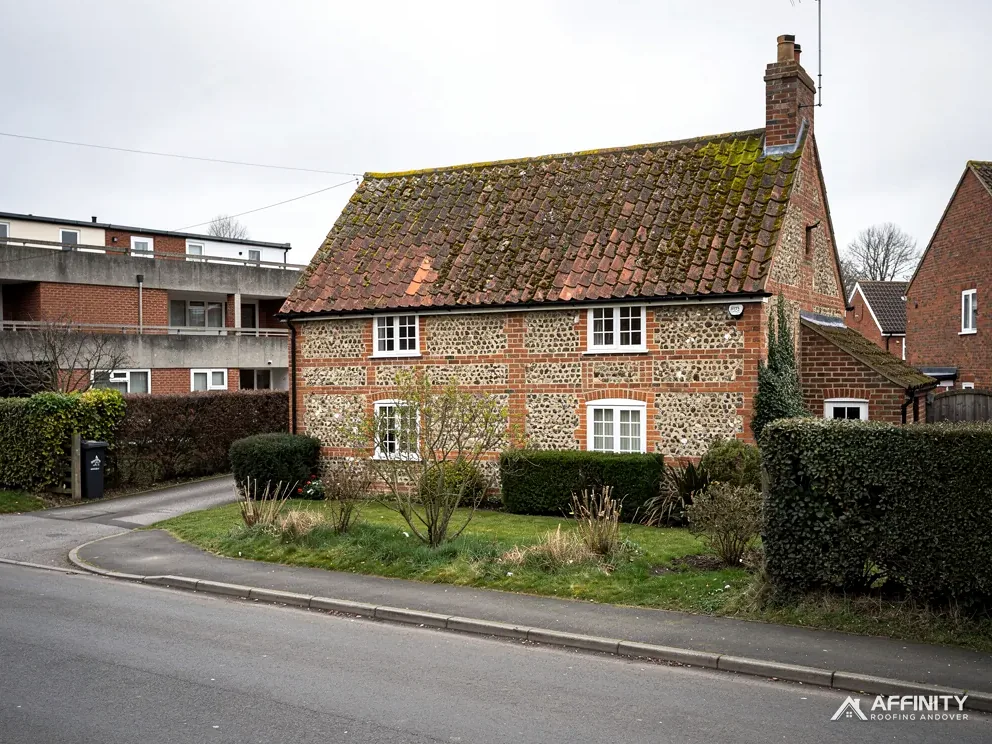
St Mary and St Melor
A Grade I church used for Church of England worship, which puts its roof works on the faculty route.
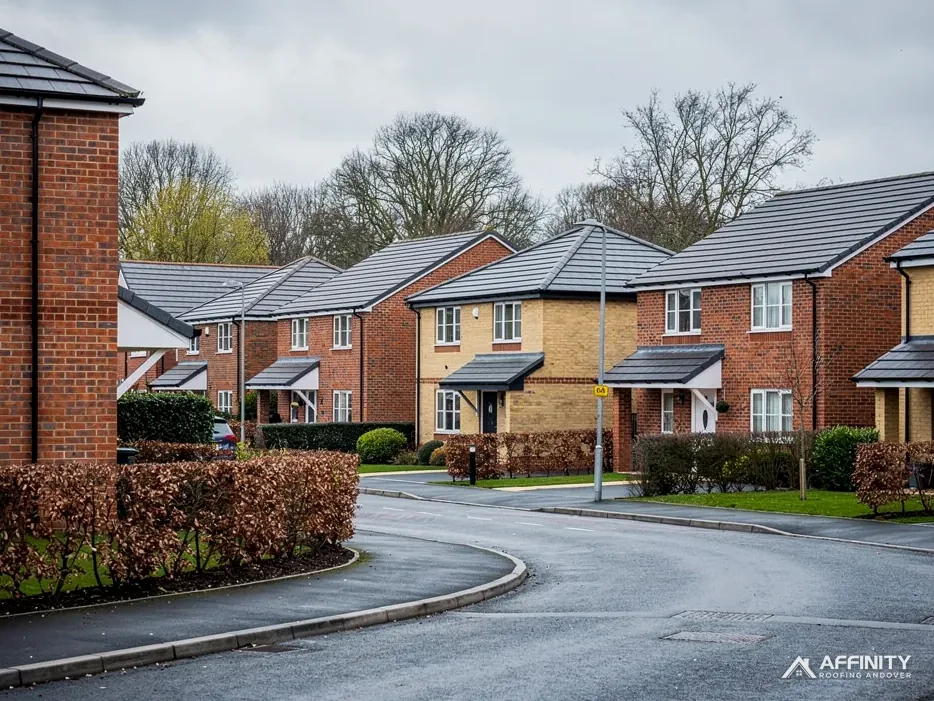
Town streets and flats
Houses and flats among 65 listed buildings, where one roof change can affect a listed neighbour.
Amesbury on the Wiltshire plain
Durrington and Netheravon lie to the north, Bulford to the north-east, Larkhill to the north-west, Shrewton to the west and Porton to the south-east.
- Distance
- 15.3 road miles west of Andover
- Planning
- Wiltshire Council
The Amesbury roof report
Local editionAmesbury, WiltshireA listed town and its flat roofs
Amesbury roofs: a Wiltshire town of 12,997, two Grade I landmarks and the flat roofs behind them
Amesbury is 15.3 road miles west of Andover, in Wiltshire. Here is how permissions work for houses and flats, what the Abbey, the church and the scheduled bridge mean for a nearby repair, and how flat roofs are judged.
Houses and flats are not treated alike
Amesbury is a Wiltshire town: its civil parish had 12,997 usual residents at the 2021 Census, and it lies 15.3 road miles west of Andover. Wiltshire Council is its planning authority, its own Building Control service handles Building Regulations, and the same council licenses scaffolds on the public highway. A homeowner has one council to deal with, and its Building Control line is 0300 456 0113.
In a town the buildings are not all houses, and the difference matters. Under the General Permitted Development Order, a dwellinghouse does not include a building containing flats, or a flat within one. Householder permitted development rights therefore do not apply to a flat, and a freeholder or managing agent needs to ask Wiltshire Council's planning team before the covering or the shape of the roof changes. A house is different, and our guide to planning permission for roof work explains where it stands.
Building Regulations follow their own logic. A building control application is not normally needed where under 25 per cent of the building envelope is affected and under 50 per cent of the roof (Planning Portal). A covering at least 15 per cent heavier than the one it replaces, or alters its fire performance significantly, does need approval. Those figures hold for flats and houses alike.
In a block of flats the roof may belong to the freeholder rather than to any one flat, so we ask early who holds the repairing duty and whether the leaseholders must be consulted. The answer decides who instructs the work and who signs the price, and it is better found out before a scaffold is ordered than after.
Commercial roofs sit under the same planning authority, but they bring their own concerns: the flat membrane, the outlets, the access for maintenance. We survey them as carefully as a house, reaching the roof by ladder or, where that is not safe, from a platform, and keeping off any surface that could give way. Commercial roofing work starts with a close look at the deck and the drainage.
None of this needs to delay a simple repair. A slipped tile or a split flashing is mended on the survey visit or soon after, and the report records what was found.
A few terms recur in the report. The eaves are the lower edge of the roof, where the gutter hangs. An abutment is a place where a roof meets a wall. An upstand is the vertical lip of membrane turned up against that wall. Each is photographed, with a short note beside the picture.
Abbey, church, bridge and the Stonehenge Article 4 area
Historic England's list holds 65 listed buildings within about 900 metres of the centre of Amesbury, so each Amesbury address is checked on the list, along with the buildings beside it. Amesbury Abbey is listed Grade I (list entry 1131079, first listed on 10 January 1953), and Diana's House (1131053) and the Chinese Temple (1131080) are Grade II*. The Church of St Mary and St Melor is Grade I as well (1182066, first listed on 18 February 1958).
The church is mapped as Anglican and in use, so roof works are approved through the faculty system, not listed building consent. Its roof needs a faculty from the diocese's consistory court, Amesbury's church being no exception, and we supply a survey report and photographs for that application, then price the work once permission is granted. The Abbey and the other houses follow the usual route: listed building consent from Wiltshire Council for any change touching the building's special character. We match what is there, and we avoid starting until the decision is in. An application for listed building consent needs photographs, a description of the existing covering and a statement of what will change, so we prepare those from the survey and the application can be made without a second visit. Reclaimed tiles or slates are the normal answer on a Grade I or Grade II* roof, because a new one would stand out.
Queensberry Bridge is a scheduled monument within about 500 metres of the centre (list entry 1015221). Works to a scheduled monument need scheduled monument consent. A house roof near the bridge is not affected by that, but scaffold footings or access on land beside it would be, and the scheduled monument consent position is checked before the work is planned.
The town has a conservation area, whose boundary lies within about 0.75 km of the centre. Wiltshire Council also has an Article 4 area named Stonehenge that reaches the ground around Amesbury. Its reference number is 62/0001, and what it removes from permitted development is for the council to say. Whether it touches your address is a question to ask before any change of roof material or shape.
A roof beside a listed neighbour gets extra care with colour and texture. A new tile among old ones shows, and the neighbours notice. A roof window on the street face of a roof in the conservation area is a visible change too, and worth a question to Wiltshire Council before it is ordered. Every repair to a listed roof is recorded with its date and extent.
“In Amesbury, householder permitted development rights cover a house roof but not a flat.”
Flat roofs, falls and the cost of access
In a town, flat roofs are common on extensions, garages and the backs of terraces, and they age differently from a tiled slope. BS 6229:2025 keeps a minimum finished fall of 1:80 for flexible-membrane roofs, and IKO advises designing for 1:40, so that settlement leaves a margin. A roof that ponds has used its fall up, and no membrane lasts as long on a roof that holds water. A fall of 1:80 is 12.5 mm of drop for every metre of run, and 1:40 is 25 mm: both are too small to judge by eye, which is why the survey uses a level on the deck.
Lifespans are typical ranges, never promises. For a rubber (EPDM) membrane HomeBuilding gives 25-30 years, while Less gives 30 to 50 years. GRP is quoted at 25-30 years by HomeBuilding and 25 to 40 years by Less. Felt is given 10-15 years by HomeBuilding and 10 to 20 by Less. The sources disagree, which is why we name both.
Replacing the membrane on a flat roof counts as renovation under Approved Document L (2021 edition), with a target U-value of 0.16 W/(m²·K) where that is feasible; the 2026 edition applies from 24 March 2027. We explain which rule applies before the price is written, and our flat roofing page sets out the work.
The scaffold is the other part of the cost. Wiltshire Council licenses it under section 169 of the Highways Act 1980, a licence lasts 28 days, and the fee is £143.80 on three-plus working days' notice or £164.70 on less. We deal with the scaffolder, and the licence is planned around the 28-day clock. In a town the scaffold competes with parked cars and pedestrians, so the run is marked on a plan, the pavement is kept passable and, where the street has marked bays, Wiltshire is asked about suspending them.
National guides give typical UK ranges: MyJobQuote puts flat roof replacement between £1,500 and £6,000, with an average rubber roof around £1,050 (MyJobQuote, Oct 2026), and Which? (Nov 2025, ex VAT) gives £1,400 to £3,500 for a new felt roof on a typical single garage of 6m by 3m.
Some Amesbury land within about 250 metres of the centre falls in Flood Zone 3 on the Environment Agency's map, so on every survey we also follow the downpipes and say where each one discharges. Penetrations such as rooflights, vents and aerial brackets on a flat roof are flashed individually, and each is checked, because a roof that is sound across its field can still leak at a single outlet.
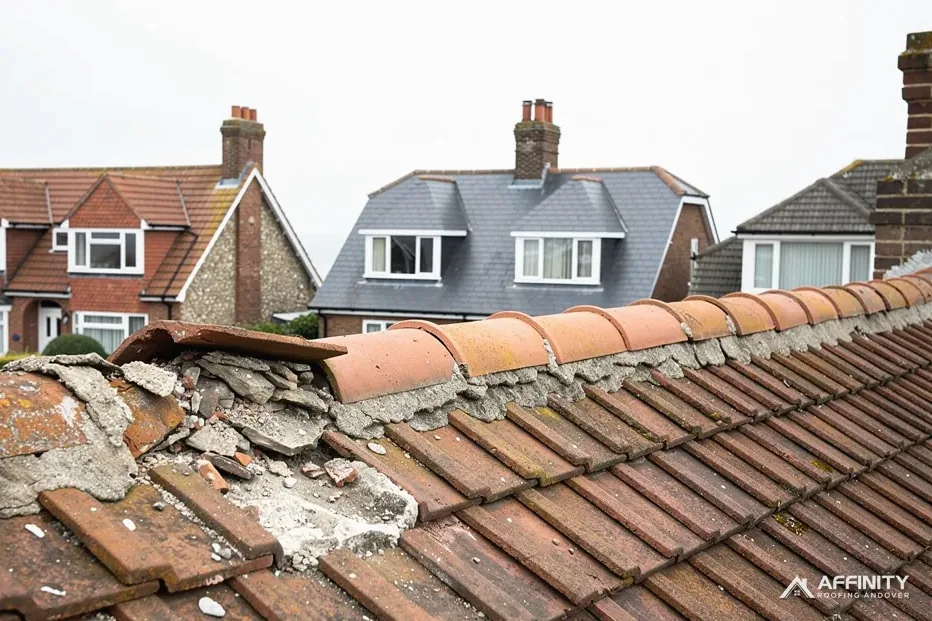
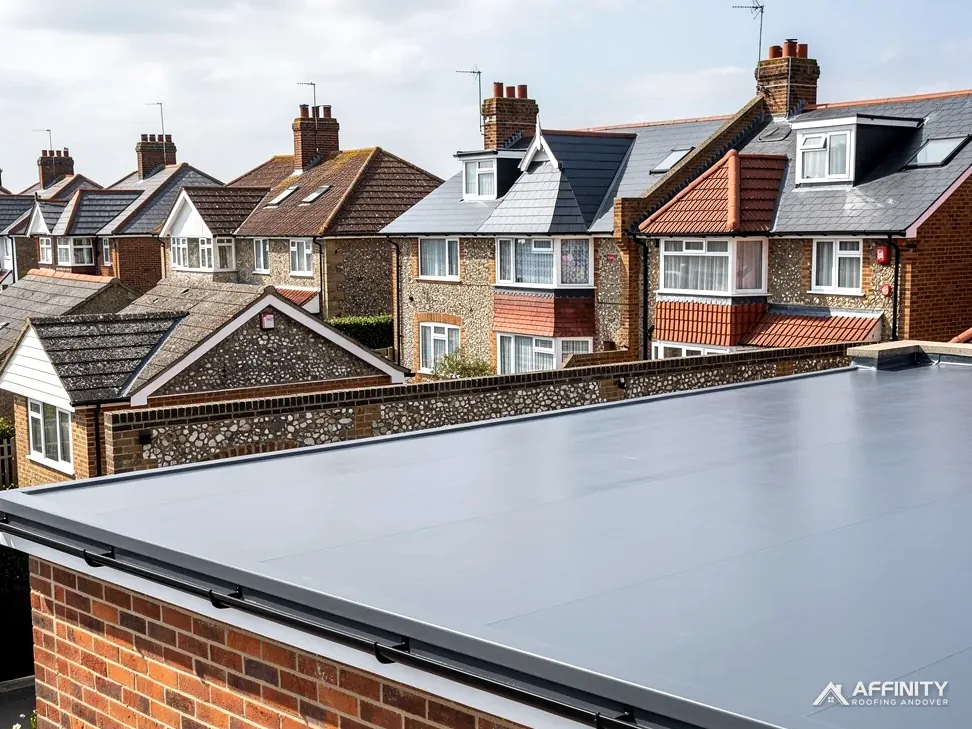
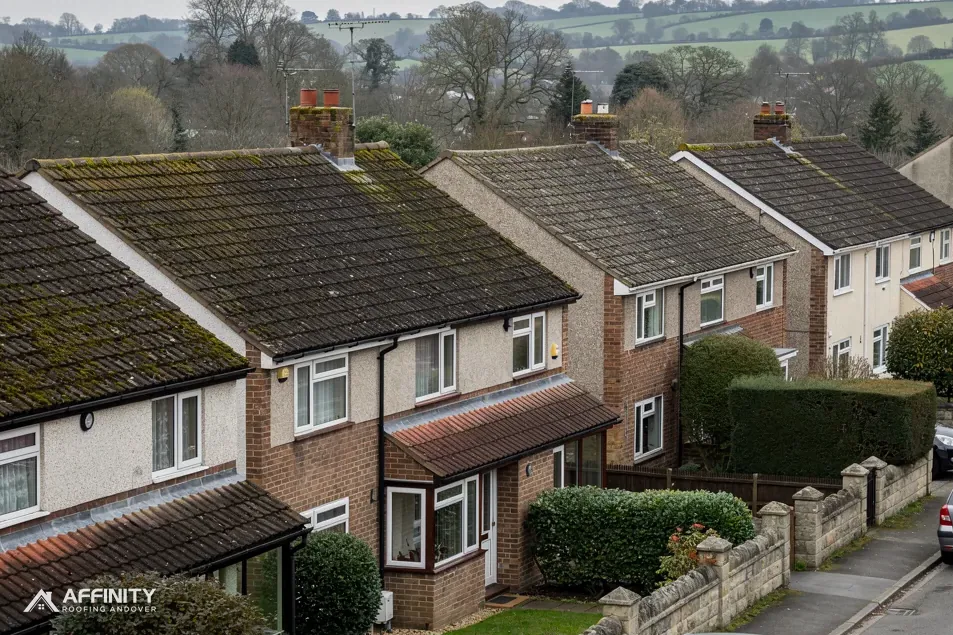
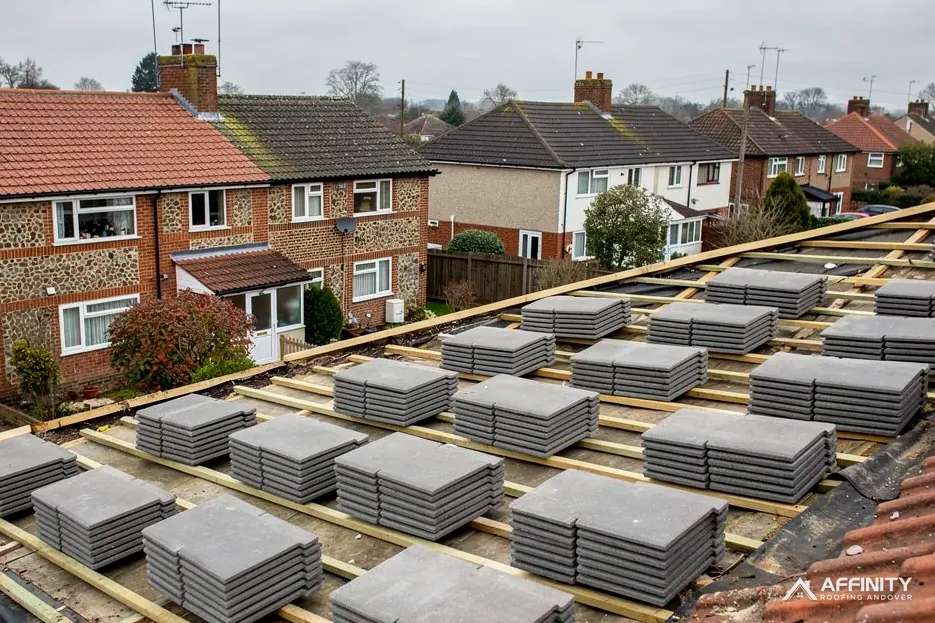
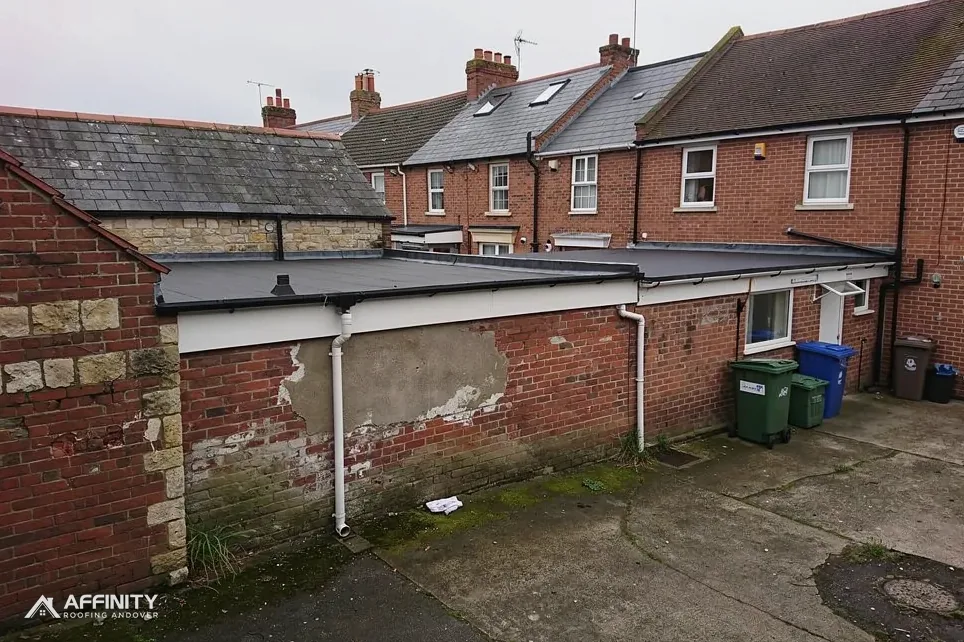
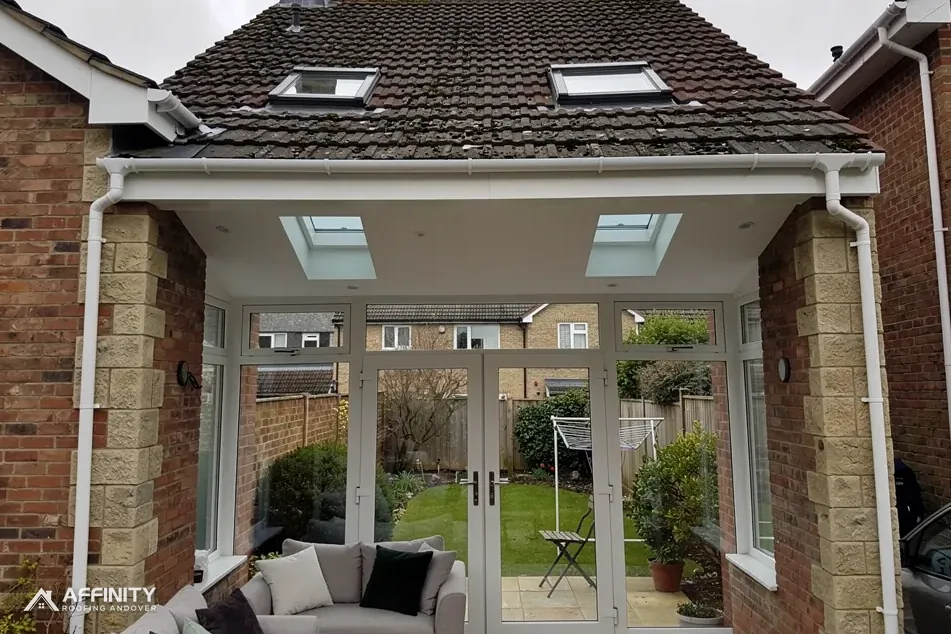
Amesbury roofs: flats, the bridge and the flat membrane
Does the Amesbury Article 4 area called Stonehenge change what I can do to my roof?
Possibly. Wiltshire Council has an Article 4 area named Stonehenge that reaches the area around Amesbury, reference number 62/0001. What it removes from permitted development is for the council to say, so ask Wiltshire's planning team about your address before you change a roof's material or shape, and keep the reply.
How long should a flat roof membrane last in Amesbury?
Published ranges differ: HomeBuilding gives 25-30 years for EPDM and GRP and 10-15 for felt, while Less gives 30 to 50, 25 to 40 and 10 to 20. These are typical ranges, not promises. The deck beneath and the fall decide how much of that a roof gets, which is why the survey measures both.
Does the scheduled Queensberry Bridge limit scaffolding near it?
Works to the bridge itself need scheduled monument consent. A scaffold on land beside it would have its scheduled monument consent position checked before any footing is set, and we raise that at the survey, not on the day the scaffolders arrive. A house roof elsewhere in the town follows the ordinary planning and building control rules.
What notice does a Wiltshire scaffold licence need for an Amesbury house?
Wiltshire Council's fee is £143.80 on three-plus working days' notice and £164.70 on less, and a licence runs 28 days. Hoarding needs a separate licence from scaffolding. The supplier of the scaffold applies through MiPermit, arranging that falls to us, and a scaffold standing wholly on private land needs none.
Amesbury and the villages around it
Ask us to survey your Amesbury roof
Send the address and a picture. We survey, check Wiltshire's route, then write one price.
10-year workmanship guarantee, in writing.