
Roofers in Netheravon
Bunces Brewery, Magpies Cottage and a village of listed neighbours
Netheravon has two conservation areas on the map, an Article 4 area on the council's list and 11 listed buildings near its centre. We survey each roof before advising.
Netheravon roofs, from the Brewery to the cottages

Around Bunces Brewery
Homes near Bunces Brewery, Grade II since 3 June 1986, where neighbouring listings shape the job.

Magpies and Yew Tree cottages
Magpies Cottage and Yew Tree Cottage, both Grade II, where repairs follow the listing.

Houses in the village core
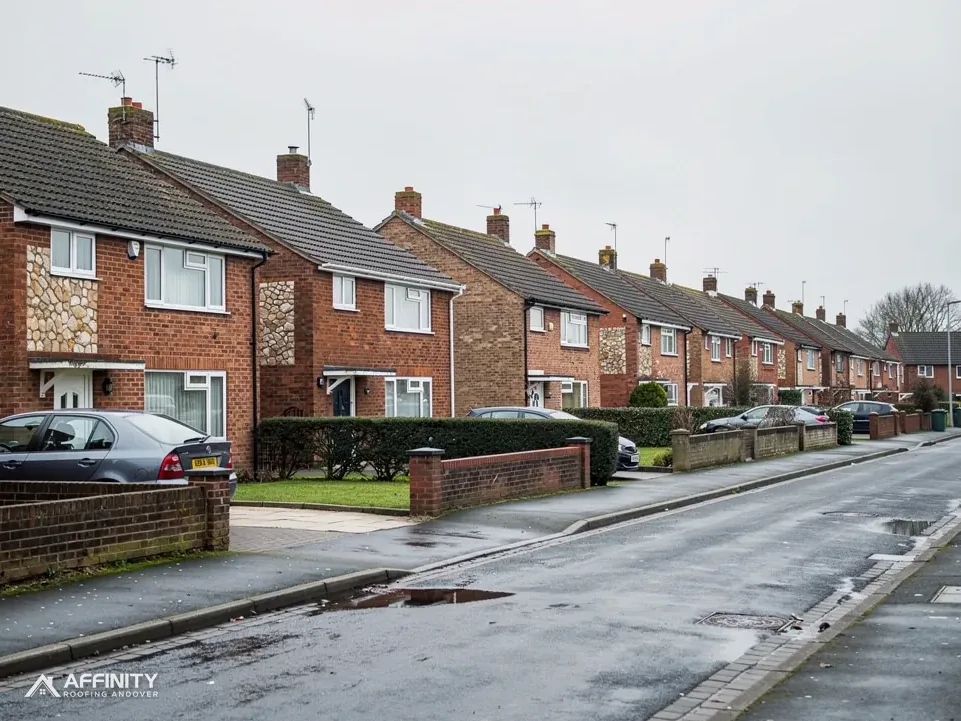
Houses within the conservation areas that cover Netheravon and the neighbouring Fittleton and Haxton.
Netheravon, north of Durrington
Upavon lies to the north and Durrington to the south, with Larkhill beyond. Bulford is south-east, Amesbury south and Tidworth further east.
- Distance
- 19.4 road miles west of Andover
- Planning
- Wiltshire Council
The Netheravon roof report
Local editionNetheravon, WiltshireTwo conservation areas and an Article 4 area
Eleven listed neighbours and a council direction: preparing a Netheravon roof job properly
Netheravon lies 19.4 road miles from Andover, in Wiltshire. This report covers its listed buildings, the conservation areas and Article 4 area on the council's map, building control, and the permit for scaffold.
Bunces Brewery, two cottages and eleven listed neighbours
Netheravon parish counted 1,067 usual residents at the 2021 Census. Historic England's list records 11 listed buildings within about 500 metres of the centre, which is a thick scatter for a village this size. Bunces Brewery (list entry 1033918) and Magpies Cottage (1033944) are both Grade II and both date from the same listing round, 3 June 1986. Yew Tree Cottage (1033947) is Grade II as well.
An old brewery, two cottages and eight more listed buildings mean a Netheravon roof can sit next to something listed. That does not freeze a roof, but it changes the order of work: who is told first, where the ladder rests, who answers for a gutter that two houses share. If your own house is listed, alterations that touch its character call for listed building consent before work begins. Our guide to listed building roof repairs sets out how that application runs.
A Netheravon survey starts with a step back. From the road we read the roof as a whole: how it is pitched, where the valleys fall, whether the ridge line is straight, whether the eaves sag. Only then do we climb, and the close look at tiles or slates, nails, flashings and gutters follows a plan, not a hunch.
Netheravon's two designations are different things. A conservation area protects the look of a place, while an Article 4 direction removes particular freedoms across a defined area. A house can sit in one, both or neither, and the survey note records what the council's map says about your address.
Durrington is 2.9 miles south, Larkhill 3.2 miles south and Upavon 3.8 miles north, all in Wiltshire too. A job in any of them follows the same council's pages as one in Netheravon, which helps when a neighbour has already been through the process.
A gutter that serves two houses can be a cause of friction between neighbours. If it fails, whose job is it to mend? The survey records which house each section drains, so that cost and consent rest on facts, and who agreed to what is written down.
Inside, the loft tells the rest. Rafters show their age in colour and cracks, battens show rot where moisture sits, and underlay shows tears and gaps. A torch along the underside of a slope can reveal a fault that looks like nothing from outside. We photograph what we find, and the pictures come to you in order.
Where tiles or slates have to be replaced, matching comes first, and reclaimed stock of the right size and colour beats a new tile that merely resembles the old.
Conservation areas, a direction and Wiltshire's building control
The council's map puts two conservation areas close to Netheravon: Fittleton and Haxton, and Netheravon itself. The first lies within about 0.75 km of the centre. Alongside them, Wiltshire Council's published data records an Article 4 area for Netheravon, reference 86/0001, with no start date given. That is all the record says, and the direction's terms are for the council to set out.
The practical advice follows. Before you change the look of a roof in or near these areas, ask Wiltshire Council's planning team whether the conservation areas or the direction touch your address, and what they require. Ask for the reply in writing, and file it. We will send the question on your behalf if you prefer, and forward whatever comes back.
Building Regulations are the job of Wiltshire Council's own Building Control service, whose office is at Monkton Park in Chippenham. Building control can also come from a registered approver, a register opened on 6 April 2024. Both routes suit a roof job, and the survey note names the one we would pick.
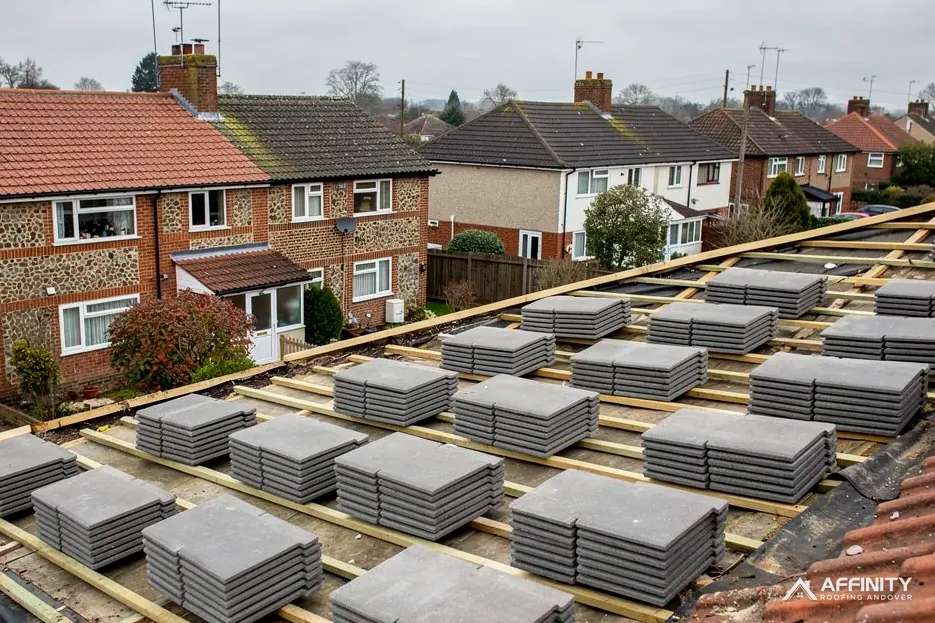
Re-roofs are measured by two Planning Portal tests. The first is size: under 25 per cent of the building envelope and under 50 per cent of the roof means no application is usually needed. The other is weight. Lay a covering that is 15 per cent heavier, or more, and approval comes into play, with a structural check beforehand. On older cottages that second test matters, since timbers sized for light plain tiles may not welcome concrete.
The tests are abstract, and the survey makes them concrete. Noting the existing covering, counting battens and checking rafters lets us tell you what kind of job it is, and which test it meets.
Rain, not paper, decides how long a Netheravon roof job takes. A repair that is simple on a dry day becomes a problem in a storm, so spare days are built into the start and nothing is left open overnight. When rain is forecast, work waits and the sheeting goes on.
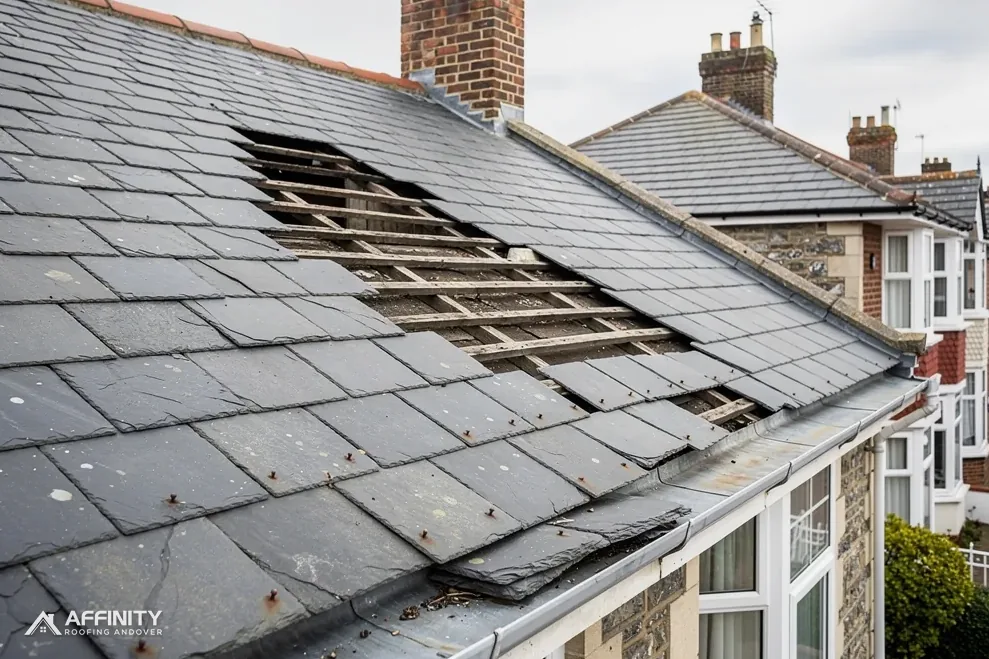
Picture a cottage in the village core whose slate roof has started to let water in near the chimney. The cause might be the lead flashing, the slates around it or the stack itself. From a ladder and from the loft we separate the three, and the photographs show which. If the flashing alone has failed, replacing it is a repair, well inside both tests, and the council need hear nothing.
Many repairs never reach any test, and the survey note says so plainly.
“In Netheravon, two conservation areas and a council direction sit around eleven listed buildings.”
Getting a Wiltshire scaffold permit for a village street
Poles set in a public road need a licence under section 169 of the Highways Act 1980. In Netheravon the council that grants it is Wiltshire Council. The facts fit on a short list.
- Applicant: the company supplying the scaffolding, via the MiPermit portal
- Scope: a single licence for each site, with any hoarding under a licence of its own
- Fee: Wiltshire Council charges £143.80 with more than 3 working days' notice, and £164.70 with less
- Duration: valid for 28 days
- Marked parking bays need a separate suspension
The householder never fills in the form, but can help the programme: be clear about the date the work is wanted, mention parked cars or gates on the frontage, and agree a start that leaves room for the notice. The cheaper fee depends on that gap.
Plenty of Netheravon houses never need the permit. Where a front garden or side access gives room, the whole frame can stand inside the boundary. A low porch or lean-to can be reached from a tower. We assess the plot during the survey and report what applies.
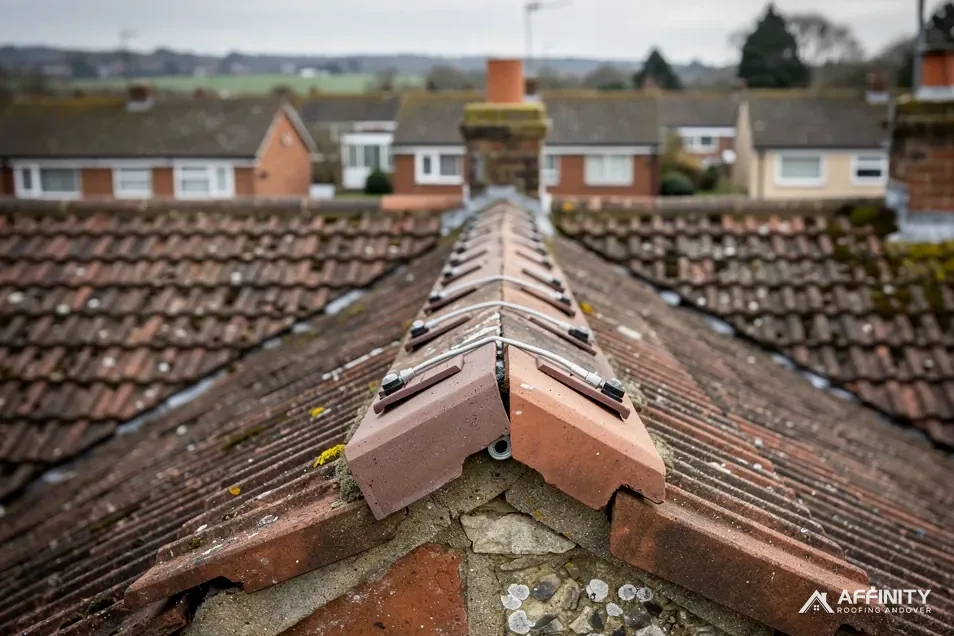
For village jobs the usual tasks are straightforward. Roof repairs deal with slipped tiles and cracked ridge pieces. Chimney repairs restore stacks with failed pointing or flashings. Dry ridge and verge systems hold the ridge and gable edges with fixings, so a failed mortar bed is not the only thing keeping tiles on.
Standing time is the hidden cost of any scaffold. Materials come first and the frame second, and the scaffolder agrees a strike date at the point of booking. If rain delays work, the open slope is covered and the dates are reviewed with you, so a wet week does not eat into the 28 days unnoticed.
A frame on a village street is a shared structure for the days it stands. The first platform is fenced, boards are tight, netting hangs for debris and neighbours hear in good time. Skips and deliveries stand where agreed.
Parked cars and gates on a frontage spoil a plan if nobody mentions them, so the survey asks about both. A car that must stay put can shift the frame by a metre, and a gate that must open can decide where the boards go.
At night the frame is made safe against anyone climbing it: the lowest ladder is taken away, loose boards are fixed and tools come down. A village is quiet, and an unattended scaffold is an invitation we would rather not issue.
When the job is done, the rubbish goes with us and the photographs reach you.
Roof work we do in Netheravon



Netheravon roofs: the Brewery, the direction and the permit
Is Bunces Brewery's listing a problem for repairs on the next house in Netheravon?
Not by itself. Consent attaches to the listed building, not to its neighbours, so a repair next door is judged on that house's own status. Bunces Brewery is Grade II, so alterations to it need consent, while a repair to the house beside it needs none unless that house is also listed. We check your own address on the National Heritage List during the survey.
What is the Netheravon Article 4 area, and does it cover my road?
Wiltshire Council's data records an Article 4 area for Netheravon, reference 86/0001, with no start date. Its terms are the council's to explain, so ask whether it covers your road and what it requires, and file the reply. We can send the question for you, pass the answer on and keep a copy with the survey photographs.
How long can a scaffold stay up under a Wiltshire permit?
Wiltshire Council licences are valid for 28 days, whatever the fee. Wiltshire Council charges £143.80 with more than 3 working days' notice and £164.70 with less, and wants the scaffolding company to apply through MiPermit. A frame confined to your own land needs no permit, and the plot is checked before we book anyone.
Does a heavier tile covering need approval on a Netheravon cottage?
Yes, when the new covering comes out 15 per cent heavier or more, whatever the size of the job, and a structural check should come first. Building control sits with the council, or with a registered approver if you choose one, and we confirm which applies before booking. We note the current covering at the survey so that you know before you choose.
Start with a survey of your Netheravon roof
Send your lane and a photo. We survey, check which consents apply, then write one price.
10-year workmanship guarantee, in writing.