The short answer
HomeBuilding lists fibre cement (Eternit) roof covering at 30 to 40 years, a typical range that carries no promise. Fibre-cement slates are made from cement and reinforcing fibres, not split from rock, so they age through fading, surface wear and, in time, curling at the edges. A roof near the top of that range deserves a survey before it fails.
The typical range, read carefully
The figure quoted here is HomeBuilding's: fibre cement (Eternit) at 30 to 40 years. It sits well below the same guide's figures for natural slate, which run from 50 to 80 years for reclaimed Welsh to 100+ years for new Welsh. The gap is the main reason an owner weighing fibre cement against natural slate should look beyond the first price.
A range like this summarises many roofs and is no countdown clock. A well-laid fibre-cement roof on a sheltered slope may pass 40 years, while a poorly fixed one with trapped moss may need work earlier. Orientation, shade from trees and the quality of the fixings all play a part, which is why two neighbouring roofs of the same age can look quite different. A warranty is a separate matter altogether: it is a paper promise with conditions attached, and it tells you little about how long slates will really last.
The date of the roof matters too. Many fibre-cement slates in older houses were made to older recipes, and some may contain asbestos. We cover that in its own section below, and in our answer on asbestos cement slates.
Unsure how old the roof is? The slate edges, the fixings and the underlay usually give a surveyor a good idea.
Fading, wear and curling
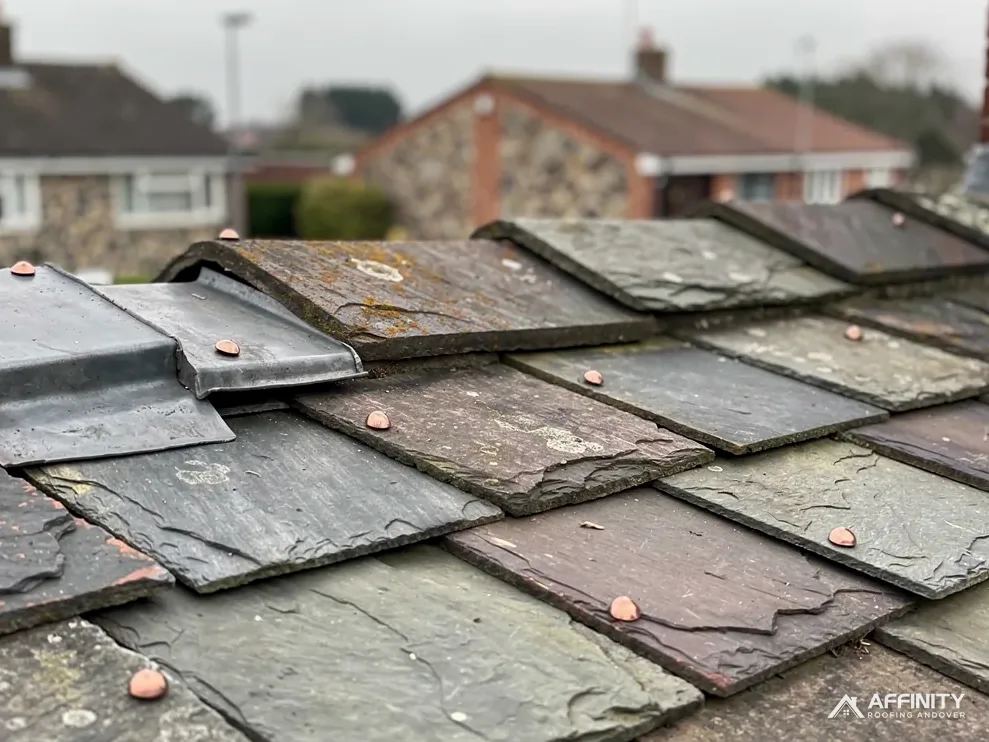
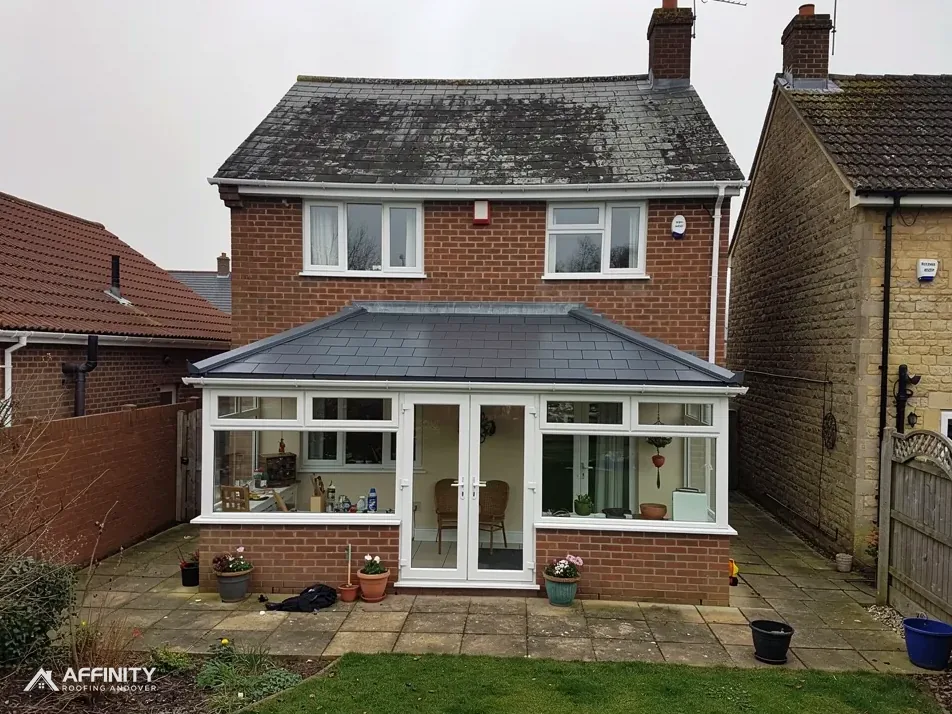
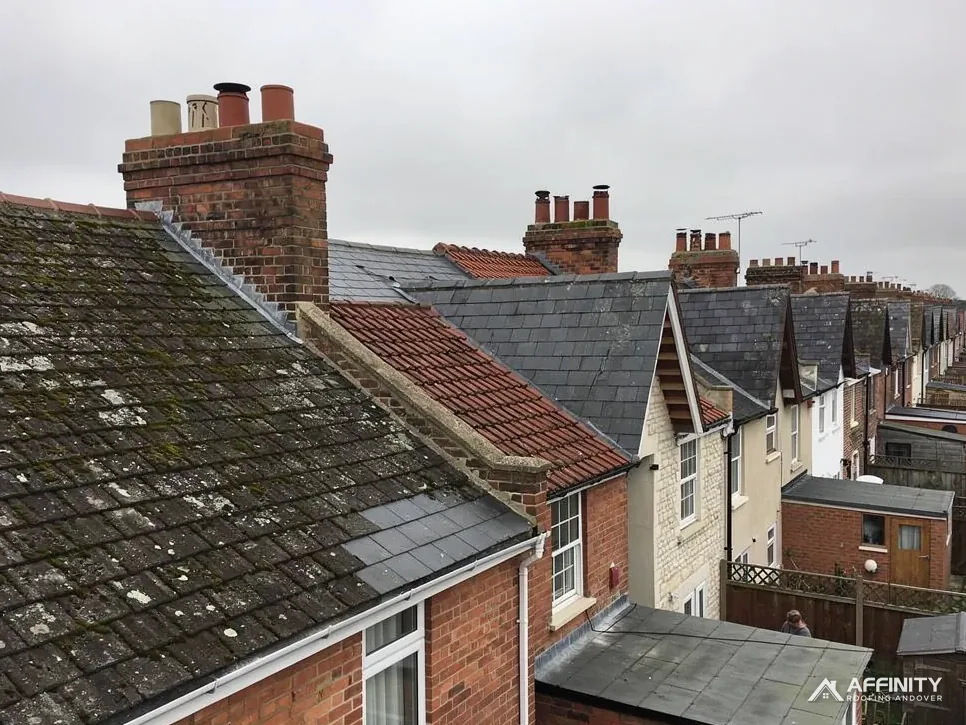
Fibre-cement slates age in the open, and the signs arrive gradually. The first is colour. The surface fades unevenly, so the roof turns patchy, with paler stretches where the weather hits hardest. That alone is cosmetic and says little about the strength of the slate beneath.
Next comes wear. The face becomes rougher and more porous, and moss and lichen take hold in the texture. A porous slate holds water longer and passes it through freezing and thawing, which speeds up the wear. Cleaning a fibre-cement roof needs care, because heavy treatment can strip the surface.
Curling is the structural sign. The edges lift or warp, often at the tail, so the slates no longer sit flat on their neighbours. Rain and wind can then reach the joints. Slates that rock under a gentle push, or ones that show cracked corners, are past cosmetic problems.
A few lifted slates can be re-fixed, but a slope of curling slates is the roof telling you it is ageing out. We photograph the pattern across the slope, so you can see whether the trouble is local or general.
Asbestos in older fibre cement
Not every fibre-cement slate is a safe-looking modern product. For homes built or refurbished before the year 2000, HSE's starting position is that asbestos may well be there. Some fibre-cement slates and sheets from that era fall under this, and the assumption changes how a roof is repaired or taken off.
On HSE's list, careful removal of asbestos cement, roof sheeting included, is non-licensed work, even where the material is weathered, provided it is not substantially damaged. Substantial breaking-up moves the job into a stricter category, notifiable non-licensed work. Waste is double-wrapped, travels with a consignment note and stays out of open skips and general rubbish.
For you, the practical steps are simple. Leave a suspect roof alone: no drilling, no hard scrubbing and no snapping slates for a quick fix. If the age is uncertain, a sample can be tested before anyone touches it.
Appearance proves nothing about content, so we never guess from how a slate looks. Our asbestos cement slates answer explains the route in more detail, and a suspect roof is treated as asbestos until a test says otherwise.
Repair, replace or change covering
Where most slates are sound and a few are damaged, repair is reasonable. Where they are curling or crumbling across a whole slope, more patching buys little, and replacement is the honest answer.
Replacement has two broad routes. You can lay new fibre-cement slates, which keeps a similar look and price, or you can step up to natural slate or a man-made alternative. Our comparison of natural and fibre-cement slate sets out the differences, and synthetic roof slates covers the lighter option. If your home is listed, or sits inside a conservation area, the new covering may need consent before work starts, so sort that out first.
Either way, the battens, the underlay and the roof timbers beneath are checked too, with photographs of anything we find, since new slates laid on tired timber waste the outlay. A sound roof structure is what lets the new covering reach its range.
The survey gives you photographs of what we find, a recommendation matched to the roof and one written total. The wider service has its own page, slate roofing.