The short answer
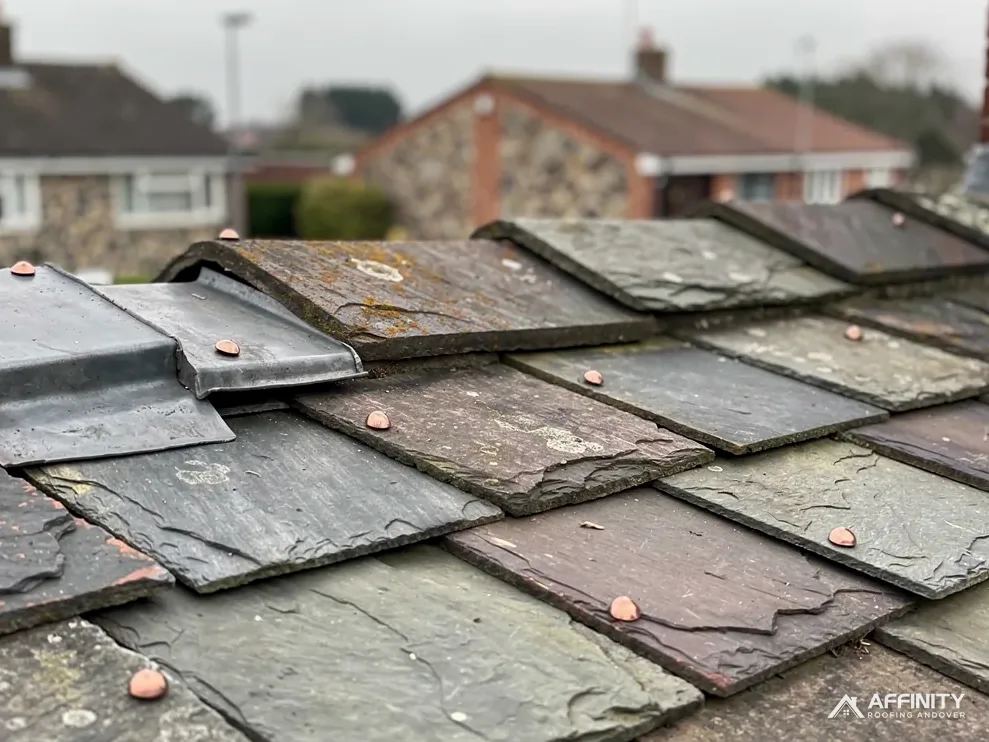
Copper nails are used for slate because copper does not rust the way iron and plain steel do. Each slate hangs on two nails driven through its head and hidden by the course above, so a nail that corrodes cannot be seen or reached until slates begin to slip. A fixing that outlasts the slate is the aim, and copper is chosen for that.
Rust is what ends iron nails
Slate is hard and slow to wear. The metal holding it is the weak link. Iron and plain steel rust whenever they sit damp, and a roof void is damp more often than owners expect. Condensation, wind-driven rain pushed through a joint and slow seepage along a batten all reach the nail shank.
Rust does two things. It eats the nail thinner, and it swells as it forms, which can chip the slate around the nail hole. A thinned nail finally snaps under the weight of the slate or a gust of wind. The slate then hangs on its second nail, and when that goes too, the slate slides.
Copper behaves differently. It weathers on the surface, turning dull brown and later green, and that skin protects the metal beneath instead of flaking away. A copper nail resists the rust that thins an iron one, so it stays sound far longer.
That is the whole argument for it. We would rather fit a nail that never needs revisiting than climb back onto the roof to repeat a repair.
Nail sickness, and what it tells you
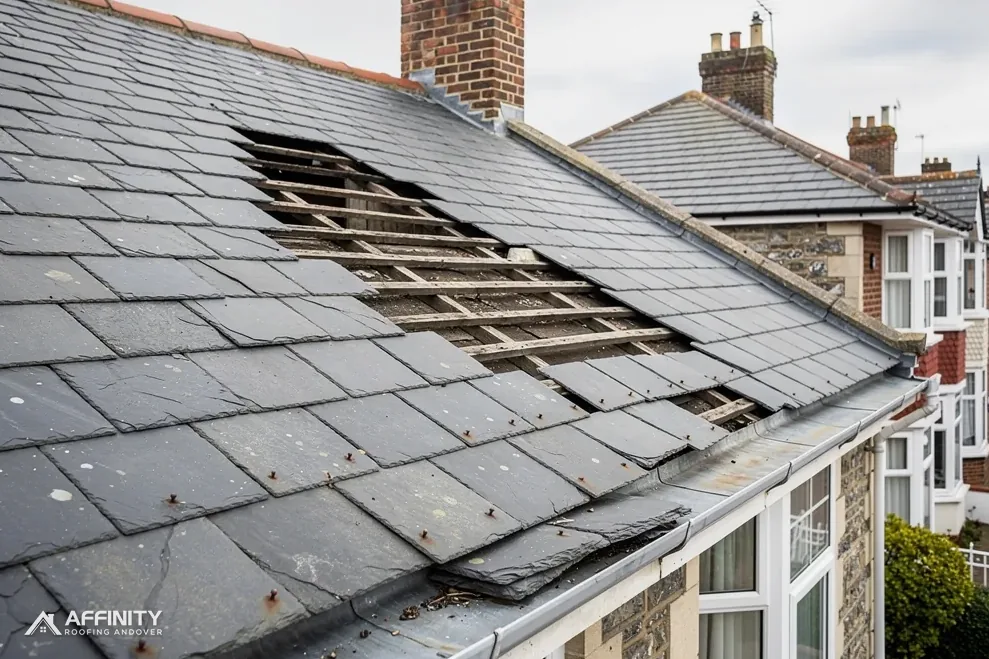
Roofers use the phrase nail sickness when the fixings give out across an entire slope. The slates themselves are fine. They simply let go, one after another, because the nails behind them have rusted through.
You can spot the pattern from the ground if you know where to look. Slates sit lower than their neighbours in ragged lines. Pieces of slate turn up in the gutter or the flower bed, each with a clean break near the head. Small tingles, the strips of metal that hold a replacement slate from below, appear in patches across the slope from earlier repairs.
Each of those is a symptom, and treating them one by one is a poor use of money once the pattern is clear. Our answer on slipped roof slates explains how we weigh a patch repair against a refix.
If the slates are sound and only the nails have failed, the slates can often be lifted, sorted and laid again on new fixings. Corrosion-resistant nails are what make the second life of the roof last, because old iron ones would fail again in the same places.
The fixing standard behind the nail
Slate fixing is dealt with by BS 5534, the national code covering slate and tile work. Its current edition is BS 5534:2014+A2:2018, and its fixing clauses are where a question about slate nails starts.
One point is worth knowing. Marley notes that installing to BS 5534 is not required by law, so the standard is a code of practice rather than a statute. A roofer who ignores it has not broken the law, but a written note that the slates were fixed to it is worth having if a dispute arises later.
The same code sits behind the pitch limits for natural slate. Cupa, a slate producer, takes it to mean natural slate needs at least 20 degrees of slope, and tells fixers to avoid hooks below 25 degrees; the slate's data sheet confirms it. Slopes that shallow lean on well-chosen nails and a correct overlap for their weathertightness. Our page on slate hooks versus nails covers how the two fixings compare.
When a quote arrives, ask which fixing is specified and which standard it follows. A prompt, specific reply tells you the firm has thought about it.
Checking what is in your roof
You cannot tell what metal holds a slate by looking at the roof from the garden, because the nail heads are covered. The only way to know is to lift a slate or two, and that belongs to a roofer with proper access, not to anyone leaning a ladder on the slope.
Walking on slate breaks it, and a loose piece can shoot off without warning, so please keep off the roof. Photographs from an upstairs window or the garden are enough for us to see whether slates are sitting low and whether there are patches of tingles.
At a survey we take a slate out at a representative spot, photograph the nail and the batten behind it, and show you what is there. If the nails are sound, we tell you that and leave them alone. If they have thinned, you see the picture and the choice between a local refix and re-laying the slope.
Re-laying means fresh corrosion-resistant nails throughout, with sound slates reused where they come off whole. The slate roofing page covers the larger job, with the written price following the survey.