The short answer
MyJobQuote (September 2026) puts a standard mid-range Velux-type roof window at around £1,100 fitted, with a straightforward swap of an existing window around £100 less. Treat that as a national guide rather than our price. A brand-new opening costs more than a swap, because the roof structure has to be cut and trimmed before the window can go in.
What the typical UK range actually describes
MyJobQuote's cost guide for Velux-type windows (September 2026) gives about £1,100 for a standard mid-range window, and says a like-for-like swap comes in around £100 less. Those two numbers frame the conversation. They are national averages from a third-party guide, and no one firm's quote.
A swap means an opening already exists. The old window comes out, the new one is set in the same hole, and the flashing around it is renewed. Nobody touches the rafters, the ceiling opening or the lining, so the work stays contained.
A guide figure also assumes a standard size and a mid-range specification. A larger window, a different opening type, an electric motor or special glazing will each push a job above the middle of any national range, so treat the number as a starting point and expect a survey to move it up or down.
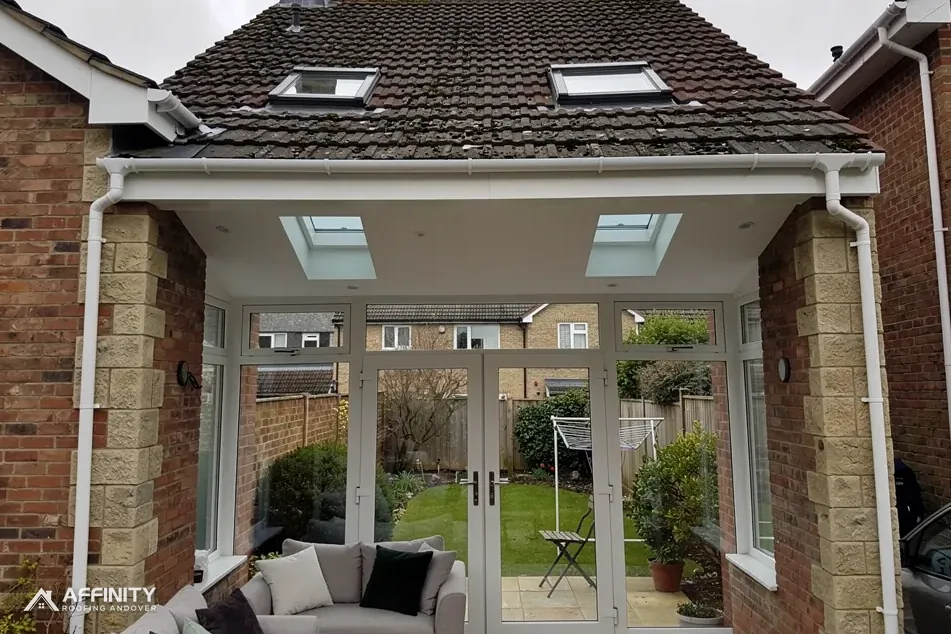
Everything on this side of our work sits under roof windows and skylights, from a single swap to a row of new openings in a loft. We start with a survey, so that a guide figure gives way to a price for your own roof.
Why cutting a new opening adds structure
Rafters are the sloping timbers that carry the battens and the roof covering. A new window almost always sits between two of them, or needs one rafter cut to make room. Once a rafter is cut, the load it carried has to go somewhere, so short timbers called trimmers are fixed across the gap to frame the opening and pass the load to the rafters either side.
That framing is a job in its own right. Our answer on trimming rafters for a roof window explains when it is needed and when the opening can sit between existing timbers.
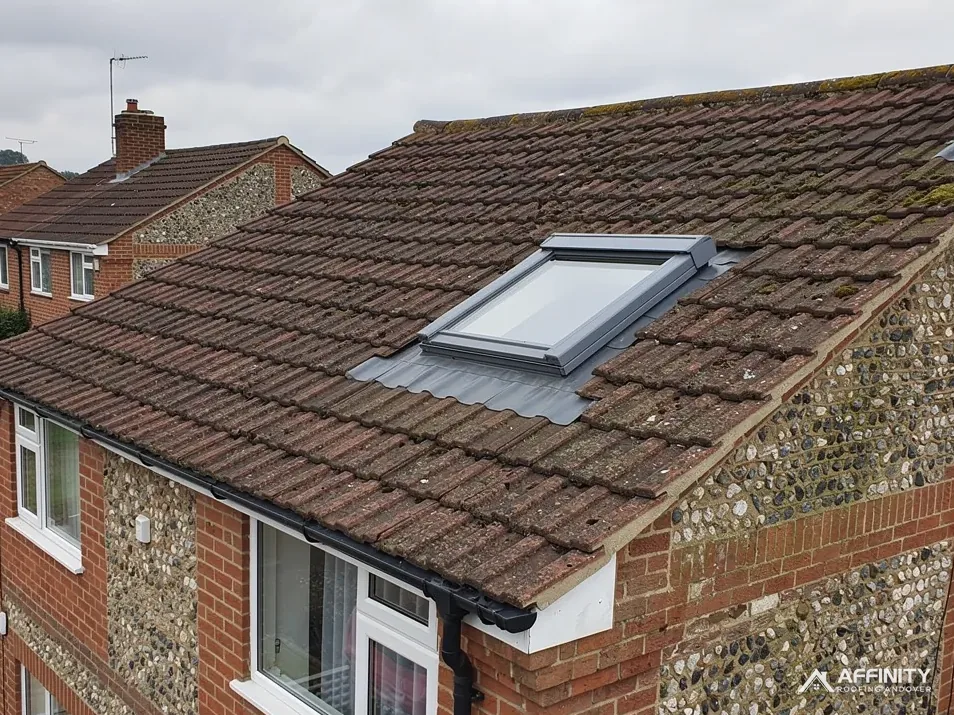
After the framing comes the roof side. The tiles or slates are stripped from the area, the flashing is fitted so that water runs around the frame, and the covering is relaid up to it. Inside, the opening is lined, usually with a splayed shaft up to the ceiling, then plastered and decorated. A new opening can also bring Building Regulations into play, which is worth checking before you settle on a position.
What moves the price from one roof to the next
The covering comes first. The flashing has to suit the covering: plain tiles, interlocking concrete tiles and natural slate all need different profiles, and slate is the fussiest, as our answer on a roof window in a slate roof shows.
Access comes next. A low extension roof can be reached with a roof ladder. A window high on a main slope may need a tower or a scaffold, and any scaffold set up on the road or pavement requires a scaffold licence under the Highways Act 1980 s169. For a Hampshire address the highway authority is Hampshire County Council, and the scaffolding firm makes the application for its customer.
Then come the choices you make. Window size, an opening style that gives more headroom, an electric motor or rain sensor, blinds, and how fine a finish you want on the inside lining all change the number.
The last factor is what the survey finds. Rotten battens, a sagging rafter or an old leak around the position all have to be put right before a new frame can sit properly, and none of that shows from the garden.
Reading a roof window quote before you accept it
Good roof window quotes give one total price in writing. Ask whether VAT is in it, since a total quoted without VAT reads lower than the bill you will pay, and ask whether scaffolding or a tower is in the total, because on a high roof access can take a big part of the job.
Also ask what is covered inside the room. Some quotes stop at the window frame, and some include the lining and a plaster finish. Knowing which one you are holding avoids a surprise later. At least three written quotes is the Citizens Advice suggestion, and it fits roof window work as well as anything.
When we survey a roof window job we look from the loft first. We check the rafter spacing, the state of the timbers and where a new opening would sit, then we look at the covering from outside. You see photos of what we found, and the price is based on your roof rather than an average.
If you are still deciding where the window should go, our guide to roof windows for a loft conversion is a useful companion.