The short answer
Possibly, but never without asking first. A listed house keeps its permitted development rights for roof alterations, but works touching its special interest need listed building consent as well. A roof window is a visible change to the roof, so expect the council to look at its size, position and type. Speak to the council before ordering anything.
Why permitted development is not the end of it
A common half-truth is that roof windows are permitted development. On a house, a new roof window normally falls within Class C of the General Permitted Development Order, the class for roof alterations to a dwellinghouse, and listed houses are not excluded from Class B or Class C.
But planning permission is a different regime from listed building consent. Section 7 of the Planning (Listed Buildings and Conservation Areas) Act 1990 requires listed building consent for works that change a listed building's character, whether or not permitted development applies. It is a separate application, made to the same council, and the decision has to come before work begins.
That point is easy to miss. A homeowner who reads that roof windows are permitted development, and who then fits one in a listed roof, has relied on the wrong rule. Our answer on roof windows in conservation areas deals with the lighter-touch version of the same question, where a house is not listed but sits in a protected area.
Flats have no permitted development rights, so for a listed flat the position is simpler: consent and planning permission are both likely to be needed.
What a conservation-style window means
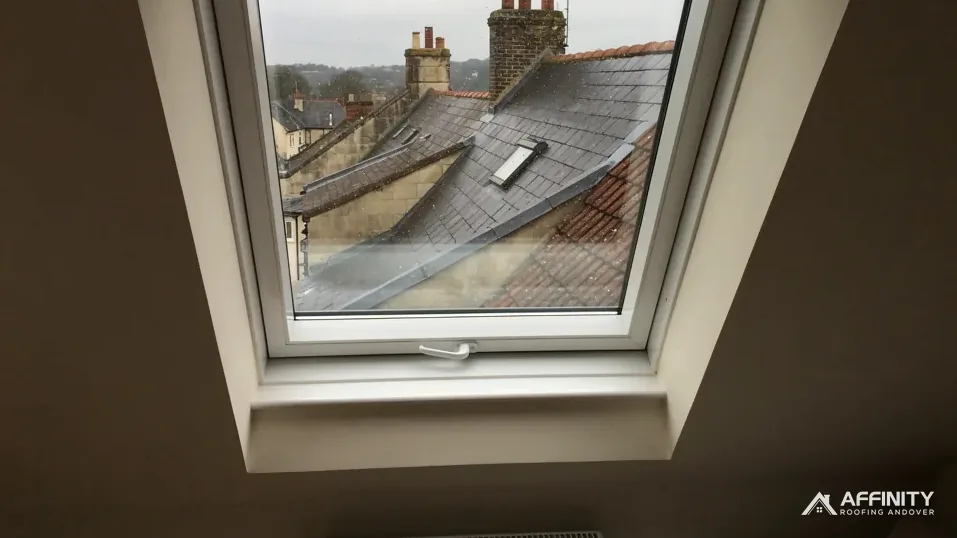
Councils that do allow roof windows in historic roofs tend to ask for a certain kind of window. Small, set low in the slope, flush with the roof covering instead of standing proud of it, with slim glazing bars and a dark finish. These are often called conservation roof windows, and several manufacturers make them in a restrained, traditional style.
The aim is to keep the roof looking like a roof. A window that sits flat among the slates or tiles reads as a break in the covering, while a large modern unit with a thick frame reads as a hole. Position matters as much as design: a slope facing the street is the most sensitive, and a rear slope that cannot be seen from public places is more likely to be accepted.
None of this is a guarantee. The council's conservation officer decides, and the same window can be accepted on one house and refused on another. If the house also lies within a National Park or National Landscape, the planning authority may be different, and your council can tell you which body to apply to.
Talk to the council before you buy
The sensible order is to ask first. Ring or write to the planners at your council, say the house is listed and that you want a roof window, and ask what the application needs. Some councils offer pre-application advice. Expect to supply drawings of the position and the window section, and perhaps a short statement of why the work is wanted.
For a Church of England church in use, the route is different. Those buildings are exempt from listed building consent and go through the faculty system, as Andover's Church of St Mary, listed Grade II*, does. Other denominations and closed churches use different routes. If you own a house, none of this applies, and consent is what you need.
Do not order windows before approval, and do not accept a quote that treats consent as an afterthought. Builders who say it will be fine are guessing. We would rather you waited for a decision than fitted a window you were later asked to remove.
For the planning side of roof windows more broadly, see roof windows and Building Regulations.
What we do on a listed roof
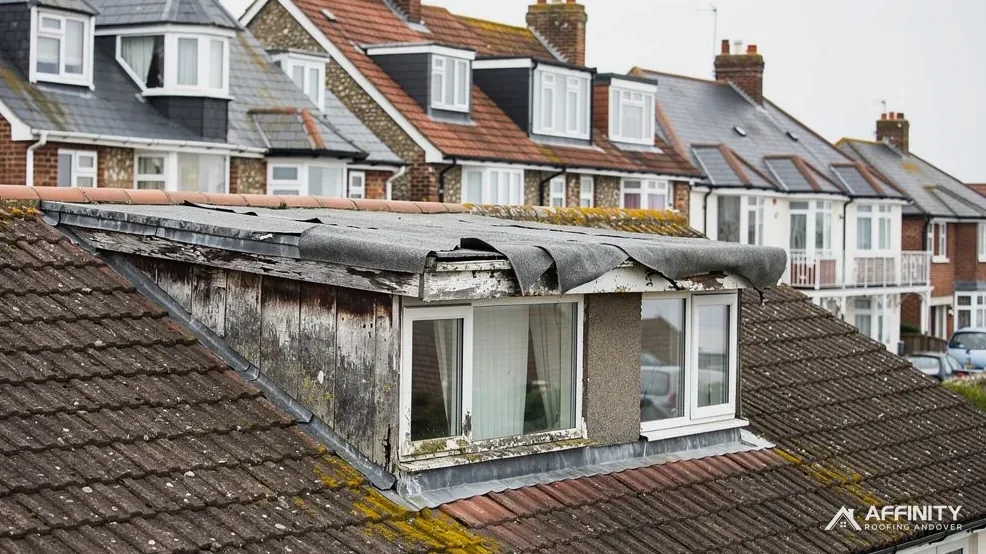
When the consent is in place, the work still needs care. A listed roof may be older timber, hand-split battens or natural slate, and cutting an opening in it exposes whatever is underneath. The rafters may be irregular and the covering fragile, so the way the roof is opened and relaid matters as much as the window.
Our survey begins in the loft, measuring rafter spacing and checking the timber, and moves outside to the covering, with photos of each finding passed to you. Should the consent drawing need amending after that, we tell you before any cutting, and the change goes back to the council instead of being improvised on site.
If the roof is covered in natural slate, our answer on a roof window in a slate roof covers the flashing and soakers, and the hub page on roof windows and skylights sets out the wider service. Some listed buildings also fall under an Article 4 direction, so ask the council whether one applies.