The short answer
Usually not, for a house. Class C of the permitted development order covers other changes to a house's roof, and re-roofing is one, so a new covering is permitted as a rule. Flats lack these rights, a listed house requires listed building consent too, and an Article 4 direction can take the rights away. Check with the planning team.
Why Class C covers a re-roof
Two routes lead to the same place. Under the Town and Country Planning Act 1990, work that leaves a building's outside look materially unchanged is not development in the first place, so a plain like-for-like re-cover may need no permission at all. Where the look does shift, the General Permitted Development Order takes over.
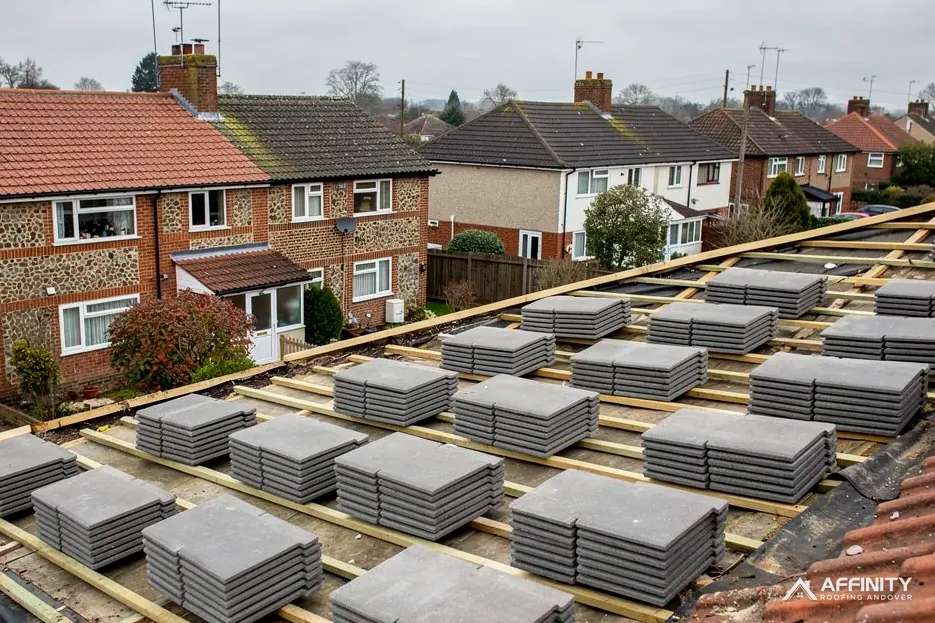
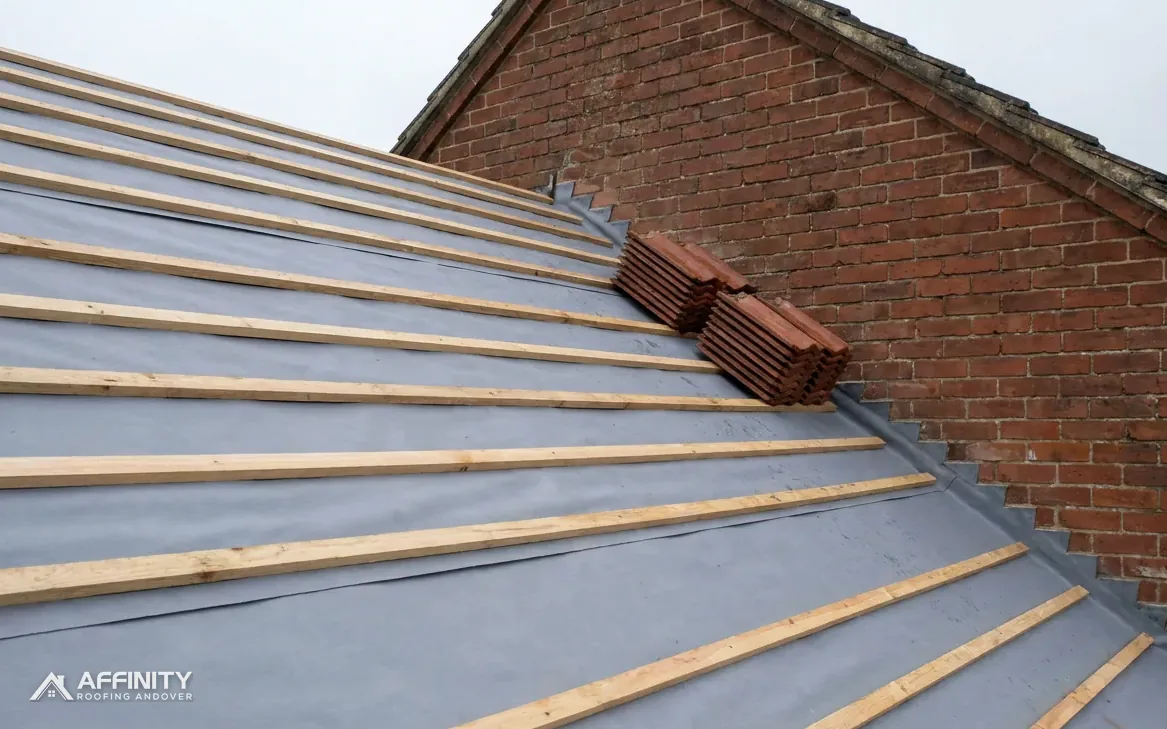
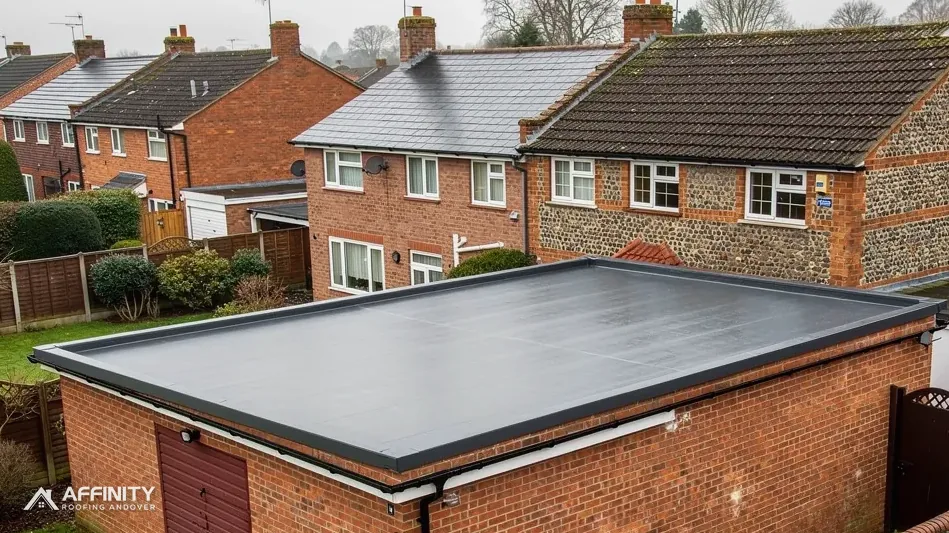
Class C of that order handles further alterations to a house's roof. Re-roofing is one of them, which makes a switch of covering on a house permitted development as a rule. The limits are modest. Nothing may stand out more than 0.15 metres from the slope's original plane, a point that matters for roof windows and solar panels, and nothing may rise above the original roof height.
Class C carries a window condition as well: glass in a roof slope on a side elevation has to be obscure, always, and fixed shut unless the opening parts are over 1.7 metres up from the floor.
Planning and Building Regulations are separate. A heavier covering needs Building Regulations approval, not planning permission; see building regulations to replace a roof.
Flats and listed buildings
The rights attach to dwellinghouses only; buildings containing flats, and the flats inside them, fall outside the term. A flat therefore has no Class C rights, so a change of roof covering there needs a decision from the local planning authority unless it counts as no development at all.
A listed house keeps the rights, since the order carves out no listed buildings. The 1990 listed buildings legislation adds its own rule, though: listed building consent covers work that changes the building's character, so a new covering or detailing on a listed house goes to the council first.
On the National Heritage List, Andover's Grade II* entries run from the Guildhall to The Angel Inn and St Mary's church. These are not ordinary house roofs. As a working Church of England building, St Mary's goes through a faculty, not listed building consent. If you live in a flat, ask the freeholder or managing agent too, since the lease may set rules of its own.
If you are unsure of your own status, the council's planning team can say whether the building is listed and whether any consent applies. Ask for the answer in writing before the scope is agreed.
Where an Article 4 direction bites
GOV.UK describes an article 4 direction as the means by which the local planning authority, or the Secretary of State, can withdraw named permitted development rights across a defined area. If one covers your street and takes in roof changes, a re-cover that would otherwise be permitted may need an application.
The detail is local. In Basingstoke and Deane, four conservation areas carry directions on roofs: the town centre plus Brookvale West, Fairfields and South View. They route roof changes through planning, and they ask that old Welsh slate and clay coverings stay in place. Hart District Council's 1998 directions reach frontage roof slopes and chimneys.
Elsewhere, including Test Valley, which covers Andover, as well as Winchester, Wiltshire and West Berkshire, the right step for your address is to ask the council's planning team whether an Article 4 direction applies, what it covers and whether it touches roof work.
That check costs a phone call. It is much cheaper than an enforcement letter after the roof is finished.
Conservation areas and the places Class C reaches
A conservation area, a National Landscape or a National Park is what the order calls article 2(3) land. On it, permitted development dormers are not allowed, because Class B (roof extensions) is excluded. Class C has no such exclusion, so a re-cover of the roof is still normally permitted there.
That is easy to misread. A re-cover on a house in the Andover conservation area is treated differently from a dormer in the same street. The Andover conservation area boundary is held on planning.data.gov.uk, and the council's own appraisal is the place to see what it says about materials.
Inside a National Park, planning sits with the park's own authority. In the South Downs that is the South Downs National Park Authority, with Winchester City Council acting as host authority for most applications in its own district. In the North Wessex Downs and Cranborne Chase, the partnerships are advisory only and the council remains the planning authority.
Our re-roofing in a conservation area guide goes further. The roof replacement page explains how we handle the survey, and the change roof tiles to slate answer looks at a change of material.