A roof does not always age evenly. One slope may carry the worst of the weather, an extension may have been built with cheaper materials, and a dormer cheek may leak while everything around it is fine. In those cases renewing just that part of the roof can be sensible, and it costs less than stripping the lot.
It is also a job that goes wrong more often than a full re-roof, for a simple reason. The new work has to meet the old at a join, and the join is the weak point where rain can get in. A partial replacement is only worth doing if the rest of the roof has enough life left to justify leaving it, and if the covering can be matched to what is already there.
This guide covers when part of a roof can be replaced alone, how to judge the remaining roof, how new tiles or slates are matched to old, where the joins go and which approval thresholds apply.
Every answer depends on a survey of the whole roof, not only the section that leaks, because a quote based on one photograph cannot show whether the rest is about to fail.
When one slope or section is enough
Partial replacement fits three situations well, and it fits poorly in a fourth.
A slope that has aged faster than the rest
Roofs facing the same direction get the same wear, but slopes differ. One may have a tree overhanging it, a valley that collects debris or simply a lot more exposure. If the tiles are spalling, which means their faces are flaking away, or the underlay has failed on that slope alone, renewing it makes sense while the other sides stay sound. A sound roof does not need replacing for the sake of symmetry.
An extension or porch roof
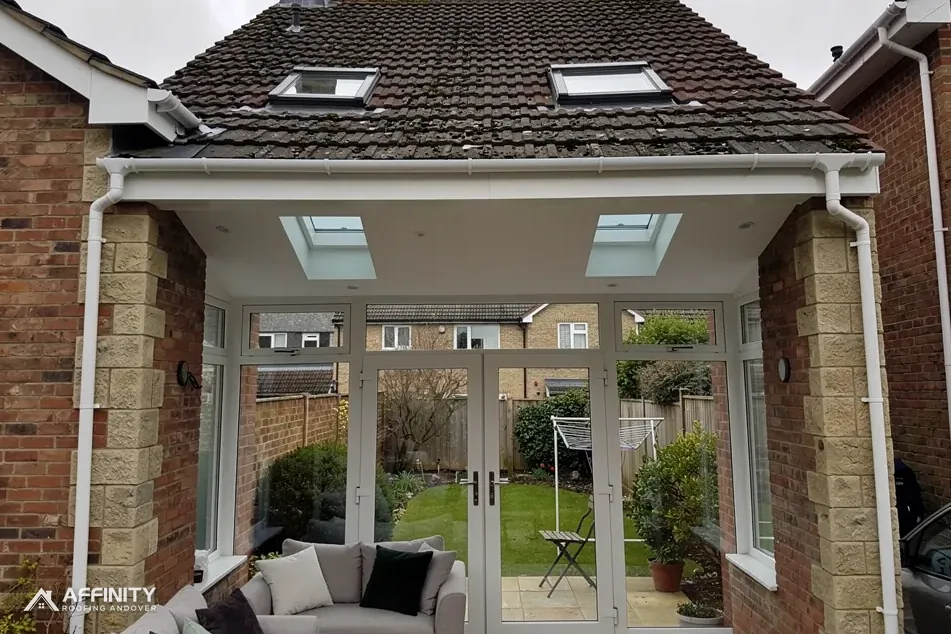
An extension roof is a separate area, often built at a different date and sometimes to a different quality. Replacing it without touching the main roof is a sensible partial job.
A section around a defect
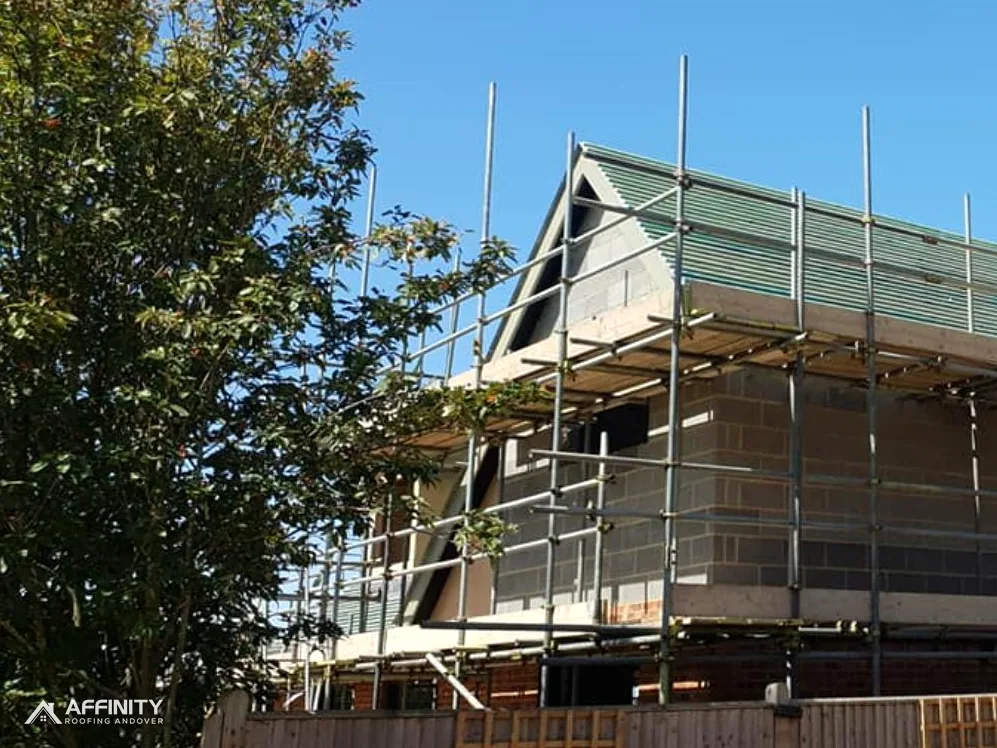
Where a chimney, a roof window or a dormer has leaked for some time, the timber around it may be wet or rotten. Opening up a section, renewing the timber and relaying the covering can solve the leak.
Where partial replacement fits badly
It fits badly where the whole roof is the same age and in the same poor state. Renewing one slope of a tired roof leaves a new area beside an old one that will need the same work within a few years. There are two scaffold hires, two rounds of mess and a join that gets repeated.
Our guide to the signs you need a new roof lists what points to a full job. The test is whether the remaining slopes are likely to outlast the time and money you spend on the new section.
Does the rest of the roof have life left?
The honest question behind a partial job is how long the untouched part will last. A survey answers it with evidence from the whole roof.
What we look at
We check the covering on every slope for slipped, cracked or flaking pieces, and we look in the loft for daylight, damp timber and stained underlay. Nail sickness, where fixings rust and let tiles drift, shows up on an older roof as tiles that sag out of line.
Typical lifespans as a guide
Published lifespans give a rough yardstick. HomeBuilding puts plain concrete tiles at 40 to 50 years and clay at 60 to 80, while natural slate runs from 50 to over 100 depending on the type (Sep 2025). Marley itself expects its roof tiles to last around 60 years. All of these are published ranges and none is a promise, and they assume a covering that has been fixed and ventilated properly.
What age tells you
If the untouched slopes are in the middle of those ranges, they probably have decades left. If they are at or past the top, the new section sits beside something that is nearly finished.
The decision
Where the rest of the roof has plenty of life, partial replacement is good value. Where it does not, the survey notes spell that out, and you decide whether to do the small job now and plan the larger one, or do everything together. Published full-roof cost ranges, which the new roof cost guide sets out, give you something to weigh the small job against.
Photographs from the survey make this a conversation about the roof you have, rather than a general discussion about roofs.
Matching new covering to old
A new slope next to a weathered one will not look identical on day one, and it is worth knowing why before you commit.
Weathering and colour
Tiles darken, lichen settles and edges soften. New pieces start clean and sharp. The difference fades over time, but it never fully disappears on a roof visible from the street.
Finding the right pieces
For a plain tile or slate roof, the best match often comes from reclaimed material of the same type and similar age, or from the existing roof itself. A careful job lifts sound tiles from a less visible slope and uses them on the prominent one, filling the back with new. This is a common approach on a visible front elevation.
Profile, size and gauge
Tiles of different makers or eras can differ in size, thickness and the way they interlock. A mixture of profiles on one roof can look wrong and can leak at the join. The batten spacing, called the gauge, also depends on the tile, so the new section must follow the same gauge as the old.
Minimum pitch still applies
Every covering has a published minimum pitch, and a replacement section has to respect it. If the old tiles were laid on a shallow roof under a lower-limit profile, a new tile with a higher minimum may not be allowed on that slope.
Where match matters most
In a conservation area or on a listed building, the council may expect the original material. See our guide to choosing a covering for the weight, pitch and lifespan side of the choice. On a roof that cannot be matched, a full replacement may give a better result than a visible patch.
Where the new meets the old
The join is where the whole job succeeds or fails. Done well, it is a neat line that nobody notices. Done badly, it is a lifelong source of leaks.
Natural break lines
The best places to stop are where the roof already changes: a ridge, a hip, a valley or the line where it abuts a wall. These junctions already have flashing or lead work, so the new work ties into proper weathering instead of ending in the middle of a slope.
Stopping mid-slope
Sometimes the area to be renewed ends partway down a slope. This is possible, but each row of tiles has to be integrated with the course below, with the underlay lapped correctly over the old one, and with battens at the same gauge.
Underlay and laps
The new underlay must overlap the old so that water running down lands on the correct layer. If the old underlay is perished, a long strip of it may need renewing as well, which widens the job.
Ridges, hips and verges
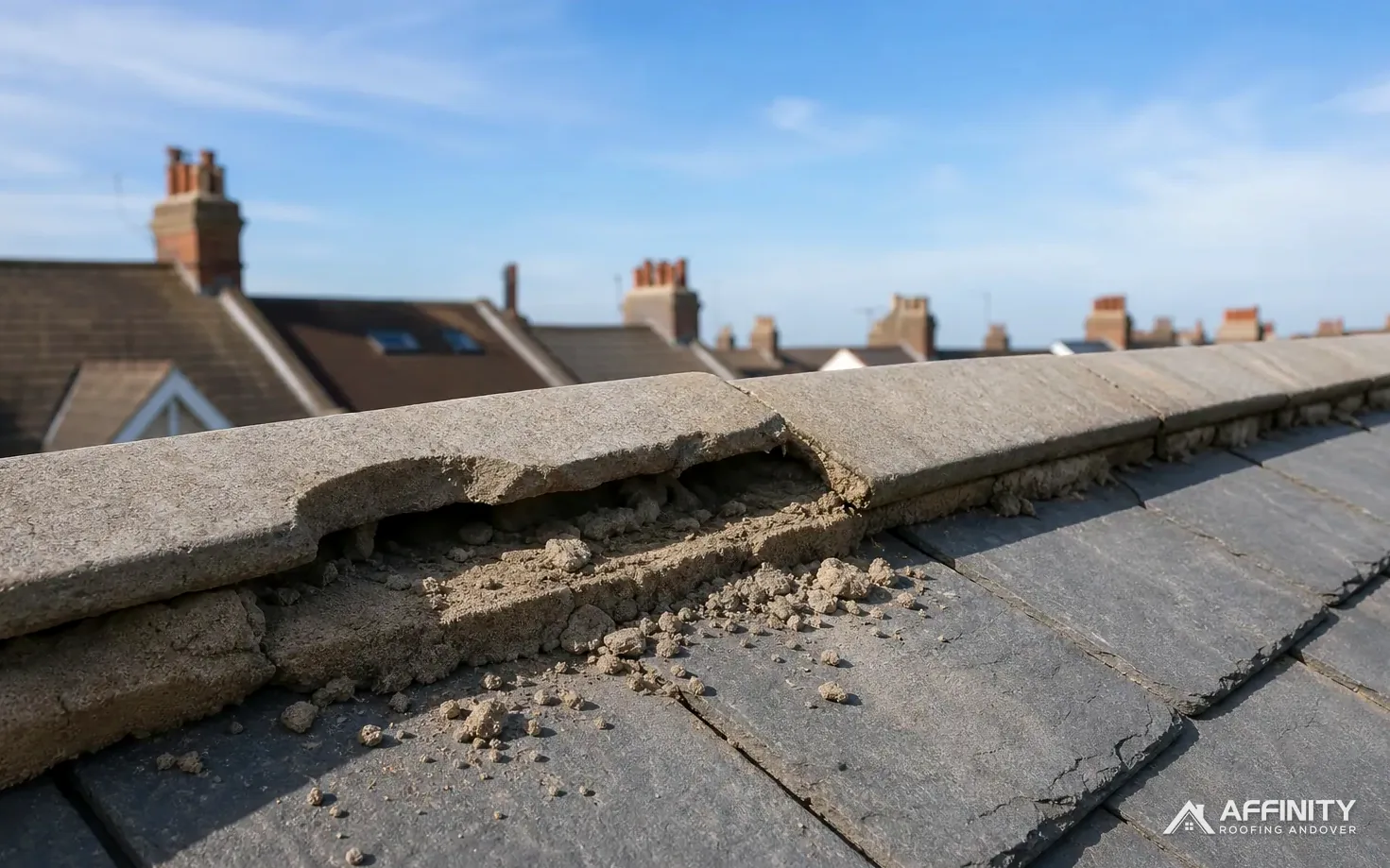
Where a replaced slope reaches a ridge, the ridge tiles are lifted and refixed. BS 5534 was revised in 2014 so that mortar on its own no longer holds ridge and hip tiles to the standard. BS 8612 tests the dry-fix systems used instead, and mortar still has a place beside them.
Lead and flashings
If the new area meets a wall or a chimney, the lead flashing there has to be checked and, usually, renewed with it.
None of this is difficult for a competent crew. It is the detail that separates a neat partial job from one that fails, and it is the first thing to ask about when you compare quotes for the same work.
Approval thresholds for partial work
Smaller jobs are not exempt from the rules, and the thresholds are worth knowing before you start.
Building Regulations
Whether an application is normally required at all turns on two Planning Portal tests, and the work has to pass both. It must touch under 25 per cent of the building envelope as a whole, meaning the walls, floor, roof and every window, door, roof window and rooflight, and under 50 per cent of the roof itself. One slope or an extension roof will usually pass both, though a big slope on a small house may not.
Heavier coverings
A separate trigger is weight. If the new covering adds 15 per cent or more to the load, approval is needed however small the area, and a structural check is recommended. A covering whose fire rating differs markedly from the old one is caught too. Laying heavy tiles on one slope of a light-tiled roof is therefore an approval question, not a detail.
Council wording
None of the councils around Andover publishes its own percentage. Basingstoke and Deane's building control page lists roof coverings, pitched or flat, among projects that might need approval, so addresses in that borough are checked before work begins.
Planning
Re-covering part of a house roof falls under Class C of the permitted development rules, so planning permission is not normally required. Flats sit outside those rights altogether. A listed house needs listed building consent as well when the work changes its special interest, and an Article 4 direction can take the right away. Our guide to re-roofing in a conservation area goes into detail.
The first call goes to your building control body, and its answer travels with the written price so that nothing is left to chance mid-job.
Doing it in stages without paying twice
A roof renewal can be planned over several years. Done sensibly, staging works. Done carelessly, it costs more than a single job.
The scaffold problem
Scaffolding is a large cost and a large hassle. Two small jobs each need their own hire. If you know the whole roof will be done within a few years, ask whether the first stage can be planned so that the scaffold can be reused or the second stage follows soon after.
Plan the order
The sensible order starts with the part in the worst condition, or the part seen from the street if appearance matters most to you. Note what was done, when, and with which covering, so that the second stage matches the first, and file the product name with the paperwork.
Keep the records
Photographs, receipts and the written price from each stage are useful to a later buyer and a later roofer. Ask for them. If the roof carries a covering from a particular maker, keep the product name.
When to stop and do it all
If the survey finds rotten timber under the "good" part, damp insulation or widespread nail sickness, patching one area only moves the problem. A full replacement is then the better route, and the roof replacement page explains the choices.
What we put in writing
The written price states exactly which areas are covered and which are left, so there is no argument later about what was included. If the remaining roof needs attention, the survey notes say so, with photographs, and you can keep them for the second stage.