The short answer
Peg tiles are clay plain tiles with a hole near the top, hung on the roof battens by a small peg, traditionally of oak, instead of a nib moulded into the tile. They are found on old roofs, many of them handmade. Repairs usually use reclaimed tiles to match, and a listed or conservation-area home has consent rules to follow first.
Clay tiles hung on pegs
Most clay plain tiles hang from a batten by a nib, a small lip moulded on the back of the tile at the top. A peg tile has no nib. Instead, it is pierced with a hole or two near its head, and a peg of timber, traditionally oak, is pushed through the hole and hooks over the batten. The tile hangs from the peg.
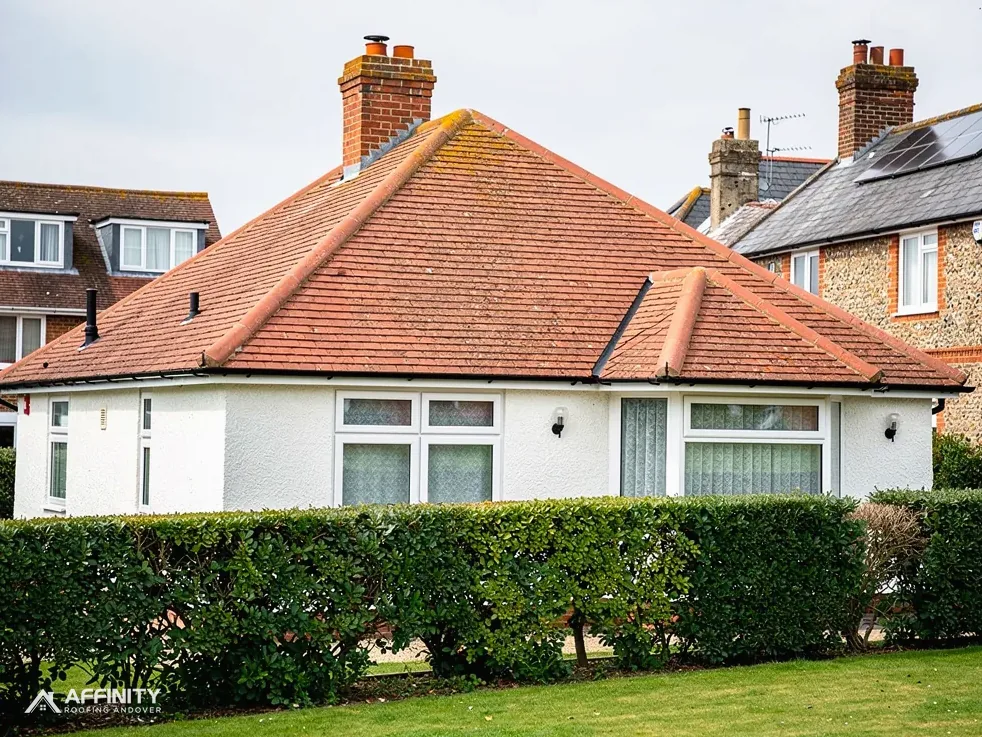
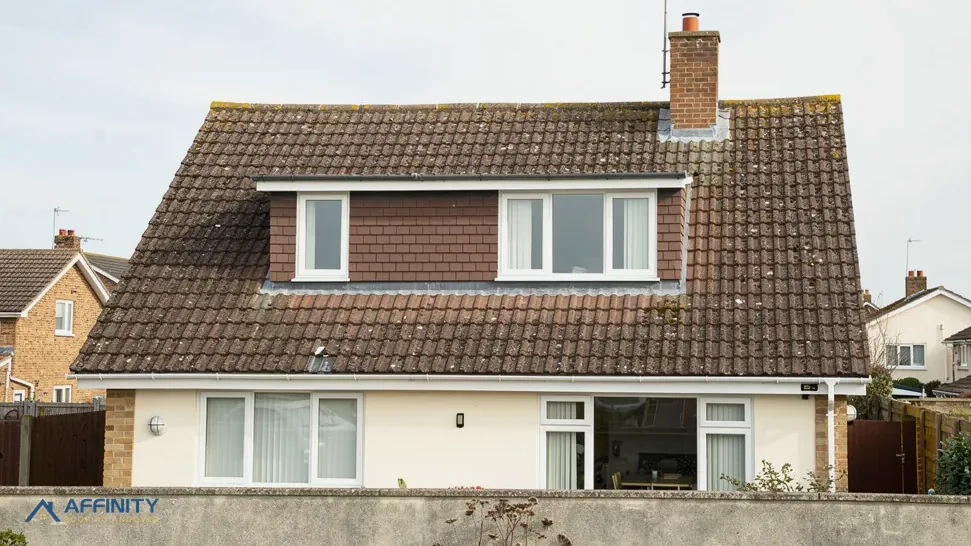
Like other plain tiles, peg tiles are laid in overlapping rows, with each course covering the joints of the course beneath and the tile two courses down. A well laid roof of this kind sheds water through the overlap, with no single layer doing the work alone. The tiles are normally slightly curved, which helps the water run off.
You can usually spot them from the loft. Look at the batten line for small wooden pegs, sometimes worn or darkened, sticking up through the tiles' holes. From the ground, a peg-tile roof often has a slightly uneven, hand-made look, because the tiles were fired in small batches and are not perfectly regular. That gives the roof its character, and it is also the reason that new tiles rarely match.
Why they are a repair specialism
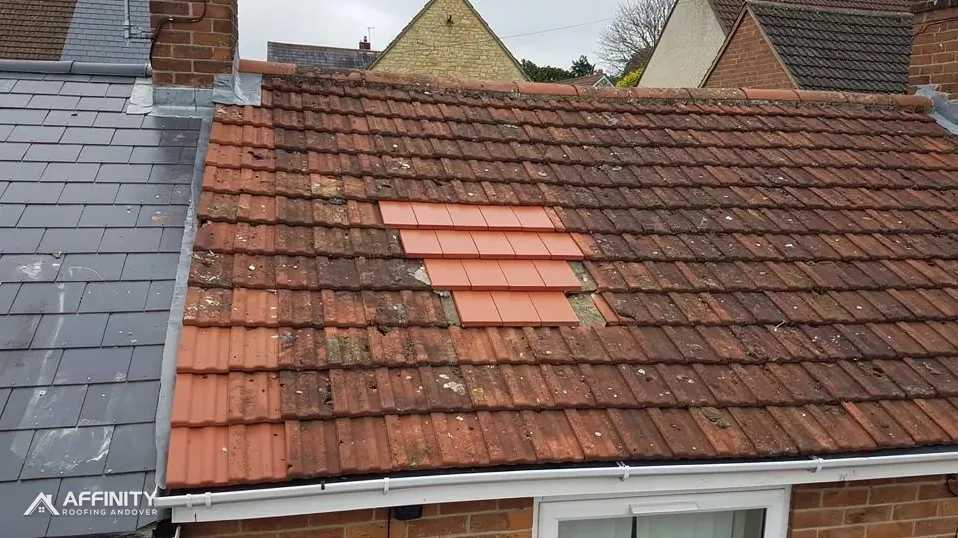
Pegs rot, snap or work loose, and when that happens the tile it held can slip or drop. Because the tile is only held by the peg and by its overlap, a few failed pegs can let several tiles move, and the first sign is usually a tile on the ground or a gap on the slope.
Modern plain tiles with nibs are made to a standard pattern, and replacement pegs of timber are easy to cut. The difficulty is the tile itself. Handmade clay varies in colour and size, and a new machine-made tile beside an old one is obvious. It may also sit differently on the batten, which affects the overlap and the line of the course.
The right approach is to fix what has failed. We replace failed pegs, rehang tiles that have slipped and only replace tiles that are cracked. Where a larger area has gone, a survey shows whether it is local or runs across the slope. Our page on clay plain tile roofs covers the family these tiles belong to.
Repairs with reclaimed tiles
Reclaimed tiles come from other roofs that have been stripped. They are already weathered, so their colour and surface match an old roof far better than any new tile can, and for peg tiles the match in size and pierce is important too. A good salvage supplier can often find tiles from the same period and region.
The work is careful. Tiles around the repair are lifted and set aside, damaged ones are taken out, and the reclaimed tiles are fitted in the same pattern with fresh timber pegs, each one checked for a sound hole and an unchipped head. The old tiles are then replaced in their original courses. The result keeps the slope's appearance, and any tile that has to be new can go on a back slope where it is less visible. That also gives the roof a chance to weather evenly, so the join between old and new does not shout.
Clay tiles last. The BRE gives a minimum life expectancy of 60 years for clay, according to Marley, and HomeBuilding gives clay 60 to 80 years. Those are typical ranges, not promises, and a sound old peg-tile roof can outlast them. Our guide to matching old roof tiles gives more detail on the process.
Old pegged roofs and consent rules
A home with a peg-tile roof is often old, and old homes are often listed or in a conservation area. A listed house keeps its permitted development rights, yet also needs listed building consent for any alteration touching its character, so a repair that alters the tile, the pegs or the pattern may need that consent. Ask the council before you start, and keep the answer in writing.
In a conservation area, planning rules can limit changes to the roof covering. Basingstoke and Deane's Article 4 advice for four of its town conservation areas is a useful example of how strict a council can be: it asks for the original clay roof tiles to be retained. Closer to home, Andover has Grade II* listed buildings of its own, such as the Guildhall. For your own address, check with Test Valley Borough Council's planning team whether a listing or the Andover conservation area applies.
We survey the roof, photograph the tiles and pegs and describe what is original, so you have a clear record to show the council. The repair aims to keep the original tile wherever it is sound. The right repair for an old roof is rarely a new roof, and our pitched roofing work reflects that.