The short answer
You can, but you should not. Roof tiles are designed to shed rain, not to carry a person, and many crack under a boot. A fall from a roof is also serious. Roofers spread their weight on roof ladders and boards, and use scaffold or a tower where the work needs it. A look from the ground, a camera or a survey is the safer first step.
Why tiles crack under a person
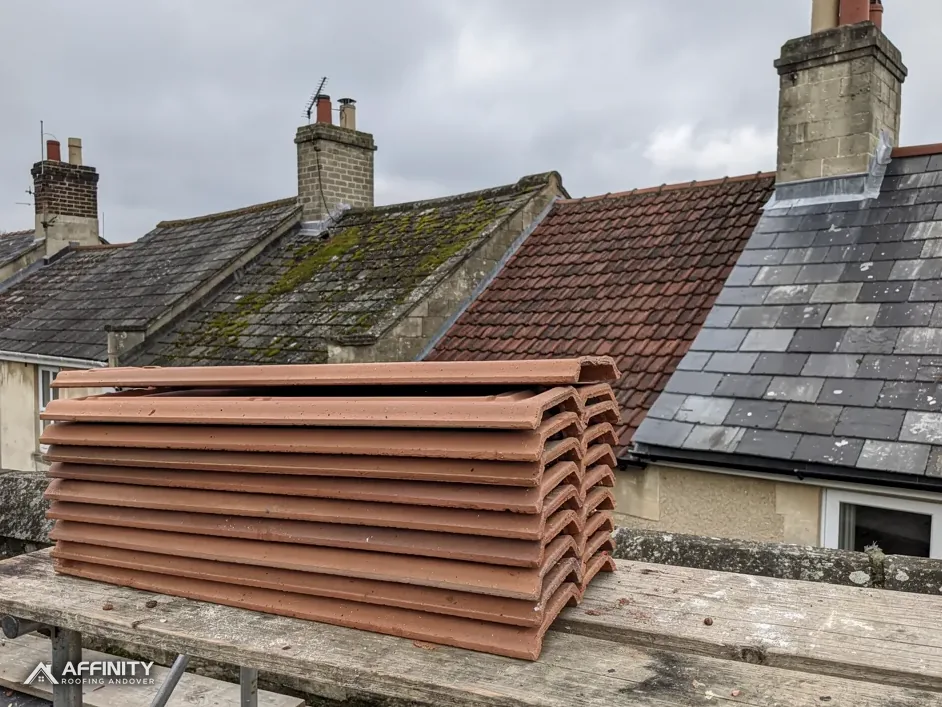
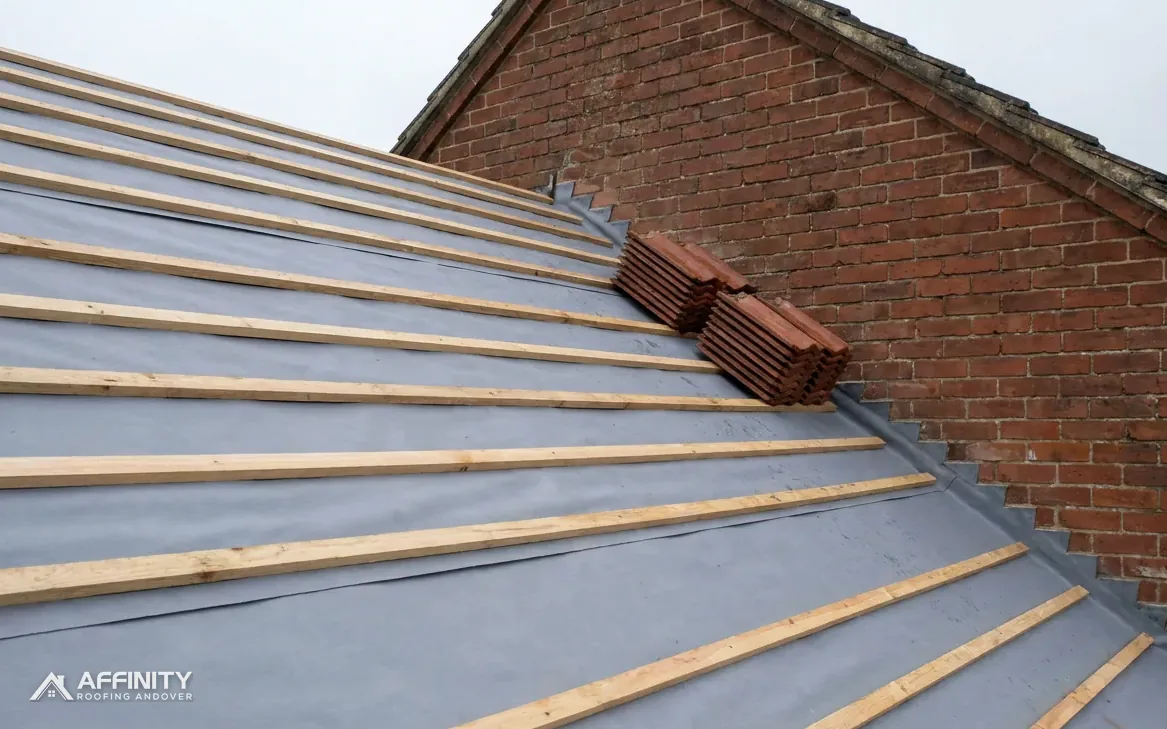
A roof tile spans the gap between two battens, the timber strips across the rafters. Where it rests on a batten it is well supported. In between, its weight and the load on it are carried by the tile itself, and a concentrated load such as a heel or a knee can crack it. Many tiles are thin at the tail, so a crack there is easy to cause and hard to see.
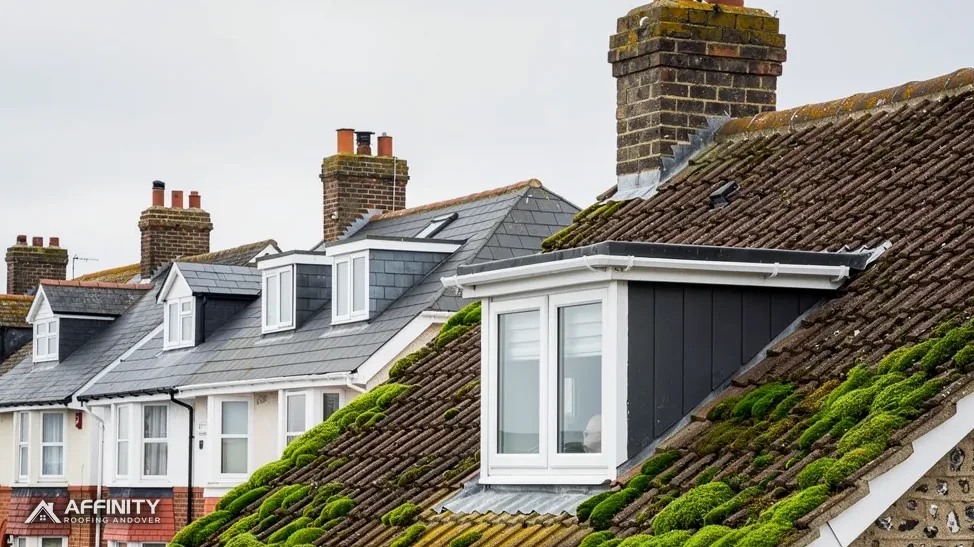
Condition makes a large difference. A tile that is wet, mossy or frosted can be slippery, and one that has aged can be brittle. Clay, concrete and slate each behave differently under load, and slates, being thin and layered, are especially easy to break. You often cannot tell from standing on one whether it has cracked, because the damage shows only when rain runs through the break.
This is why a person who walks on a roof to look for a leak may cause a fresh one. A cracked tile leaks, and a tile that has shifted can leave a gap. Our answer on a cracked roof tile shows how that damage is found and mended.
How roofers spread their weight
A roofer does not simply step across tiles. For work on a slope, a roof ladder is hooked over the ridge, the crest where two slopes meet, and rests along the slope so that the roofer's weight is spread across several battens and tiles. Crawling boards, wide planks that lie across the slope, do the same job on a larger area.
The roofer works from these, holding the roof ladder, and moves them as the work moves. Where the roof is high, steep or hard to reach, a tower or scaffold gives a stable platform around the eaves, and a safe edge to work from. A roof ladder only spreads weight. It is not a guard against a fall from the edge, and that is what the scaffold is for.
The equipment needs to be set up correctly: the ladder hooked securely over the ridge, the base footed, the boards laid on sound areas and the roofer using proper footwear. A person who goes up with none of this is trusting the tiles, the battens and luck. A roofer who goes up with it is trusting a method that has been designed for exactly this purpose.
What foot traffic breaks
Cracked tiles are the obvious damage, but they are not the only kind. Walking on ridge tiles can break the mortar or the dry-fix clips that hold them, and the ridge is the part of the roof that most needs to stay secure. Footfall near the verge can loosen the edge tiles or the cement bedding there.
Walking can also strip the surface of concrete tiles, whose colour layer is thin, and scratch glazed or coated tiles. Over a flat area, it can dislodge tiles from their nails, particularly on older roofs where the fixings are tired, and tiles that have slipped may be sitting on nothing.
Equipment left up there causes problems as well. A ladder leant against the tiles instead of the gutter bracket, a bucket dropped from height or a cable run across the slope all do their own harm. Lead flashing at chimneys and valleys can be creased by a boot, and a dented flashing leaks. Even when nothing breaks at the time, a roof walked on without care can start leaking weeks later, and the connection is hard to prove.
Leave it to a roofer: safety comes first
The risk is not only to the tiles. Falls from roofs cause serious injuries, and a pitched roof wet with rain or dew gives no second chance. If you suspect a problem, look from the garden first, using binoculars or a phone's zoom, and then from inside the loft with a torch.
A ladder resting on the tiles is no way to climb higher, and nobody should go onto a roof alone, in wet or windy conditions, or with a damaged tile underfoot. If a tile is hanging, keep people clear of the area beneath and tell us.
When we survey, we use the right access for the roof: a roof ladder for a small job on a low slope, and a tower or scaffold for a high one. For Andover, the highway authority is Hampshire County Council, and a scaffold across the public road or pavement is licensed by it under the Highways Act 1980. Any licence is arranged by us with the scaffolder. Our guide to replacing roof tiles without scaffolding says when a lighter set-up is enough, and the pitched roofing hub covers the rest.