The short answer
Published figures disagree, so we give two. Marley looks for around 60 years from its tiles and says that figure is no guarantee. HomeBuilding gives 40 to 50 years for plain concrete and Double Roman tiles alike. Treat both as typical ranges, and look at the whole roof, not the tile alone.
Two sources, two answers
A single number would be tidier, but two published answers differ, and it is better to show both. Marley, a roof tile maker, looks for around 60 years of life from its tiles. In the same passage it describes the figure as neither a guarantee nor a warranty of longevity, which is worth taking at face value.
HomeBuilding and Renovating, in a guide revised at the end of September 2025, puts plain concrete tiles at 40 to 50 years, and Double Roman tiles, a broad interlocking profile, at 40 to 50 years too. Its range for clay is longer, at 60 to 80 years.
The gap between 40 and 60 may reflect different assumptions: the product, the exposure, the quality of fixing and what counts as the end of life. We do not pick one and call it the answer. A sound roof with careful upkeep may sit toward the upper figure, and a neglected one toward the lower.
One caution matters. The 60 years above is Marley's own expectation for its tiles. It is not a national standard for concrete, and a roof that is neglected can fall well short of any published range.
Surface wear and real failure
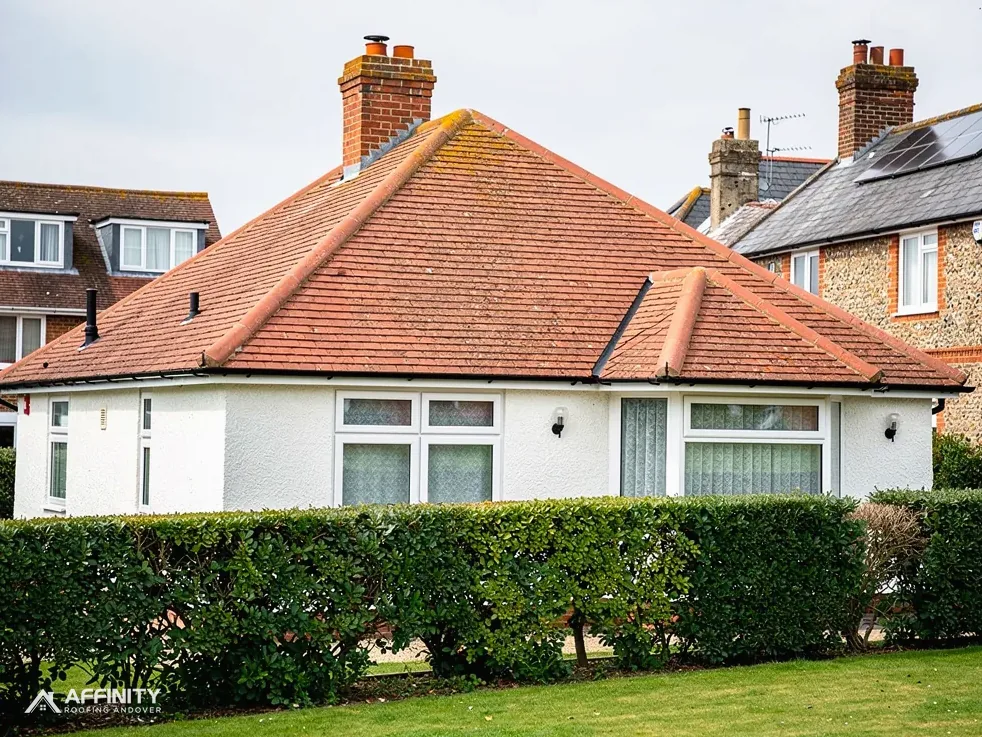
The first thing that changes on a concrete roof is the look. Colour fades, moss and lichen settle, and the surface roughens. Those changes are normal, and they are not the same as failure. Our answer on why concrete roof tiles fade explains what to expect and what is cosmetic.
Failure looks different. A tile that has cracked through, split along its length or lost a corner no longer sheds water. A face that crumbles and flakes in layers has lost its protective skin. A tile that has become porous and stays dark and wet long after rain is taking in water, and frost can then work at it.
Fixings are another source of failure. Nails can corrode, clips can fatigue, and tiles at verges and eaves may lift in wind if their fixings give out. A roof can fail by the loss of tiles, not by the tile material itself wearing through.
It helps to separate the three: how the roof looks, how the tile surface is holding and whether the system beneath is intact. A faded roof with sound tiles and fixings can serve for many more years.
What shortens or extends the life
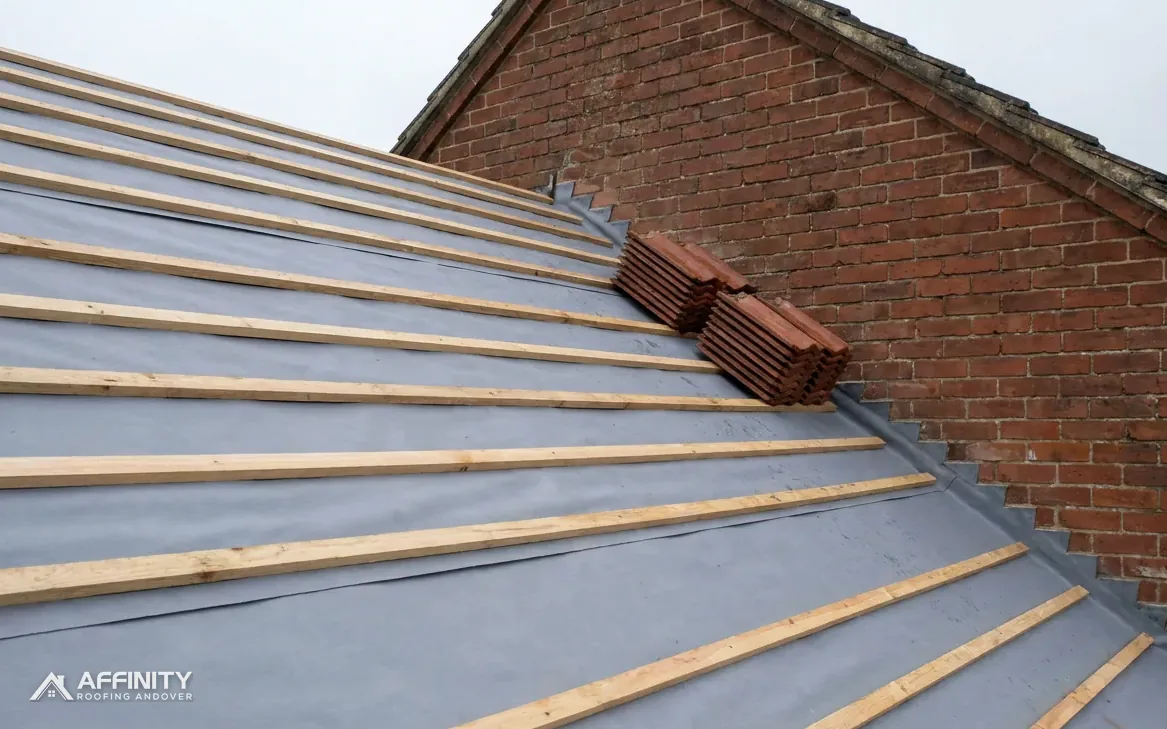
Several things set the length of a concrete roof's life. The quality of the original fixing is one. Tiles on a roof laid with sound battens, a good underlay and the right clips are protected against wind and slippage. Where fixings were skimped, tiles can move early.
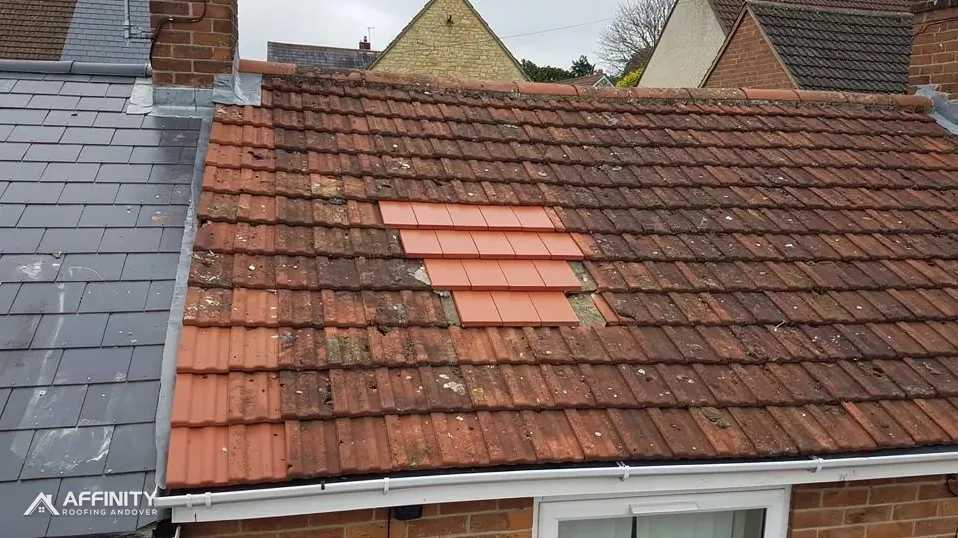
Maintenance is another. Clearing gutters and valleys, replacing broken tiles quickly and keeping moss from packing the laps all slow wear. A single missing tile can let water into the underlay and the battens for months before a stain shows.
Exposure counts as well. A roof in shade holds moisture longer than one in open sun. Trees overhanging the slope drop leaves and keep it damp.
Finally, the underlay and battens beneath may reach the end of their life before the tiles do. Our answer on how long clay roof tiles last makes the same point for clay, and it holds for concrete too. When we survey, we photograph the tiles, the fixings and the timbers beneath, so the whole system is judged, not just the surface.
Planning for repair or renewal
If your concrete roof is within the published ranges and in decent order, keep it up with small repairs. If it is beyond them, or showing flaking, cracks and failing fixings, ask for a survey that says what is left in it. The result may be targeted repair, stripping and relaying on new battens, or a new covering.
Costs depend on the area, the access, the tile and what lies beneath, and one written total is given once we have surveyed. Repairs to a few tiles are small jobs. A strip and relay costs more, since battens and underlay are renewed, and a full re-roof costs more again.
If a change of tile is likely, ask about weight and approvals, which our answer on heavier roof tiles covers. It also helps to know your roof's age. If you moved in recently, your survey report or the house's paperwork may give a date for the last re-roof.
At the survey we photograph the problem tiles, the fixings and the timbers, and we explain what we would do first and what can wait. For more on tiled roofs, visit the pitched roofing hub.