The short answer
Not always. Underlay is laid with a gentle drape between the rafters, so a soft sag you can see from the loft is often how it was fitted. It becomes a problem when the felt has split, perished or slipped at the eaves, when it touches the tiles or holds water. Replacing it means lifting the tiles, so a survey comes first.
What the felt is for and why it drapes
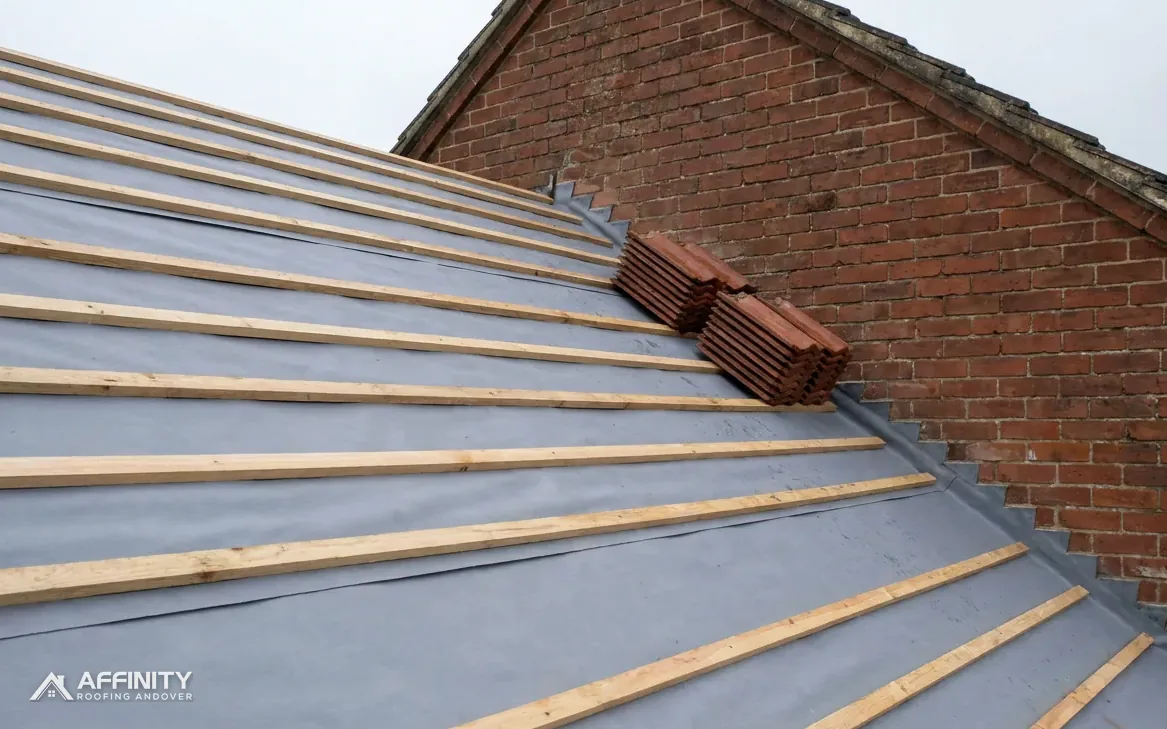
Under the tiles, fixed across the rafters, is a layer of underlay, commonly called roofing felt. Its job is to catch the small amount of water that blows or seeps past the tiles, and to guide it down to the gutter. Tiles are not sealed to each other, so no tiled roof relies on the tiles alone to stay dry.
The underlay is not pulled drum-tight. It is laid with a gentle drape, a slight sag between each pair of rafters, so that any water that reaches it can run down the slope beneath the battens and clear of them. Pulled flat, the felt would press against the battens and could hold water against the timber.
So the first thing to know is that a soft curve in the felt between rafters is normal, and nothing in itself to worry about. It looks worse from underneath because you see the underside of the whole slope at once. A drape that looks like a shallow bowl is usually the original fitting, not damage, and it may have been that way since the roof was built.
When the drape stops being normal
Look for signs that it has gone further than a gentle curve. Felt that hangs low enough to touch the tiles or the back of the battens is a worry, because it can hold water and drag moisture into the timber. Pools of water, stains on the felt, or damp patches on the rafters below suggest it is no longer shedding water properly.
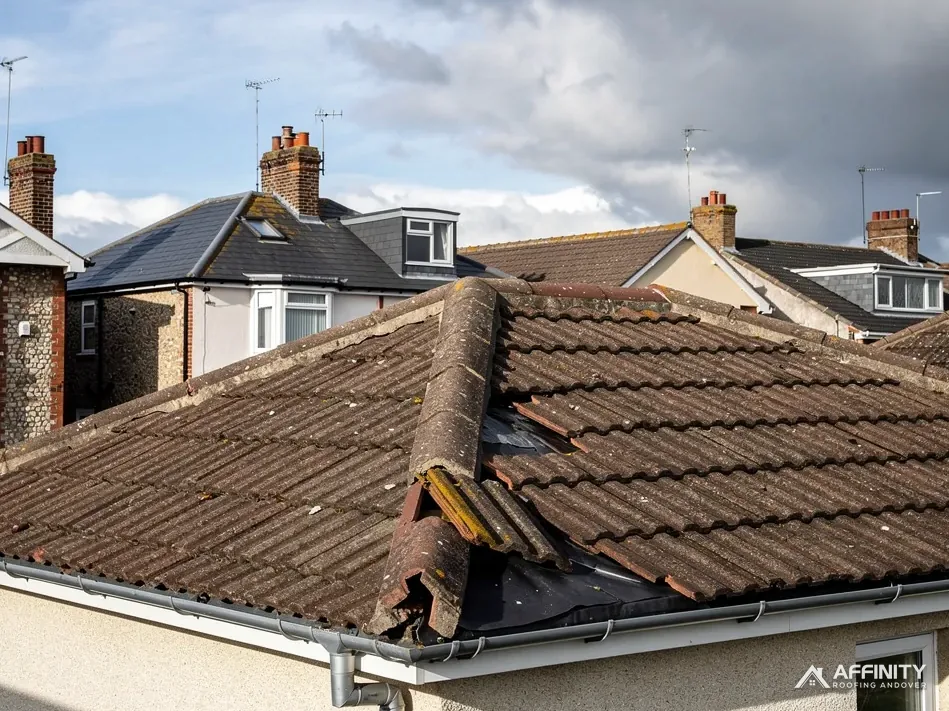
Felt also splits. Old underlay stiffens, cracks along the line of a batten and tears where nails pass through it. Daylight through a gap, or dust and debris falling through, points to a break. Rodents and birds can also chew through it, and it sometimes tears when a roof is poorly repaired.
The condition of the felt matters most for how a roof ages. If the underlay is sound and the tiles above are intact, the roof is working as designed. If the underlay has failed, the tiles become the only defence, and wind-driven rain can then reach the rafters. Our comparison of breathable membrane and roofing felt explains how the two types of underlay differ and age.
Perished felt at the eaves
The eaves, the lower edge of the roof over the gutter, are where the felt takes the most punishment. Water runs down to it, the felt has to carry that water into the gutter, and the edge is exposed to light and frost. If the felt ends short of the gutter, or has perished and curled, water can run behind the fascia board, the board along the eaves, and rot it.
This is also where ventilation matters. Marley sets out two cases for a cold roof. Where the underlay is HR, which is non-breathable, it asks for a 25 mm opening running the full eaves length on pitches of 15 degrees or less, and 10 mm on steeper pitches. Where the roof has an LR breather membrane over a well-sealed ceiling, it accepts the ordinary eaves construction as the ventilation, subject to third-party certification.
A sagging felt that blocks the eaves gap can choke that airflow and add to condensation in the loft, so the ventilation question and the felt question often go together. Our page on pitched roof ventilation covers it in more detail.
Replacing underlay means lifting the tiles
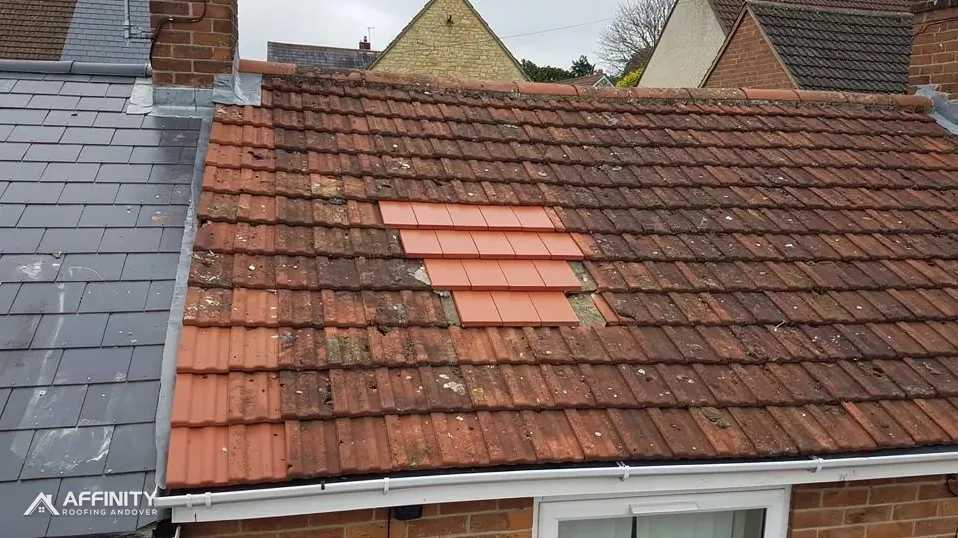
Underlay sits beneath the battens and tiles, so it cannot be renewed from the loft. To replace it, the tiles and battens in that area have to come off, new underlay is laid, the battens go back and the tiles are relaid. Where only the eaves strip is damaged, a localised repair may be possible, by fitting a new eaves tray or support under the lower courses.
That is why we survey before we suggest anything. We look at the felt from the loft, check the battens and tiles above, and photograph what we find so you can see it. If a small patch is torn, we may repair that and leave the rest alone. If the felt has gone all over the slope, the honest advice is that the tiles need to come off, and the underlay is renewed as part of the job.
It is cheaper to renew underlay while the tiles are off for another reason, such as a re-roof or new battens. Our pitched roofing work starts with the survey, then one written price. Area, access and the condition of what lies beneath all move the figure.