Re-tiling means stripping the old covering, renewing the timber battens and underlay beneath it, and fitting a new covering, either the old tiles reclaimed or new ones. For a homeowner it is usually the biggest roofing job they will ever commission, so it is no surprise that a price is the first thing they ask for, often before anyone has stood on the roof.
The difficulty is that nobody can price it fairly from a postcode. Published cost guides give national ranges, and those ranges are wide. They also differ from one another, because each surveys different traders and assumes a different kind of house. A range shows what a job of this size looks like across the country. It cannot tell you what your own roof will cost.
This guide sets out the figures from Which?, HomeBuilding and MyJobQuote, explains why they disagree, lists what pushes a re-tile towards the top or bottom of a range, and describes how a fair written price is built for an Andover-area home. Dates matter with cost guides, so each figure below carries its own. Guides are also written for a national audience, so they are best used as a sense check on the size of the job, not as a budget.
The published ranges for a whole roof
Three guides give figures worth reading side by side. All are national typical ranges, and none is an Affinity price.
Which?
A Which? survey of 11 tradespeople, gathered in November 2025, puts a full roof replacement on a typical three-bedroom house at £7,000 to £21,000. The figures cover labour and materials, with VAT left out.
HomeBuilding
HomeBuilding (page updated 30 September 2025) offers a narrower worked example. A three-bedroom semi of 65 m² with a new plain concrete tile covering falls between £10,000 and £15,000, with labour, scaffolding and insulation included. The same house in Welsh slate, it adds, might reach £18,000.
MyJobQuote
MyJobQuote's new-roof page (6 October 2026) gives a figure of around £5,250, well below the other two. The page does not state whether VAT is in it, so ask whether any quote you hold includes it.
Reading the three together
Taken as a group, the guides stretch from around £5,250 to £21,000. That does not mean one of them is wrong. It is what a market looks like when house sizes, coverings and access vary so much. Our pitched roofing page shows where a re-tile sits among the other jobs on a pitched roof, from a single slipped tile to a full strip.
What the ranges leave out
None of the three says what happens when the strip reveals rotten timber or a chimney that needs attention. Those discoveries are why a survey beats any guide. A roof of tired tiles on sound timber is a different job from the same roof with rafter feet that have rotted, and the guides cannot tell the two apart. Neither can anyone else without looking, which is why we photograph the roof before we name a price.
Why the guides disagree
Cost guides are not measuring the same thing, and the differences matter more than the headline numbers.
Different houses
Which? describes an average three-bedroom house without a floor area. HomeBuilding states 65 m² and a semi-detached plan. A detached four-bedroom house with a wide, double-fronted roof is a different job from either, so a range for one does not stretch neatly to the other.
Different coverings
HomeBuilding's example is plain concrete tile, and it notes that Welsh slate on the same house could reach £18,000. Slate costs more to buy and takes longer to fix. A guide that never states its covering is blending concrete, clay and slate roofs into one number.
Different inclusions
HomeBuilding counts scaffolding and insulation inside its range. Which? names labour and materials only. MyJobQuote lists nothing. When one range includes scaffold and another leaves it out, a wide gap between the ranges is easy to account for.
Different dates and samples
The Which? survey covers 11 traders in November 2025. HomeBuilding's page dates from September 2025 and MyJobQuote's from October 2026. Prices move, and each guide is a snapshot of its own moment.
The practical lesson: treat a guide figure as the opening of a conversation. The only number that carries weight is the written price issued once your own roof has been surveyed.
What pushes a re-tile up or down
Most of the movement in a price can be seen at the survey. A few drivers sit outside the covering itself.
Roof size and shape
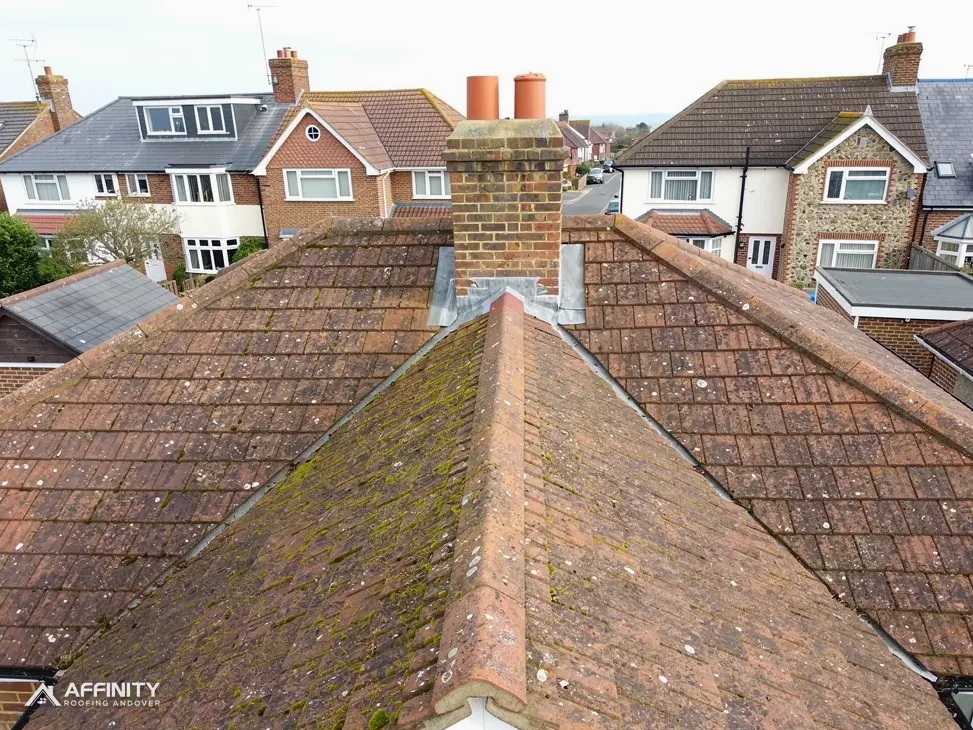
Area comes first: more square metres to strip and relay means more labour and more material. Shape follows. A plain gable roof with two slopes goes quicker than a hipped roof with valleys, dormers and a chimney, because each junction needs cutting, flashing and fitting by hand.
The covering you choose
Plain clay, interlocking concrete and natural slate sit at very different prices per square metre and take different amounts of time to fix. Our guide to concrete versus clay roof tiles sets out the contrast. Within slate, HomeBuilding's supply-only prices show Welsh costing about 2.5 times as much as Spanish.
Condition underneath
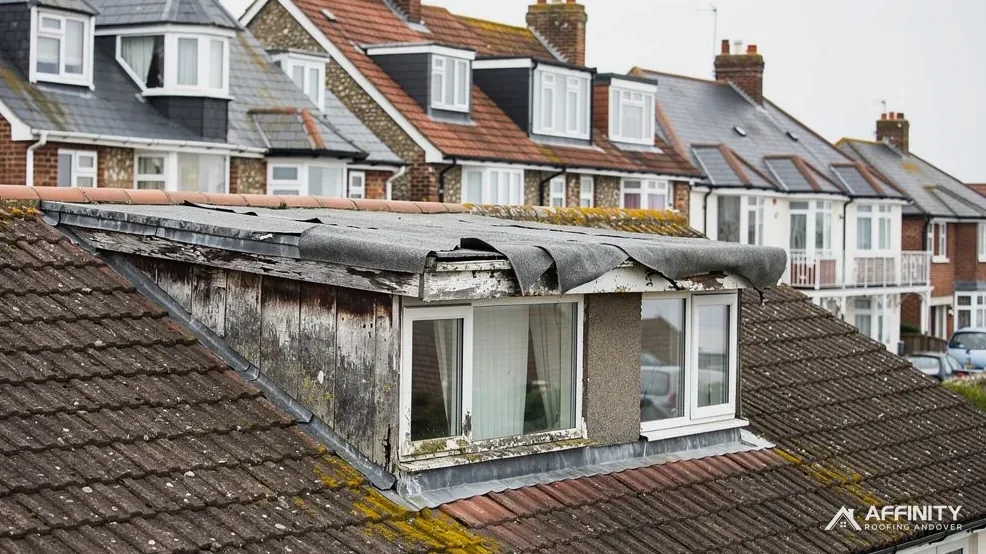
Rotten battens, perished underlay and damaged rafter ends only show once tiles come off. A look from the loft and the eaves picks up some of them in advance, and the rest are agreed on site before anything is fixed.
Access and scaffold
A tall house, a narrow plot or a roof that overhangs a road changes the access. Scaffold is part of the written quote, and what it costs depends on the house and the set-up, so no general figure is given here.
Finishing and waste
Old tiles and timber must be taken away, and a full strip produces a large volume of waste, and taking it away is part of the work. Ridge, hip and verge details are finished last, and a house with long verges or many hips has more of that work than a plain one.
Repairs against a full re-tile
A re-tile is not always the answer. A roof may need less, and the published repair figures show how large the gap can be.
Small repairs
Which? gives £75 to £400, ex VAT, to replace as many as six standard tiles that are broken or gone (Nov 2025). MyJobQuote's average for replacing five tiles is around £215 (6 October 2026). It gives the average roof repair as around £650 in 2026 (6 October 2026), and an emergency call-out as typically £150 to £300 (22 October 2026).
When a repair stops making sense
Repair works while faults are few and the structure beneath is sound. It stops working when tiles slip because the battens behind them have failed, when the underlay has perished or when the covering has simply run its course. At that stage, repeated visits cost more than doing the roof once.
Lifespans as a guide
HomeBuilding gives clay tiles 60 to 80 years and plain concrete 40 to 50 (Sep 2025). These are typical ranges, not warranties. A roof near the bottom of its range with a growing list of faults is a candidate for re-tiling, while a younger roof with a local problem usually is not.
The survey decides
We photograph the faults and the sound areas alike and send the pictures with our view. If repair is the better buy, we recommend it. If the roof needs stripping, the photographs show why.
A roofer who recommends a new roof without showing the evidence deserves a second opinion.
Rules, approvals and VAT on a re-tile
A re-tile can bring in a few rules that affect cost and timing.
Building Regulations
The Planning Portal's test says no building control application is normally needed when under 25 per cent of the building envelope and under 50 per cent of the roof is affected. Bigger jobs need approval, as does any covering 15 per cent or more heavier than the one removed. Basingstoke and Deane's building control page puts roof re-covering on pitched and flat roofs on its list of projects that might need approval, wording that is that council's own and applies to its addresses only. The other councils in our area give no percentage, so the Planning Portal test is the working rule, and building control confirms the route before work starts.
Planning
Re-covering a house roof normally falls within Class C of the permitted development rights. A listed house adds listed building consent where its character is touched, and a conservation area calls for a check on any Article 4 direction with Test Valley Borough Council.
VAT
GOV.UK gives the standard rate as 20%. Installations of energy-saving materials made from 1 May 2023 to 31 March 2027 carry no VAT, and the reduced 5% rate applies from 1 April 2027. That reduced rate covers energy-saving materials, and does not extend to roof repairs.
Scaffold licences
Where scaffold has to stand on the highway, the highway authority licenses it; the scaffolder and we sort that out together.
How one written total is put together
Once the survey is done, a single written total follows, covering everything. That single price covers stripping the roof, the timber, the underlay, the covering, the ridge, hip and verge details, scaffold, waste and clearing up.
What the survey records
We measure the roof area and pitch, count chimneys, valleys and roof windows, check battens and rafter ends where we can reach them and photograph the covering. The photographs travel with the price, so every figure rests on what is actually on the roof.
What to check in any quote
Ask whether VAT and scaffold are in the total, which covering and underlay are named, and who pays if rotten timber is found under the tiles. Citizens Advice recommends at least three written quotes, and what counts is whether each describes the same job.
Dates and payment
Agree in writing when work starts, how long it should take and how any payment is staged. An off-premises contract, including one signed at home after a survey, carries a 14-day cancellation right. The Citizens Advice consumer helpline is 0808 223 1133.
The underlay question
The underlay is chosen as part of the price, and it affects loft ventilation. Our guide to breathable membrane versus roofing felt explains the choice.
Your own figure
Because every house differs, the only reliable figure is the one that follows a survey.