The short answer
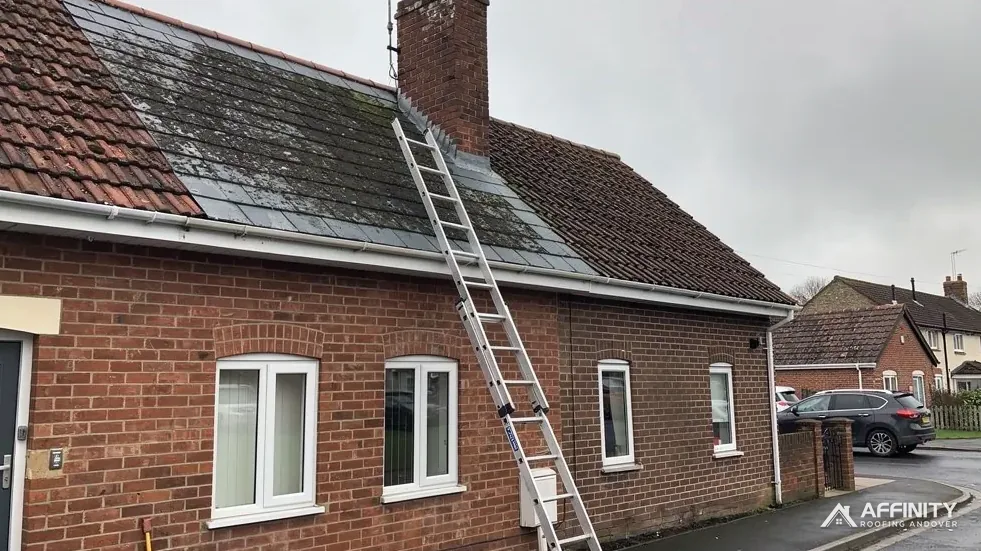
Tiles lift in the wind when they are not held down well enough: nails have corroded or are missing, clips were never fitted, or the battens beneath have weakened. Wind then lifts the tail of a tile and works it loose. Tiles that lift are a warning, so have them looked at before the next blow takes more.
Why tiles come loose
A tile sits across two or three battens, the strips of timber laid over the rafters, and is held by its own weight, a pair of nails and, on many roofs, a clip. Moving air creates suction on the lee slope and forces its way up under any tile edge that is not tight. A well-fixed tile resists that. One with a weakness does not.
The weaknesses are usually small. Nails rust through with age, and the tile then relies on weight and friction alone. Nail holes enlarge after years of movement. A batten that has gone soft with damp gives the nail nothing to bite into. Tiles at the edges are the most exposed, because air can reach them from the side as well as from below.
Sometimes the cause is a repair done at some point in the past. A tile slid back into place without a clip or nail is held by friction, which may not last. So although the wind brought the problem to your attention, it rarely created it. It simply tested the fixings that were there.
Missing fixings and the role of clips
BS 5534 is the code for slating and tiling, and it expects tiles to be fixed mechanically, by nails and clips that grip the timber. Marley notes that the law does not demand it, though its fixing rules help explain why a roof with loose tiles may be under-fixed.
A clip hooks over the lower edge of the tile and stops the tail lifting. Where clips were never fitted, or have corroded, the only defence against uplift is the nail near the head. Our answer on roof tile clips goes through how they are used.
When we survey a roof with lifting tiles, we look along the whole slope, not just at the tile that was reported. We check how many nails each course has, whether clips are present, how the battens look from the loft and whether the verge and eaves are secure. Each finding gets a photograph for you to keep. Often a handful of edge tiles can be re-fixed. If the failure runs right across the slope, it is a larger decision, and we tell you plainly which it is.
Storm damage or wear and tear: how insurers decide
Two questions tend to decide whether an insurer pays for lifted tiles. Was there a storm, as your policy defines one? And did that storm cause the damage, or did it find a roof already failing? Look at the policy wording first, because each insurer words its own definition.
The Financial Ombudsman Service (FOS) publishes how it approaches storm complaints. For wind storms it looks for violent gusts, often with rain, hail or snow, and it consults the Beaufort Scale, although it also notes that heavy rain or snow can be a storm without strong wind. It then asks if the damage is the sort that kind of event leaves. A roof that was visibly poor beforehand, or wear that built up over time, is where claims commonly stall.
We cannot predict what your insurer will decide, and nothing here is a promise of a payout. Evidence helps: photos of the roof from before the event if you have them, photos afterwards and receipts for emergency work. Which? reported that only 32 per cent of storm claims made in 2024 ended in a payout. If an insurer refuses and you want it reviewed, the FOS helpline is 0800 023 4567.
Make-safe first, permanent repair second
A lifting tile is a hazard. It can drop onto a path, a garden or a car, and the gap it leaves lets rain into the loft. The first step is a make-safe: removing or securing loose tiles and covering the gap so the rain stays out until a proper repair can be arranged. That comes before any talk of anything bigger.
Tell your insurer first if you are considering a claim, limit yourself to the temporary repair, and keep your photos and receipts. IStructE, the structural engineers' institution, calls photographs vital evidence of damage when a claim is made. Please do not climb up to inspect it yourself; our answer on walking on roof tiles explains why.
Once the roof is safe, the permanent repair follows the survey. It might be re-fixing tiles with new nails and clips, replacing cracked ones, or working over a larger area, and our pitched roofing hub sets out what each involves. You receive a single written price for that work once the survey is done, and the site is left tidy with the waste taken away.