The short answer
Concrete roof tiles fade because the colour at their surface weathers. Sun, rain, frost, moss and lichen act on the face for years, and the tile gradually looks paler and patchier. Fading alone is cosmetic and does not mean the roof is failing. It matters when the surface turns rough and soaks up water, or when tiles flake, crack or hold moss in thick mats.
What fading really is
A concrete tile is a cast block of sand and cement, shaped to interlock with its neighbours and to shed rain down the slope. Its colour comes from pigment in the mix or from a coloured layer at the surface. Both are exposed to weather every day, from the first summer onwards.
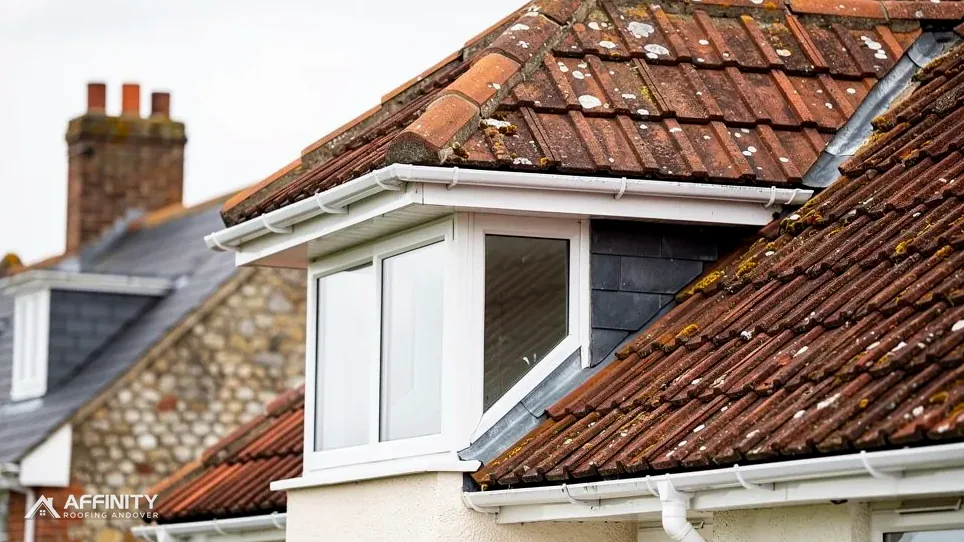
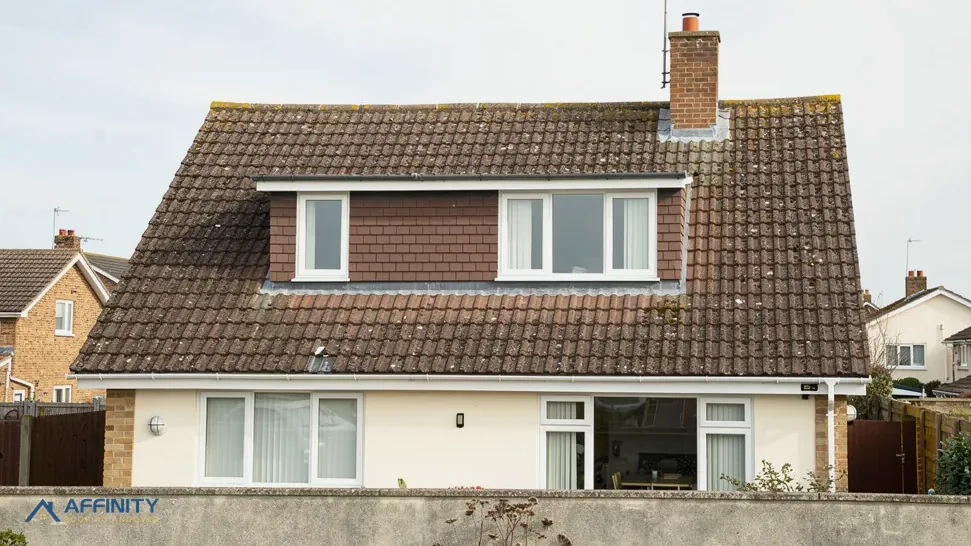
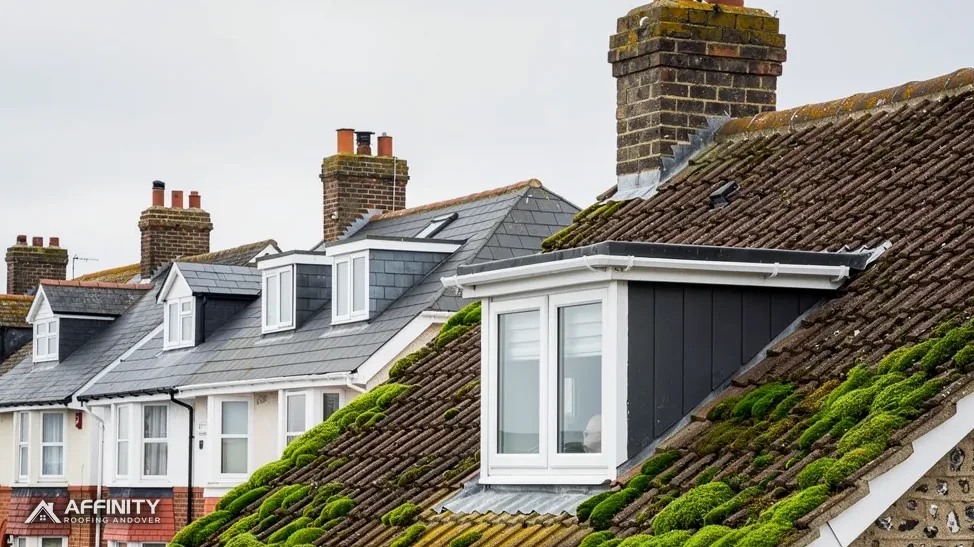
Sun bleaches pigment, rain washes fine particles out of the surface, and frost works at tiny gaps in the face, so a south slope and a shaded slope age in different ways. Moss, algae and lichen settle in the damp north-facing slopes and stain the face as they grow. What you see from the garden is a roof gone paler, streaked or patched, with one slope often faded more than another because the weather reaches them unevenly.
None of that tells you how the tile performs. A roof tile is there to keep rain out and to stay fixed against the wind. A tile can lose a good deal of colour and still do both, which is why age and shade are poor guides to condition. Our answer on how long concrete roof tiles last sets out the published life ranges, which are measured in decades, not in shades of colour.
A coating is a finish, not a fix
Faded roofs attract offers to clean and paint them. A coating can freshen the look, and some owners choose it for that reason. It is a finish, though, and it is not a repair. It does not strengthen a tile, mend a crack, replace a broken fixing or cure a leak, and a roof that looks new can still hide a failing underlay beneath. Ask who will carry out the work, what the finish is, and how it is renewed.
It also locks you into upkeep. A coating weathers in its turn, and recoating means preparing the surface again. If it traps moisture in a tile, the paint can flake and leave the roof looking worse than before.
Cleaning needs care too. Marley, a tile maker, advises against high-pressure jet washing, saying it can harm the face of a tile and cut into its expected life. Biocides are a further trap, since HSE is clear that householders should keep away from any product made for trained professionals only. Our page on roof cleaning and moss removal explains the safer routes.
If appearance is the aim, ask what the finish will and will not do before you agree to it.
When fading comes with porosity
Some fading is a warning. If the face of a tile has gone rough, sandy or crumbly, rubbing off on a finger, the surface layer is wearing through. A tile in that state takes up more water and holds it longer, which feeds moss and lets frost work deeper into the body. Over time the tile can flake in layers, crack or lose a corner, and each loss lets more water in.
The signs to look for are flaking, a gritty residue in the gutters, tiles that look dark and damp long after rain, and moss packed thickly into the lap of each tile. Slipped or cracked tiles beside faded ones are another cue. A single cracked roof tile can be replaced, but a run of them points to something wider.
Then the survey has to look past the colour. We photograph the face and the underside of sample tiles, check the battens and the underlay at the eaves, and look at the fixings. The picture decides whether the answer is cleaning and a few replacements, selective re-tiling or a full re-roof, and you see the reasoning in photographs.
Deciding what to do about a faded roof
For a roof that is faded but sound, the best answer may be to leave it alone. Clear any gutters that are filling with moss, replace any tile that has broken and keep an eye on the surface from the ground each year. Nothing needs spending on colour for its own sake, and a small repair budget goes further on fixings and flashings.
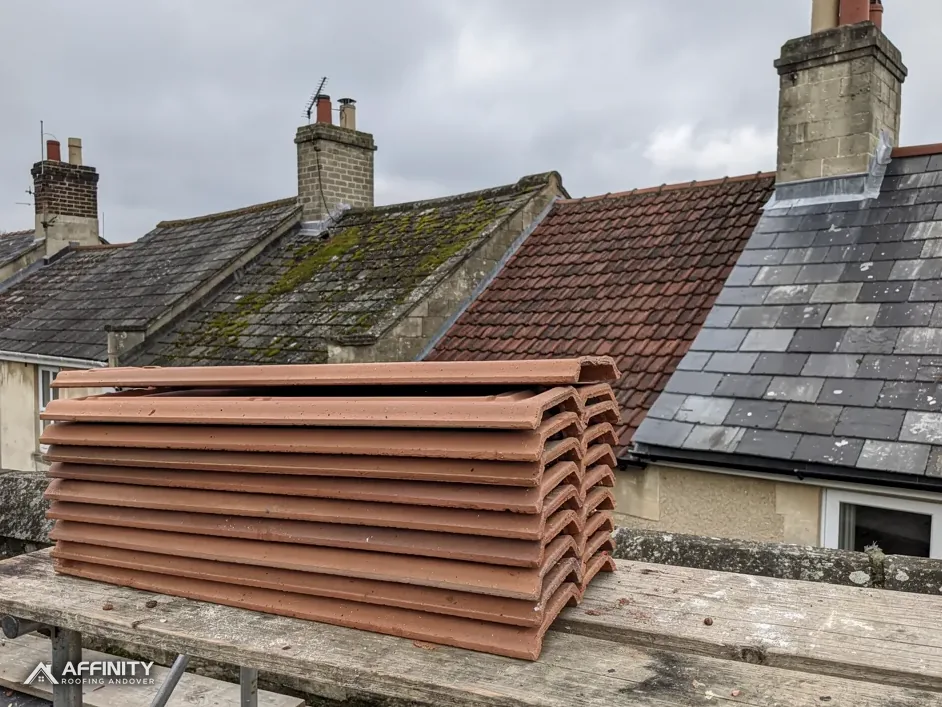
If you want the roof cleaned, choose a method suited to concrete and an installer who explains it in plain words, and ask what is done about the moss that falls into the gutters. If a re-roof is already on the cards, use the moment to compare coverings; our guide to concrete versus clay roof tiles sets the main differences side by side.
What the work costs depends on the roof's area, its slope, the access and whether tiles need replacing. After the survey you receive one written price, so you decide on a fixed figure, not a guess formed from the pavement. Our pitched roofing page covers the wider range of tile work.