The short answer
A dry ridge has no promised life. The fixings are meant to hold the ridge tiles for about as long as the covering around them, but the real figure depends on the tiles, the clips and screws, and how the ridge has moved. HomeBuilding gives typical covering lives of 40 to 50 years for concrete tile and 60 to 80 years for clay, so a survey tells you more than any single number.
Two lives sharing one ridge line
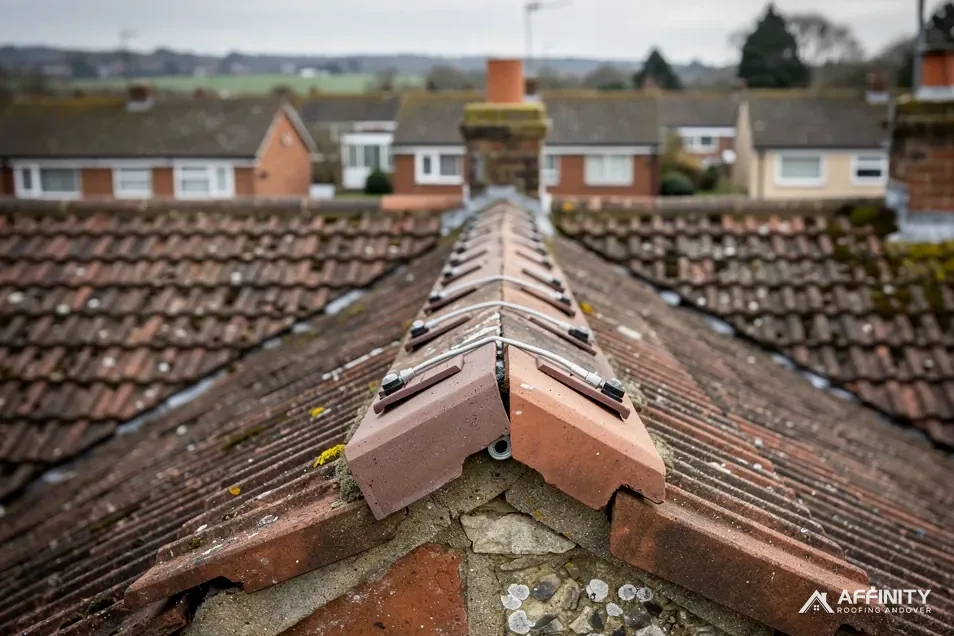
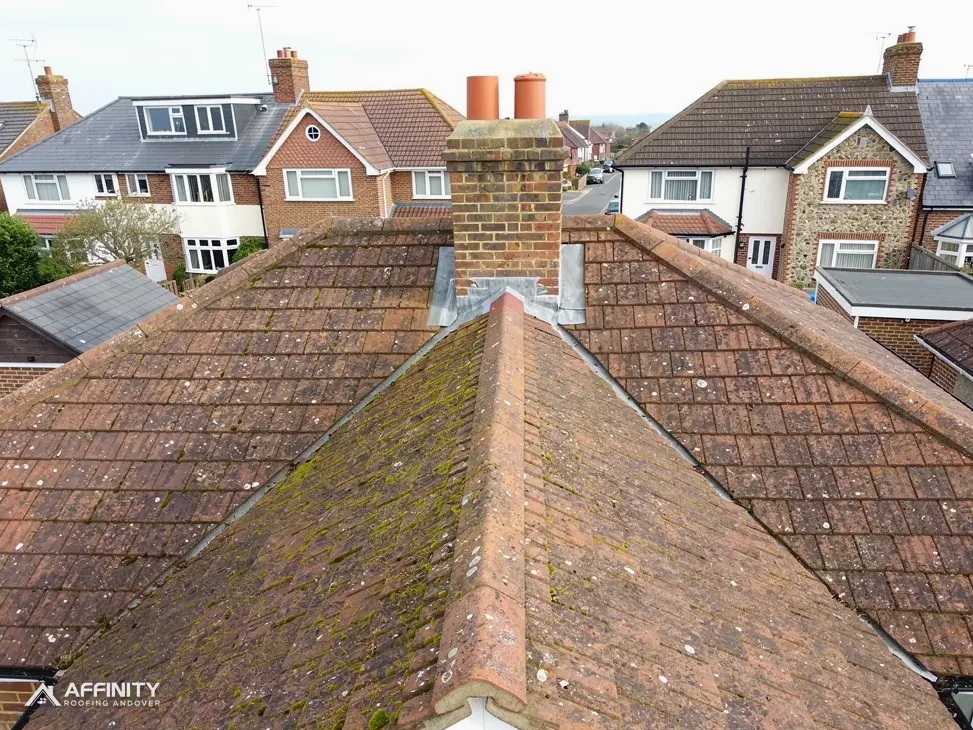
Where two slopes meet at the top of a house, a line of curved capping tiles is laid along the join. That line is the ridge. On a dry-fix ridge those tiles are held by mechanical fixings rather than a bed of mortar: clips or screws that bite into a batten, a timber strip running along the apex. A flexible strip under the tiles keeps weather out of the joint while letting air move through.
That gives the ridge two separate lives. The tiles have one, and the fixings and strip have another. Whichever gives up first decides when the ridge needs work, which is why a sound tile can sit on a tired fixing, or the other way round.
For the tiles, HomeBuilding's published ranges are 40 to 50 years for plain concrete tile and 60 to 80 years for clay. Marley says its roof tiles are expected to last around 60 years and is clear that this is not a promise of longevity. The BRE minimum of 60 years applies to clay tiles only, so it should never be read across to concrete.
Those are lives for the covering. They describe a typical roof, and yours may sit above or below them.
What the fixings change
The reason dry-fix exists is mortar. Marley notes that after the 2014 revision of BS 5534, a bed of mortar alone stopped counting as a sufficient hold for the capping on ridges and hips. A dry system fixes each tile mechanically, so a hairline crack in a joint no longer decides whether a tile stays put.
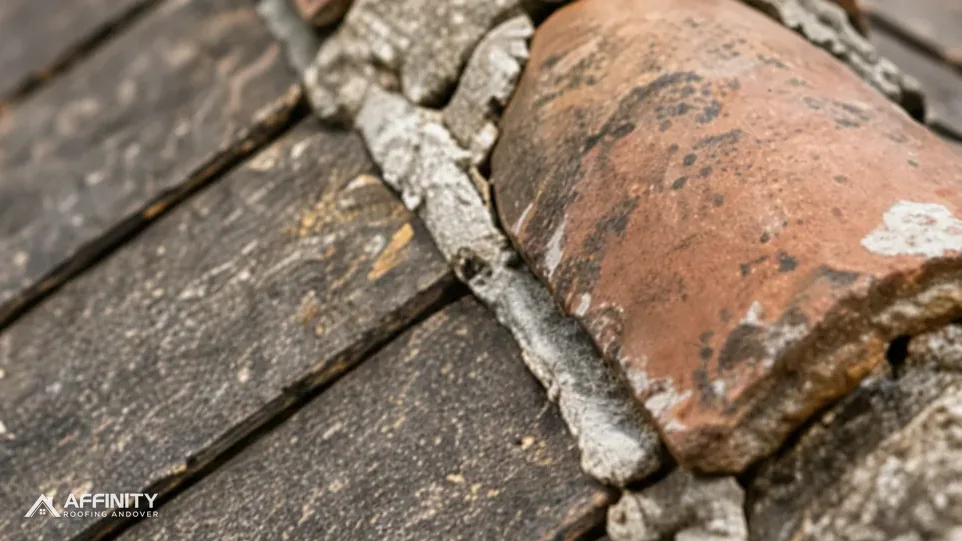
Mortar itself is not banned, and installing to BS 5534 is not required by law. The point is that a ridge held by fixings has a different failure pattern from a ridge held by a bed of mortar. Mortar cracks, dries out and drops away. A dry system tends to fail where metal meets weather: a fixing that has worked loose, a clip that has corroded, or a strip that has perished and curled.
BS 8612 is the standard that tests dry-fix systems for the ridge, hips and verge, and it is worth asking about when you compare products. Our answer on BS 8612 explains what it covers.
None of this puts a number of years on the fixings. What it does is move the ageing from something you can see falling off to something a roofer checks by hand.
What we look at on a ridge that is already dry-fixed
Most of the checking is done by eye and by touch. We walk the ridge line, or work from a roof ladder or scaffold, and try each tile gently for movement. A tile that rocks has a loose fixing underneath it, and the photograph we take shows you the same movement.
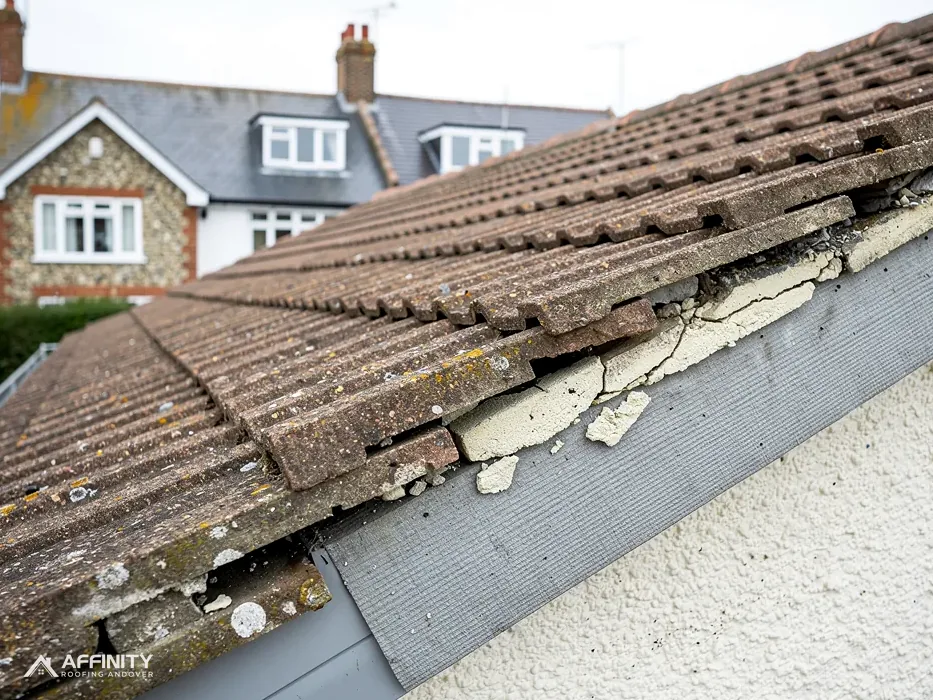
We also look for hairline cracks in the tiles themselves, a strip that has lifted or sagged at the ends, and any gaps at the junction with the verge, the sloping edge where a roof stops at a side wall. Staining or a trail of moss near the ridge can mean water is getting into the joint.
A ridge with a few loose tiles can often be re-fixed without lifting the lot. Where the strip has failed along the whole length, the sound tiles are usually lifted, set aside and put back on a new batten and fixings, which is cheaper than starting again with new tiles.
Our answer on the cracked ridge tile covers what a single break means for the tiles around it.
Cost, and why we avoid a promise
Replacing a ridge is a modest job next to a re-roof. A new ridge tile is listed by Which? at £80 to £300 excluding VAT (November 2025 trader survey), while MyJobQuote's October 2026 guide shows £225 to £550 for a ridge. Neither is a price for your roof; both are typical ranges.
What moves the cost on a real roof is the length of the ridge, how the roof is reached, whether the existing tiles can be reused, and what is found underneath when they come off. Scaffolding is a large variable on a tall house.
We would rather tell you a ridge is sound than sell you a new one on a schedule. If the survey shows fixings in good order and tiles with no movement, the honest answer is to leave it and look again after the next hard winter. If it shows rot in the batten, or tiles that cannot be reused, you will see the photographs and after that comes one written price.
See the wider dry ridge and verge page for how a full ridge job runs.