The short answer
Polycarbonate roofs are given a typical life of about 10 years by HomeBuilding and 10 to 15 years by The Eco Experts. Glass roofs are judged differently, because the panes outlast the gaskets, caps and sealant around them. Solid roofs depend on the covering used. Treat each figure as a typical range, since a warranty is a separate matter from a lifespan.
Polycarbonate sheets
Polycarbonate is the lightest and most common conservatory roofing, built from multi-wall sheets with narrow air channels inside. HomeBuilding gives it a typical lifespan of 10 years, and The Eco Experts say about 10 to 15 years. Those are two published ranges, and they are not a guarantee for any particular roof.
The sheets age in recognisable ways. They yellow or cloud, the surface crazes under sun, and the end seals can fail so that damp and algae creep into the channels. A sheet that has gone green inside is past saving, even if it still keeps the rain out.
Thicker sheets with a better UV layer tend to last longer than thin ones, and a sheet that is cleaned gently, with a soft brush and mild soapy water, keeps its surface better than one left alone. A jet has no place on polycarbonate, where it can drive moisture into the channels and strip the coating.
If your roof is at the age these guides describe, that is a reason to inspect it, not proof that it has failed. Equally, a younger roof can fail early if it was fitted badly.
Fixings are worth a look as well. Sheets are held by bars and caps, and when a cap lifts or a screw backs out, the sheet moves a little in every gust. That movement wears the seal, and rain soon follows it in.
Glass and the bars that hold it
Glass itself is a long-lived material, but a glass conservatory roof is a system, and its life is set by the parts around the panes. Gaskets harden, caps loosen and sealant cracks long before the glass gives way. The bars hold it all, and the bars age differently depending on the metal.
Aluminium bars resist rust, though the powder coating can fade. Older steel-cored or timber-framed bars can corrode or rot. A bar that has corroded is not a repair job, because the whole frame may be affected.
So the question for a glass roof is not how old the glass is. It is how the seals, bars and drainage channels have held up, and a survey checks each of them. Age alone says little about condition, and a young roof can be tired.
Glazing units themselves have a failure mode of their own. A double-glazed unit can lose its seal and mist between the panes, which is cosmetic at first, though it also means the insulating gas has gone. A misted unit can be replaced on its own without touching the bars.
Tinted and solar-control glass add a coating that can age too, though the coating sits inside the sealed unit and is protected from the weather. Cleaning the outer face with soft water and a sponge is all the glass needs.
Solid and tiled roofs
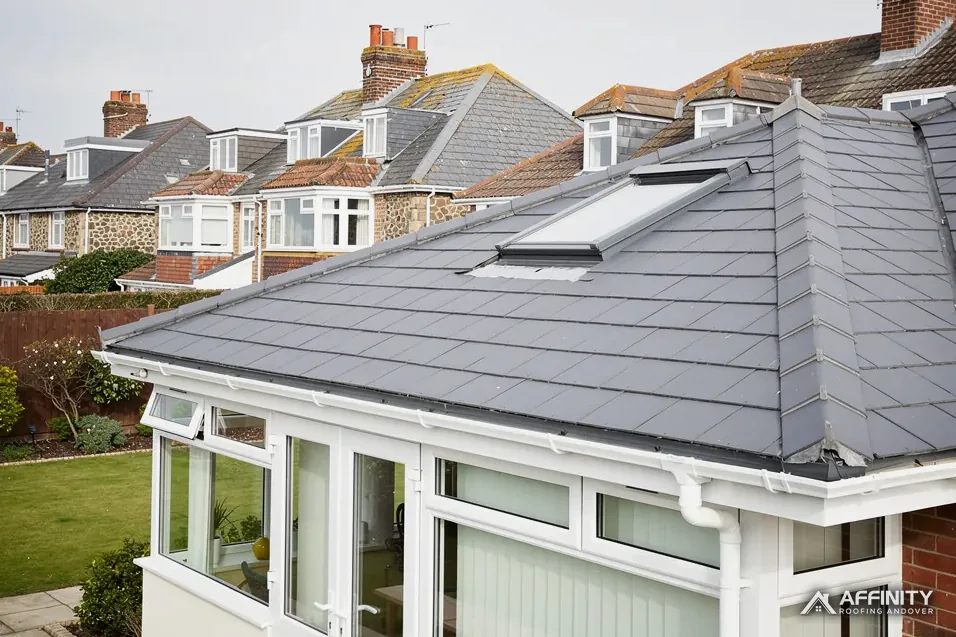
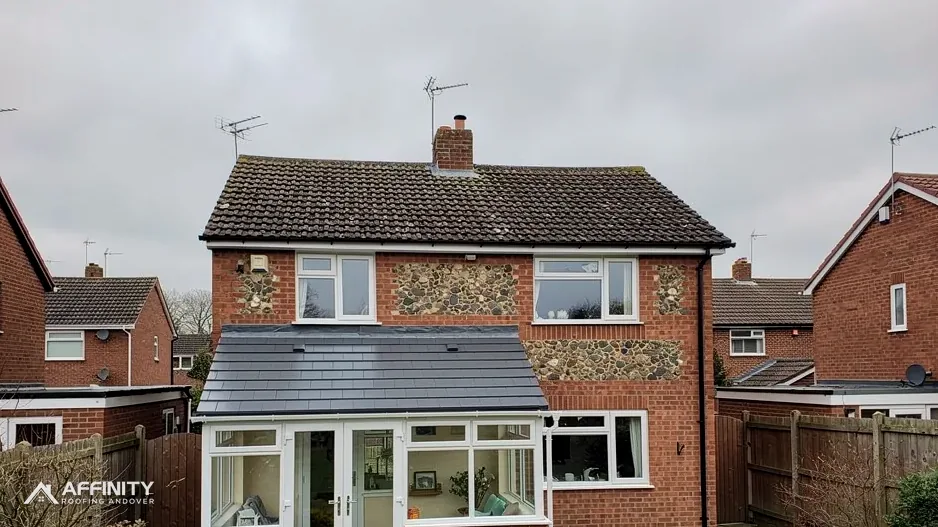
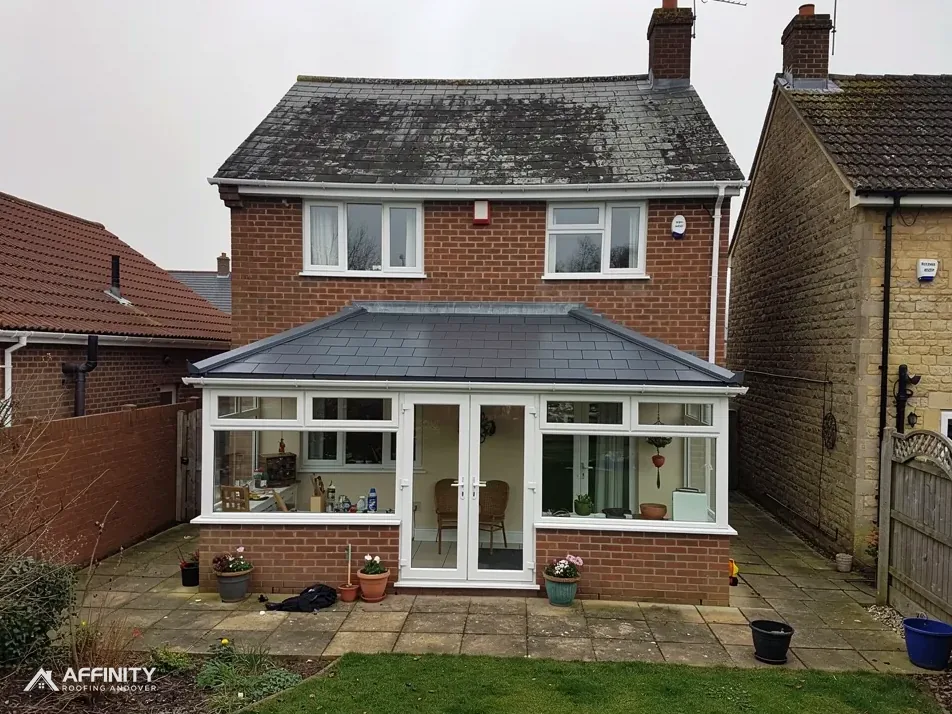
A solid conservatory roof is judged by its covering and its junctions. Tiles and slates carry their own typical lifespans: HomeBuilding gives plain concrete tile 40 to 50 years and clay tile 60 to 80. Slate lasts longer still, with HomeBuilding putting Welsh slate at over 100 years.
The covering is rarely the weak point on a conservatory roof. The flashings and the joint where the roof meets the house take more of the abuse, and lead flashing can last for over 80 years, which MyJobQuote gives as a lower bound.
A lightweight tiled system also comes with a manufacturer's warranty, and a warranty is not a lifespan. It is a promise of repair or replacement under set terms, usually shorter than the typical life of the material.
Our guide to the lightweight tiled conservatory roof explains what these systems are made of, and the answer on condensation covers the damp problems a solid roof avoids.
Insulation and plasterboard inside the roof are rarely the part that wears out. They are protected from the weather, and they last as long as the layers above keep the water out.
Making a roof last, and knowing when to stop repairing
Most conservatory roofs last longest when someone looks at them once a year. Clear the gutters, check the caps and gaskets, wash the surface gently and look for green marks between sheet layers. Small faults caught early are cheap, and the same faults left for a winter are not.
There comes a point where repairs stop making sense. Several failed seals, bars that have bowed, polycarbonate that has clouded across the roof and rising bills for each visit are the signs. A repair on a tired roof tends to move the leak along the bar.
That is when replacement is worth pricing, and the conservatory roof options guide sets out what to compare. MyJobQuote gives a conservatory roof replacement as between £3,200 and £6,000, and The Eco Experts as between £2,300 and £6,000, both typical UK ranges. The survey comes first, with photographs of every junction, and the written total follows it.
For wider help, see the conservatory roofs hub.
If you are selling, a roof that is dry and well documented is easier to explain to a buyer than one with a history of patched leaks, so keep your survey photographs and receipts in one folder.