The short answer
Possibly, depending on your policy wording and on what caused the damage. The Financial Ombudsman Service describes a storm as a spell of violent wind, often with downpours, hail or snow, and accepts that extreme rain, hail or snow can qualify alone. Insurers then ask if the weather was chiefly to blame, and many policies exclude wear and tear. Ring your insurer, make the roof safe and keep records.
What a storm means for a policy
No single legal definition of a storm applies to every policy. The Financial Ombudsman Service, which settles disputes with insurers, looks at the facts of each case. It says some storms bring no high wind at all, and that a sudden burst of rain, hail or snow can be a storm if it is extreme or arrives in large volume over a short time.
It also considers the Beaufort Scale, the grading of wind strength from calm to hurricane. Certain insurers set their own wind threshold on that scale, and the threshold lives in the policy, which we have not seen. Before you phone, look up how your policy words its storm cover.
A conservatory can be a special case. Some policies count it as part of the building, others list it on its own, and a few set a lower limit for glazing or for a structure that is not joined to the house. Find out how yours is described, because it changes what you ask for.
Jot down the date, the weather and what you heard and saw at the time. Those small details help to connect the damage to the weather.
What an insurer weighs up
When the ombudsman reviews a refused claim, it asks three questions. Was it a storm? Is the damage consistent with one? Was the weather the main cause? A pane cracked by a falling branch fits that pattern. A gasket that perished over several winters and let rain in does not.
Gradual deterioration and ordinary wear are the usual exclusions. A complaint is weak where the roof was already deteriorating and the owner was aware of it, or where the weather simply exposed an old fault. So the roof's condition beforehand carries weight.
Which? has reported that only 32% of storm-related claims made in 2024 ended in a payout. A claim is never automatic, nobody can promise one, and we cannot say what your insurer will decide. We do not handle claims.
What helps is a clean record. Dated photographs of the roof from before the storm, if you have any, sit alongside detailed pictures of the damage afterwards, and together they show what changed. Maintenance records help too: an invoice for a recent gutter clean or a seal repair shows the roof was looked after, which speaks for itself when an insurer asks about the roof's condition.
The first call and the first photographs
Ring your insurer before anything is arranged. Which? notes that many insurers run emergency helplines around the clock, so there is rarely a reason to wait. Ask what they need from you, and whether an inspection comes before any repair.
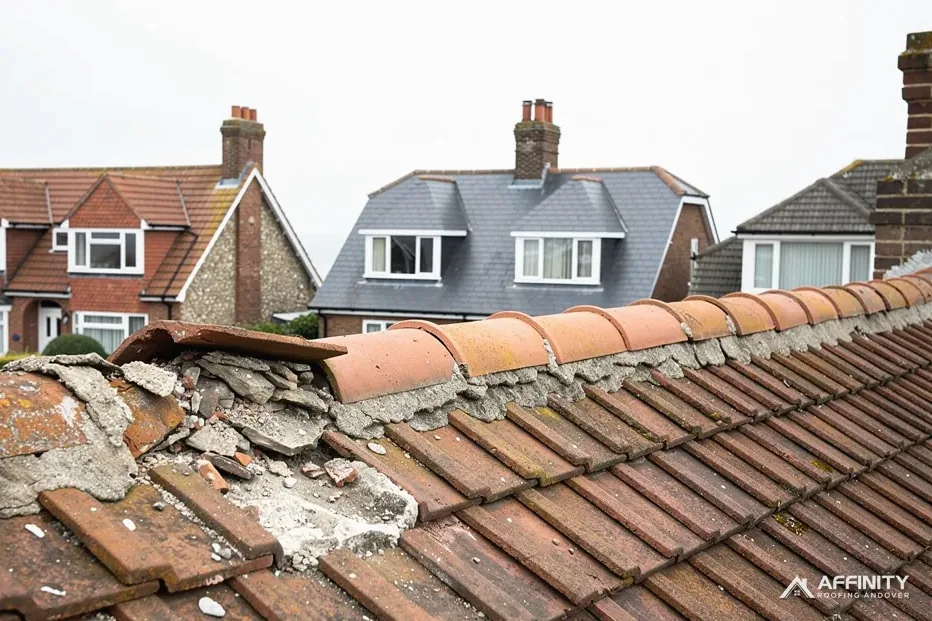
Next, make the roof safe. That can mean boarding a broken pane, laying a membrane over an opening or taking down a loose section. We can make a damaged conservatory roof safe, photographing as we go. The Institution of Structural Engineers calls good photographs vital proof of damage, so take pictures outside and in the room, and keep every receipt.
Hold on to broken pieces if you can lift them without risk, since an insurer may ask to see them. Stay off the roof, and keep people away from any glass still hanging. If water is coming in, move furniture and electrics clear and switch off anything wet at the consumer unit.
A temporary repair is a reasonable expense. A permanent repair should wait for the insurer's agreement.
Note who you spoke to, the time and any reference number, while it is fresh.
If the claim is refused, and the repair itself
If the insurer turns down all or part of the claim, ask for its reasons in writing and complain to the insurer first. Where eight weeks pass with no final answer, or you disagree with the one you receive, the Financial Ombudsman Service (0800 023 4567) will look at the case free of charge. Once the insurer's final reply arrives, the clock for the ombudsman is six months.
Meanwhile the roof still needs fixing. Where only a pane or a section has gone, a repair may be enough. Where the frame has bent or the bars have lifted from the base, replacement may be the only safe route, and our guide to conservatory roof repair sets out both.
Our survey separates what is damaged from what was already worn, which is the split an insurer is likely to make. If the damage is to glazing alone, mention it when you ring: a single cracked unit is a smaller job than a bent frame, and the photographs we send show which you have. The conservatory roofs page explains the work, and our price comes in writing after the visit.