The short answer
Conservatory guttering overflows for three common reasons: the gutter is blocked with leaves and moss, the fall has drifted so water stands instead of running, or the gutter is smaller than the roof needs. A big glazed roof sheds a lot of water quickly. Clearing and re-aligning fixes the first two, and a larger gutter or an extra downpipe fixes the third.
A small gutter on a large roof
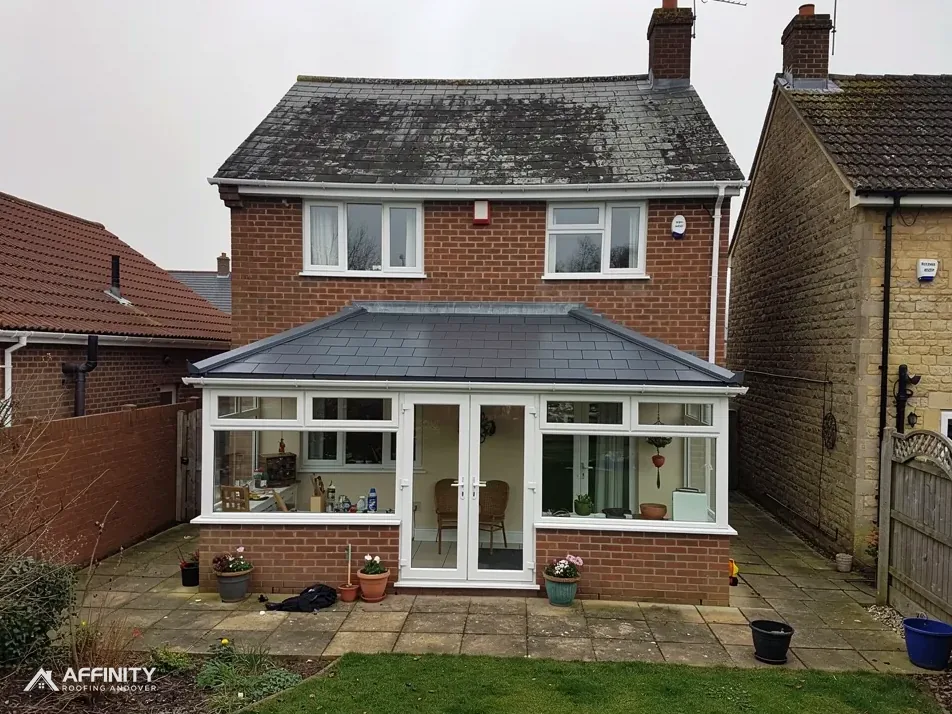
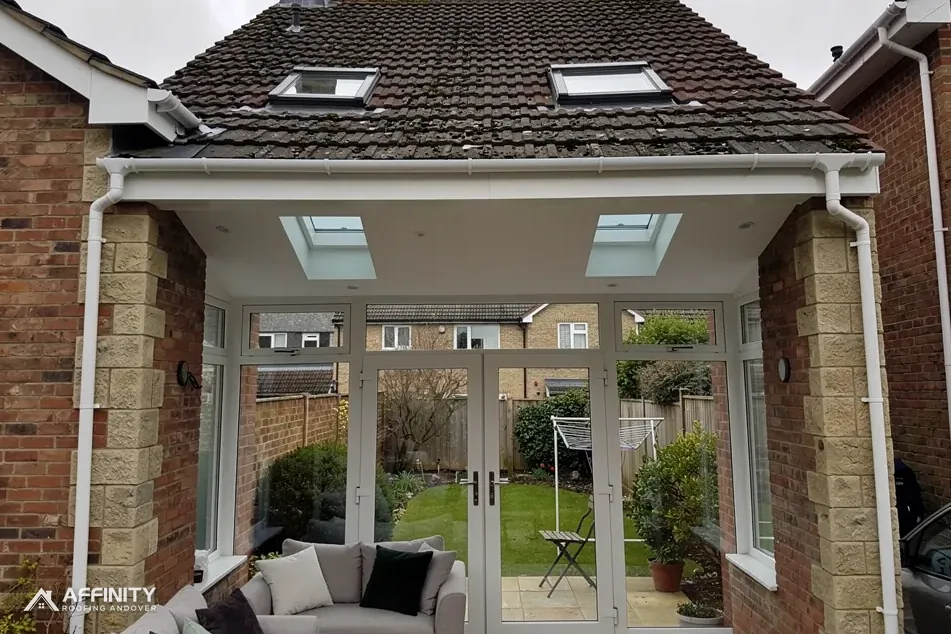
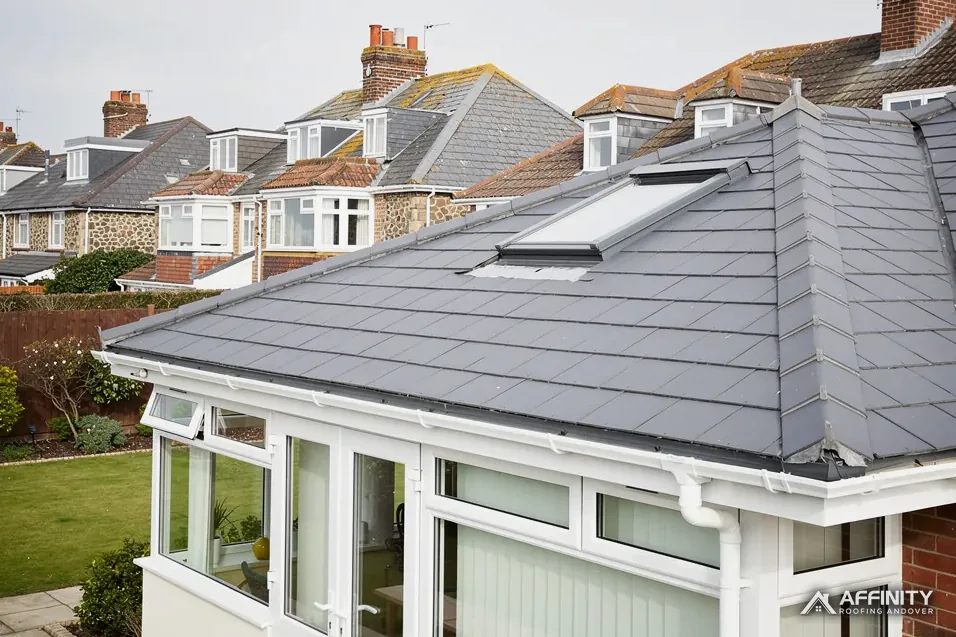
Glass and polycarbonate shed water faster than tiles do, because the surface is smooth and there is no pause while the water soaks along a course of tiles. The whole sheet of rain reaches the gutter at once. Many conservatories were fitted with a standard half-round gutter and a single downpipe at one corner, which is enough for a shower and not enough for a downpour.
The signs are easy to read. Water sheets over the front lip during heavy rain, the fascia shows green streaks below the joints, and the patio beneath has a permanent wet patch in the same place. If the gutter overflows only in the heaviest rain and clears afterwards, capacity is the likely cause. If it overflows in light rain, look for a blockage or a lost fall.
A larger gutter profile takes more water, and a second downpipe, put in at the opposite corner, halves the distance each drop has to travel along the channel. Both are routine changes for a conservatory roofline, and we can add them to the repair if the survey shows capacity is the issue.
Where the downpipe runs into a drain, check that the drain itself is clear. A gully full of silt makes a perfectly good gutter back up, and it is a cheaper fix than any gutter work.
Blockages and sagging runs
Leaves, moss from the roof edge and grit washed off the roof collect at the outlet, and a blocked outlet turns the whole gutter into a trough. Conservatories under trees clog fastest, and a gutter that is full will spill over the front however large it is.
Clearing is a two-person job in many cases, because the gutter sits at the edge of a fragile roof. A gutter vacuum on a pole or a ladder against the wall reaches it without anyone stepping onto the glazing. Which? gives £75 to £350, ex VAT, for clearing a whole house of gutters, front and back, as a typical UK range from its November 2025 survey.
Falls matter as much as cleanliness. Brett Martin, a gutter maker, suggests a drop of 1 mm for every 600 mm of run towards the outlet. Brackets that have loosened let a run sag, and water then sits in the low spot until it overflows at the joint. Re-aligning the brackets is quick work when the gutter itself is sound.
Moss deserves a mention. A conservatory roof with a shaded edge collects it along the lower rim, and clumps wash down into the gutter after rain. A soft brush along the rim, before you clear the gutter, stops the same moss blocking it again a fortnight later.
Joints, brackets and leaks that look like overflow
Not every wet patch is an overflow. A cracked joint can drip below the gutter in a dry spell, a split union leaks at the seam, and a loose bracket lets the gutter tilt away from the wall. Dripping that starts a minute after the rain begins, and stops a minute after it ends, points to the joints. Water pouring over the lip in a storm points to capacity or blockage.
Check the end caps and the stop ends too. A stop end that has popped off sends a stream down the glass, and at first glance it looks like a leak through the roof.
A conservatory with a box gutter behind the fascia is a different case, because the overflow can run inside the structure. Our short answer on the conservatory box gutter explains how that channel works.
On the survey we run water through the gutter and watch where it goes, then photograph the joints and brackets, so you can see whether the fix is a clean, an adjustment or a replacement.
A simple test you can do yourself is to pour a bucket of water into the gutter at the high end on a dry day. If it runs steadily to the outlet and out of the downpipe, the run is sound. If it pools, hesitates or leaks, you have found the section that needs attention.
When to replace the gutter
Replacement is sensible when the gutter is cracked along its length, when the plastic has gone brittle and chalky, or when so many joints leak that patching is a repeat job. A larger profile and a second outlet are easier to fit with new gutter than to adapt on old.
MyJobQuote puts gutter replacement for a whole house around £1,000 to £1,600 as a typical UK range from October 2026, though a conservatory run is a fraction of the house, and the length, the pipework and the access change the total. Seamless aluminium gutters, formed on site in one length, remove the joints altogether, which suits a roof that sheds water hard.
It is worth fitting the new gutter at the same time as any roof work, because the scaffold or tower is already in place. We can also check the fascia behind it for rot, since a gutter screwed to rotten board sags again within a season.
For the bigger picture of the roof, see the conservatory roofs hub, and the guide to conservatory roof repair.