The short answer
Anyone working at the edge of a roof needs something that stops a fall, and on a commercial building that usually means a scaffold or other guard rail system with toe boards around the perimeter, not just a harness. Fragile roofs and rooflights call for more, such as covers, nets and crawling boards. The measures are chosen in the CDM planning, before anyone goes up.
Scaffold and perimeter protection
The most dependable form of edge protection is a scaffold built up past the eaves, with guard rails and toe boards on the open sides. It gives a firm platform to work from, stops people walking off the edge and stops tools and materials falling on those below. On a long commercial building it often runs round the whole perimeter, or along the sides being worked on.
Where a full scaffold is not practical, other systems are used: freestanding guard rail frames that clamp or weight themselves to the structure, edge protection fixed to the purlins or parapet, and safety nets or air bags under the roof when sheets are being replaced. Which one is chosen depends on the building, the type of roof and how long the job will last.
The scaffold itself should meet recognised standards. Hampshire County Council expects scaffolds it licenses to follow BS EN 12810 and 12811, or NASC guidance TG20:13, and they are sound references to ask a scaffolder about wherever the job is. It should be inspected regularly and after bad weather, and the inspection recorded.
Where the frame stands over a footway or carriageway, it is the highway authority that licenses it. Our answer on scaffolding for chimney repairs explains how the licence works in Hampshire.
Fragile roofs and rooflights
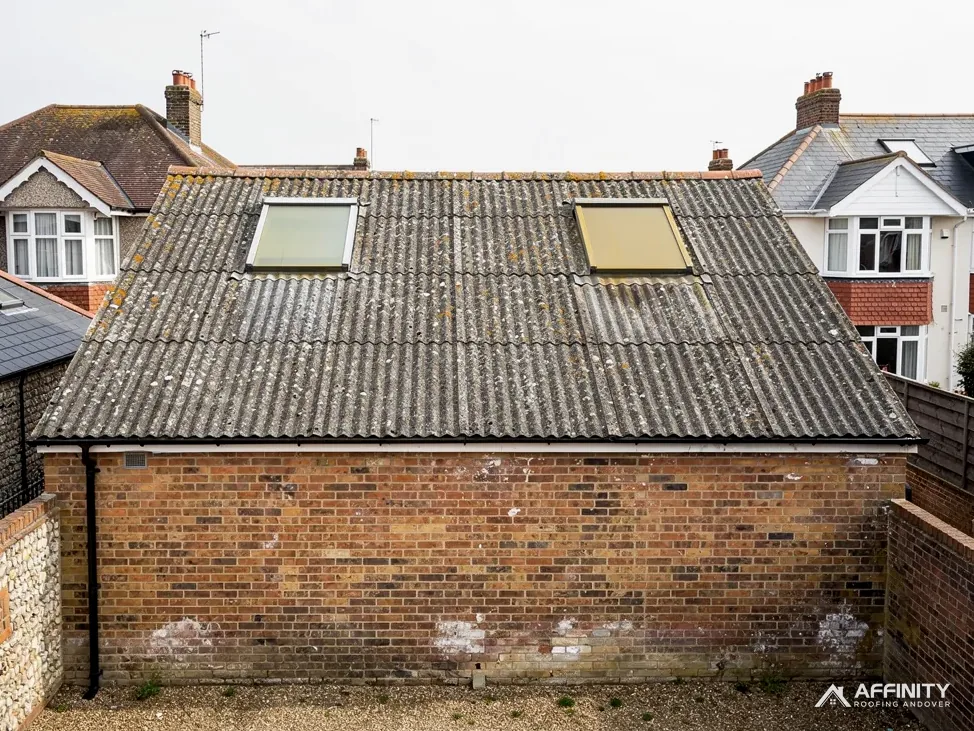
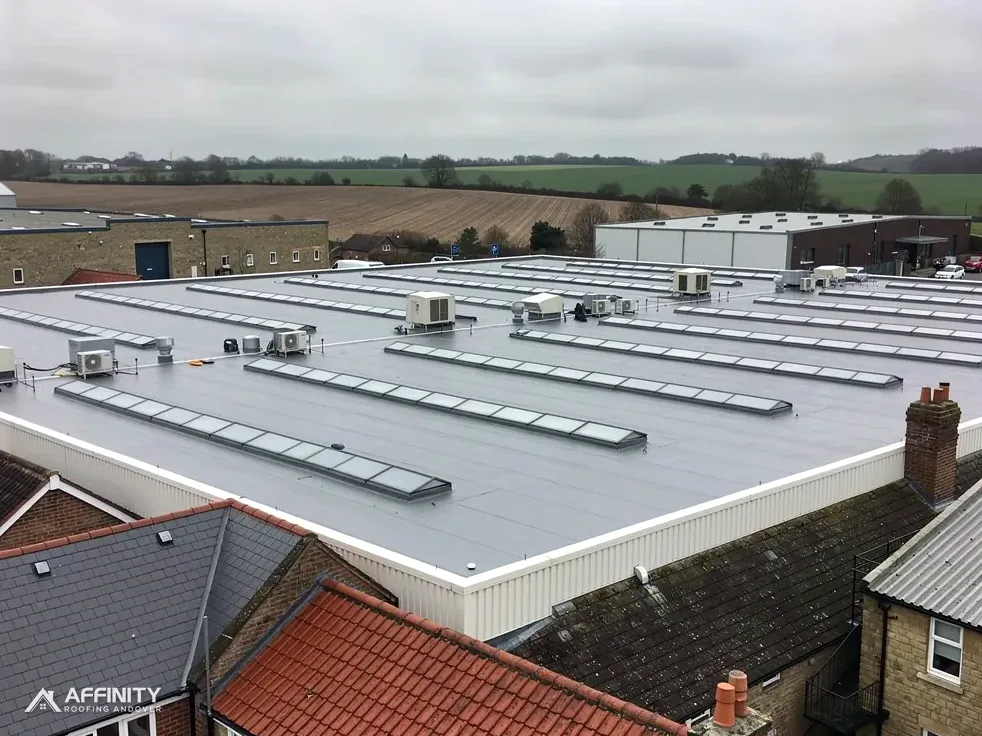
Edge protection stops people falling off the edge, but many commercial falls are through the roof. HSE's A14 says asbestos cement roofs are always fragile, and old plastic rooflights deserve the same caution, which weather to look like the sheets around them and can break under a person's weight.
On such roofs the rule is that nobody walks on the sheets. Work is done from crawling boards or staging laid across the purlins to spread the load, or from below on a mobile access platform. Rooflights are covered with rated guards or boards, or guard rails are set around them, and the cover is marked so everyone can see it.
Nets under the roof, fixed to the structure, catch someone who does go through, but they are a second line, not the first. The plan is that no one steps on a fragile surface in the first place.
The roof must be assessed before access. If a sheet cannot be shown to be safe, it is treated as fragile. Our guide to fragile roof safety sets out the precautions in detail, and asbestos matters too: the survey must come before sheets are disturbed.
Planning the work with the client
Roof work is construction work, and the CDM Regulations 2015 apply. The client provides information about the building, including its asbestos register, fragile areas, services and use. Regulation 15(5) leaves a sole contractor to write the construction phase plan, while regulation 5 calls for a principal designer and a principal contractor once several firms are engaged.
The plan should say what edge protection will be used, who puts it up, who inspects it, where materials are stored and how people reach the roof. It should cover the ladders or stairs, the lifting of materials, exclusion zones on the ground and the weather limits for working, so that the crew on the day is following a decision already made.
Planning makes the work safer and cheaper. Protection that is planned in is built once and used throughout the job, while protection added afterwards, after a near miss or a visit from an inspector, costs more and interrupts the programme.
Our answer on CDM and commercial roof work explains the roles, and we share the plan with the client before starting. Where staff or customers remain inside, the plan covers them too.
What we do, and what it adds to the price
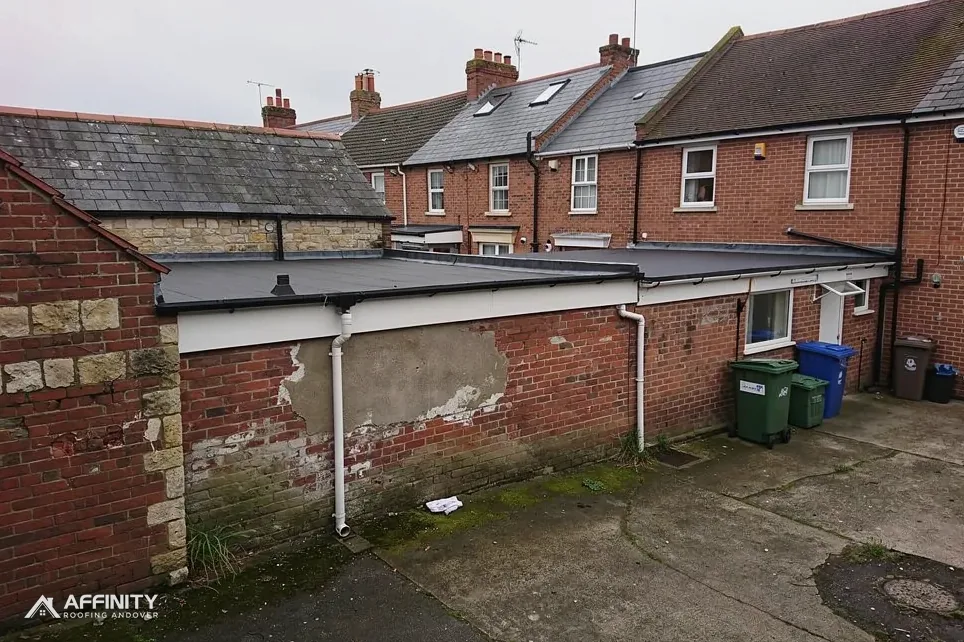
Our first step is to survey the roof and its edges, noting the type of covering, the fragile areas, the parapet height and the access, because those facts decide what can be fixed to what. Pictures of the edges, covering and access let the protection be designed for this roof, not a general case.
From that we set out what is needed: scaffold or other guard rails, platforms, covers over rooflights, boards across fragile sheets and the route up. Edge protection can be a large element of a roof job, and it is easier to accept when you can see why it is needed.
Cost depends on the length of edge, the height, the type of system, how long it stays up, and whether a highway licence is needed. It sits inside the single written total that follows the survey, so check whether other quotes include it.
A quote with no edge protection, or one that mentions only harnesses on a fragile roof, is a warning sign. The quickest route onto a roof is rarely the safest. See the commercial roofing page for the wider service.