The short answer
There is no single legal interval for every roof, so the sensible answer is a planned inspection at a regular rhythm set by the roof's type, age and condition, with an extra look after storms and before winter. Older roofs, roofs with many gutters and roofs above stock or machinery justify closer attention. Whatever the rhythm, write each visit down and keep the notes.
Setting a rhythm for the building
A regular visit once a year is a reasonable baseline for most commercial roofs, with a second look in the other half of the year for roofs that are older, more complicated or more costly to get wrong. The right rhythm is a judgement, not a formula, and it should be written into the building's maintenance plan so it is not forgotten when staff change.
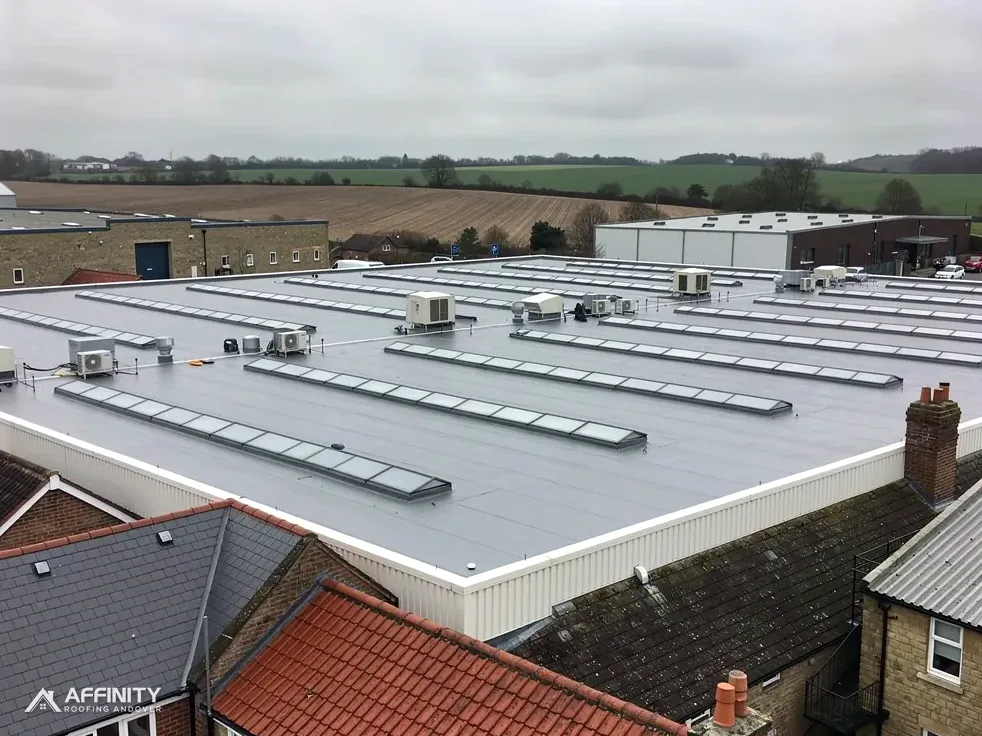
Several things push the frequency up. Age is one: a membrane or a set of sheets in its later years needs closer watching. Complexity is another, since a roof with box gutters, plant, many rooflights and abutments has more places for a fault to start. What lies beneath matters as well. A roof over a warehouse of stock, a server room or food production justifies more frequent checks than one over an empty store.
Surrounding trees and the local setting add to it. Leaf fall loads gutters and outlets, so a roof beside mature trees benefits from a clearing visit in the autumn, and a roof near a flight path of birds may need attention after the nesting period.
Our page on commercial roof maintenance describes what a planned visit includes.
Checks after storms and before winter
Calendar visits are not enough on their own. A severe storm can lift a sheet, tear a flashing or dislodge a rooflight in an afternoon, and the damage may not show inside until the next heavy rain. After a storm, a look at the roof from the ground, with binoculars if needed, will show missing sheets, lifted edges or debris. A closer inspection should follow if anything looks wrong.
Before winter, the purpose is to clear gutters and outlets, check the fixings along the eaves and ridge and make sure that anything loose is secured. Frost and snow load make small defects worse, and a blocked outlet becomes a pond when the weather turns.
The Financial Ombudsman Service says that its approach to insurance storm claims asks whether the roof was already in a bad condition at the time and whether the owner knew. That is a reason to keep a dated record of the roof's state, so the picture before a storm can be shown. Our answer on commercial roof storm damage covers what to do afterwards.
Anyone going onto a roof for these checks needs safe access and must stay off fragile sheets, as our guide to fragile roof safety explains.
What an inspection looks at
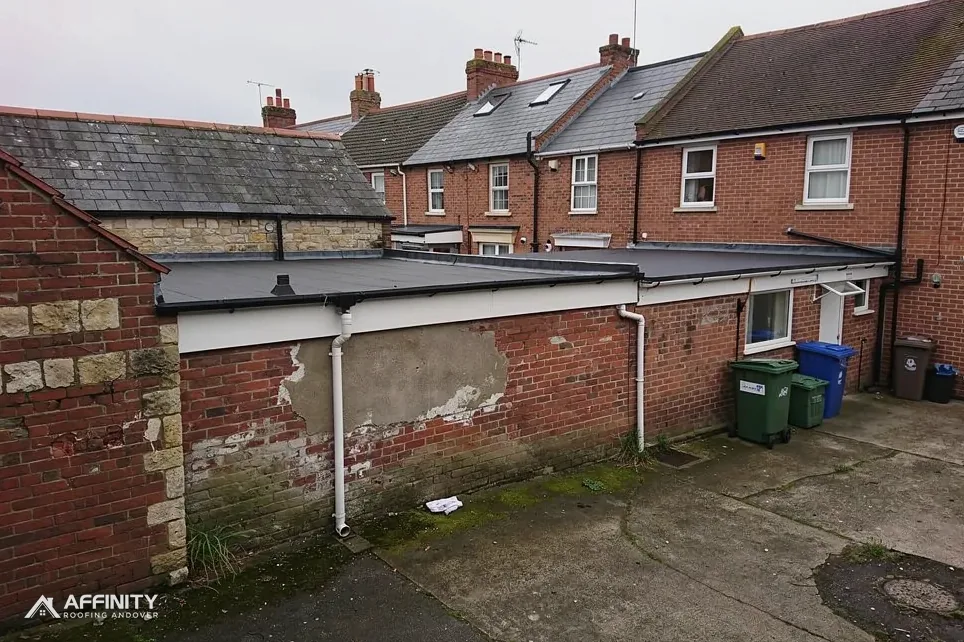
A good inspection is systematic. It covers the covering itself: sheets, membrane or felt, with attention to laps, seams, fixings and areas of wear around walkways and plant. It covers the details: flashings, upstands, rooflights, penetrations and the junctions with walls. It covers drainage: gutters, outlets, down pipes and any ponding.
Inside, it looks for the signs that tell you what the outside is doing: stains on ceilings, damp patches, light visible through a sheet, rust on the underside of a deck, and condensation. A leak seen in one place often starts somewhere else, so inside and outside are read together.
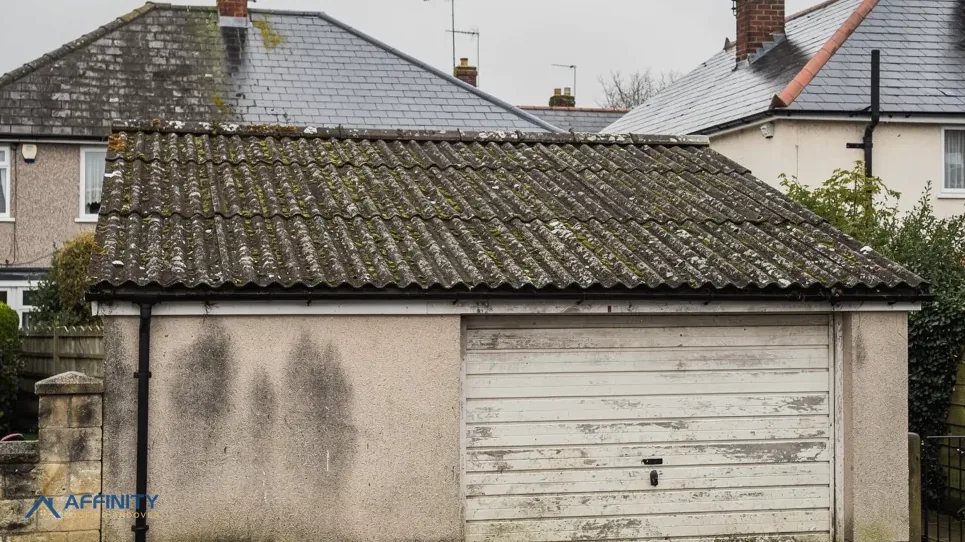
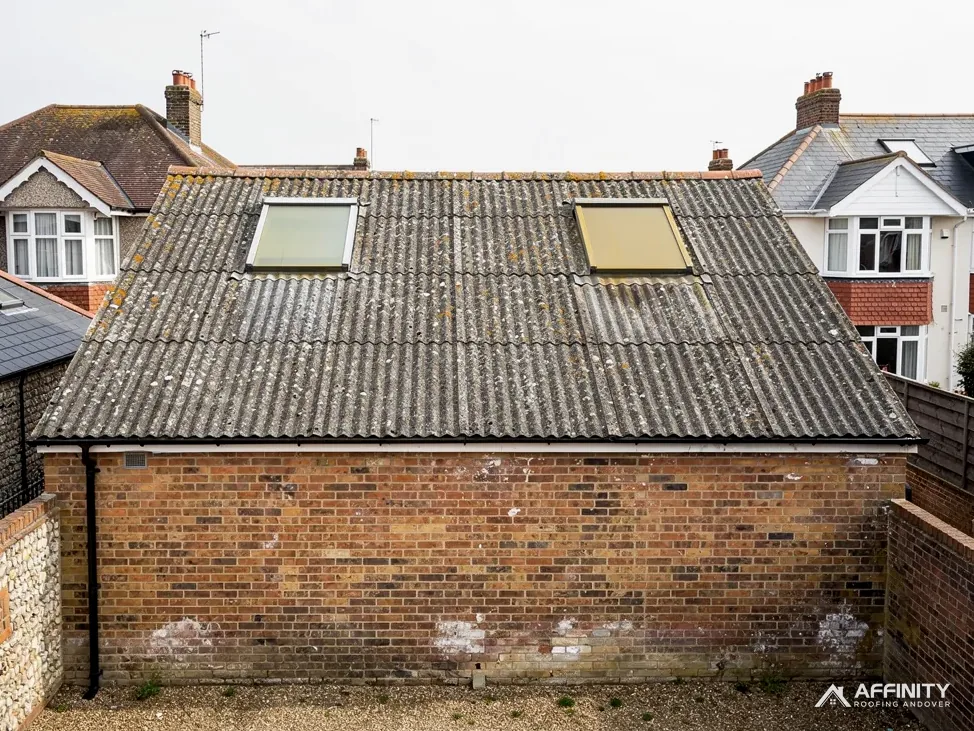
The inspector should be able to reach the roof safely, so edge protection, safe routes and platforms matter. On an older cement-sheet roof they matter more, because the sheets cannot be trusted to hold a person, and the asbestos register should be at hand before anyone goes up.
Photographs are the practical record. They let the owner see what the inspector saw, compare one visit with the next, and show a contractor exactly where a fault is when it needs fixing.
Records, and how we help
Records turn inspections into a history. For each visit, note the date, who carried it out, what was found, what was done and what is to be watched. Keep the photographs with the report. After a few years, patterns appear: the same outlet blocks each autumn, the same lap lifts, the same corner stays wet.
Those records help in practical ways. A buyer or tenant asking about the roof can be shown its history. An insurer asking how the roof is looked after can be shown a plan and the visits against it. A contractor pricing a repair can see what has already been tried.
If you do not have a plan, we can survey the roof once, photograph what we find and set out a rhythm that fits the building, with the visits that matter most. Planned work is also easier to price, since faults are found early and repaired while they are small.
The survey leads to one written total for any repairs it finds. See the commercial roofing page for the full list of work we take on for business premises.