The short answer
Yes, for any roof that might contain asbestos. HSE guidance is to presume it in any building erected or refurbished before 2000, and asbestos cement roofs are always fragile. A survey tells the contractor what is there before any sheet is touched. MyJobQuote (Sep 2026) gives around £325 as a typical UK survey cost. The duty holder commissions it.
Why older buildings are treated as suspect
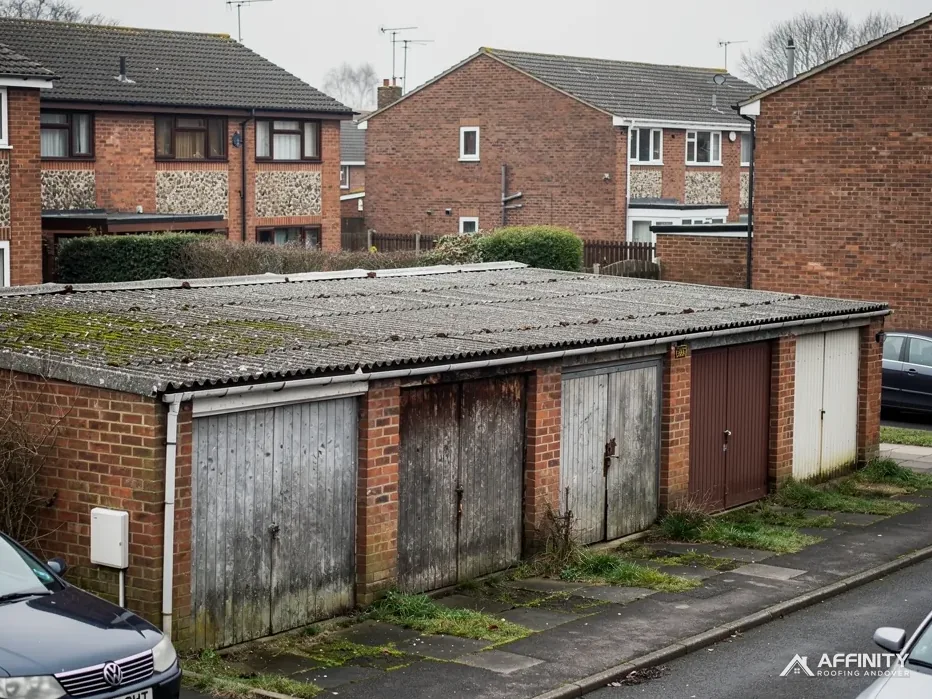
Asbestos was used widely in British building until the end of the twentieth century, and roofs used more of it than most places. Corrugated cement sheets covered factories, warehouses, farm sheds and garages. Roof lights, flue pipes, gutters and soffits were made from related products.
HSE's rule for older buildings is short and easy to remember: for a building dating from before 2000, whether built then or refurbished, proceed on the basis that asbestos is in it. That position stands until a survey says otherwise. A building completed after that date is a different case, though records of what was used should still exist.
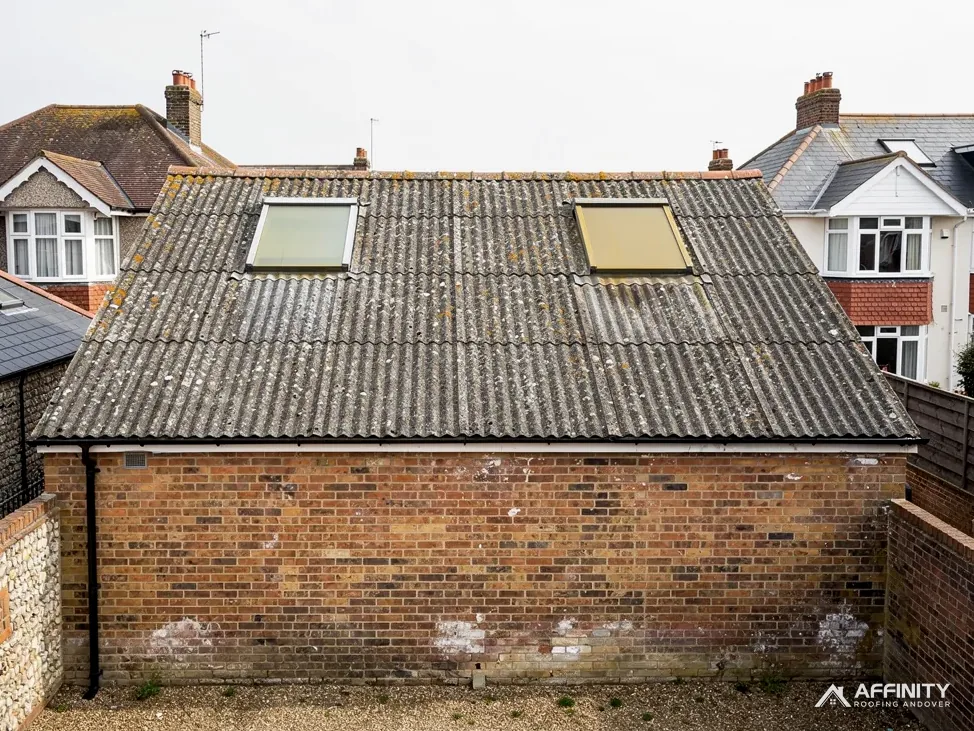
Eyesight is not enough. HSE notes that insulating board items and their asbestos-free equivalents are difficult to separate by appearance, and cement products can be just as deceptive. A sheet that seems modern may be older stock, and a 1990s extension may reuse original materials.
So a roofer standing on the ground cannot give a safe verdict on what a roof contains. A competent surveyor has to identify it, normally from samples tested in a laboratory. Our guide to a commercial roof survey covers the separate question of the roof's condition.
The survey, and the figure to expect
An asbestos survey for a roof records what is present, where, in what state and how great the risk is. For work that will disturb materials, the refurbishment type is the one usually asked for, because it examines closely the parts the contractor is going to touch.
MyJobQuote, in its asbestos-roof pricing guide updated in September 2026, shows around £325 for a survey as a typical UK cost. Treat that as a general marker. A big building with many roof planes, lean-tos and ducts takes longer to survey than a single shed, and costs more.
The survey is money well spent, being far cheaper than discovering asbestos halfway through a job, when a crew is already on site and every idle day has a cost. If a roofer breaks into sheets and suspects the material, work stops, the area is made safe and the start of the replacement slips.
The report belongs with the asbestos register and goes to every contractor who might disturb the roof. File a copy somewhere easy to reach for whoever works on the roof next, so nobody has to start the enquiry again. Our answer on asbestos roof removal cost follows on from this one.
Who commissions it, and what the roofer needs
The duty to manage asbestos in a non-domestic building sits with the duty holder, who is the owner or whoever is responsible for maintenance. They commission the survey and answer when a contractor asks what is in the roof. Our page on the asbestos duty holder explains how to tell who that is.
A contractor can ask for a survey, and should not carry out invasive work without seeing one. Before pricing we need the type of material, the condition of the sheets, whether insulating board is present in soffits or linings, and whether the roof lights are cement-based.
The result tells us which route the job takes. Careful removal of sound cement sheeting, lifted whole, is non-licensed work in HSE's classification, while breaking sheets up brings it into the notifiable class, and insulating board work beyond a short job needs a licence.
Each route carries its own controls, its own waste arrangements and its own cost. That is why the survey comes first, and why a quote given without one is unreliable. Ask any contractor which route their price assumes, and how the price moves if the sheets turn out to be in worse condition.
What happens after the survey
With the survey in hand, the work can be planned. The usual options are to leave sound sheets in place and manage them, to overclad them, to repair them, or to remove and replace them. Each has its own effect on the building, the budget and the duty holder's continuing responsibilities.
Where sheets come off, they are handled with care and kept whole where possible, then bagged and carried away as hazardous waste. HSE describes wrapping asbestos waste twice and marking it, and an open skip is never acceptable.
From the findings we price the roof work as one written total. It rests on the survey, not on a guess, and it names the plan for waste. If the building stays occupied, the plan covers phasing and protection below, which our guide to roof work on an occupied building explains.
Fragile roofs also call for safe access, with edge protection and proper platforms, and nobody should step on a cement sheet, whatever its age or how solid it looks from above. See the commercial roofing page for the wider service.