The short answer
Often yes, if the work is planned around the business. The roof is repaired in phases, so only part of it is open at a time, the floor beneath is shielded and left empty, people and traffic are kept away from the work zone, and a construction phase plan covers the lot. Some jobs, such as sheet replacement over live aisles, may need a short shutdown of the area underneath.
Phasing the work bay by bay
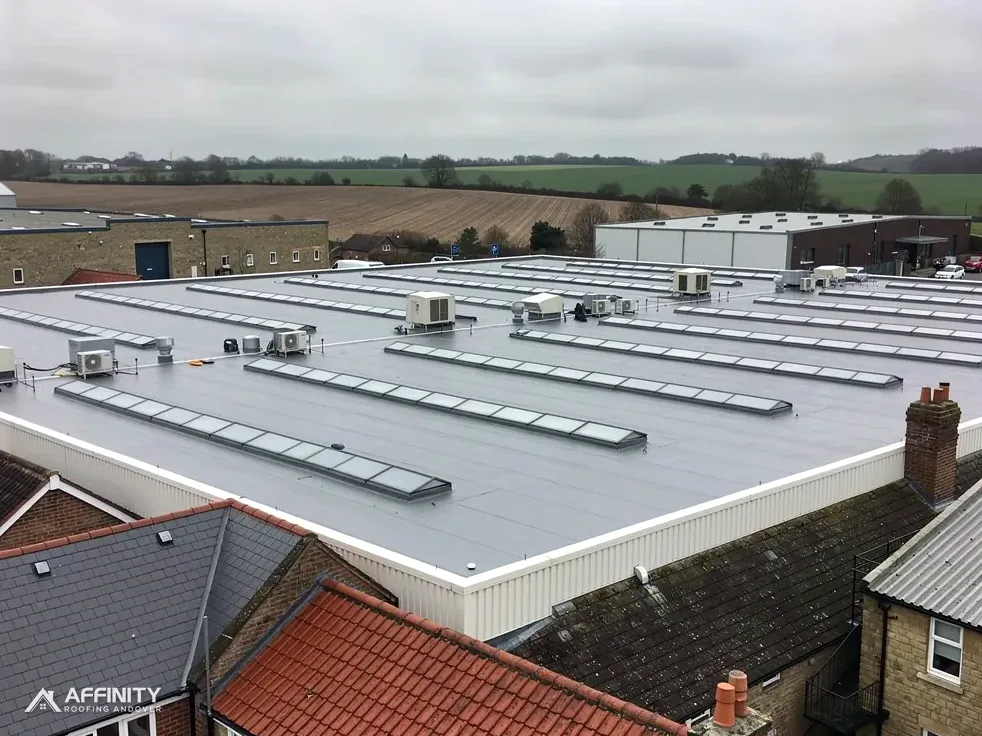
Phasing means breaking the roof into sections and working through them one after another, instead of opening the whole roof at once. On a long portal-framed shed a section might be a few bays, with the first closed and weathertight before the next is started.
Phasing limits the risk to the building. A roof stripped in full is exposed to the weather, and one sudden shower can soak racking and stock. With a bay open at a time, the exposed area is small and can be sheeted over when work stops for the day or the first rain arrives.
It also keeps disruption local. The goods-in door, the loading bays and the busiest aisles can be left to the last or the first, depending on when the business can best cope with them. The programme is set with the person who runs the warehouse, because they know the busy weeks and the quiet ones.
Phasing takes longer than a single-stage strip, and the price reflects that, but it also lets the business keep trading, which is usually worth more. Our guide to roof work on an occupied building goes through the approach in more detail.
Protecting what is below
Under the work zone, protection is needed against falling material and weather. For a sheet roof replacement, the usual measures are a catch layer below the area being worked, such as nets or a secondary lining fixed to the purlins, together with exclusion zones on the floor beneath where people and trucks do not go.
Stock and equipment under the zone are covered or moved. Racking can be sheeted, sensitive machinery wrapped and electrics protected. Fire detection and sprinkler heads need thought, since dust or debris can set them off or hide them.
Dust, noise and fumes need controlling. Cutting and fixing sheets is loud, and some processes produce fumes or particles. Where food, pharmaceuticals or sensitive electronics are stored, the standard of protection goes up, and the agreed plan should say how.
Where the roof contains asbestos cement sheeting, everything changes. Breaking or disturbing it above a working floor is not an option without full controls, and the survey must come first, as our answer on an asbestos survey before roof work explains. Sometimes the only safe answer is to clear the area beneath while sheets are removed.
CDM and the construction phase plan
Roof work on business premises is construction work under the CDM regulations of 2015, and the business is its client, with duties. HSE reserves the domestic client label for householders whose work has nothing to do with a business, which excludes a warehouse owner or tenant.
With a single contractor on the project, regulation 15(5) leaves the construction phase plan to that firm. Regulation 5 then adds two named roles when a second firm arrives: a principal designer, and a principal contractor to run the site. A warehouse job often brings several: a roofer, a scaffolder, an electrician, and sometimes an asbestos contractor.
The plan is the document that sets out phasing, exclusion zones, traffic routes, protection, emergency arrangements and how the warehouse staff are told what is happening. Draw it up before work starts and share it with the people it affects. Our answer on CDM and commercial roof work explains the roles.
The client's part is to provide information about the building and its use, to allow enough time and to make sure the arrangements are in place. That includes the asbestos register, the layout of services and the hours when the warehouse is busiest.
What can be done live, and what cannot
Many repairs fit around a working warehouse: resealing laps, replacing fixings and washers, renewing flashings, clearing and relining gutters, patching a membrane, replacing individual rooflights. These are done from outside, with the floor below protected where a sheet is opened.
Larger work, such as stripping and replacing whole sections, is harder. It can still be done in phases, but it may need exclusion zones that take part of the floor out of use for days at a time, or short shutdowns of the busiest areas.
The decision turns on what the survey finds. We reach the roof safely, avoid stepping on fragile sheets, photograph the defects and set out what can be done with the building open, what needs part of it closed, and what the programme would look like. You see the options before choosing.
The price follows from the phasing, access, protection and the repairs themselves, and comes to you as one figure in writing after the survey. Compare quotes on whether protection below and the plan are included. See the commercial roofing page for the wider service.