The short answer
Wait. Section 1 of the Wildlife and Countryside Act 1981 punishes anyone who intentionally harms an occupied nest, so a nest in use should be left alone. Once the birds have finished with it, the flue can be swept and a cowl fitted to keep birds out. Do not light a fire while a nest may be in the flue.
Signs of a nest in the flue
Birds are drawn to a chimney because it is a sheltered, dry cavity high above the ground. Jackdaws are the usual builders, but others use them too. A nest can be a big pile of sticks packed into the flue, and it can block it completely.
The signs are plain once you know them. You may hear scratching, chirping or flapping from the fireplace or the stove. Twigs, soot or feathers may fall into the hearth. In spring and summer you may see birds flying in and out of the pot carrying material.
Do not light a fire or a stove while you suspect a nest. A blocked flue sends smoke and carbon monoxide back into the room, and a lit fire can harm the birds. If you have a fuel-burning appliance and any doubt, stop using it.
Do not poke a rod up the flue to clear it either. That could destroy an active nest, and a block of sticks can drop suddenly.
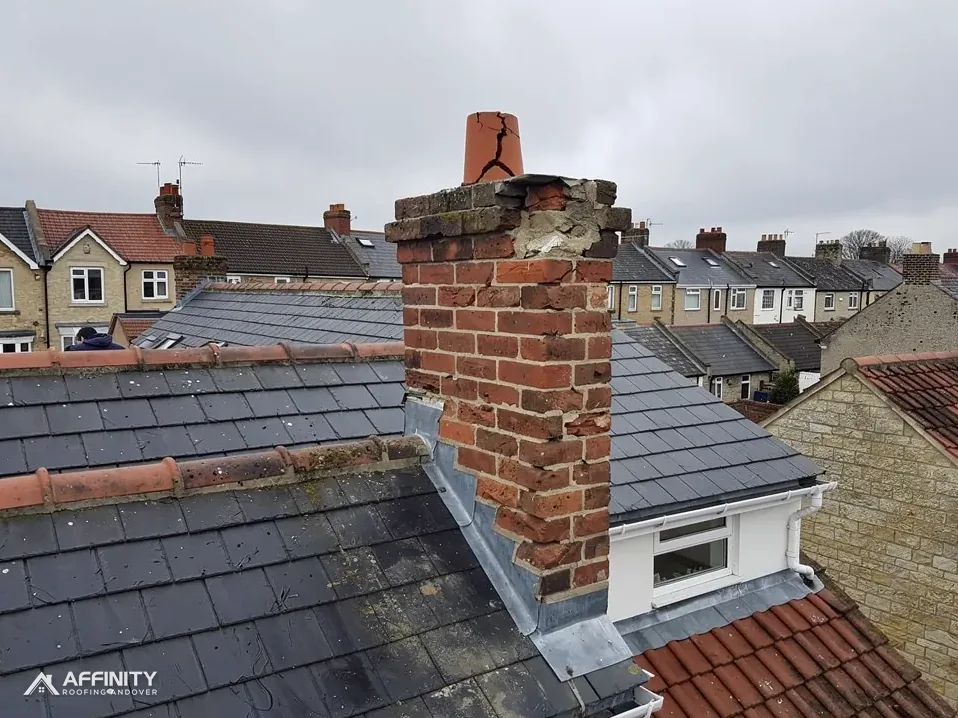
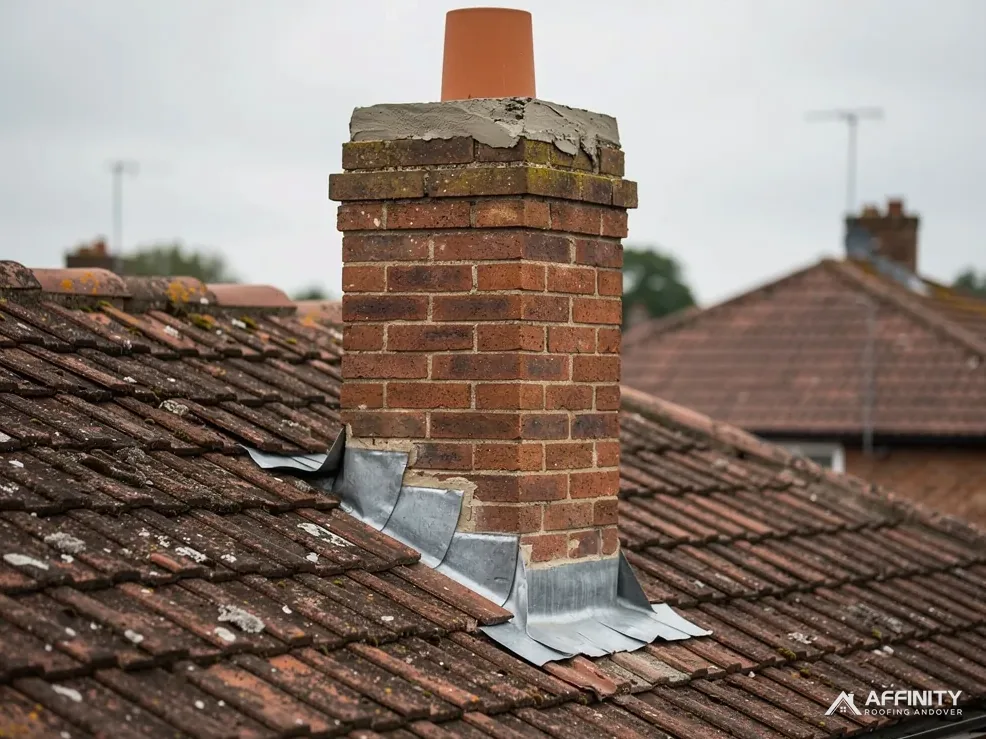
Take a photograph of the pot from the garden, using a zoom lens or binoculars, and note the date. That helps a roofer to see what is going on without climbing up.
What the law says about an active nest
Section 1(1) of the Wildlife and Countryside Act 1981 is breached if anyone intentionally takes, damages or destroys an occupied or half-built nest. Intent is the key.
It is wrong to say that disturbing any nest is always illegal, and it is just as wrong to say that nothing is at stake. If you know a nest is active and clear it anyway, that is the case the law has in mind. The Act sets no dates for the nesting season, so what counts is whether a nest is in use now.
GOV.UK says there are no licensing purposes that permit development or construction, so a chimney repair is not a reason to move a nest. The sensible course is to plan the job around it.
For you, that means leaving the nest in peace and putting up with a blocked chimney for a few weeks. If the birds are in a stack that must be rebuilt for safety, talk to the roofer about what can be done around them, and get advice if in doubt.
This is general guidance, not legal advice.
Our answer on roof work and nesting birds covers the same point for the rest of the roof.
Clearing the flue once the nest is finished with
When the young have left and the nest is clearly abandoned, the flue can be cleared. Be certain before you start: a nest that looks old may still be in use, and a second brood is possible. If you are unsure, wait longer.
A chimney sweep can remove the nest and brush the flue, and a roofer can lift the pot and clear the top if the nest is wedged. The debris can be heavy and dirty, so the room below needs sheeting and the hearth needs protecting.
Have the flue inspected afterwards. A nest can hold moisture against the lining, and bits of masonry can be loosened by the clearing. A camera survey or a smoke test will show whether the flue is clear and the liner is sound before any appliance is used again.
Check the stack at the same time. Birds often work at loose pointing, and a pot that was already wobbling can be moved further by their weight. If bricks are loose, our answer on bricks falling from a chimney explains the steps.
Keep photographs of what is removed and the state of the pot, as a record for the next visit.
Keeping birds out afterwards
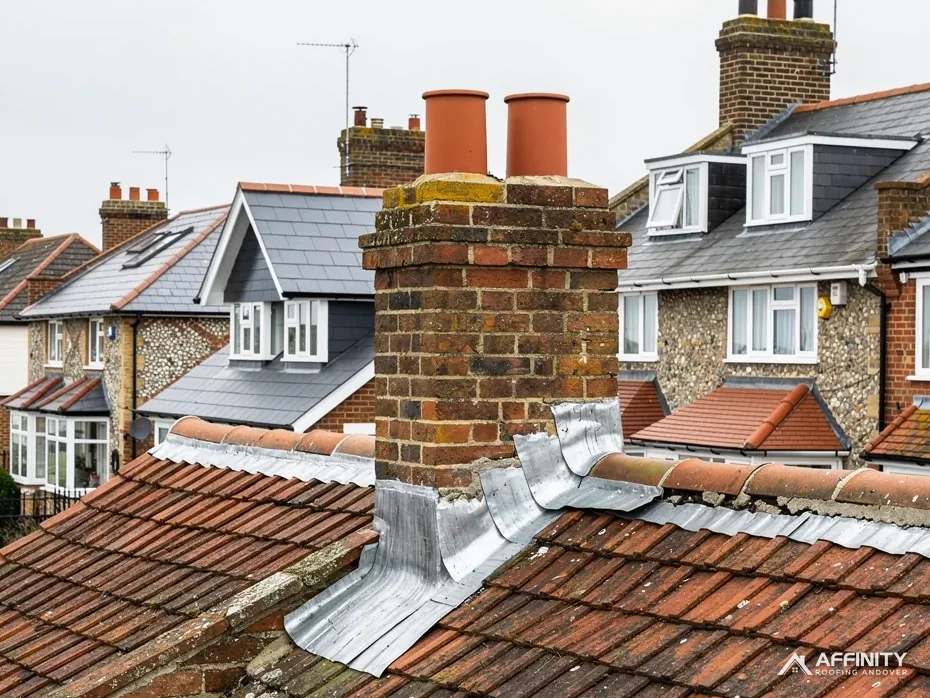
A cowl is the lasting answer. A bird guard, which is a wire cage over the pot, or a cap with a mesh, keeps birds out while letting the flue breathe. The type depends on whether the flue is in use. Our answer on whether you need a chimney cowl explains the choices.
A chimney that is no longer used needs more care. If it is capped, it should still be ventilated, to keep the flue dry and to avoid damp in the breast. Our answer on ventilating a capped chimney covers it.
Because a cowl sits on the very top of the stack, fitting it is roofer's work, with proper access. The price depends on the pot, the access and the type of cowl, and the written quote fixes it after a survey.
Do the work out of the nesting period only if you are sure no nest is active. Look first, and if birds are still around, wait.
The full range of work on stacks is on our chimney repairs page.