
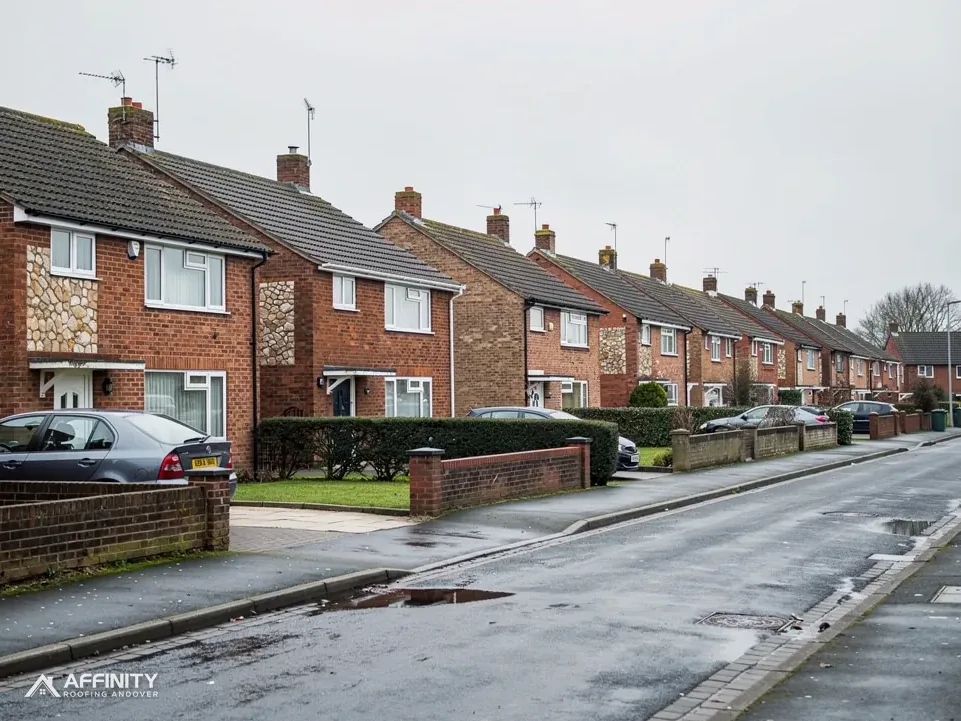
Roofers in Penton Mewsey
Holy Trinity, Home Farm House and the roofs of The Pentons
Penton Mewsey is a village of 399 residents with a Grade II* church and 29 listed buildings near its centre. A survey with photographs comes before any repair is chosen.
Penton Mewsey roofs, church and farmhouse
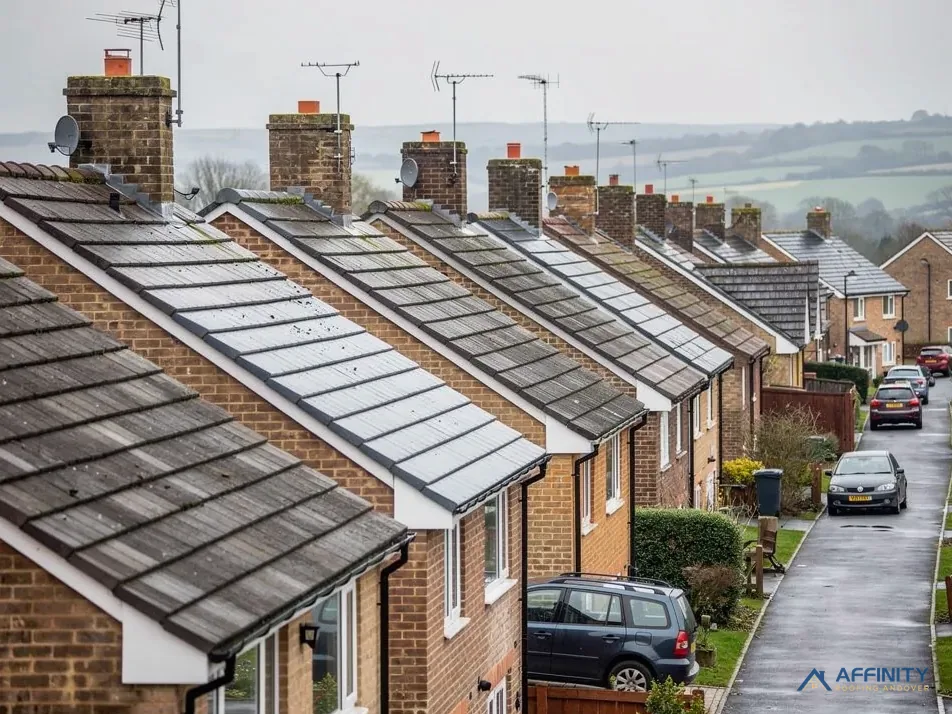
Holy Trinity Church
A Grade II* church, first listed on 20 December 1960, with a roof that falls under the faculty system.
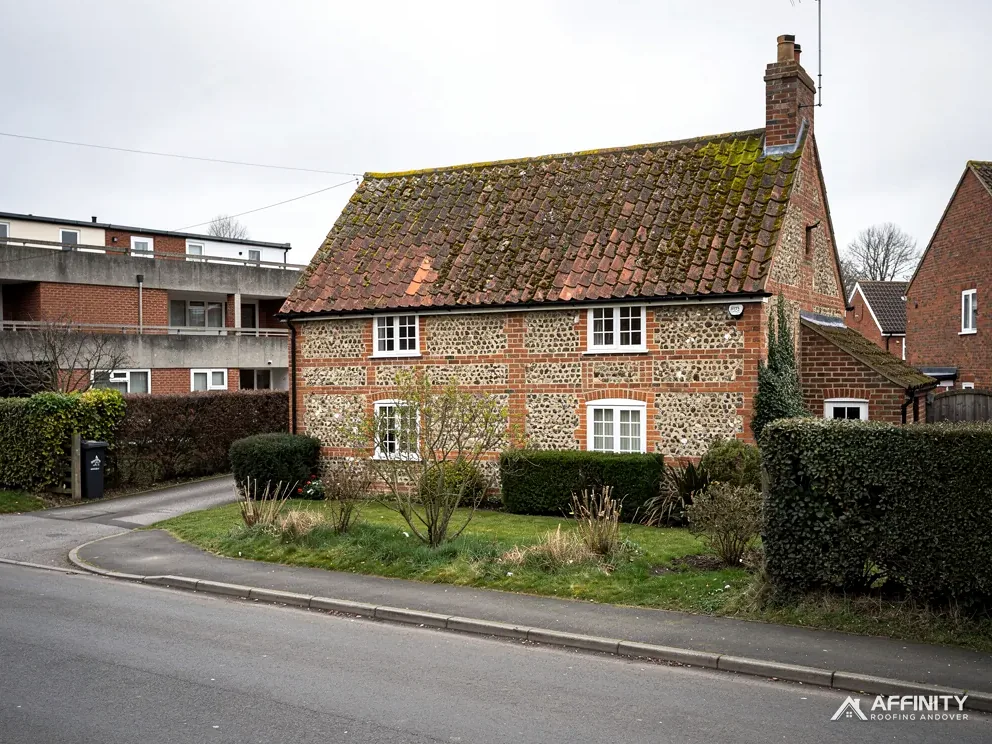
Home Farm House
Home Farm House, Grade II since 20 December 1960, a farmhouse whose repairs should copy its present roof.
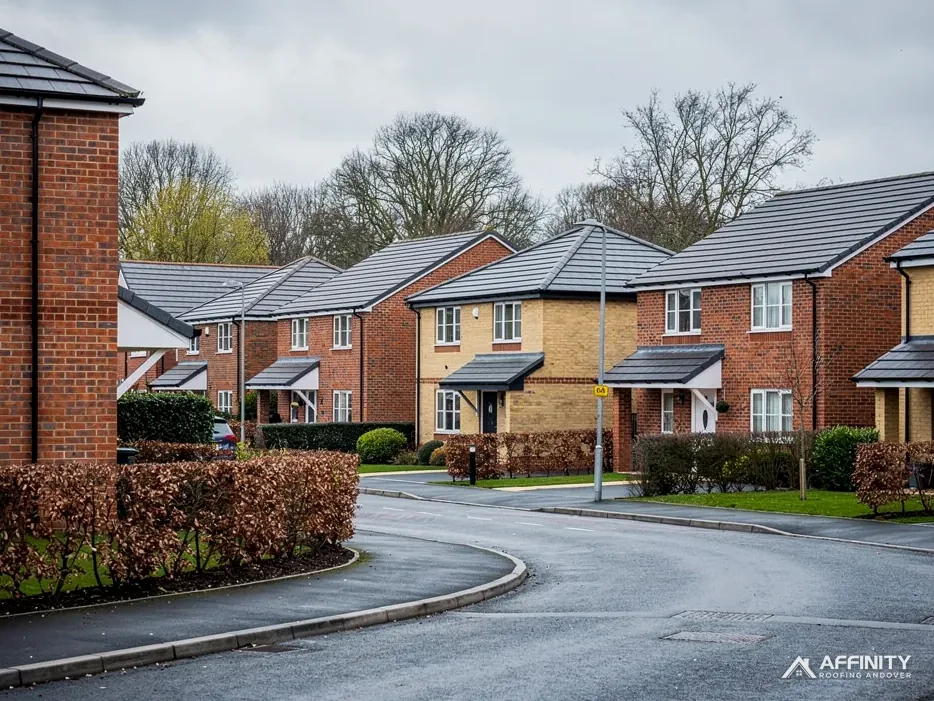
Houses in The Pentons area
Houses near the village centre, close to the conservation area boundary that the council supplies for The Pentons.
Penton Mewsey between Weyhill and Charlton
Weyhill lies to the south-west, Charlton to the east, Appleshaw to the north-west and Hatherden to the north. Each is within our working area.
- Distance
- 4 road miles north-west of Andover
- Planning
- Test Valley Borough Council
- Council
- Test Valley Borough Council and Hampshire County Council
The Penton Mewsey roof report
Local editionPenton Mewsey, HampshireChurch, conservation area and roof-space wildlife
Penton Mewsey roofs: a small village, The Pentons conservation area and the bats and nests under the tiles
Penton Mewsey has 399 residents, a Grade II* church and a conservation area named The Pentons. Read on for the consent questions, the church route and the legal protection for bats and nesting birds.
The Pentons conservation area and Test Valley
Andover's East Street is 4 road miles away to the south-east of Penton Mewsey, and the village is a small one: the 2021 Census counted 399 usual residents in the parish. Planning decisions come from Test Valley Borough Council, the same body that deals with Andover, while the lanes belong to Hampshire County Council. No national park or National Landscape covers the village. A village roof is viewed from the lane as well as from above, since planners read a repair as the road sees it.
The Pentons conservation area lies within about 0.75 km of the centre of Penton Mewsey, on a boundary Test Valley Borough Council draws. Inside a conservation area, a change to the look of a roof deserves a conversation with the council before anything is ordered. Whether an Article 4 direction reaches your lane is something to check with Test Valley Borough Council, so we put the question to it before pricing.
Building control is a separate desk with two tests for a re-roof. Where the work stays under 25 per cent of the building envelope and under 50 per cent of the roof, the Planning Portal says approval does not normally follow. Replacing a handful of slipped tiles or a failed flashing falls far inside that. Stripping and re-laying a whole slope is when your building control body should be asked for its view; local authority building control or a registered building control approver can answer.
The second test is weight. A covering at least 15 per cent heavier than the one it replaces brings Building Regulations into play, and the Planning Portal recommends that an engineer or surveyor inspect the structure beforehand. Natural slate or clay replaced by concrete tile is the swap that raises it, since timbers under an old covering were not necessarily sized for the new one.
The survey is there to answer such questions with the roof itself. Ground level comes first, then a climb where the roof permits; a raised tile lets us photograph the battens, the slim timber strips carrying each course, and the underlay, the sheet under them. A report follows in plain words: what has failed, what is sound, what each option involves and which approvals it needs.
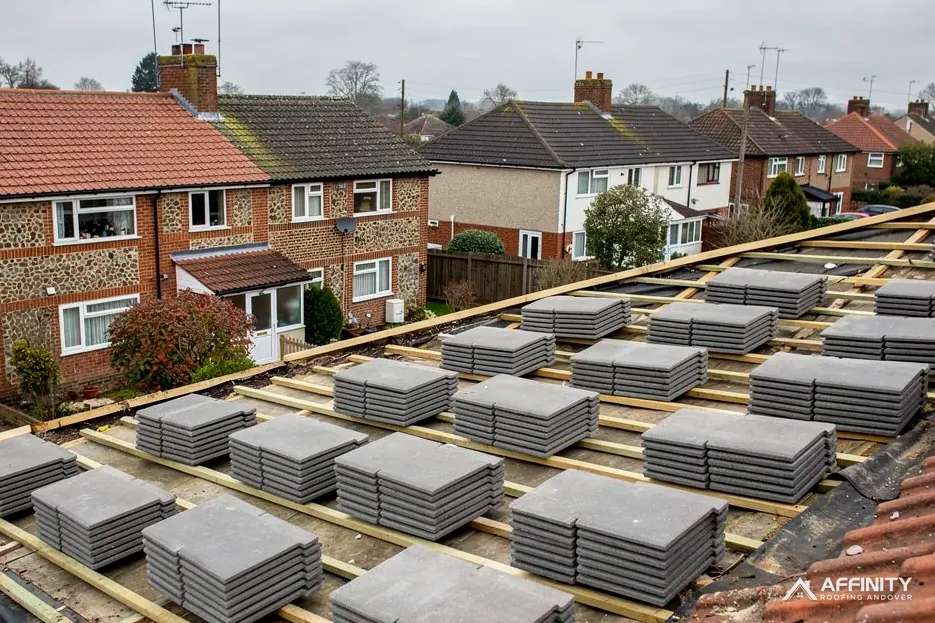
On a small roof the answers tend to be short. Repair what has failed, leave what is sound, and note what to watch next time. Where the covering is spent, the pictures make the case for replacing it, and the route through building control is asked about before a date is set.
Holy Trinity, Home Farm House and 29 neighbours
Historic England's list records 29 listed buildings within about 500 m of the centre of Penton Mewsey. Holy Trinity Church is Grade II* (list entry 1278801), first listed on 20 December 1960. Home Farm House is Grade II (1230055) and carries the same listing date. In a village of 399 people, 29 listings in so small a radius is a dense record, and the roof next door may well be a protected one.
Holy Trinity, Anglican and still used for worship, comes under the Church of England's faculty system rather than listed building consent. A faculty from the diocese's consistory court, Penton Mewsey's route for Holy Trinity, clears the work, and the roofer's part is evidence: a survey and a clear account of the work. We prepare the photographs and written findings such an application needs. A church's architect will often ask for close pictures of the lead, the ridge and the rainwater goods, and we gather those on the same visit.
Home Farm House is a private home, so its route is the council's. Work touching its character needs listed building consent, which Test Valley Borough Council decides. The simplest request to support copies the existing covering in material, size and pattern. A new covering, a changed ridge or altered chimneys makes a harder case, and the council can refuse. Asking early costs nothing and spares a plan that cannot proceed.
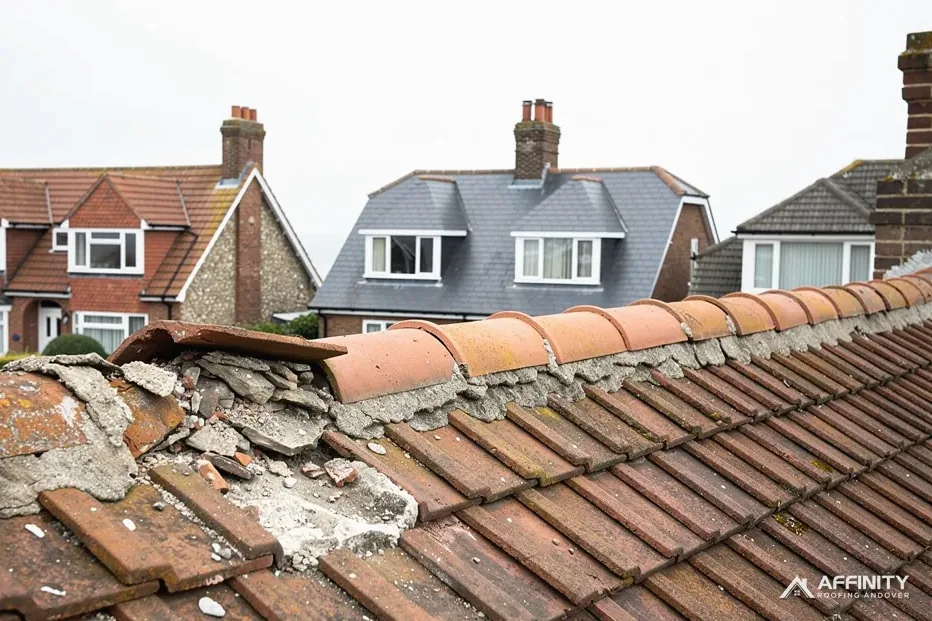
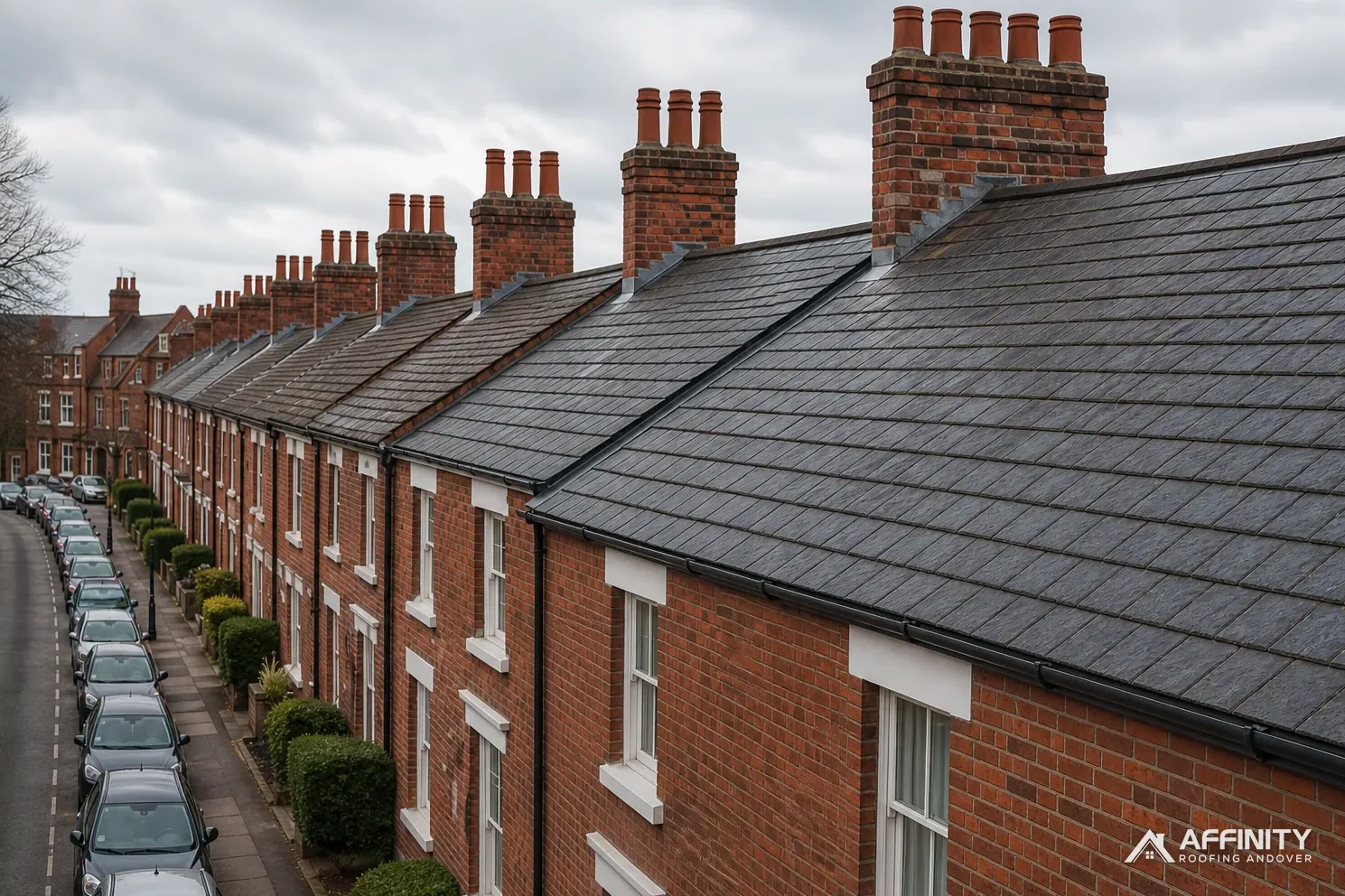
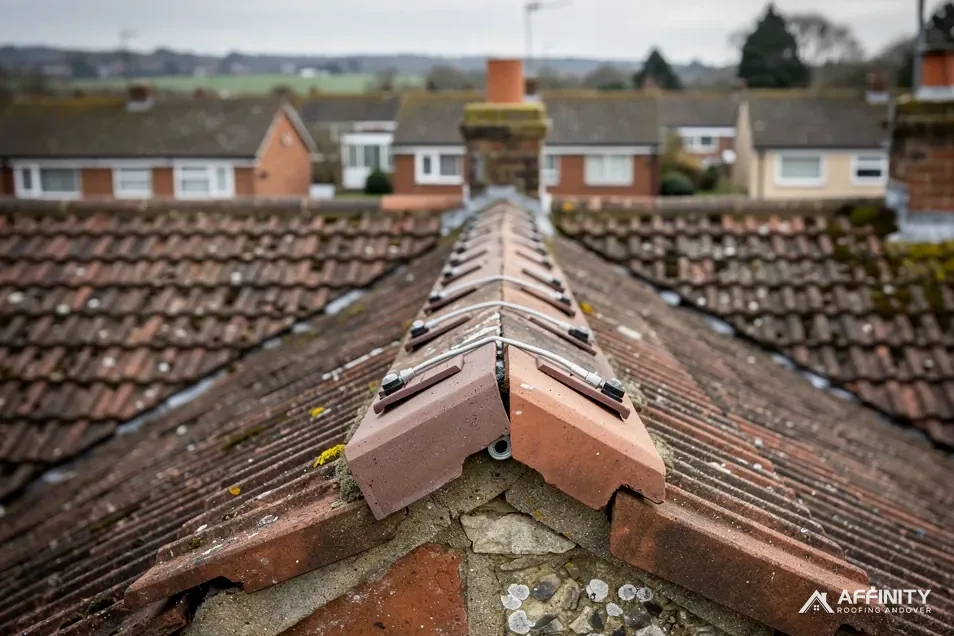
Chimneys carry much of the character of a village roofline, and a stack that is leaning, flaking or losing its pointing is worth attention before the weather turns. The survey checks the flashing at the junction of stack and slope, the flaunching around the pots and the brickwork above the roof, and the photographs show which of them has failed.
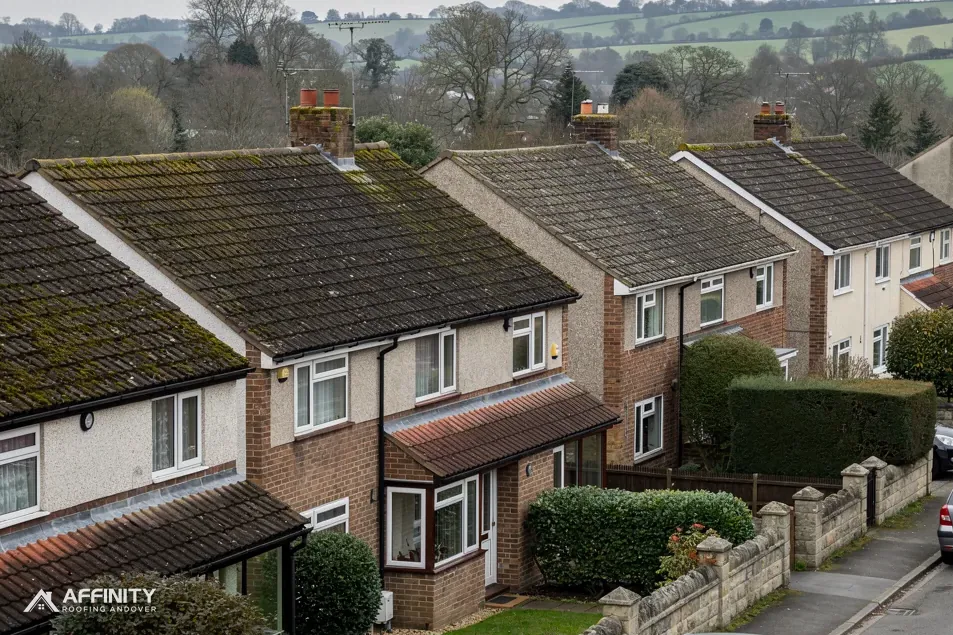
With so many listed neighbours, an unlisted house here may be part of a group seen together from the lane. That is a reason to match materials closely even where no consent is required. Colour, thickness and laying pattern are noted for the tiles, along with the ridge, the hip lines and the gable edges, and then we look for reclaimed stock. A near match in colour beats a bright new tile that stands out for a decade.
Farm buildings, barns and stores around a farmhouse are roofs in their own right. We survey them as we would a house, with photographs and a written report on the covering, the fixings and the gutters, and the same consent questions are asked before a price is given.
“On a small village roof the survey looks above the ceiling as carefully as at the tiles.”
Bats, nests and the roof space
An old roof is a home as well as a shelter. Birds first: section 1(1) of the Wildlife and Countryside Act 1981 bites on anyone who intentionally takes, damages or destroys a nest that is being built or is in use. Bats are covered more tightly. GOV.UK calls every bat species, with its breeding sites and resting places, fully protected, and includes roof repair and replacement in its list of activities that may affect them.
Two provisions matter to a roofer. Under section 9(4) of the same Act it is an offence to disturb a bat in its shelter intentionally or recklessly, or to obstruct its way in or out. Regulation 43 of the Conservation of Habitats and Species Regulations 2017 adds deliberate disturbance and, with no need for intent, damage to a breeding site or resting place. Roof work can do the second without meaning to, which is why the roof space is checked before the tiles. A nest that is in use is a reason to work round it, and the photographs record where it is.
A survey in a village like this therefore includes the loft, with a path cleared to the ridge if the space is used for storage, so the underside of the covering can be seen, the gable ends and the underside of the ridge, and we photograph what we find. If anything suggests bats, work on that part of the roof stops and an ecologist is asked for advice before gaps are lifted, closed or sealed. None of this is a reason to avoid repairs. It is a reason to ask first, and a repair planned around the advice is still a repair.
A scaffold on the lane needs section 169 licensing under the Highways Act 1980, and Hampshire County Council grants it. Under those rules the applicant is the scaffolding contractor and not the householder, with ten clear working days to elapse first. Hampshire County Council's fee is £211.90 on application for the first 2 weeks and £72 for each further 2-week period, with no extensions. Private ground sits outside the scheme.
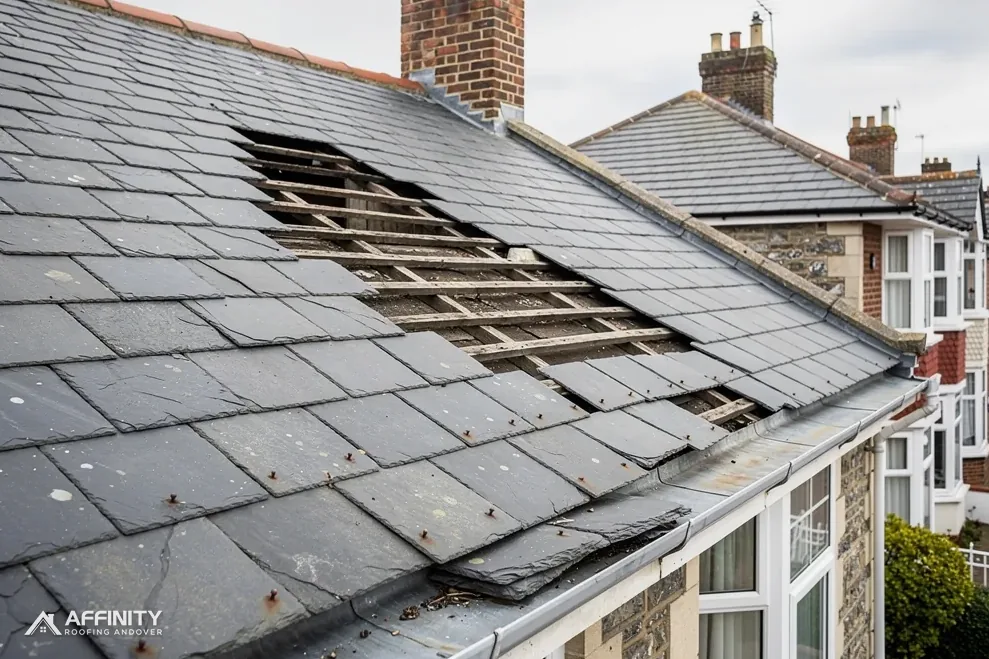
The regular work is roof repairs, pitched roofing and chimney repairs. Where the covering is natural slate, HomeBuilding (September 2025) gives Welsh slate 100 or more years and Spanish natural slate 75 to 100 years, typical figures and never promises, so a sound slate roof with a few failed fixings is a repair and not a replacement. We clear up as we go and take the waste with us, and a day-by-day outline comes before the start.
Penton Mewsey: the jobs we take on
Penton Mewsey roofs: wildlife, the church and the conservation area
What if there are bats in the roof I want repaired in Penton Mewsey?
Stop work on that section and ask an ecologist for advice before anything is lifted or sealed. GOV.UK treats bats, with their breeding sites and resting places, as fully protected, and section 9(4) of the Wildlife and Countryside Act 1981 means anyone disturbing a bat in its shelter intentionally or recklessly commits an offence. A repair can be planned around the advice.
Does Holy Trinity Church need a faculty for roof work?
Yes. Being Anglican and still in worship use, the church comes under the faculty system, and the council's listed building consent plays no part. We supply the evidence for the application, which is the survey, pictures and a brief written note on the old covering and the planned repair. Its faculty comes from the diocese's consistory court, Holy Trinity included.
Is my Penton Mewsey house inside The Pentons conservation area?
A boundary for The Pentons is recorded within about 0.75 km of the village centre, which puts several roads near its edge. Only Test Valley Borough Council's map can say whether yours is in or out. Changing a covering or adding a dormer calls for a word with the planners first, and a plain repair that copies what is there generally does not.
Does a heavier tile on a Penton Mewsey roof need Building Regulations approval?
It does where the new covering raises the load on the roof by 15 per cent or more, and the Planning Portal recommends that an engineer or surveyor inspect the structure beforehand. We examine the rafters and battens during the survey, report what they can carry, and raise the question with your building control body before a start date is agreed.
Get a Penton Mewsey roof survey booked
Name the house and the problem. A survey is the first step; one written price follows it.
10-year workmanship guarantee, in writing.