
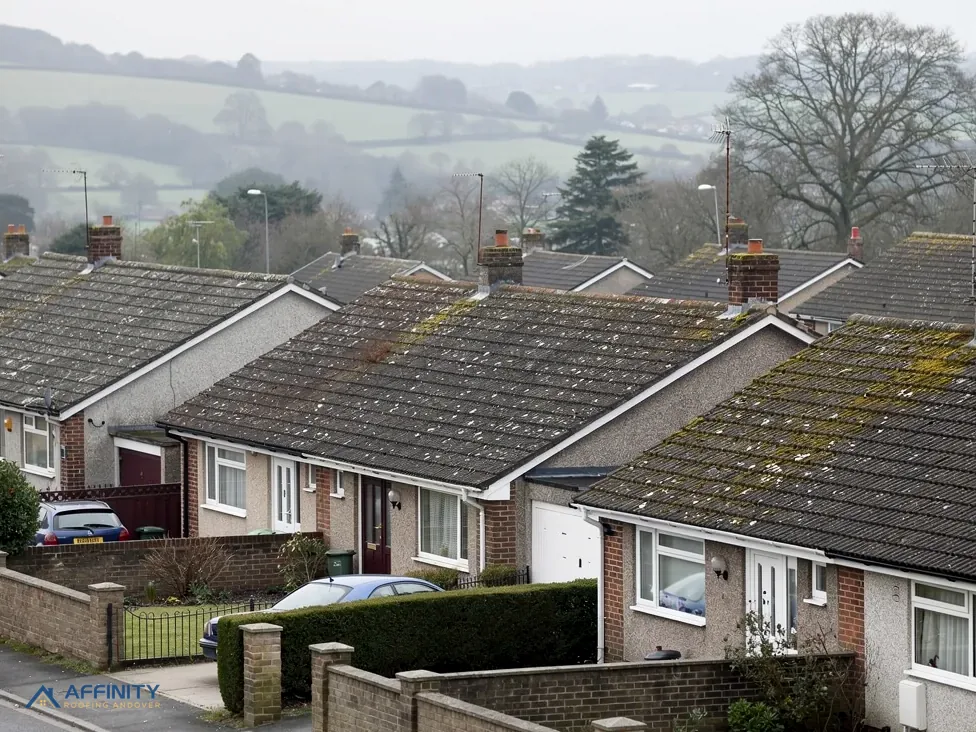
Roofers in Waltham Chase
Roofs and rainwater in Shedfield parish, east of Bishop's Waltham
Waltham Chase is in Shedfield parish, with land near its centre partly in Flood Zone 2. A sound roof is half the job; the water must also get away.
Waltham Chase roofs and where the water goes
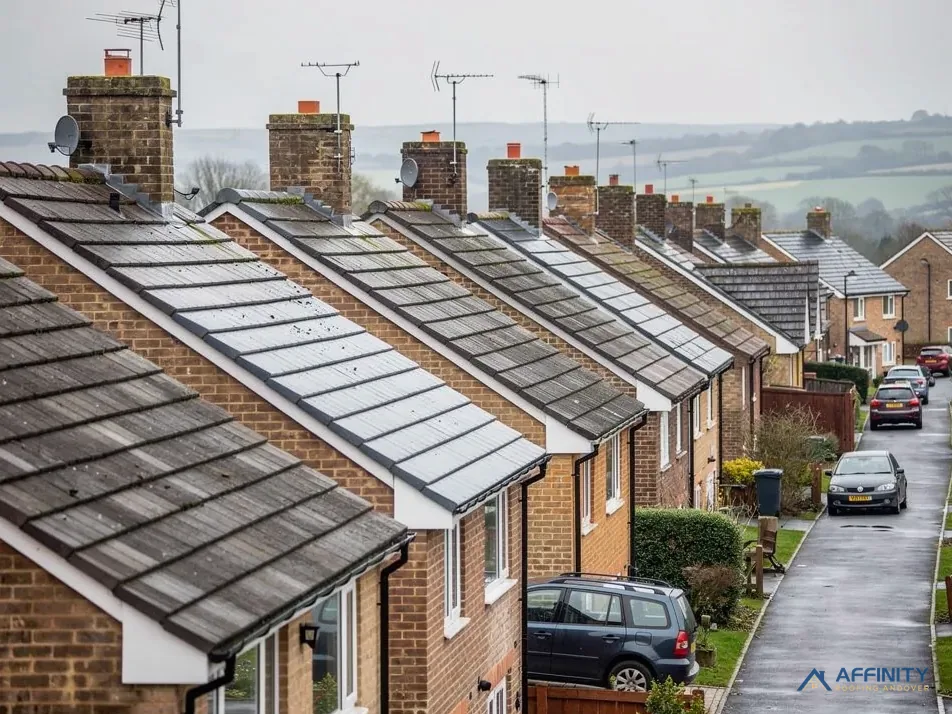
Gutters and downpipes
With part of the land near the centre in Flood Zone 2, a blocked outlet or a sagging gutter matters more.
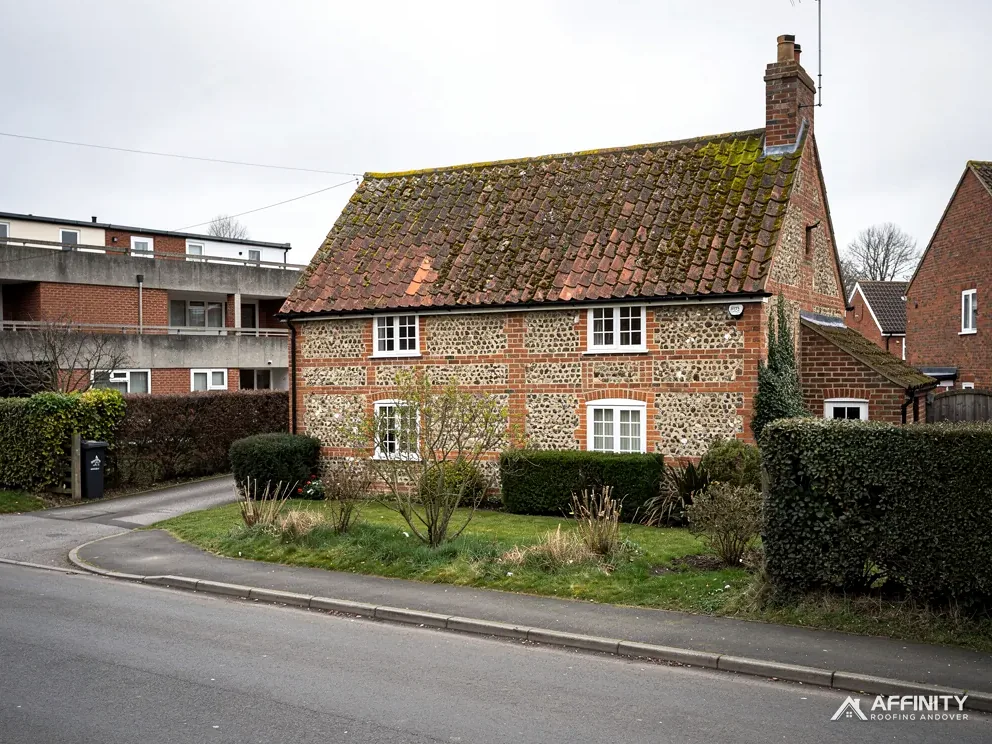
Homes in Shedfield parish
Houses in a parish of 4,517 people, where Winchester City Council decides planning and runs building control.
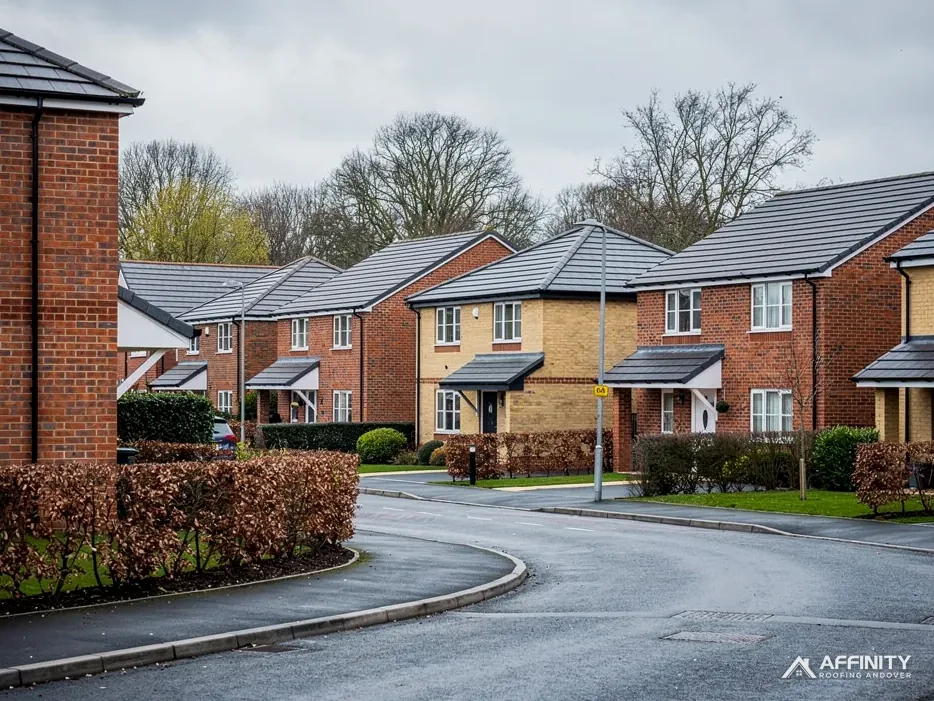
Roofs near Bishop's Waltham
Streets near the Bishops Waltham and Shedfield conservation areas, the nearest to the village.
Waltham Chase and its neighbours
Bishop's Waltham is the closest, up the road to the north-west, Durley lies west, Upham further north-west, and Meonstoke north-east of Waltham Chase.
- Distance
- 30 road miles south-east of Andover
- Planning
- Winchester City Council
- Council
- Winchester City Council and Hampshire County Council
The Waltham Chase roof report
Local editionWaltham Chase, HampshireRoofs, drains and a Winchester address
Waltham Chase: a Winchester address, a parish of 4,517 and why the gutters matter
Waltham Chase lies south-east of Andover, 30 miles away by road, in Shedfield parish and the Winchester City Council area. The report covers the council that decides on roofs here, what the Flood Map for Planning adds, and the scaffold licence.
Shedfield parish and Winchester City Council
Waltham Chase has no parish of its own. It belongs to Shedfield, which counted 4,517 usual residents at the 2021 Census; that figure is for the whole parish and not for Waltham Chase alone. The village lies in Winchester City Council's area, so the city council decides planning applications, while Hampshire County Council is the highway authority. That keeps the planning picture uncomplicated.
Building control is Winchester's as well, through its own Building Control service, reached via the council's number, 01962 840 222. Two of the three roof questions therefore belong to one council. The third, scaffolding on the road, belongs to the county. At the first visit we tell you which of the two offices you are likely to hear from, so a letter arriving from either is no surprise.
Two numbers decide whether building control wants to hear about a re-roof: the Planning Portal puts them at 25 per cent of the building envelope and 50 per cent of the roof. Work that stays under both does not normally need an application. A single repair to one slope sits far inside. A full re-cover of a house does not, and then the question goes to the council before any price is written.
A third number is 15 per cent. A covering that tips the roof's weight up by that much or more brings in Building Regulations approval, and the Portal advises a structural opinion first. The classic trap is light slate swapped for concrete tile; it is better dealt with at the survey than at the roof's edge.
There is a private alternative, a registered building control approver, under a registration regime in force since 6 April 2024. You get both options for your address in writing, with the survey pictures attached. Dates wait for the route, and nothing is booked on a guess.
Council records follow the parish and the postcode, not the name people use for a village. At the first call we take the whole address and compare it with Winchester's pages. A correct address at the start means the right office is asked the right question, and nobody waits on an answer that belongs elsewhere.
The planning side is covered in our guide to planning permission for roof work, which explains where houses, flats and listed homes stand. Read it before choosing a new shape or a different covering, since the answer can change what is sensible. An extension roof, a new roof window or a different covering can each alter the planning position, so the guide is a sensible first stop even for a small job.
Flood Zone 2 and where the roof water goes
The Flood Map for Planning, published by the Environment Agency, puts part of the land around Waltham Chase's centre, within about 250 metres, in Flood Zone 2. It describes land and not any single road or house. For a roofer it prompts a practical question: where does the water from the roof end up?
On any house, rain that lands on the roof is gathered by the gutters, carried down the downpipes and sent to a drain or soakaway. If that path is blocked or too slow, water spills over the gutter edge, runs down the wall and collects at the foot. The roof can be perfectly sound and the house still turn damp. Where flood mapping already flags some of the land, we give that path extra attention.
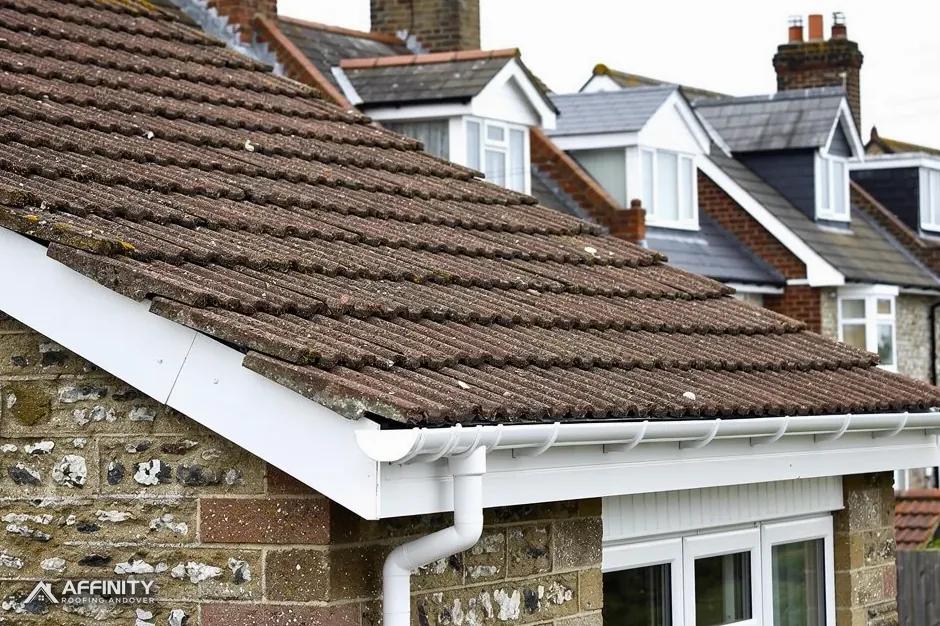
Our survey of the roofline looks at gutter joints, sagging brackets, blocked outlets, split downpipes and the fascia behind. We photograph the run from the scaffold or the ladder and mark where water escapes. That evidence is worth having whatever happens next, because it shows whether a gutter needs clearing, rehanging or replacing, and which lengths are fine as they are.
Flood risk itself is a matter for the Environment Agency's map and for your insurer. Our part is to make sure the roof sheds water properly and the guttering carries it clear of the walls. Our page on guttering, soffits and fascias describes the work.
Water leaves a roof in a few well-worn places, and we look at each. A valley gutter takes the flow from two slopes at once and is the first place to overload in a downpour. A hopper head catches leaves and can silt up between visits. A lead-lined gutter on a flat roof needs its outlet clear and its falls true. On a conservatory or porch, the roof sheds against the main wall, and the flashing there must lie flat. Where we find a weakness, the report shows the spot, so you can see why a particular fix is proposed.
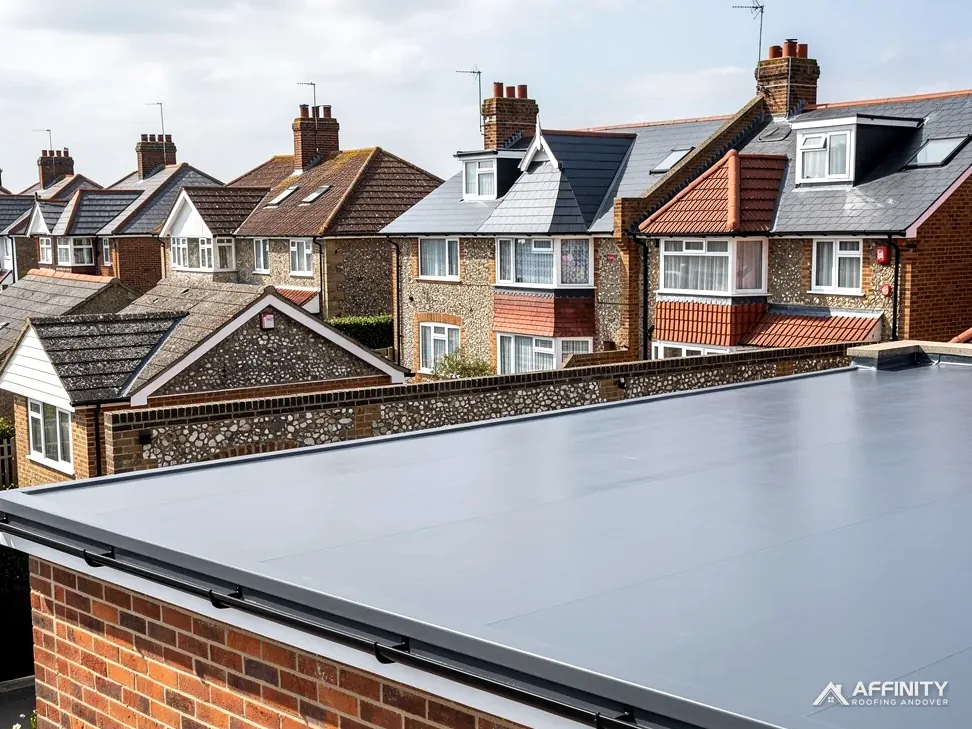
Flat roofs and extensions deserve the same scrutiny. A flat roof with poor falls leaves water standing for days, and a porch or conservatory roof may send a large volume down a single pipe. We trace where each one drains before suggesting any repair.
Everything is photographed and written up, so the report tells you what is working and what is not, without any need for you to climb up and look. If a downpipe discharges onto a path against a wall, the pictures show that, and the fix is often small.
“A sound roof still needs a clear path for its rainwater to leave the house.”
Nearby conservation areas, Article 4 and the scaffold
Bishops Waltham and Shedfield are the closest conservation areas, both within about 2.5 km of Waltham Chase. Winchester City Council's map settles the question for your address, and a quick word with its planning team clears it up. It is worth asking before any work that changes the look of the roof seen from the street.
Whether an Article 4 direction reaches Waltham Chase is a question for the same team, and the wording is easy: does an Article 4 direction apply to my road? We put it to the council ourselves when a job might be affected, and pass its reply to you.
A scaffold set up on the carriageway or footway falls under section 169 of the Highways Act 1980, which calls for a licence. For Waltham Chase the licensing body is Hampshire County Council, and Winchester does not issue it. Hampshire County Council's page has the scaffolding company apply, on the customer's behalf. Hampshire County Council charges £211.90 on application for the first 2 weeks and £72 for each further 2-week period, wants ten clear working days to elapse before the start, and allows no extensions.
A scaffold kept wholly on private ground needs no highway licence, so the plan for a house with a long drive differs from one with a road frontage. The survey records which you have, and the written price reflects it. Waltham Chase houses meet the road in different ways: some front the pavement, others sit behind a verge or a drive. That changes the scaffold, the licence and the price, so we photograph the frontage along with the roof.
The ten clear working days Hampshire asks for are a fixed lead time, so a booked date can slip if consents arrive late. We therefore hold the booking until the paperwork is in hand and tell you the earliest realistic start. Where a ladder or a tower will do the job, the highway licence may not come into it at all, and the survey says which. A tower on the pavement is still on the highway, though, so the same licence question applies to it.
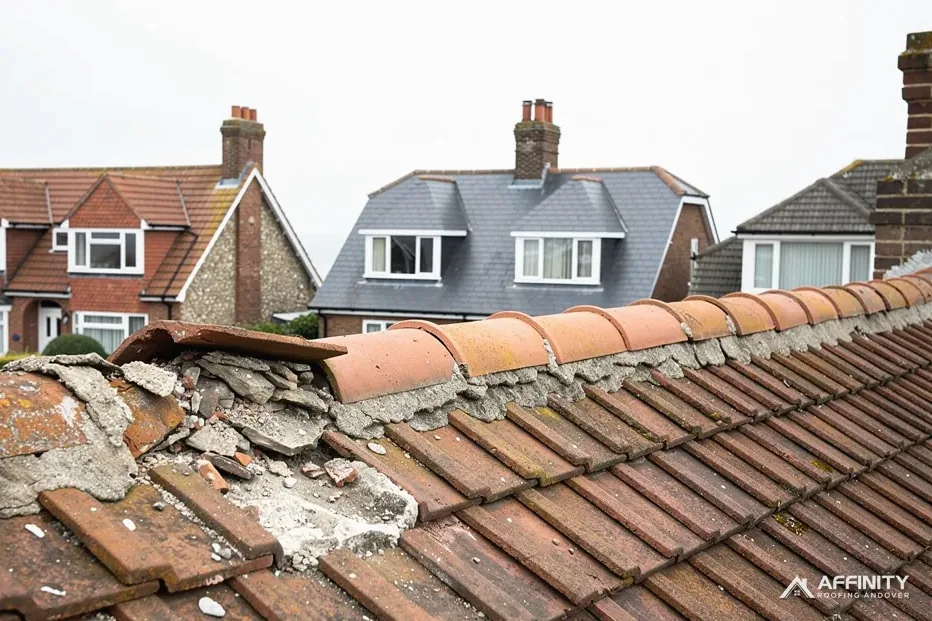
The jobs are mostly the ordinary kind. We take roof repairs after lifted or slipped tiles, guttering, soffits and fascias on tired roof edges, and flat roofing on extensions and garages. Jobs here open with a survey, and pictures of the roof as it stands.
A covering with years left calls for repair, and the pictures show whether yours is one. Rotten battens and split underlay point the other way. A single written price follows either verdict, and the site is cleared.
Work we carry out around Waltham Chase
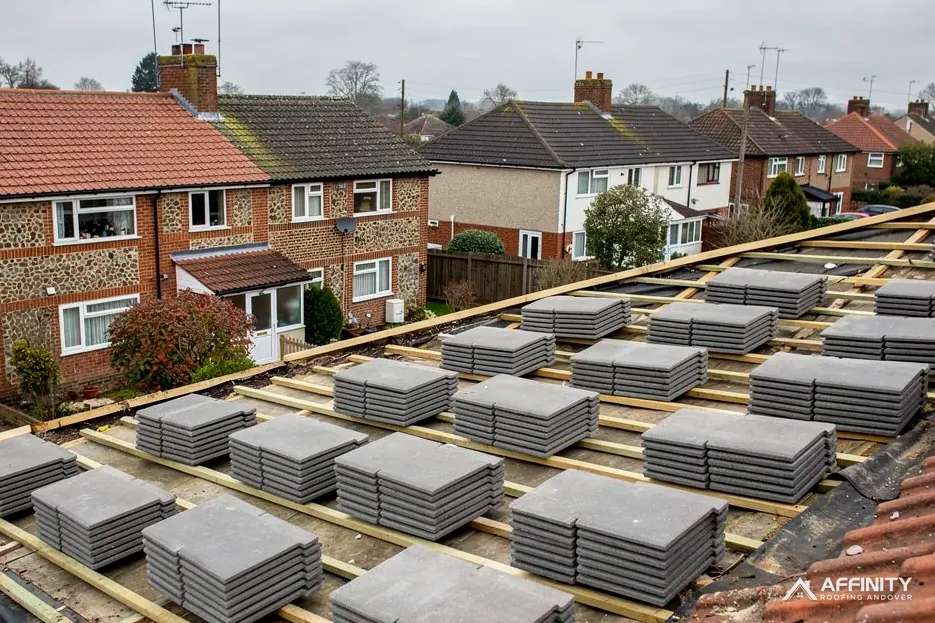
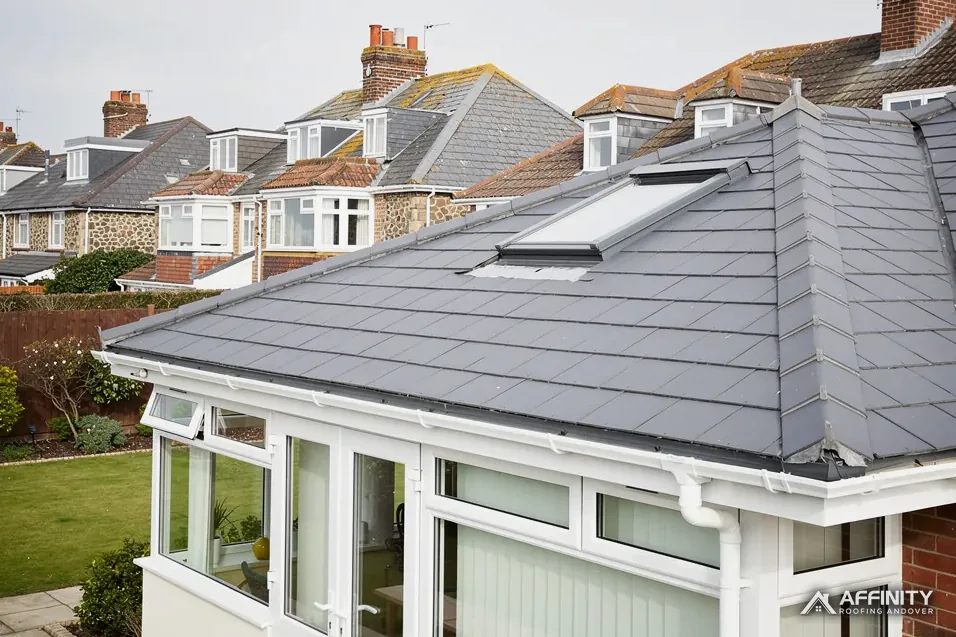
Waltham Chase roofs: drains, zones and licences
Should Waltham Chase gutters be checked more often because of Flood Zone 2?
Flood Zone 2 covers parts of the land near the centre on the Environment Agency's Flood Map for Planning, and it describes land, not your particular house. In any zone, a blocked outlet sends water down the wall. We check the whole gutter run at survey and photograph whatever fault we find, so you can see each one for yourself and nothing rests on a spoken description.
Is Waltham Chase inside a conservation area?
Bishops Waltham and Shedfield, within about 2.5 km, are the closest ones, and Winchester City Council's map settles it for your address. A short call to its planning team settles it, and we can send photographs of the roof so the officer sees the covering as it stands.
Who do I contact about building control for a re-roof here?
Winchester City Council, through its own Building Control service, on the council number 01962 840 222. Where a re-roof affects less than 25 per cent of the envelope and less than 50 per cent of the roof, building control does not normally need an application. A covering 15 per cent or more heavier brings approval and a structural check. The council can confirm which applies to your roof, and we pass its answer to you before any date is fixed.
Who licenses scaffolding in Waltham Chase?
Hampshire County Council licenses scaffolds as highway authority, while the scaffolding company files for you and gives Hampshire its ten clear working days. Hampshire County Council's fee is £211.90 on application for the first 2 weeks, then £72 for each further 2-week period. Poles inside your own boundary are off the highway. We check which applies to your frontage at the survey and note it on the report.
Survey a Waltham Chase roof, gutters included
Share your postcode with a photo. We survey, check the route with Winchester City Council, then send one written total.
10-year workmanship guarantee, in writing.