
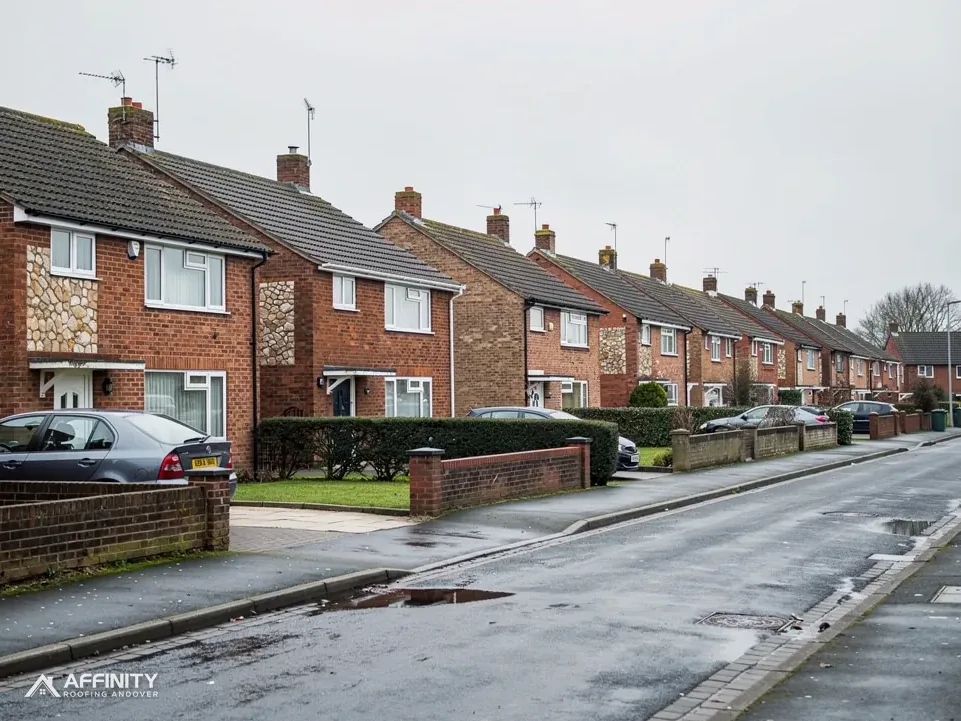
Roofers in Bishop's Waltham
A palace, a Grade II* church and the Park at its edge
Bishop's Waltham has 101 listed buildings within about 900 metres of its centre, and the South Downs National Park reaches the town's edge. Each roof is surveyed before pricing.
Bishop's Waltham roofs, from the High Street to the palace

Church of St Peter
St Peter's is Grade II* and Church of England, so its roof follows the faculty route, not the council's consent.

Palace House and High Street
Palace House and a bank on the High Street are Grade II*, with The Crown Hotel at Grade II.

Roofs at the Park's edge
Addresses near the National Park boundary, which may put a house under the Park Authority for planning.
Bishop's Waltham among its Hampshire neighbours
Waltham Chase lies to the south-east, Upham to the north-west, Durley to the west and Meonstoke to the north-east. Roofs in all of them are within our reach.
- Distance
- 29 road miles south-east of Andover
- Planning
- Winchester City Council
- Council
- Winchester City Council and Hampshire County Council
The Bishop's Waltham roof report
Local editionBishop's Waltham, HampshireA palace town on the Park's edge
Bishop's Waltham has a palace at its heart and a National Park at its edge: which rules apply
Bishop's Waltham is a town of nearly 7,000 people with a scheduled palace site and the South Downs National Park at its edge. This report covers which council decides a roof question, what the listings and flood map add, and scaffold licensing.
Winchester decides, and the Park lies close
Bishop's Waltham parish had 6,957 usual residents at the 2021 Census. The town centre sits outside the South Downs National Park, so Winchester City Council is its planning authority, and it also runs its own Building Control service, reached through the council's main number, 01962 840 222. But the Park is near: about 32 per cent of the 1.5 kilometre box around the town lies inside it. Any address that falls inside the boundary is the South Downs National Park Authority's to plan, with Winchester processing most such applications as host authority.
That makes the first question a geographic one. We ask for the postcode and check the boundary map before anything else, because the answer decides which planning team reads the paperwork. Inspection is unaffected by the line: building control stays with Winchester or a registered building control approver, because the Park Authority's work stops at planning. The roads, in either case, belong to Hampshire County Council.
For a re-roof, the Planning Portal's pair of limits applies: below 25 per cent of the building envelope and below 50 per cent of the roof, and building control is not normally needed. No local figure overrides it. A heavier covering is judged separately, and one that is 15 per cent or more heavier requires Building Regulations approval, with the Planning Portal recommending a structural check. We photograph the existing battens and underlay so the evidence is in hand if the question is asked.
Signing at home after a survey brings the cooling-off rules into play: Citizens Advice says the period lasts at least 14 days, beginning the day after you sign, for services costing £42 or more. An urgent repair you asked the trader to attend is outside that right. Ask for the terms in writing, and keep them with the survey photographs. The Citizens Advice consumer helpline is 0808 223 1133 if you need advice before you sign.
In the Park, a new dormer meets closer limits, and in a conservation area the same is true. Our guide to planning permission for roof work explains how. For any Article 4 direction touching your street, the planning team is the right place to ask, before a design is drawn.
A town of this size can also have flats above shops and offices with shared roofs. A flat is not a dwellinghouse for the permitted development rights that houses enjoy, so an owner of a flat should check before assuming a roof change is simple.
A bishop's palace, St Peter's and 101 listings
Historic England's list records 101 listed buildings within about 900 metres of the centre of Bishop's Waltham. The Church of St Peter is Grade II* (list entry 1179141, first listed on 6 March 1967), and so is Palace House (1350587, listed on 5 March 1967) and a bank and offices on the High Street (1178766). The Crown Hotel (1095674) is Grade II. Each is on Historic England's public list, searchable by address.
Bishop's Waltham Palace and Associated Fishponds is a scheduled monument within about 500 metres of the town centre (list entry 1016169). Works to a scheduled monument need scheduled monument consent, and works carried out without authority are an offence. A house roof elsewhere in town is outside the monument, but a frame, a skip or a trench near its boundary could touch it, so such work is checked against the scheduled boundary on Historic England's list before any delivery.
Because St Peter's is a working parish church, its roof falls to the Church of England's faculty system, with the faculty granted by the diocese's consistory court. For a listed house, shop or hotel, listed building consent is the extra step whenever an alteration affects its character. Repairs aim to match what is there: the same tile or slate, fixed the original way, with salvaged pieces found where a new one would show. A listed roof is judged as a whole, from tile and ridge to verge, eaves, stack and gutter, so even swapping a lead gutter for plastic could change its character and belongs in the application.
The Bishops Waltham conservation area lies within about 750 metres of the centre, using boundaries the council supplies. Anyone planning to alter the roof's look from the street should mention it to the planning team early.
A High Street survey starts at the kerb. We read the frontage from the ground first, with binoculars if need be, noting the tiles, the chimney stacks, the gutters and the valleys that can be seen, and then climb onto the roof only if conditions allow. The ground-level photographs show the roof in its setting, the close ones show the faults, and together they let the planning team see a proposal in context without visiting.
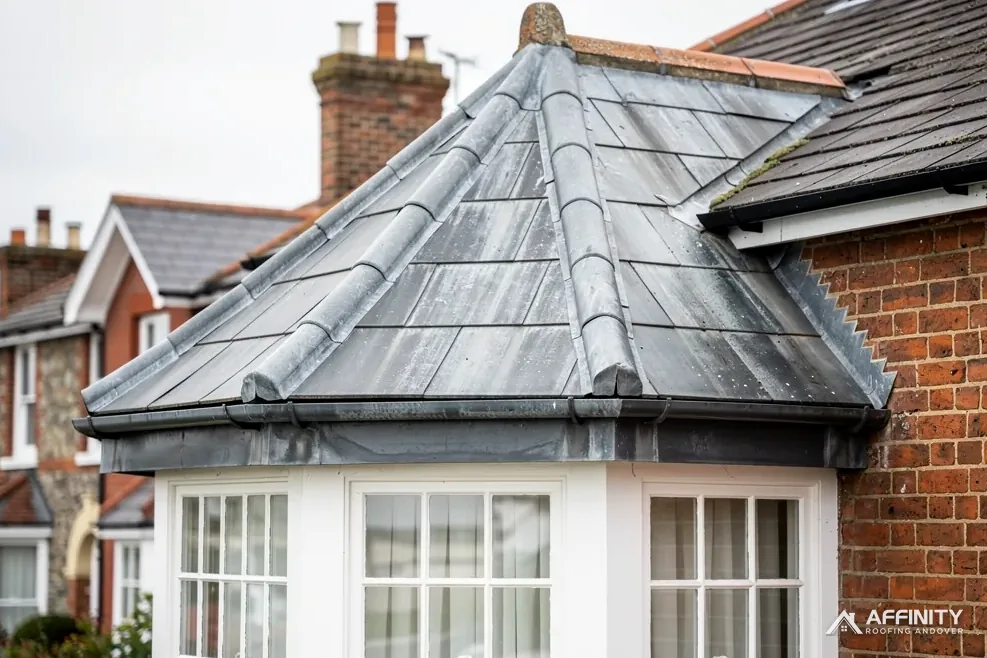
On High Street frontages, lead is often found at parapets, valleys and abutments. Lead flashing can last for over 80 years according to MyJobQuote, a minimum and not a forecast, and Royston Lead's brochure lists code 5 and above for parapet and box gutters. Sound lead is dressed back, and failing lead is replaced in the right code.
“The centre of Bishop's Waltham is in Flood Zone 3 on the Environment Agency's planning map.”
Source: Environment Agency Flood Map for Planning (via planning.data.gov.uk)
Flood Zone 3, town roofs and the county licence
The Environment Agency's Flood Map for Planning places the centre of Bishop's Waltham in Flood Zone 3. That is a statement about the town centre, not about a particular house, but it explains why we put gutters, hoppers, downpipes and gullies near the top of every survey. A blocked outlet on a flat roof or a parapet gutter can send water through a wall, and the cure is usually cheap if the fault is found early.
Roof covering choice follows pitch. Marley's data gives minimum pitches that depend on the tile: plain concrete tiles 35 degrees, Double Roman 22.5 degrees smooth, and some clay types between 15 and 40 degrees. BS 5534 indicates a minimum of 20 degrees for natural slate. Always check the product data sheet, and our survey measures the pitch before any covering is suggested.
Putting scaffold on the road brings in section 169 of the Highways Act 1980 and a licence from Hampshire County Council. Hampshire County Council tells the scaffolding firm to apply for its customer, asks for 10 clear working days and gives no extensions. Hampshire County Council charges £211.90 for the first 2 weeks and £72 for each further 2 weeks. Hampshire County Council also expects public liability insurance of £10 million and a frame built to BS EN 12810/12811 or NASC guidance TG20:13. A private road needs no licence at all.
Repairs to ridge and verge are a common item here. As national guides, Which? (November 2025) gives £80 to £300 per job, excluding VAT, to fit one new ridge tile, MyJobQuote (1 October 2026) puts ridge work between £225 and £550, and MyJobQuote (8 October 2026) says a dry verge usually falls between £500 and £2,000. These are guides and never our prices. A ridge or verge that is loose is photographed, measured and priced after the survey as one total.
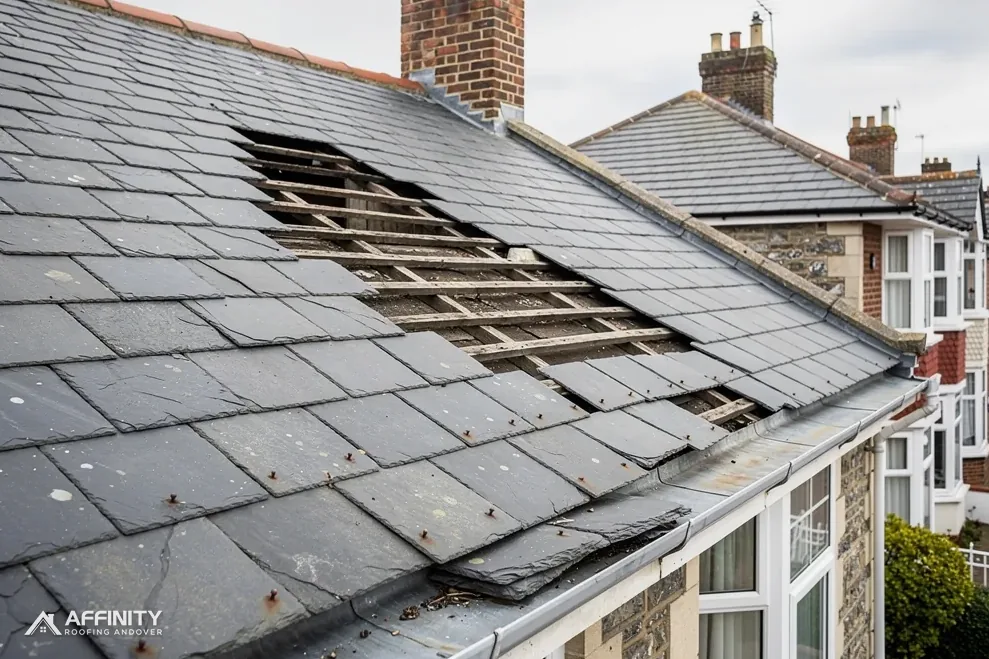
Our slate roofing, lead roofing and commercial roofing work suit a town of shops, hotels and older houses. Each begins with a survey and photographs, and each ends in one written total covering the frame, labour, materials and clearing away.
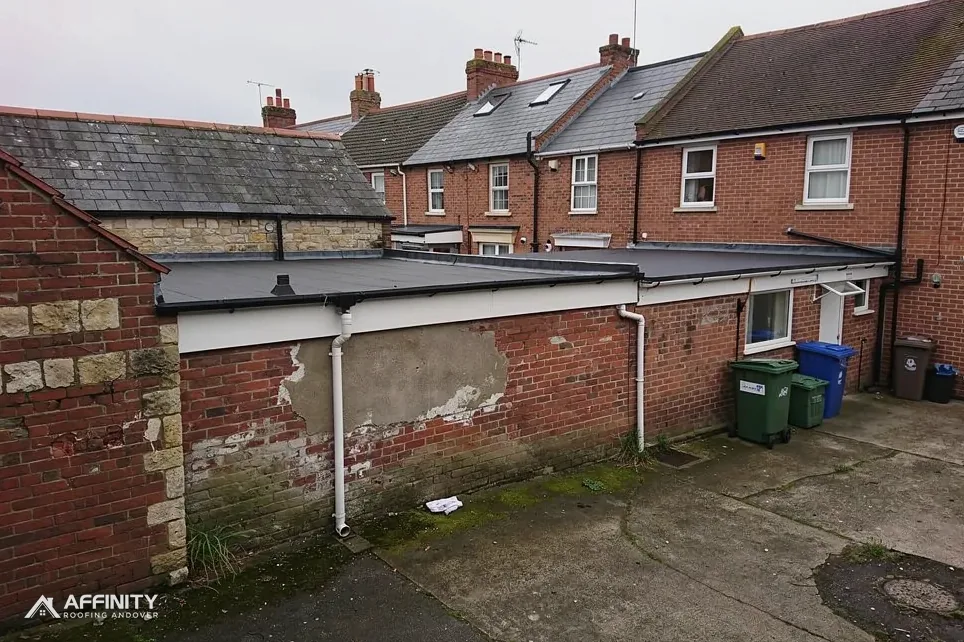
Behind a parapet, the fall of a flat roof matters most. BS 6229:2025 applies to roofs with a pitch of not more than 10 degrees, covers flexible membranes only and not lead, and keeps a finished minimum fall of 1:80. Lead follows BS 6915 through Approved Document C. We measure the fall and photograph where water stands, so repair or renewal rests on evidence.
On a shared building we ask who else will be on site, because CDM 2015 changes the duties when two or more contractors work together.
Bishop's Waltham roofing services



Bishop's Waltham roofs: the Park line, the palace and the licence
How do I tell if my Bishop's Waltham house is inside the National Park?
Ask Winchester City Council or the South Downs National Park Authority to confirm the boundary for your postcode. The town centre is outside the Park, but about a third of the area around it is inside. Inside, the Park Authority plans and Winchester processes most applications as host authority. Inspection stays with Winchester either way, and we note both answers on your file.
Does the palace scheduled monument affect roof work in Bishop's Waltham?
Only if work touches the monument. Bishop's Waltham Palace and its fishponds are scheduled, and works to them need scheduled monument consent. A roof elsewhere is unaffected, but we check any scaffold, skip or trench near the boundary against Historic England's map first, so no delivery arrives before the question is answered, and the reply is filed with your photographs.
Can a Bishop's Waltham High Street shop roof be re-covered in new slate?
If the building is listed, only with listed building consent for any alteration to its character, and the planning authority decides. We repair like for like, record the existing slate with photographs and set out the proposal before ordering. On an unlisted building in the conservation area, a call to the planning team is still wise, and the answer should be on your file.
What would licensed scaffold cost on a Bishop's Waltham street?
Hampshire County Council charges £211.90 for the first 2 weeks and £72 for each further 2-week period, with 10 clear working days needed, and it expects the scaffolding firm to make the application. A private road needs no licence. We coordinate the dates, and the cost is part of your one written price, so no separate scaffold bill arrives later.
Book a Bishop's Waltham survey before you plan
Give us your address with a photo of the roof. We check the boundary, survey and write one price.
10-year workmanship guarantee, in writing.