
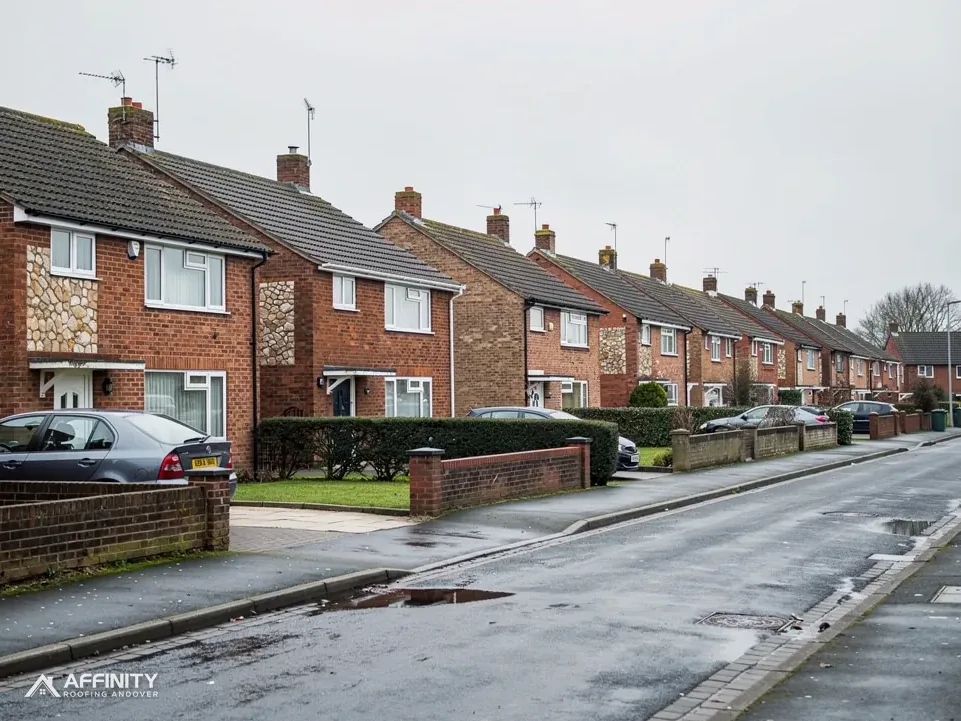
Roofers in South Newton
A small parish with a Grade II church, cottages and farmhouse
South Newton has 7 listed buildings within 500 metres of its centre, and only 703 residents. Every roof is surveyed slope by slope, with photographs, before a price.
South Newton roofs around St Andrew's and the manor
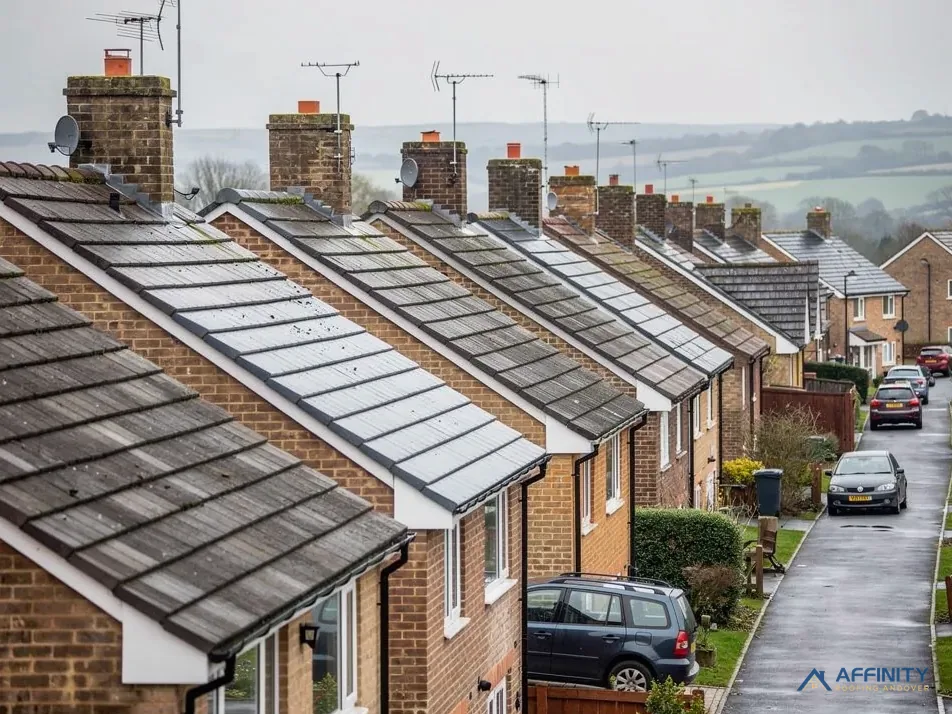
Church of St Andrew
Listed Grade II on 23 March 1960 and used for Anglican worship, so repairs follow the faculty system.
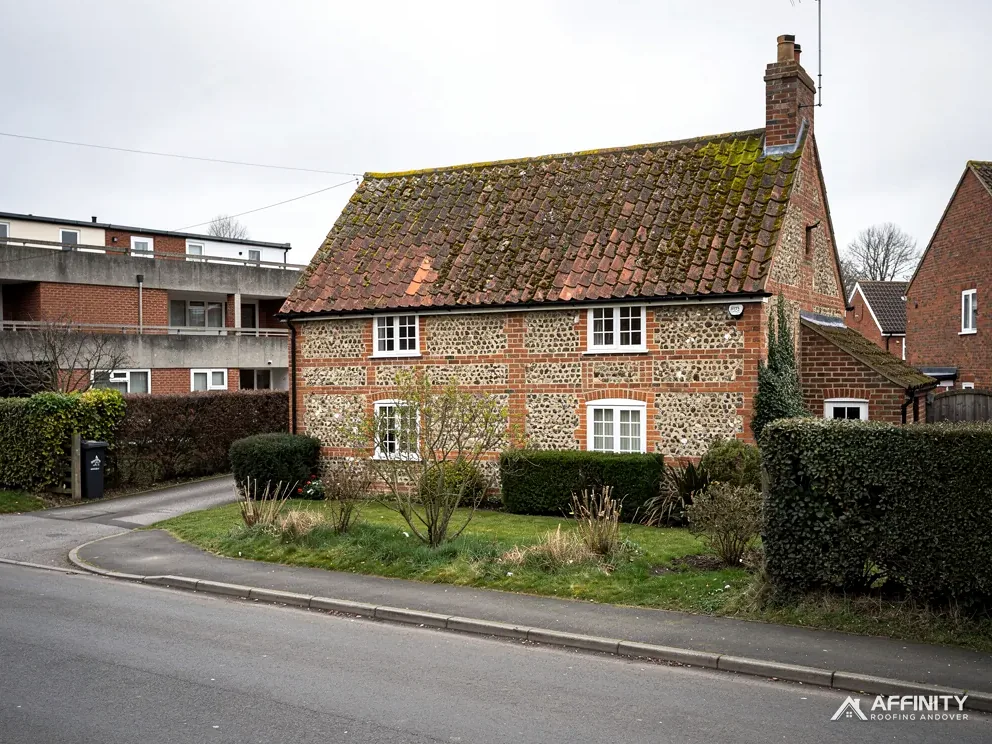
Pembroke Cottages
Listed Grade II on 21 May 1986, alongside Manor Farmhouse and Newton House, also Grade II.
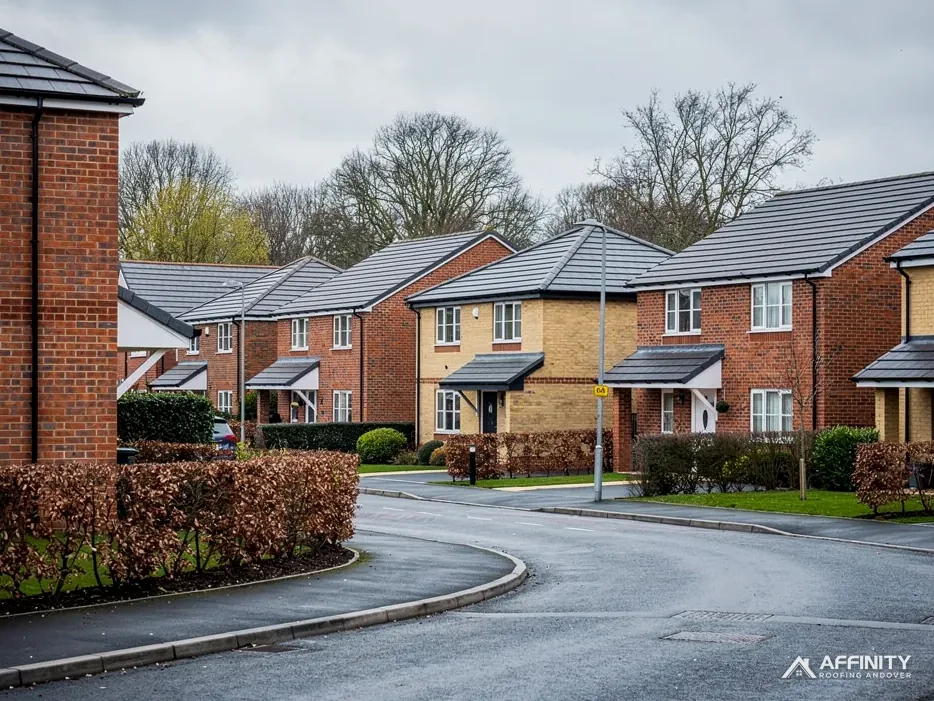
Edge of Cranborne Chase
Part of the ground around South Newton lies inside the Cranborne Chase National Landscape, so the boundary matters for dormers.
South Newton between Wilton and Shrewton
Wilton lies to the south, Salisbury and Laverstock south-east, Amesbury north-east, Shrewton north and Dinton south-west. Each lies within reach of a survey.
- Distance
- 23.9 road miles west of Andover
- Planning
- Wiltshire Council
The South Newton roof report
Local editionSouth Newton, WiltshireA small parish, a church, the Chase edge
South Newton's roofs: a small parish with seven listings nearby, and one council to ask
South Newton is a Wiltshire parish of 703 people between Wilton and Shrewton. This report explains how Wiltshire Council handles planning, inspection and scaffold licences, and what the church, the cottages and the Cranborne Chase edge change for a roof.
A small parish under one unitary council
South Newton lies 23.9 road miles west of Andover's East Street. Its parish had 703 usual residents at the 2021 Census, and each of them lives under Wiltshire Council. Elsewhere in our patch the work of a roof application is split between a district and a county. Here it is not. Wiltshire is a unitary area, so planning, the Building Control service whose inspectors check the work (Monkton Park, Chippenham, 0300 456 0113) and the scaffold licence for the highway all sit with one council. A homeowner here deals with one council, though different teams handle each question, and we say at the outset which one yours belongs to.
The Cranborne Chase National Landscape adds a note, not a second decision-maker. The designation was formerly the Cranborne Chase and West Wiltshire Downs Area of Outstanding Natural Beauty, and its partnership offers advice on planning without deciding anything. Wiltshire Council stays the planning authority. The village point lies just outside the boundary, yet 17 per cent of a 1.5 km box centred on it falls inside, so the line has to be checked address by address.
Two cut-offs matter for a re-roof, the Planning Portal says: 25 per cent of the building envelope and 50 per cent of the roof. Cross neither and an application is normally not needed. We work to those figures in South Newton, and Wiltshire's team hears about any job near either figure before a date is set. Anyone who prefers can engage a registered building control approver instead.
Added weight is the second trigger. A gain of 15 per cent or more in the roof's load brings in Building Regulations approval, and the Planning Portal's advice is to have the roof structure assessed before ordering. On older farmhouse and cottage roofs the timbers need checking, so we measure and photograph the rafters before a heavier material is proposed.
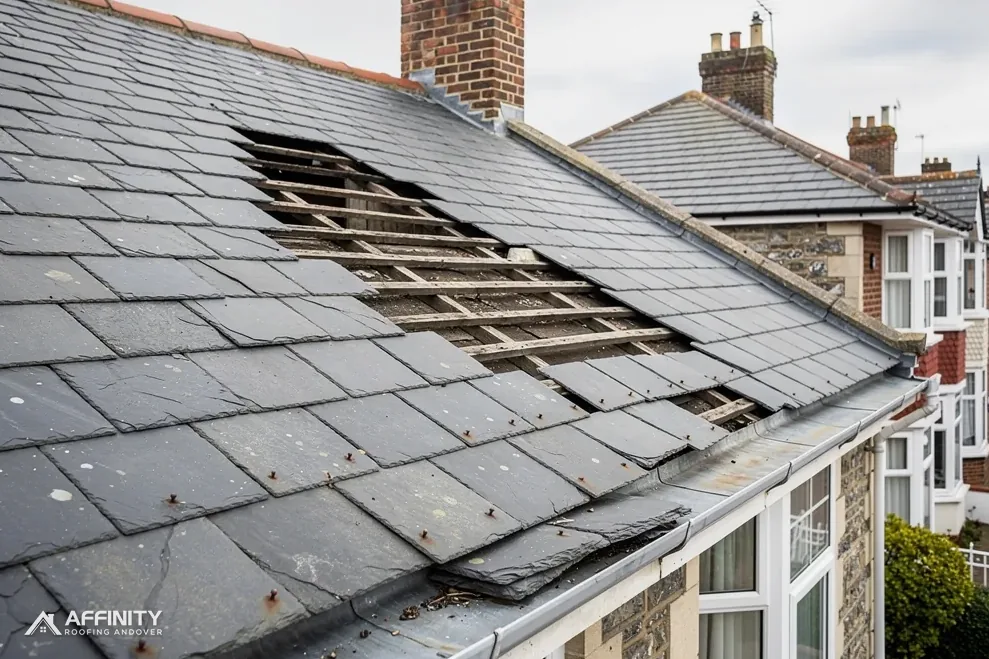
Our survey follows the water. We begin at the gutter line, where roof water meets the wall, and trace it upwards through the eaves, the slopes, the valleys and the ridge, then across to each chimney. Wherever a tile or slate has failed we work out whether the cause is the covering, the fixing or the timber beneath.
A cottage may have only two slopes, so re-covering one of them is already half the roof. We measure each slope and write the share into the notes as a number. Each claim in the report points to a picture. The set is attached to the write-up and can stay with the house papers for the next owner.
St Andrew's, Pembroke Cottages and the Great Wishford edge
Historic England's list holds 7 listed buildings within 500 metres of the village centre. St Andrew's church is Grade II (list entry 1146258, first listed on 23 March 1960). The OpenStreetMap record shows it in Anglican use, which points to the faculty system instead of listed building consent, with the faculty decided by the diocese's consistory court. Pembroke Cottages are Grade II (1146218, first listed on 21 May 1986), and so are Manor Farmhouse (1182785) and Newton House (1182808).
For the houses the route is listed building consent for any change to their character, on top of planning permission where that also applies. A listed roof can be served well by a repair in matching materials, and the application describes the existing covering, ridge and chimney flashings, so the officer sees what would be kept and what replaced.
The Great Wishford conservation area lies within about 0.75 km of the centre of South Newton. Near is not inside, and a house is covered only when the council's boundary includes it. Wiltshire Council's map settles that for a given address, and the council can confirm any doubtful case. Wiltshire Council can confirm whether one of its Article 4 directions affects your street, so we ask it and file the reply.
On the National Landscape edge, protected-land rules for a dormer apply where an address is inside the boundary and not where it is outside. Our guide to planning permission for roof work explains the difference. Repair and matching re-covering are assessed apart from alteration, as the survey makes clear for each project.
On a listed house we add a second set of photographs: each elevation, the roof seen from the nearest public place, and a close view of anything we propose to change. They show what the roof looks like from outside, which is how any change would be seen. Photographs matter most on listed and edge-of-designation houses. They give the officer evidence, give you a record and show a future owner what the roof was in the first place. When old tiles or slates must be replaced, we search for reclaimed pieces of matching size and colour, and we record where each replacement piece came from and which slope it went onto.
A ladder or scaffold often has to reach a farmhouse across a yard or a verge, and a gate that is too narrow for a pallet changes how tiles arrive. We note the ground, the width of the way in and any trees, since they decide how the roof is reached and how materials arrive.
“A small Wiltshire parish with seven listings nearby still has only one council to ask.”
What Wiltshire asks of a scaffold, and our jobs
Anyone putting scaffold on the highway in South Newton needs a Wiltshire Council licence under section 169 of the Highways Act 1980. Wiltshire Council has the contractor erecting the scaffold apply on the MiPermit portal, which issues a licence for each site and spares you the paperwork. Poles that stay entirely on your land never need it.
Notice drives the charge. Wiltshire Council asks £143.80 for an application made with more than three working days in hand and £164.70 on shorter notice. Each licence is good for 28 days, and a parking bay beside the house needs its own suspension on top. The survey tells you which of these apply to your plot, and the dates are set out in the plan, so you know the sequence of licence, scaffold and work before agreeing to anything.
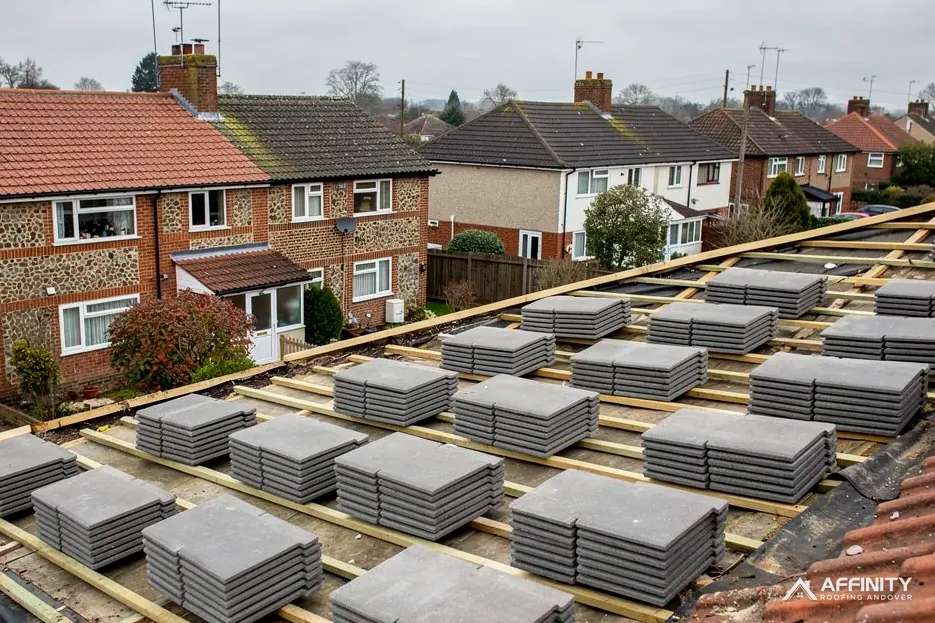
A licence that runs for 28 days suits a repair and pinches a full re-roof, so the order of work is agreed with the scaffolder in advance to avoid idle weeks. Where a consent decision is outstanding, the scaffold date waits for it, since poles up with nobody working cost the same as poles up with a team on the roof.
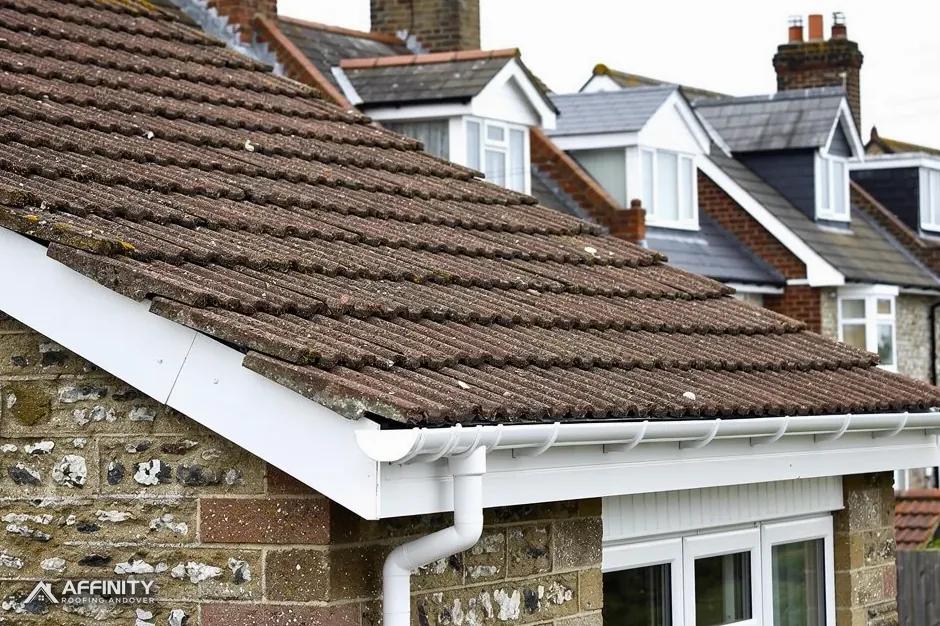
Replacement tiles are checked against the existing roof in daylight and from the road, because a tile that looks right in a showroom can stand out once it is fixed. The chosen sample and the order note are kept with your file, so the match can be repeated if the roof is ever extended or patched.
Where a farmhouse has outbuildings, the survey takes in the barn and store roofs on request. They are often simple to price once the scaffold is up for the house, and they get the same photographs and the same written route.
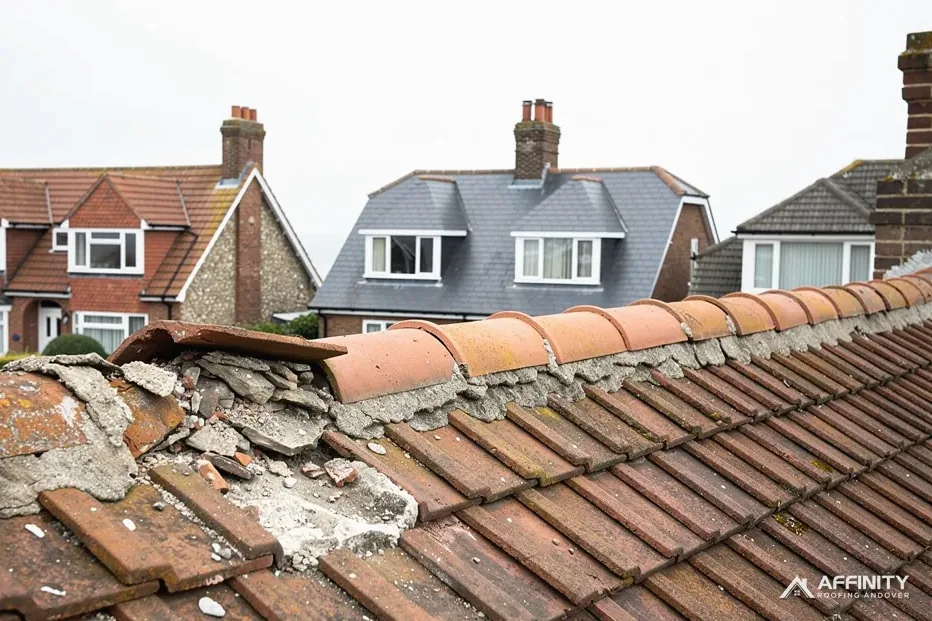
The jobs are of the usual kind. Roof repairs fix slipped tiles and failed flashings. Chimney repairs deal with stacks whose pointing has weathered. Roof replacement is weighed against repair in the survey, with pictures behind each option and the reasoning set out in plain terms. Slate and tile are read with the same care.
Think of repair or replace as a question about battens and fixings, not about age. A roof can be old and sound, or newer and failing. Sound battens and a single local fault suggest repair. Fixings failing slope after slope suggest full re-covering, and the pictures will show it.
Wilton, Salisbury, Laverstock, Amesbury, Shrewton and Dinton are all within reach. They share Wiltshire Council as their council, but each has its own designations, so each address is looked at on its own terms, with the result kept in your notes.
South Newton roof repairs and more
South Newton roofs: listings, the Chase and the licence
Can a farmhouse roof in South Newton be re-covered in a different clay tile?
Check first. If the farmhouse is listed, as Manor Farmhouse is, a change that alters its character needs listed building consent. On an unlisted house, matching the old tile still keeps the roof right from the road. We photograph the existing tiles, look for matches, and put the question to Wiltshire Council where there is doubt, so any application describes the roof as it stands.
Is South Newton inside the Cranborne Chase National Landscape?
The village point lies just outside, but 17 per cent of a 1.5 km box around it falls inside, so some addresses may be. The partnership gives advice only, and Wiltshire Council decides. We check the council's map for your address before discussing a dormer, since a new dormer needs an application on protected land.
Who inspects a re-roof in South Newton, Wiltshire or someone else?
Wiltshire Council, through its own Building Control service at Monkton Park, Chippenham (0300 456 0113). The Cranborne Chase partnership plays no part in inspection. A replacement covering heavier by 15 per cent or more needs Building Regulations approval. Larger jobs go to that team ahead of booking, and its written answer is filed beside the survey photographs.
How is a Wiltshire scaffold licence priced for a South Newton house?
Wiltshire Council asks £143.80 for an application made with more than three working days in hand and £164.70 for anything later, with every licence running 28 days. Wiltshire Council expects the scaffold contractor to lodge the MiPermit request. The licence cost is built into the one price we quote, and poles on land that is wholly yours need no licence.
Start a South Newton roof survey
Pass on your address and what has gone wrong. We book a survey, then a single written price follows.
10-year workmanship guarantee, in writing.