
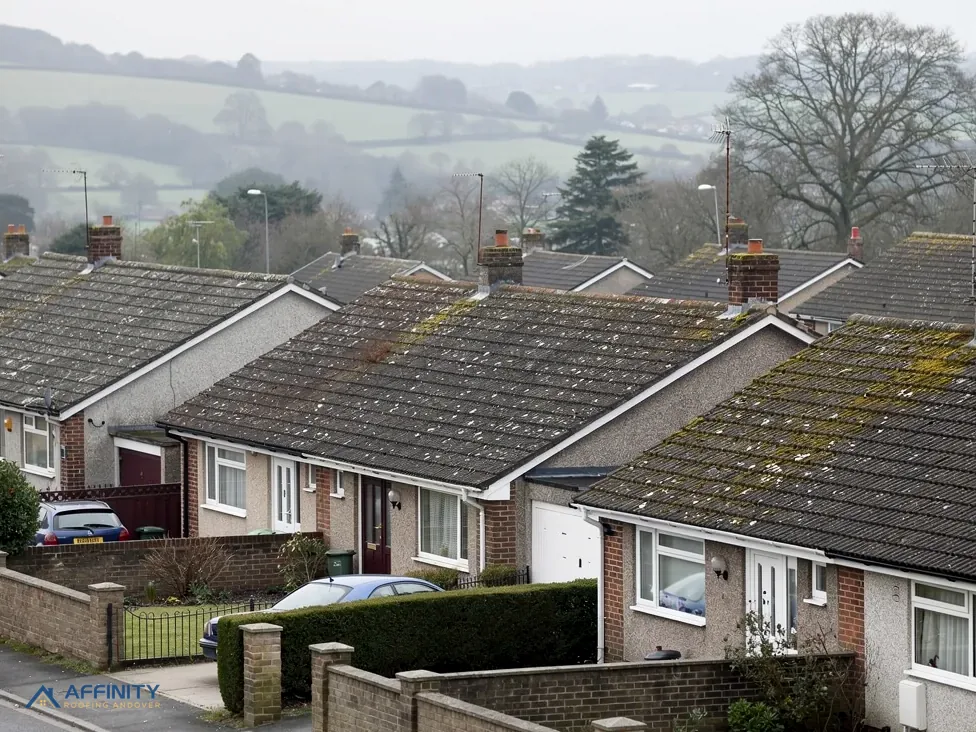
Roofers in Pamber Heath
Houses beside Pamber Common, on the Berkshire border
Pamber Heath is a village at the northern end of Pamber parish, beside Silchester and the Berkshire border. Each roof is inspected and explained before any price is given.
Pamber Heath roofs, from the common outwards
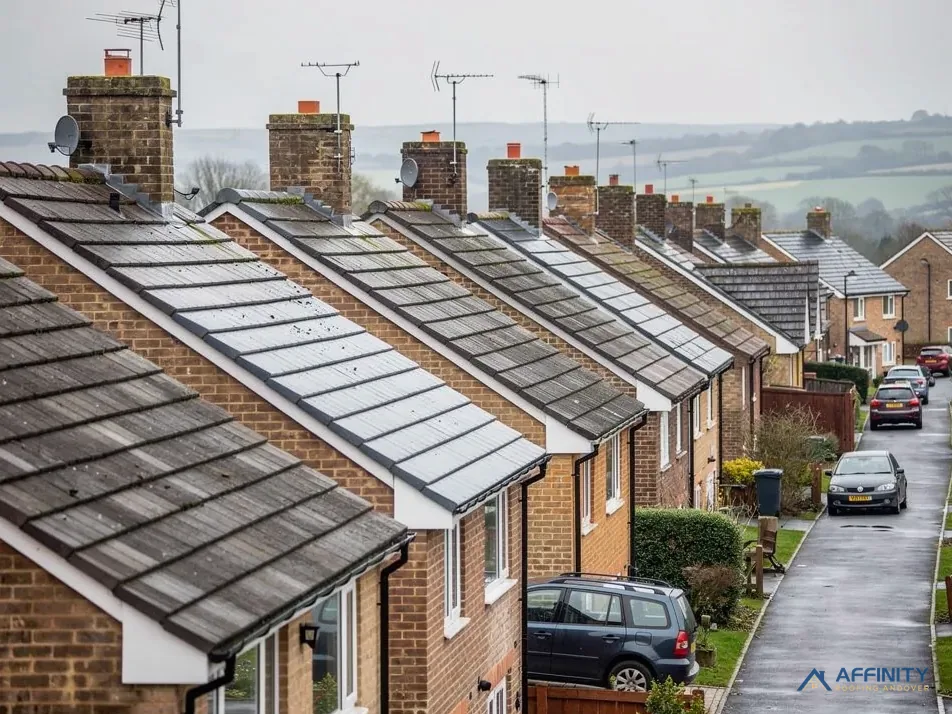
Homes beside Pamber Common
Houses near the common at the northern end of the parish, which the 1911 Victoria County History called scattered.
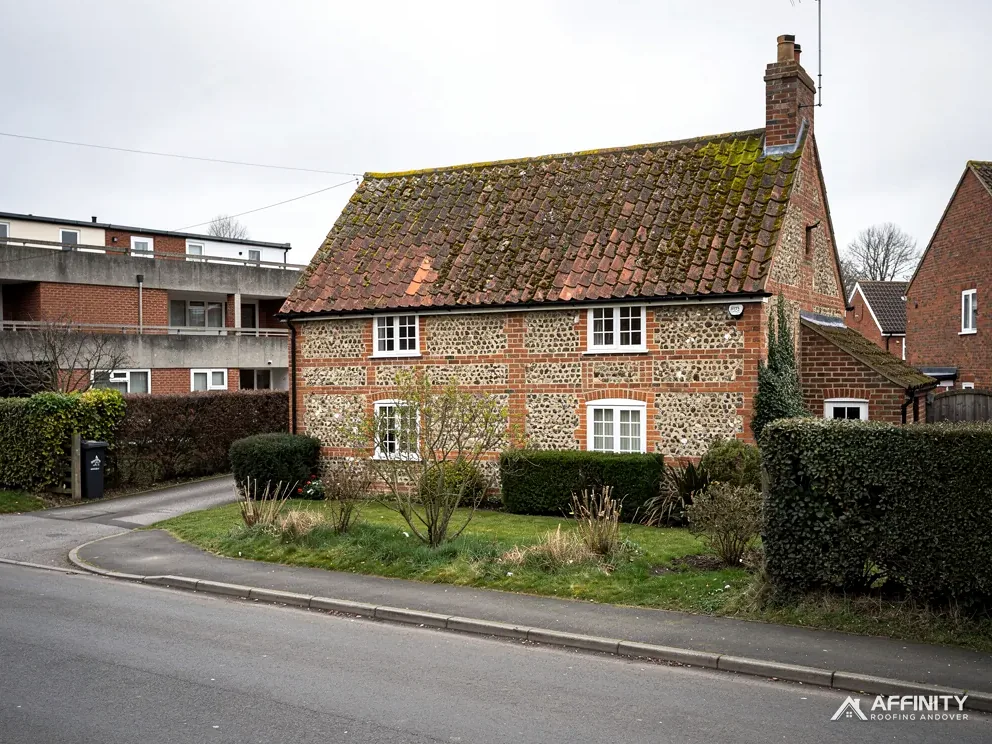
Cottages and farms on clay
Older properties spread across ground the 1911 Victoria County History described as clay and gravel, reached by lanes and drives.
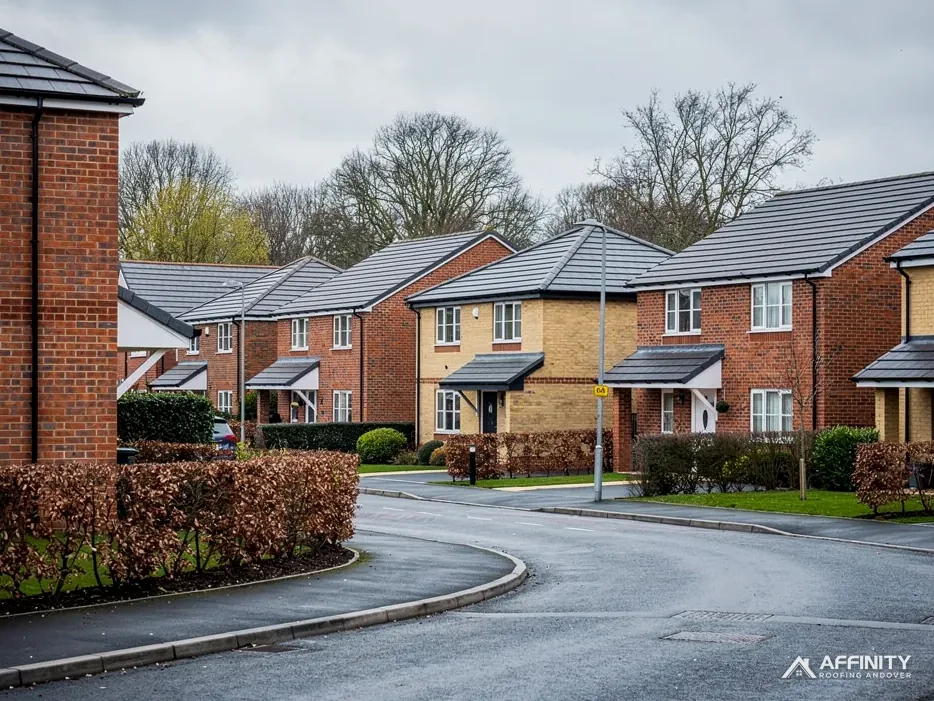
Later houses and extensions
Newer family homes, garages and rear additions around Pamber Heath, repaired to suit the way each roof was built.
Pamber Heath between Tadley and Silchester
Silchester lies immediately east and Tadley immediately west. Bramley is south-east, Baughurst south-west, Aldermaston north-west and Mortimer north-east, all within a few miles.
- Distance
- 21.2 road miles north-east of Andover
- Planning
- Basingstoke and Deane Borough Council
- Council
- Basingstoke and Deane Borough Council and Hampshire County Council
The Pamber Heath roof report
Local editionPamber Heath, HampshireBasingstoke's rules on the Berkshire border
A Hampshire village that looks to Basingstoke: how a Pamber Heath roof is cleared
Pamber Heath lies 21.2 road miles from Andover but looks to Basingstoke, not Test Valley. Below: which office approves roof work here, what the council's Article 4 pages do and do not cover, and how the Hampshire licence is charged by the fortnight.
Basingstoke's rules for a village on the border
Pamber Heath lies in the north of Pamber parish, where Hampshire meets Berkshire, and the councils that serve it are Basingstoke and Deane Borough Council and Hampshire County Council. The borough council takes the planning decisions and has its own Building Control team, reachable on 01256 844844. The county council looks after the road. Pamber civil parish had 2,629 usual residents at the 2021 Census.
Basingstoke and Deane is unusual in saying something about roofs. Its building regulations page puts the replacement of roof coverings, pitched and flat, in its list of alteration work for which owners might also need approval. Note the word might. It is a prompt to ask, and no rule that every re-cover needs a form, so before a Pamber Heath re-roof is booked the Building Control team gets the question first and you get its answer.
Weight is the firmer trigger. If the new covering would exceed the old by 15 per cent or more, Building Regulations approval applies on any house, and the Planning Portal recommends a structural check by a suitably qualified person first. For smaller jobs the usual threshold is less than 25 per cent of the building envelope and less than 50 per cent of the roof.
Choosing a registered building control approver instead of the council's team is open to you, a private route regulated since 6 April 2024. A homeowner who prefers one tells us when booking, and our notes go to that approver in place of the Building Control team. Either way the reply is on file before any scaffold is ordered, next to the survey pictures.
The council also publishes planning advice that helps a homeowner understand where the tightest rules fall. The Article 4 directions it describes for roof changes, fascias, soffits and guttering, and solar panels belong to four conservation areas in Basingstoke town: Fairfields, South View, Brookvale West and the town centre itself. None is a Pamber Heath street.
That does not make Pamber Heath free of Article 4. Basingstoke and Deane decides whether any direction touches your address, and the nearest conservation areas, within about 2.5 km, are Church Road, Tadley, Silchester and Tadley. We check the council's map at the survey and write what it shows on your paperwork.
Where a roof needs consent, or advice, or neither, you get that answer in writing before any materials are ordered, so the programme starts on firm ground and no neighbour or planning officer is surprised by a scaffold that arrives unannounced.
A scattered parish of common, clay and gravel
In 1911 the Victoria County History described Pamber as a scattered parish, with Pamber Common at its northern end, where the boundary with Mortimer was marked by the Impstone. It recorded that the soil was clay and gravel, and that the common lands had been inclosed under an Act of 1824. The description is of the parish and does not single out Pamber Heath.
The national list records no listed building within about 500 metres of the village centre, so listed building consent is not the usual question here. A listed house elsewhere in the parish is still possible, so the entry covering your address is read before any price goes on work that changes a roof's appearance. If the answer is yes, the consent route applies in full.
Conservation areas sit nearby but not on the doorstep. Church Road in Tadley, Silchester and Tadley are the nearest, each within about 2.5 km. A house that falls inside one meets tighter rules on altering a roof's appearance, and Basingstoke and Deane's map settles which side of the line a given address stands. Our guide to planning permission for roof work sets out the principles.
With houses spread across a parish, access varies a great deal from one job to the next. A house on a lane may need a long carry for tiles, and a skip may have to stand on a verge that belongs to someone else. We walk the approach on the survey and plan the delivery, the skip and the scaffold together, so the first day does not turn into a discussion about where the lorry can stop.
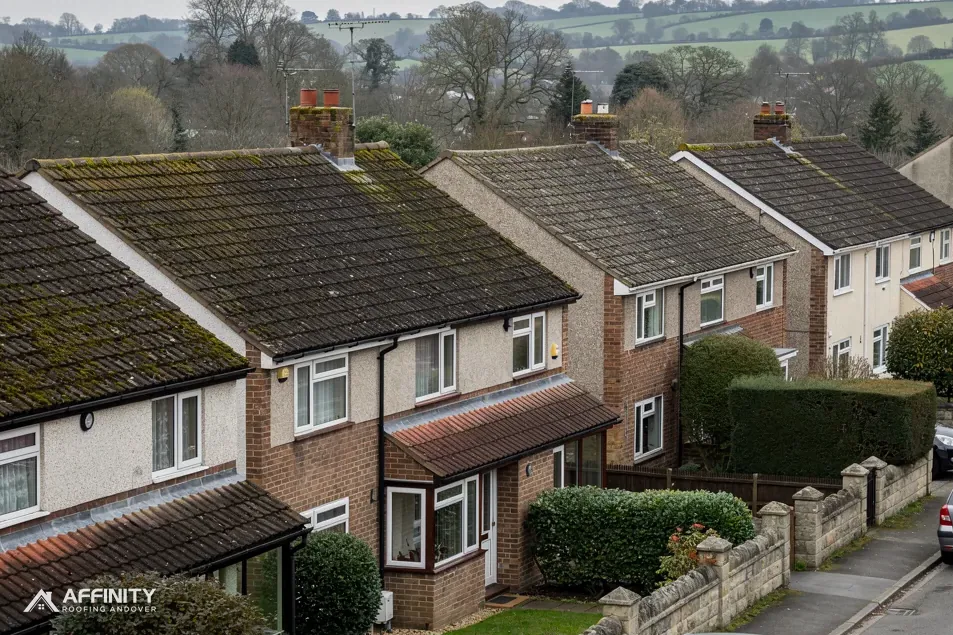
Where mature trees stand close to a roof, they shape how it wears. Leaves in valleys and gutters hold water against the covering, moss builds up on shaded slopes, and branches rub on tiles in the wind. A survey looks at what the trees are doing to the roof as well as at the roof, and the photographs make the connection plain to see. Roofs shaded by trees also dry slowly, and a slope that stays damp for months invites the moss that lifts tiles at their edges.
None of this needs a heavy hand. Faults on a house in this setting are often small ones caught early: a lifted tile, a loose ridge, a blocked outlet, a gutter that sags. The skill lies in finding which of them is letting the water in, and in saying so without turning a small repair into a large quotation.
“Pamber Heath is in Hampshire but looks to Basingstoke for every roof question.”
The Hampshire fee per fortnight, and the jobs we price
When scaffolding has to occupy the road or pavement, section 169 of the Highways Act 1980 is the basis of the licence from Hampshire County Council. Hampshire County Council charges £211.90 on application for the first 2 weeks and £72 for each additional 2-week period, which makes a fortnight the unit to plan around. Under Hampshire's scheme the scaffolding company, not the householder, applies, and 10 clear working days' notice is needed.
Tacit consent does not apply, and no extension is available. If the work overruns the licence, a fresh application is needed, so the order of work is arranged to finish inside the period or to ask for the right number of fortnights at the start. A private road or drive needs no licence, and which case applies is noted at the survey.
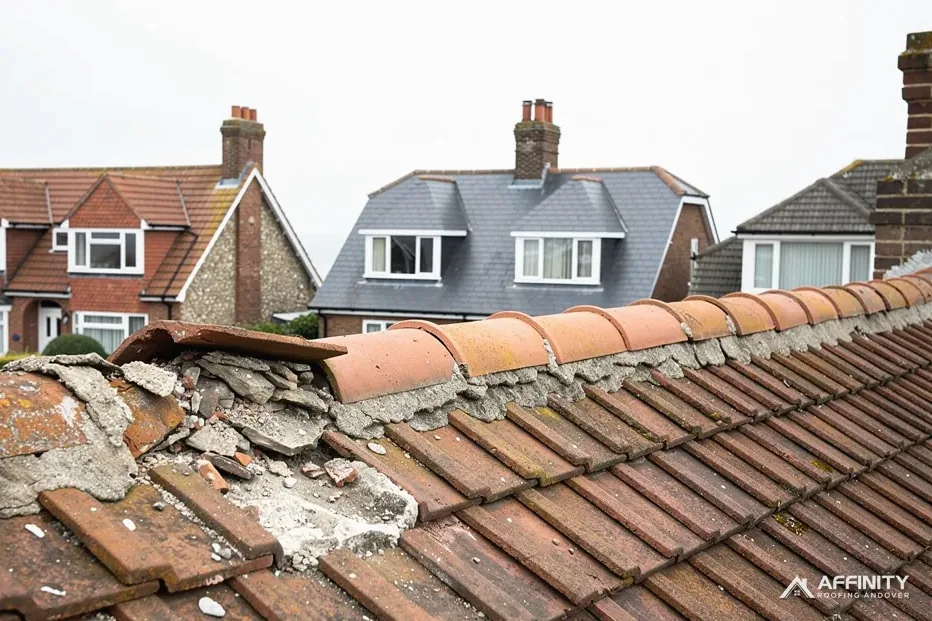
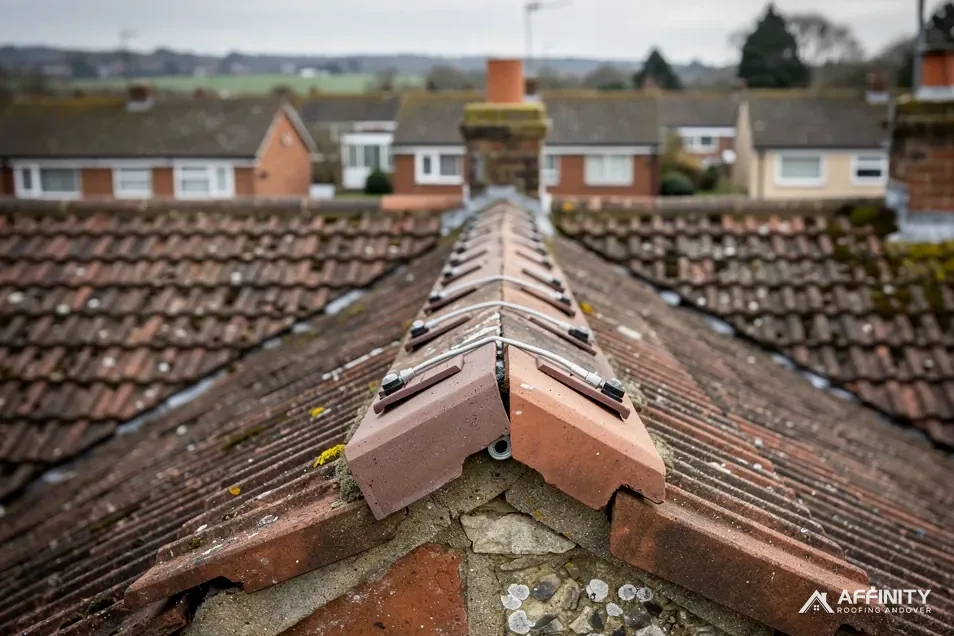
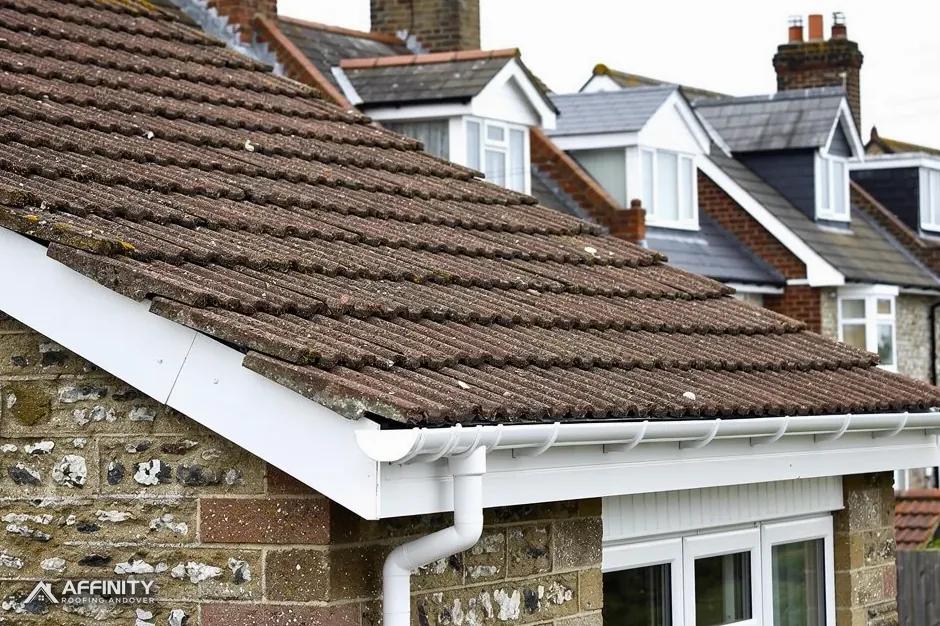
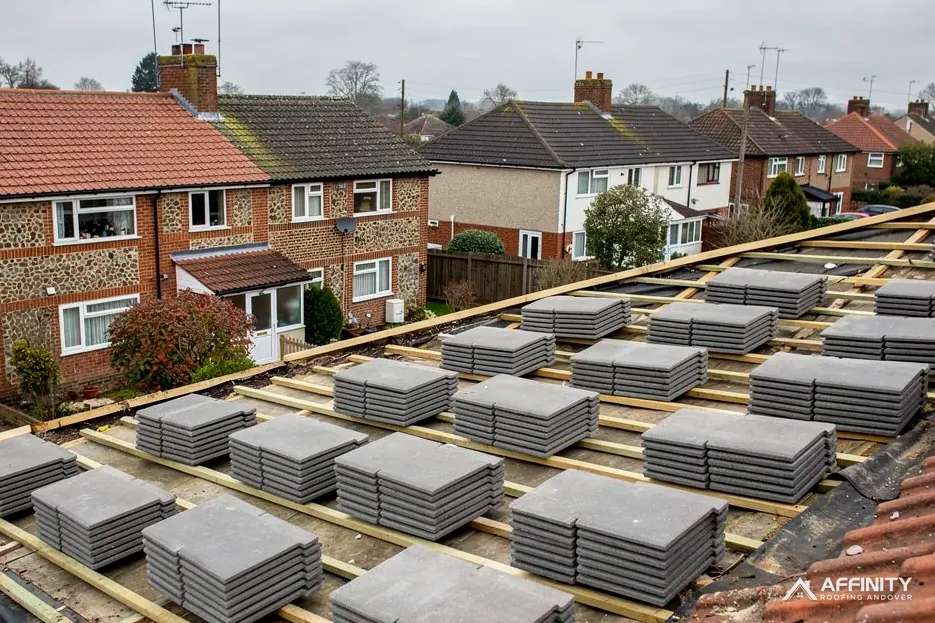
Pamber Heath roofs need everyday services. Roof repairs cover cracked, slipped or missing tiles and failed flashings. Dry ridge and verge systems replace mortar that has crumbled with fixings that clip the tiles in place. Pitched roofing covers re-covering a slope when repairs would be money spent on a failing roof.
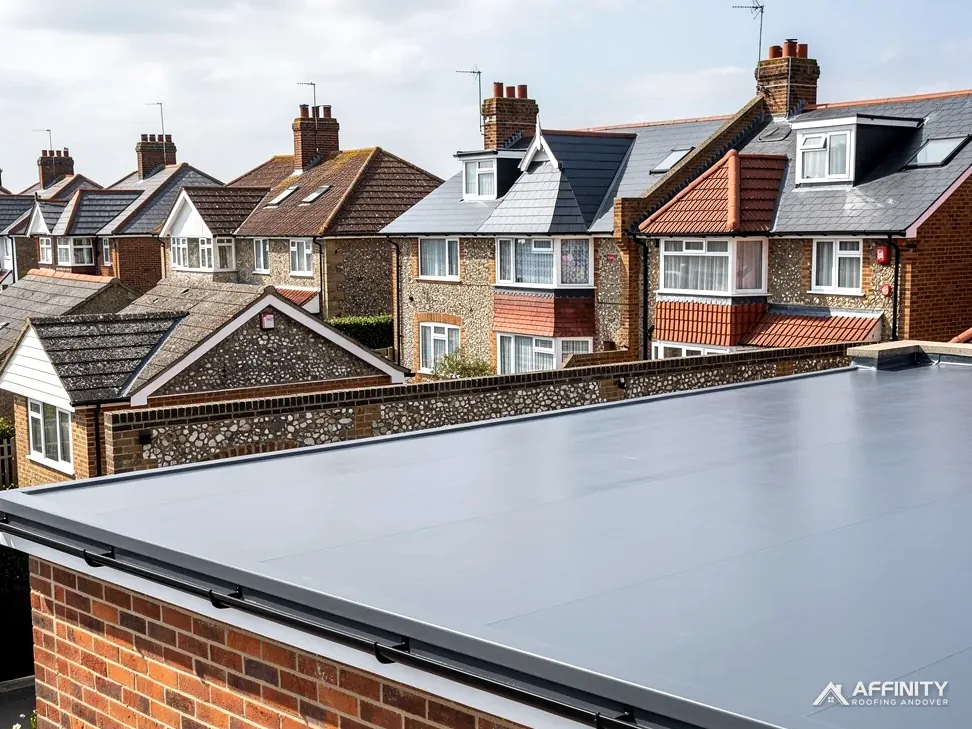
Flat roofs on garages and extensions get the same close look. The falls, the outlet, the trim round the edge and the seams are all checked, and any pond that stands after rain is photographed. A flat roof that holds water is telling you about its slope, and the pictures show whether a patch will hold or a new membrane is the sounder choice.
Gutters and the roofline are part of every visit. A fascia that has been wet for years can rot, and the rot spreads into the timber behind it. Replacing a board early is a smaller job than replacing the rafter ends later, and the photographs show the difference to you before the work is agreed.
When two quotes are on the table, compare like with like: scaffold, licence, waste, VAT, and how rotten timber is handled once the covering is off. A lower figure that leaves those open is usually the start of a conversation, not the end of one.
Some single-storey repairs are done from a tower or a roof ladder with no scaffolding at all, which removes the licence question altogether. Larger jobs do need the full scaffold, and the survey says which kind you have, so the programme rests on the right assumption from day one.
An active leak is covered over straight away, and the proper fix is chosen later from the photographs. Nobody should be asked to agree a re-roof on the same afternoon as a leak.
Pamber Heath roof repairs and more
Pamber Heath roofs: Basingstoke's pages, the common and the fee
Does Basingstoke and Deane's Article 4 advice cover Pamber Heath roofs?
The roof-related directions it publishes belong to four conservation areas in Basingstoke town, so none is a Pamber Heath street. That does not rule out a direction at your address. Basingstoke and Deane Borough Council confirms that, and we ask it at the survey before pricing anything that alters a roof's appearance.
Must the borough approve a Pamber Heath re-roof?
It might. Its building regulations page lists replacing roof coverings, pitched and flat, as work that might call for approval, so its Building Control team is asked first. A covering 15 per cent heavier needs approval. By the Planning Portal test, work below 25 per cent of the envelope and 50 per cent of the roof seldom requires an application.
How does a Hampshire scaffold licence work for a Pamber Heath house?
Hampshire County Council charges £211.90 on application for the first 2 weeks and £72 for each further 2-week period. Whoever supplies the scaffold applies to Hampshire County Council, leaving at least 10 clear working days, and no extensions are given. A private road or drive needs no licence, so ask which case applies to your lane before dates are fixed.
Do trees near a Pamber Heath house affect its roof?
They can. Leaves collect in valleys and gutters, shade encourages moss, and branches can rub tiles in a wind. None of that is a reason to cut anything down, but it is a reason to survey the valleys and outlets carefully and to clear them. We photograph what the trees have left on the roof.
Villages either side of Pamber Heath
Get a Pamber Heath roof surveyed
Send an address with a roof photo. The Basingstoke route is confirmed first, then a single written total arrives.
10-year workmanship guarantee, in writing.