
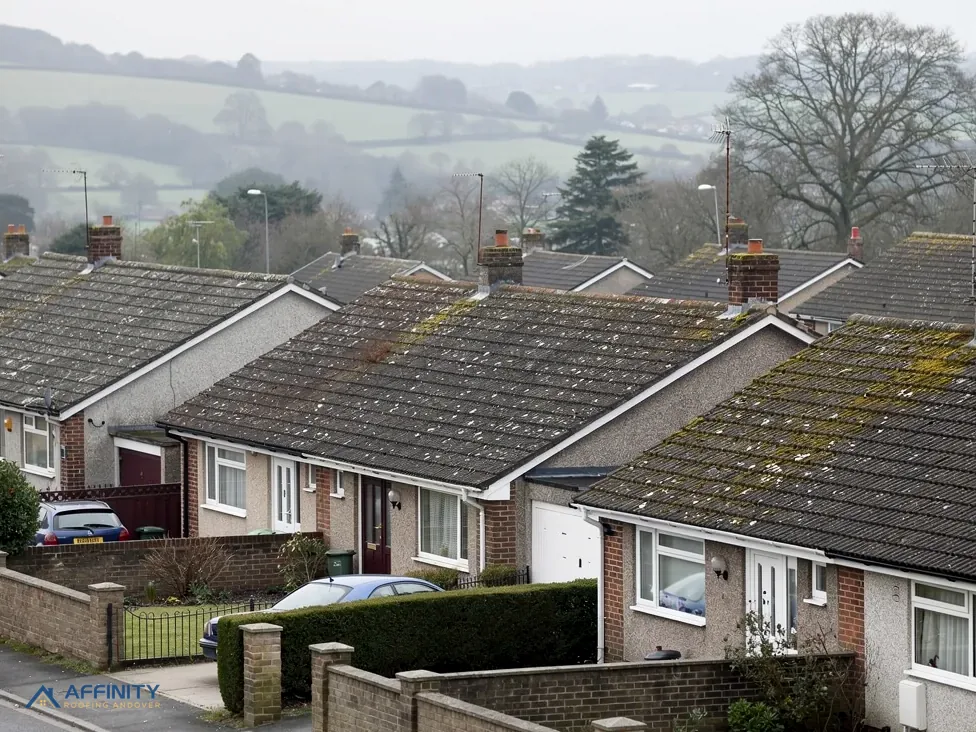
Roofers in Compton, Berkshire
Downland roofs, a Grade II* church and a village green setting
Compton, Berkshire, lies wholly inside the North Wessex Downs and has 11 listed buildings within 500 metres of its centre. We survey, photograph and quote one written price.
Compton roofs, from St Mary and St Nicholas to Horn Street
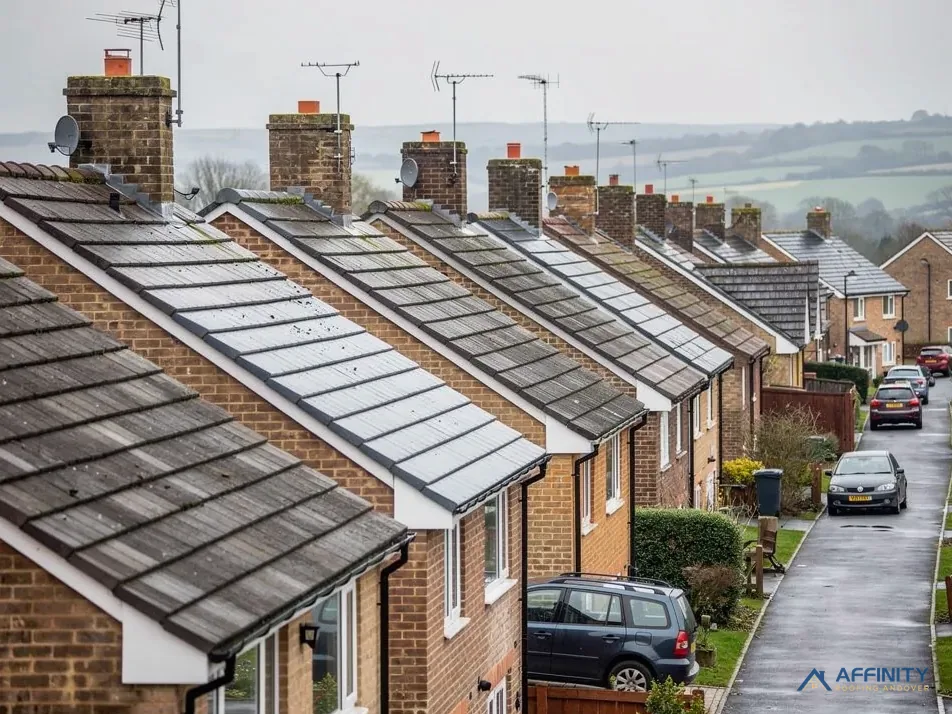
Church and churchyard roofs
St Mary and St Nicholas is Grade II*, so repairs on neighbouring roofs are judged against it.
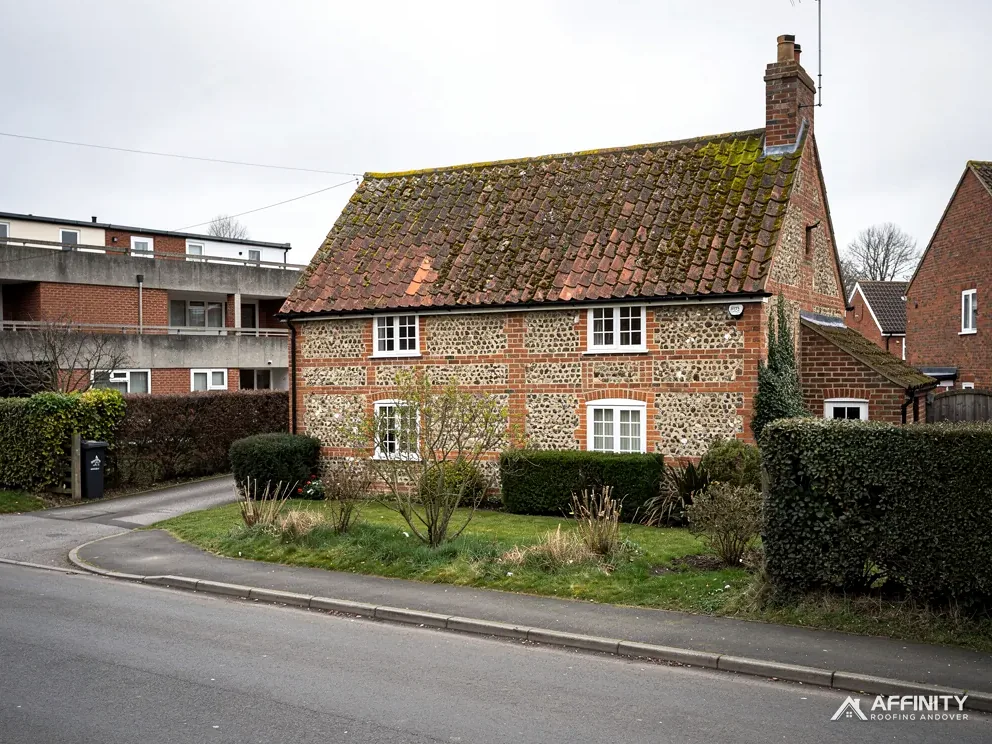
Yew Tree House and farmhouses
Yew Tree House and Church Farm House are Grade II, and their roofs are repaired like for like.
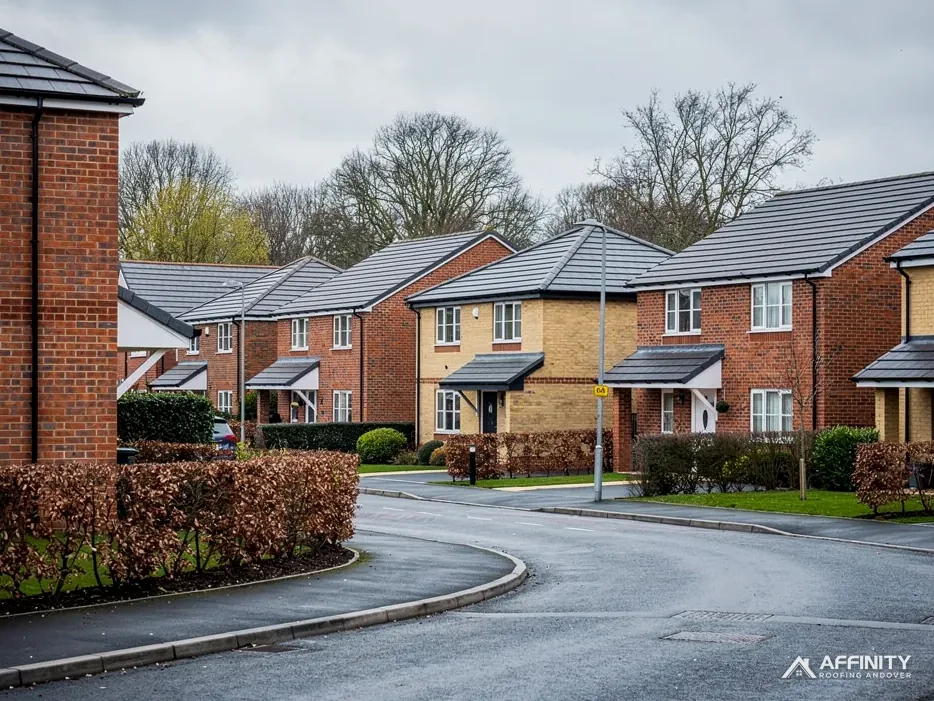
Houses in the conservation area
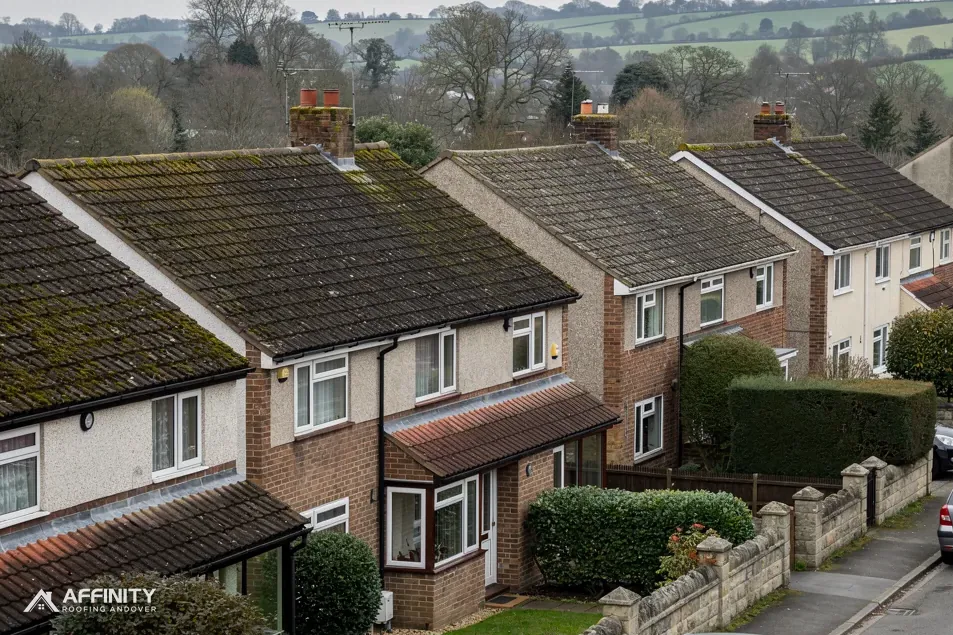
Homes inside the Compton conservation area, where visible roof changes are raised with West Berkshire Council first.
Compton between Hampstead Norreys and Chilton
Hampstead Norreys lies to the south, Chilton to the north-west, Hermitage to the south and Chieveley to the south-west. We cover roofs in each of them.
- Distance
- 28.4 road miles north-east of Andover
- Planning
- West Berkshire Council
The Compton roof report
Local editionCompton, BerkshireA Downs village and its paperwork
Compton sits wholly inside the North Wessex Downs, but West Berkshire still decides
Compton is a West Berkshire village of 1,789 people, inside a National Landscape that advises and does not decide. This report covers the council, the inspectors and the scaffold fee, what the listed buildings add, and what to know about spray foam in a roof.
A Downs village in West Berkshire's hands
Compton parish counted 1,789 usual residents in 2021. West Berkshire Council, a unitary authority, grants planning permission here and also looks after the roads. Inspections run through Building Control Solutions, which West Berkshire shares with Wokingham Borough Council, on 0300 790 0580. The North Wessex Downs National Landscape covers the whole village.
The Downs partnership advises on planning without deciding anything, and Natural England has a role as a statutory consultee. Decisions stay with West Berkshire's planning officers, so that is where an owner's questions go, wherever in the village the house is.
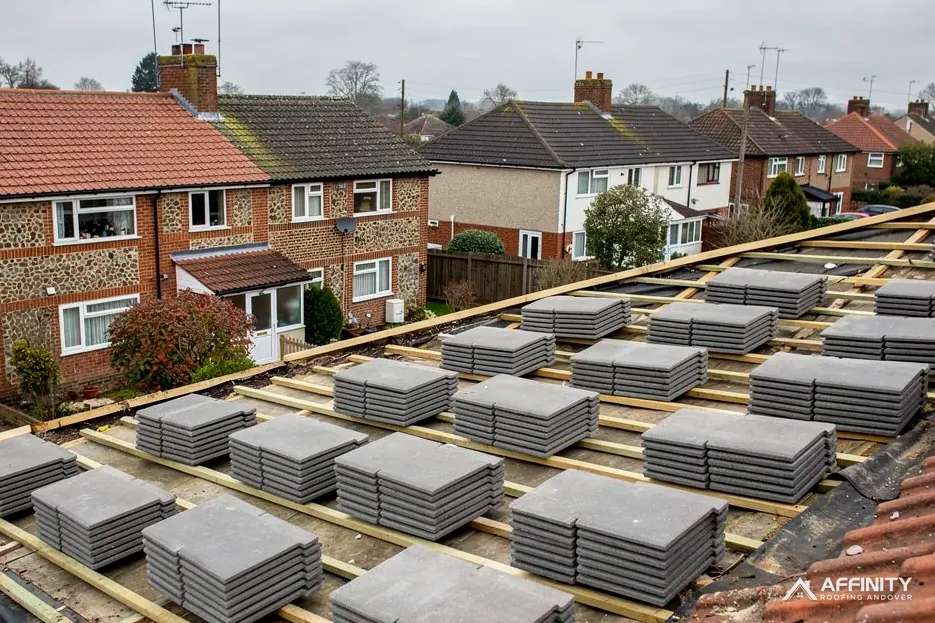
For a re-roof, the first test is the Planning Portal's: under 25 per cent of the building envelope and under 50 per cent of the roof, and building control need not normally be told. Heavier coverings are the second test: 15 per cent or more extra weight brings in Building Regulations approval and a structural check. West Berkshire Council has issued no percentage of its own that changes either figure. Put another way, a tile-for-tile repair or a patch of new battens is ordinary maintenance, and a whole new roof is the point at which the questions begin.
You can use a registered building control approver instead of BCS if you wish, under rules in force from 6 April 2024. We explain the practical differences at the survey: who inspects, when they come, and what they want to see. The survey photographs of battens, underlay and fixings are the evidence either inspector will ask for.
A word on the stacks. A chimney breast, the masonry that carries the flue up through the house, is part of the building's structure, and the Planning Portal says Building Regulations approval will always apply when one is removed. If you plan to take a stack down as part of a re-roof, tell us at the first visit, so the approval and the party wall position are dealt with before work starts. Send us anything you already hold, such as an earlier survey, a completion certificate or listing details; each one saves a question later. A neat folder on day one often shortens the whole job, since the council's questions and ours then have answers waiting.
On paying for the work, Citizens Advice explains that a service bought away from the trader's premises, costing £42 or more, can be cancelled within 14 days, counted from the day after the contract. An urgent repair that you asked the trader to attend does not carry the right. Get the terms on paper and file them with the survey sheet.
Church, Yew Tree House and Horn Street
Historic England's list records 11 listed buildings within 500 metres of the middle of Compton. St Mary and St Nicholas is Grade II* (list entry 1135775, first listed on 24 November 1966), and Yew Tree House (1117186, listed on 3 June 1986) is Grade II. Church Farm House (1135784) and 1 Horn Street (1135813) are Grade II too. A repair near any of them is read against a protected neighbour. Listing has three grades, I, II* and II, and the church sits in the middle one.
The Compton conservation area is mapped within about 0.75 kilometres of the village centre, using West Berkshire Council's boundary. Anything that alters the roof's visible look there is worth raising first with the council's planning team. Our guide to planning permission for roof work explains the limits. A call can also settle whether an Article 4 direction applies to your address, which only the council can confirm.
The church is still a Church of England place of worship, so the faculty system, under which the diocese's consistory court grants a faculty, governs its roof and listed building consent does not. A listed farmhouse or cottage is different. Changes to its character call for listed building consent, an application apart from planning permission. Our approach is a matching repair: the same clay or slate as before, fixed the way the original was, with a short description and photographs sent to the council.
The Environment Agency's planning map puts Flood Zone 3 within roughly 250 metres of Compton's centre. That is no statement about any one house. Even so, gutters, hoppers and outlets get a close look on each survey, because a roof that cannot shed water cleanly soon shows signs of trouble.
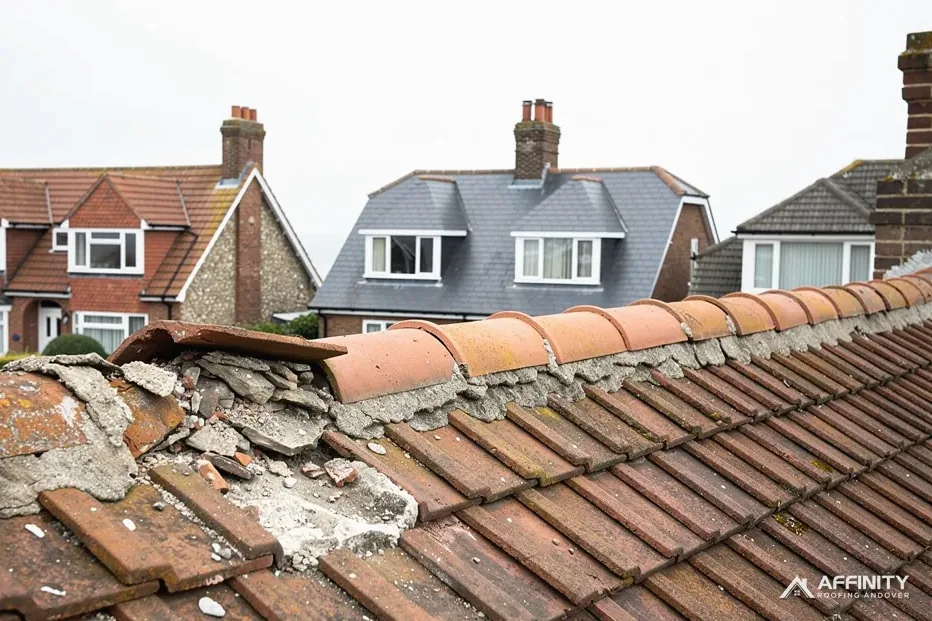
Old details tell their own story. Where a ridge, a verge or a chimney flashing has been patched more than once, the survey sheet records it and the photographs show it, so you can decide whether another patch is sensible or a proper repair costs less over the years. According to MyJobQuote, lead flashing lasts over 80 years at the least, so a sound piece is dressed back instead of replaced.
In any village, rainwater is also worth tracing from roof to ground. A gutter that overflows onto a wall, or a downpipe that discharges at a footing, can cause damp that looks like a roof fault. We follow the water the whole way, and the photographs show where it goes.
“Compton lies wholly inside the North Wessex Downs, yet West Berkshire Council is still the one to ask.”
Spray foam under the tiles, and a weekly fee
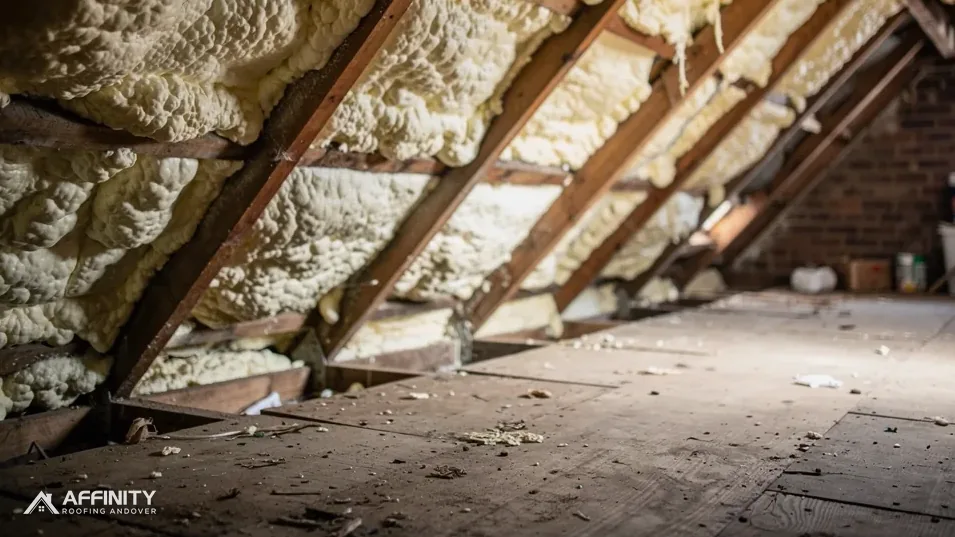
Some roofs have had spray foam applied to the underside of the covering. RICS's March 2023 consumer guide reports worry among some lenders and tells owners to check the position with their mortgage provider. Foam over the rafters hides the timber, so a surveyor cannot fully inspect what lies beneath, and a poor installation can upset ventilation and lead to moisture damage. The Energy Saving Trust, in advice last updated on 8 May 2026, does not recommend foaming a roof that already leaks.
Whether foam should come out is a matter for evidence and not for a rule, and our spray foam insulation removal work starts with a survey. The visible timber is photographed, the hidden parts are described as hidden, and one written price covers the whole job.
People ask about grants for this kind of work. No national scheme funds a replacement roof. The schemes that exist concern energy: ECO4 runs until 31 December 2026, the Great British Insulation Scheme closed at the end of March 2026, and the Warm Homes Local Grant helps households under an income limit with insulation. Eligibility is never ours to promise, so read each scheme's own page.
Scaffold on the road falls under section 169 of the Highways Act 1980, and West Berkshire Council issues the licence. Its page insists that the scaffolding provider, not the resident, submits the application. West Berkshire Council charges £125 plus £71 a week, wants 10 working days' notice at a minimum, and requires insurance indemnifying it to £10 million. No licence is needed for scaffold on a private road.
Everything else follows the same pattern. Roof repairs put right slipped tiles and failed ridges, and chimney repairs deal with pointing and flashings; pitched roofing covers re-covering. The scaffolder files the licence, and we coordinate dates so that a consent, if one is needed, arrives before the frame does.
When foam is on the underside of the covering, a surveyor looks for staining, softness and fixings at the edges, because those mark where water has got in. The survey notes what can be seen from the loft hatch and the eaves and is honest about what cannot be reached. A single photograph of a stained rafter end says more than a long description, and it is worth keeping in case a buyer's surveyor asks. Keep the photographs and the written price together with your deeds, because both will matter when the house is next sold. If the foam goes, the clean timber underneath is photographed again, so the record shows the roof after as well as before.
Compton, Berkshire homes: our roof services

Compton roofs: the Downs, the church and spray foam
Does the North Wessex Downs designation change how a Compton roof is repaired?
Not for a repair. The North Wessex Downs partnership is advisory, and West Berkshire Council remains the planning authority for Compton. A change to a roof's shape faces tighter limits inside the landscape and the conservation area, so ask the council before you design one. A like-for-like repair is treated here as it would be in any other part of West Berkshire.
Who deals with the roof of a Grade II farmhouse in Compton, Berkshire?
West Berkshire Council's planning team decides whether listed building consent is needed. Work affecting a listed building's character needs it, in addition to any planning permission. We repair like for like, photograph the existing covering and describe the proposal in plain words, then wait for the council's reply before any material is ordered, so nothing is bought that cannot be used.
What does West Berkshire charge for a scaffold licence?
West Berkshire Council charges £125 plus £71 per week and wants at least 10 working days' notice. The scaffolding provider submits the application, not the resident. A frame on a private road escapes the licence altogether. Dates are agreed with the scaffolder, and the scaffold is included in your single price. A late licence delays the job, so we ask early.
Should spray foam be removed from a Compton roof before I sell?
Not automatically. RICS reported lender worries in March 2023, so ask your mortgage provider where you stand. A survey shows whether the foam hides defects in the timbers, and removal is a decision for the evidence, not for a rule. If removal looks sensible, we give one written price after the survey, with the photographs that justify it attached for your lender or buyer.
Ask for a Compton survey before you decide
Give us the address, with a photo if possible. We survey, confirm consent and write one price.
10-year workmanship guarantee, in writing.