
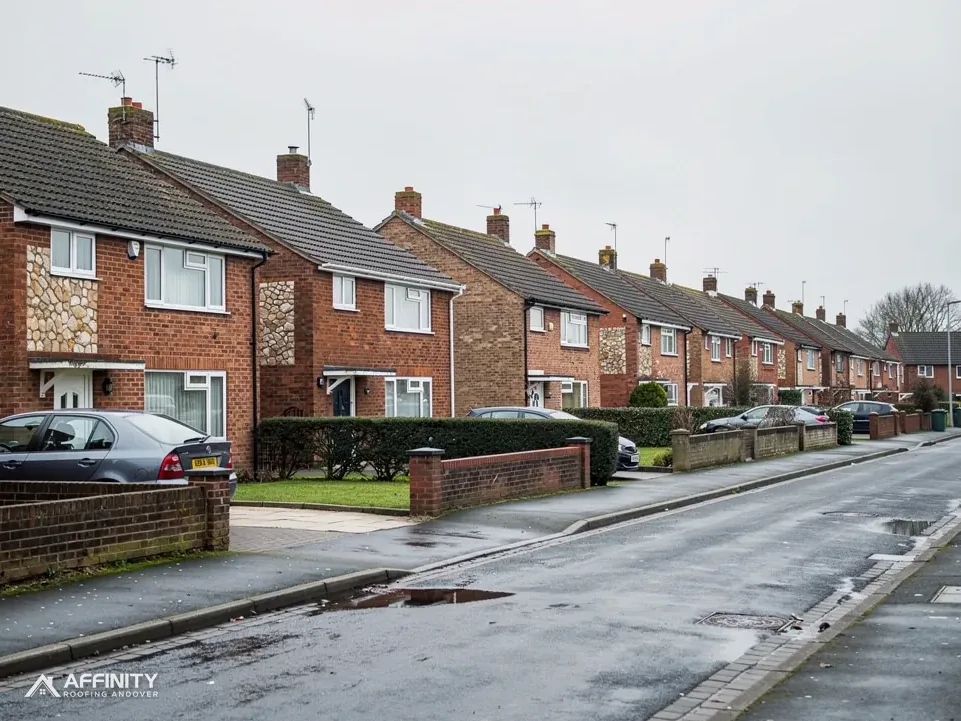
Roofers in Chilton
A Downs village of farmhouses and a green in the Vale
Chilton lies inside the North Wessex Downs and has 8 listed buildings within 500 metres of its centre. A survey and photographs always come before a price.
Chilton roofs, from Place Farm House to the Green

Place Farm House
Place Farm House is Grade II*, so roofs beside it are repaired to match.

All Saints and the churchyard
All Saints church is Grade II, and repairs on neighbouring roofs are made with it in mind.

Cottages on the Green
Numbers 1 and 2, the Green, are Grade II, so their neighbours are repaired to suit.
Chilton on the Downs edge, north of Compton
Compton lies to the south-east, Hampstead Norreys to the south, Chieveley further south and Great Shefford to the south-west. We repair roofs in each of them.
- Distance
- 29.2 road miles north of Andover
- Planning
- Vale of White Horse District Council
- Council
- Vale of White Horse District Council and Oxfordshire County Council
The Chilton roof report
Local editionChilton, OxfordshireTwo tiers and a shared inspection service
Chilton is Oxfordshire, not Berkshire: which council plans, which inspects and who licenses scaffold
Chilton sits in the Vale of White Horse, inside the North Wessex Downs and close to the Berkshire border. This report sets out which council does what, what the listed farmhouse, church and cottages add, and what help exists for energy work.
Vale of White Horse plans, Southvale inspects
Chilton parish had 1,720 usual residents at the 2021 Census. The village is in Oxfordshire, in the area of Vale of White Horse District Council, which is the local planning authority, while Oxfordshire County Council is the highway authority. It is a two-tier arrangement of the kind more often seen in Hampshire than in Berkshire, and it is easy to get wrong because the village sits near the border. Building control is delivered by Southvale Building Control, which describes itself as a complete local authority statutory building control approval service across South Oxfordshire and Vale of White Horse.
The whole of the village lies within the North Wessex Downs National Landscape, formerly an AONB. The Downs partnership can advise but cannot decide, Natural England is a consultee, and the decision on any application rests with the district council. So Vale of White Horse is the council to ask, whichever side of the village a house stands on.
For a re-roof, the Planning Portal's test is the starting point: below 25 per cent of the building envelope and below 50 per cent of the roof, and building control need not normally be told. No Vale figure replaces it. Weight is the second test. A replacement covering 15 per cent or more heavier needs Building Regulations approval, and the Planning Portal recommends an engineer or surveyor assess the roof structure beforehand. You can use a registered building control approver rather than Southvale.
We confirm the council at the start of every Chilton survey, because a nearby address might belong to Berkshire, with West Berkshire and BCS, or to Oxfordshire, with Vale and Southvale. The answer is written on your file next to the photographs, so the right office is asked from the first call.
The survey then covers the loft, the eaves and the covering. Pictures show the state of the battens, underlay and fixings, and a short note records the share of the roof that a job would reach, so every later conversation starts from the same facts.
Money matters deserve a line in a village like this one. Standard-rate VAT is 20 per cent. The domestic reverse charge belongs to trade invoices within the Construction Industry Scheme, and a householder is never billed that way. Ask whether the figure includes VAT and the scaffold, and whether the roofer will give the terms in writing before you sign anything. Citizens Advice also suggests getting at least 3 written quotes, which compare most easily when each names the same covering and the same area.
Place Farm House, All Saints and the Green
Historic England's list shows 8 listed buildings within 500 metres of the middle of Chilton. Place Farm House is Grade II* (list entry 1199600, first listed on 7 May 1976). Grade II also describes All Saints church (1048229, listed on 24 November 1966), and numbers 1 and 2, the Green (1048230). A farmhouse of that grade sets a high standard for any roof near it.
The West Hagbourne conservation area lies within about 2.5 kilometres of the village of Chilton. That is not an answer about your own house. Vale of White Horse District Council's planning team can say whether an address is in a conservation area and whether any Article 4 direction applies, and the answer belongs on file before a visible change is designed.
A listed building also needs its own consent when the character of the building changes, in addition to any planning permission. For a farmhouse or a cottage on the Green, we aim for a matching repair: the same clay tile, with its size, colour and texture, fixed in the original way, with salvaged tiles found where a new one would stand out. The council receives a brief description and photographs. Lead is part of that historic fabric too. Valleys and flashings on an old farmhouse are often lead, and MyJobQuote puts lead flashing at over 80 years, a floor and not a promise, so sound lead is kept and dressed back into place rather than stripped. Royston Lead's brochure gives codes 4 and 5 for flashings.
All Saints, on Church Hill, holds regular services and appears in the Church of England's directory of parish churches. A church in that use takes the faculty route for roof work, a faculty being issued by the diocese's consistory court, rather than listed building consent. Were it ever closed or made redundant, listed building consent would apply instead.
The list entries are public. A search of Historic England's list by address takes a few minutes and shows which neighbours are protected before anything is commissioned, and it can save a call to the council later. It also shows when the listing took place: Place Farm House in 1976 and All Saints in 1966, so both have been protected for decades. The size of a farmhouse roof can make access a large influence on cost: long slopes need long runs of frame, and the survey measures them instead of estimating.
Flood Zone 3 appears on the Environment Agency's planning map within about 250 metres of the centre. The map is not about any single house, though it earns gutters, hoppers and downpipes a careful look.
“Chilton's inspections are a joint service shared by two Oxfordshire district councils.”
Scaffold in Oxfordshire, clay pitches and energy help
Roadside scaffold needs the licence described in section 169 under the Highways Act 1980, and for Chilton the body that grants it is Oxfordshire County Council. We sort the licence out with the scaffolder, ask the county who applies for your address, and tell you the answer in writing. A frame on your own land needs none, and the scaffold sits within the single written price.
Clay tiles matter on farmhouse roofs, and each has a minimum pitch, so always check the product data sheet. Marley's figures for clay are 40 degrees for Canterbury, 35 for Ashdowne, 30 for Hawkins and Acme single camber, and 15 for Lincoln pantile. A roof that is too shallow for its tile will leak, and a survey that measures the pitch before a covering is chosen avoids the mistake.
Owners of older houses often ask about help with energy work. Nothing national pays for a replacement roof itself. The schemes are narrower: ECO4 until 31 December 2026, the Great British Insulation Scheme which stopped at the end of March 2026, and the Warm Homes Local Grant, which supports insulation where a household's income is usually £36,000 a year or under. A Disabled Facilities Grant is for adaptations. Read each scheme's own page, since eligibility is never ours to promise.
Our pitched roofing covers re-covering in clay, roof repairs deals with slipped tiles and failed ridges, and chimney repairs deals with stacks that have lost their pointing or flashings. Every job starts with a survey and photographs.
After the survey you receive one written total that names what it includes, with the photographs beside it. If a repair would only delay the inevitable, the survey says so, and the choice between repair and renewal stays yours.
Old farmhouse roofs can shelter wildlife as well. Bats and their roosts are fully protected, and re-roofing is work that can affect them: blocking a bat's way in, or disturbing it intentionally or recklessly, breaks the Wildlife and Countryside Act 1981. Droppings and gaps at the eaves are noted at survey, and advice is taken if any turn up.
Cottages and farmhouses on a green or beside a lane may have neighbours who share a gable or a chimney. A party wall surveyor, not building control, is the right person to ask when work affects a shared wall, and a courteous word with the neighbour before any frame goes up avoids most difficulties.
Our services for Chilton homes


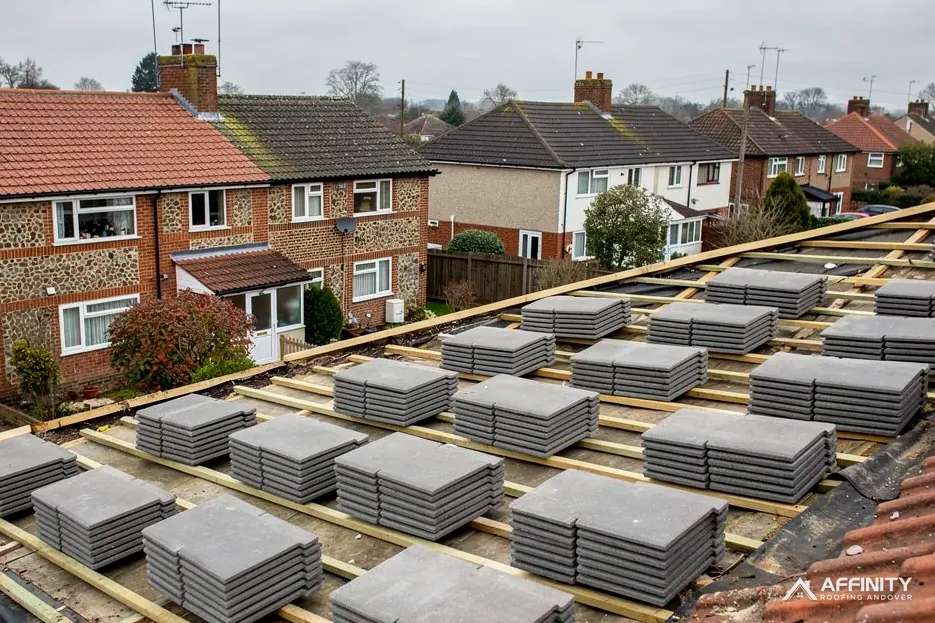

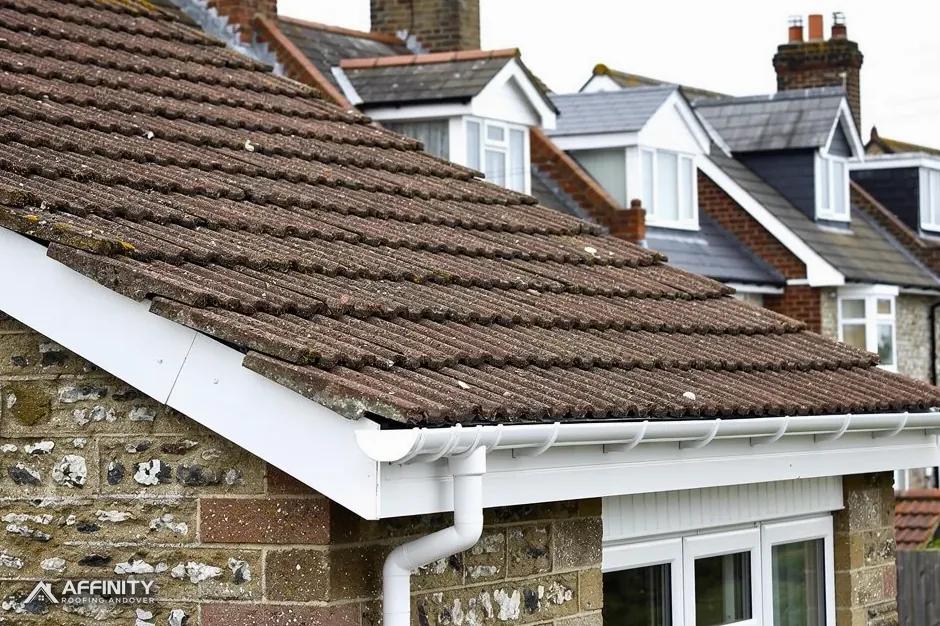
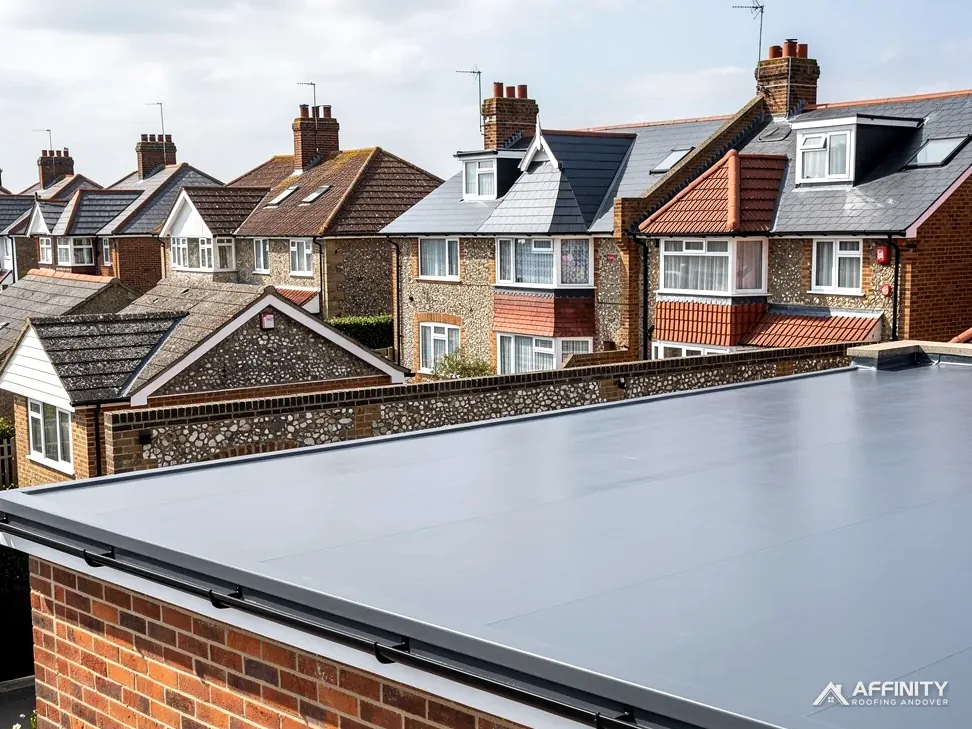
Chilton roofs: the Vale, the farmhouse and the scaffold
Can the roof of a Grade II* farmhouse in Chilton be re-covered in new clay tiles?
Only with listed building consent, which Vale of White Horse District Council's planning team decides, and not on a guess. The usual aim is a tile that matches in size, colour and fixing, taken from salvage if necessary, and the existing roof is photographed before any proposal is made. Material is ordered only once consent is settled, and the council's reply is kept with your photographs.
Which council inspects a roof in Chilton?
Southvale Building Control, a joint service of South Oxfordshire and Vale of White Horse District Councils, handles inspections, though you may appoint a registered building control approver instead, a private route regulated since 6 April 2024. Vale of White Horse District Council is the planning authority. The Planning Portal's test is below 25 per cent of the building envelope and below 50 per cent of the roof.
Who licenses a scaffold on a Chilton road?
Oxfordshire County Council is the highway authority, under section 169 of the Highways Act 1980. We ask the county who applies for your address, confirm it in writing and arrange the licence with the scaffolder. A frame on your own land needs none, and the cost sits inside your written price.
Can Chilton homeowners get help paying for roof work?
Not for a replacement roof as such, though energy work may qualify for help. ECO4 runs until 31 December 2026 and the Great British Insulation Scheme closed in March 2026, but both concern energy. The Warm Homes Local Grant helps with insulation for households under an income limit. Read each scheme's page, because eligibility is never something we can promise.
Have your Chilton roof surveyed first
Give us your address and, if possible, a roof photo. A council check, a survey and one price follow.
10-year workmanship guarantee, in writing.