The short answer
Thin polycarbonate sheet is loud in rain. The sheets are thin and hollow, so rain drums on them like a tight skin, and a heavy shower can drown out conversation. Loose caps and fixings add rattles in the wind, and metal bars tick as they warm and cool. Tightening the fixings helps with the small noises. Thicker sheets, glass or a solid roof change the big one.
Why rain drums on polycarbonate
Polycarbonate sheets are built from two thin skins joined by ribs, with air channels between. The skins are light and a little springy, and each raindrop sets them vibrating. The hollow channels behave like a drum body, so the sound is amplified instead of damped.
The effect depends on how thick and how rigid the sheet is. A thin sheet fixed at wide spacing rings more than a thicker one on closely spaced bars. Heavy rain, hail and wind-driven drizzle all produce a louder sound than a gentle shower, because more drops land harder.
Glass behaves differently. A pane of glass is dense and stiff, so a raindrop makes less noise on it, and a double-glazed unit with two panes and a sealed gap is quieter still. That is one reason owners who switch from polycarbonate to glass often notice the change in the first storm.
Solid roofs are quieter again. A tiled roof has several layers between the rain and the room: the tiles themselves, a membrane, insulation and a plasterboard ceiling. Each of them takes energy from the sound before it reaches you.
Rattles, ticks and creaks
Not all noise is rain. A rattle in a gust points to something loose: a glazing bar cap that has lifted, a screw that has backed out or a sheet that has lost its grip on a gasket. These small noises are usually cheap to put right, and they are worth fixing early because movement wears the seals and invites leaks. A loose sheet can also work its way out of its channel in a strong gust, and then it is a safety matter as well as a noise.
A ticking or creaking in the morning sun, or as the evening cools, is thermal movement. Aluminium and plastic expand when warm and shrink when cold, and they move at different rates against each other. Where a bar has no room to slide, the movement makes noise. Slightly oversized holes, correct fixings and clean slip points are the remedies.
Wind can hum across a gap in a ridge or an end cap, and a rattling gutter or loose flashing nearby can be mistaken for the roof. It is worth tracing the sound before deciding that the roof is the problem.
We listen on the survey and tighten, re-seat or replace the fixings that are making the small noises, and we photograph what we change.
Fixes short of a new roof
If the rain is the problem, there are limited fixes. Replacing thin polycarbonate with thicker multi-wall sheets reduces the drumming, since a stiffer, deeper sheet vibrates less. The bars may need to be changed or reinforced to carry it.
Adding mass or damping helps too. Fitting closely spaced bars, and making sure sheets are fixed firmly and do not flex between supports, takes some of the drum effect away. Some owners add an insulating lining below the sheets, which can soften the sound, though it also affects ventilation and condensation, so it needs thought before it is done.
Replacing the sheets with a glass roof is the next step. Double glazing is quieter, and laminated glass quieter again, and it also brings better insulation. Glass is heavier and the frame must be able to carry it. Our guide to polycarbonate vs glass compares the two.
None of these fixes will make a thin roof silent. Expect a quieter room, not a silent one, and judge the result in a real shower, not in a showroom. Be wary of any firm that promises complete quiet before it has seen the roof.
A solid roof as the quiet option
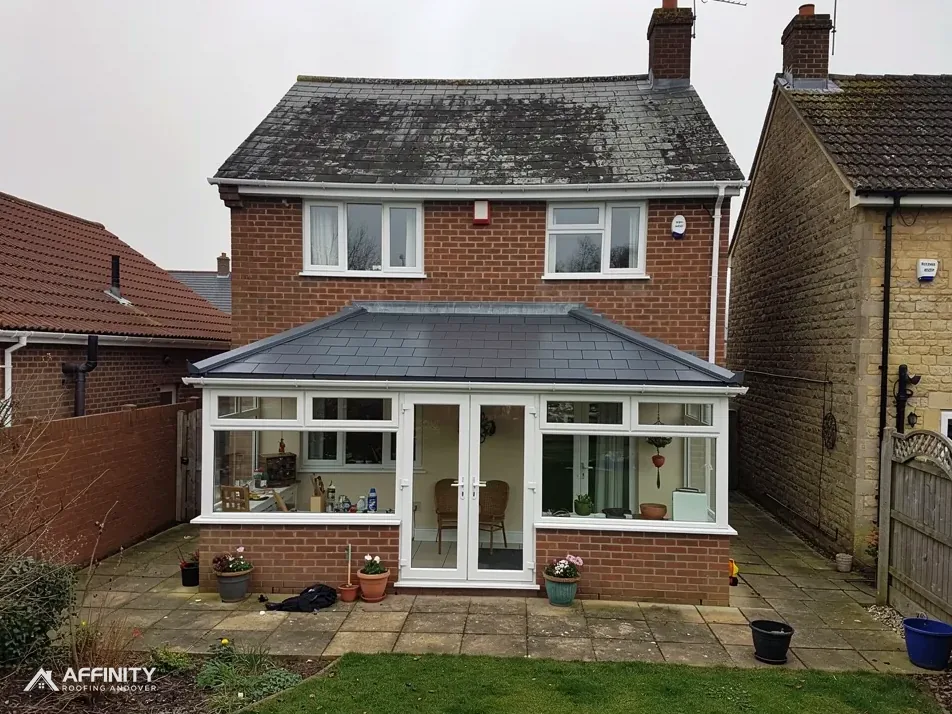
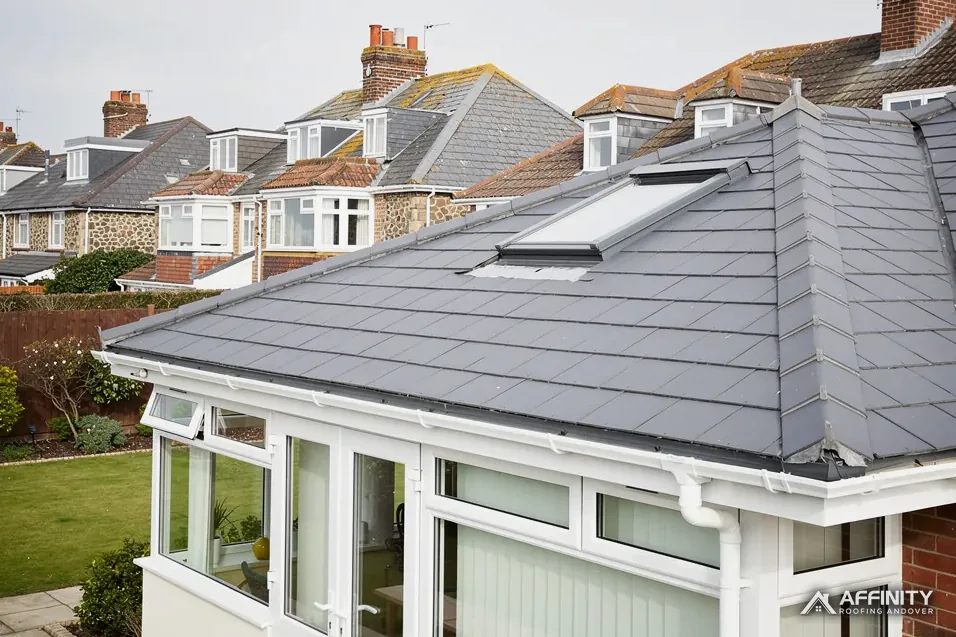
A solid roof is the most effective way to cut rain noise. The rain falls on tiles, not on a thin skin, and the layers beneath absorb what is left. A solid roof chosen for warmth also brings a quieter room.
The change brings weight and the need for approval. A tiled roof weighs more than glazing, so the dwarf wall and frame must be able to carry it, and your building control body signs off the work. A lightweight tiled system keeps the weight down while giving much of the quiet.
Ask about the build-up, not only the covering. Insulation thickness, the type of membrane and the ceiling board all affect how much sound gets through, and so does the way the roof is ventilated.
Unsure whether the noise is rain, wind or movement? Send a short recording with a note of the weather, and photographs of the roof. We can usually tell which fix applies. The conservatory roofs hub lists the roof types, and our guide to insulating a conservatory roof covers the layers.