The short answer
EPDM can suit a commercial flat roof. It is a synthetic rubber membrane made in large sheets, so there are few seams, and it copes well with movement. Its success rests on the deck, the falls, the adhesive or fixing and especially the details at edges and penetrations. Published lifespans disagree: HomeBuilding says 25 to 30 years and Less says 30 to 50. Neither is a promise.
What EPDM is, and why large sheets help
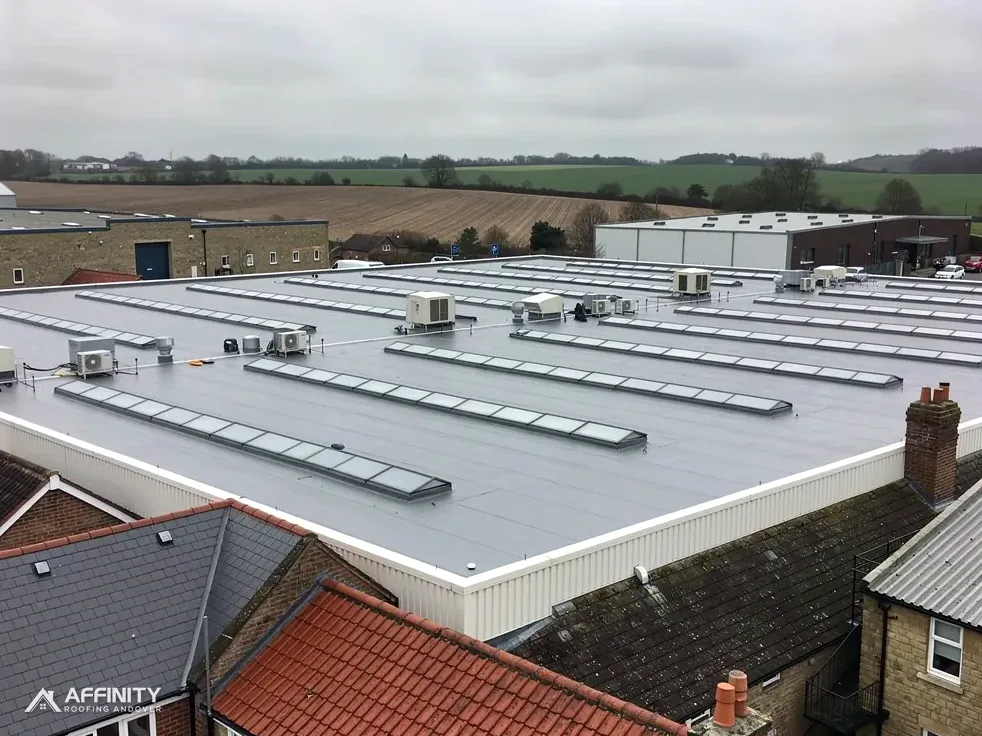
EPDM is the common name for a synthetic rubber made from ethylene propylene diene monomer. As a roofing membrane it is made in wide sheets that can cover a large area in one piece, which is its main attraction on a flat roof. A seam is one place a flat roof can start to leak, and a sheet that spans the whole roof has none across the middle.
The sheets are laid over the deck and insulation, then held down in one of three ways: bonded with adhesive, mechanically fixed through the sheet at its edges, or ballasted with stone or paving that sits on top. Which method suits depends on the wind, the structure, the insulation beneath and what else is on the roof.
Rubber stays flexible, so it follows small movements in the structure and the temperature without cracking. It resists weather and sunlight and does not need a surface coating. That flexibility is part of the reason it is used for large industrial and retail roofs as well as for small extensions.
It is one of several single-ply choices, and our page on single-ply roofing compares the main types.
Details are where an EPDM roof succeeds or fails
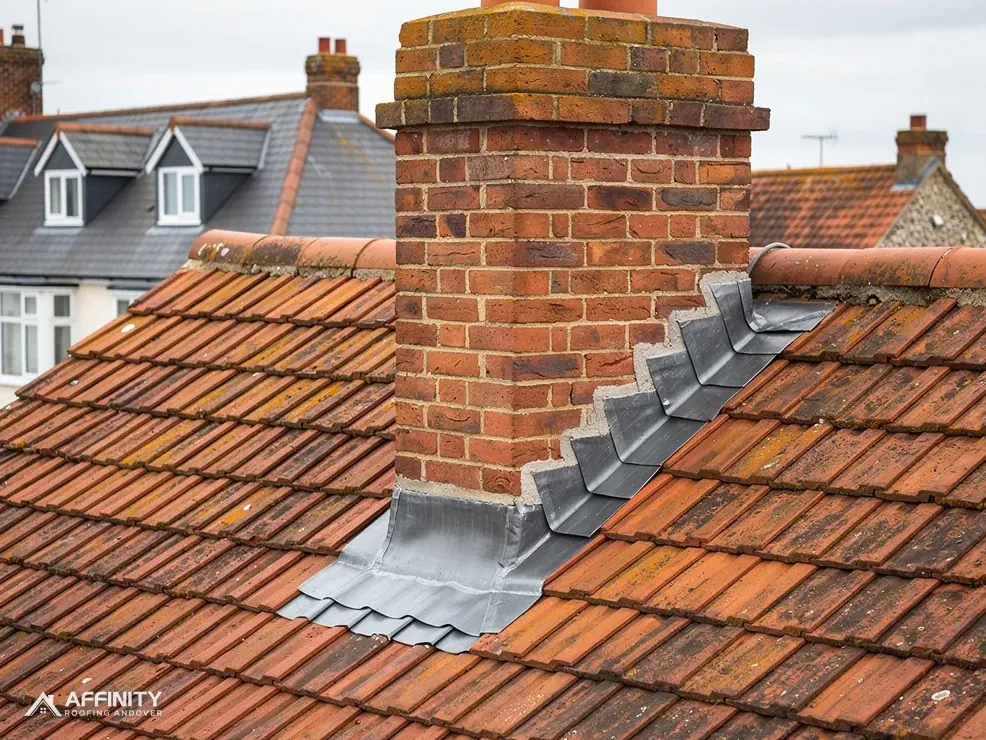
The field of the roof is simple. The edges, corners, upstands, outlets, pipes, rooflights and plant bases are where the work is. Each needs a purpose-made detail: a preformed corner, a flashing strip, a sealed collar, a bonded upstand dressed up the wall and covered by a flashing or coping.
Seams that remain, between sheets or at details, are joined with tape or adhesive made for the purpose. Their quality depends on clean, dry surfaces, the right temperature and careful pressing. A poor joint may look fine and leak within a few seasons, so these are the places to inspect.
The deck and the falls matter as well. EPDM does not cure ponding; it will sit under it. Roofs need proper falls so that water reaches the outlets, and BS 6229:2025 keeps a finished fall of 1:80 for general areas, with IKO advising a design fall of 1:40. A flat deck needs tapered insulation or new outlets.
Protection from damage is the other side of it. Rubber can be punctured by tools, dropped objects and sharp edges, and foot traffic should be limited to protected walkways. Our guide to commercial roof drainage covers the water side.
Lifespan, and why sources disagree
Published lifespans for EPDM do not agree. HomeBuilding & Renovating (Sep 2025) gives 25 to 30 years. Less (Oct 2026) gives 30 to 50 years. Both are typical ranges, and the gap between them shows how much depends on the source, the product and the conditions assumed.
What happens in practice depends on how well the roof was installed and cared for. Good detailing, clear drainage and light traffic help a roof towards the top of any range. Poor seams, ponding and damage pull it down.
A manufacturer's warranty is a separate matter. It is a contract with terms, often tied to approved installers and maintenance, and it is not the same as the life of the membrane. Treat a warranty as protection against defects, not a forecast.
When you plan for replacement, use the lower end of the range for budgeting and let inspections tell you where the roof actually stands. Cracking or shrinkage at edges, split seams, lifted details and repeated leaks are signs that age is catching up. Our answer on commercial roof lifespan compares other systems.
When EPDM suits, and what we check
EPDM suits larger flat roofs with few penetrations, where the deck is sound and falls can be achieved. It is also a sensible choice where a quick, clean installation matters, since sheets are laid without heat. It is less suited to roofs crowded with plant or regularly walked on, where a tougher or more repairable covering may serve better.
On a survey of an existing roof we look at the deck, the insulation and the falls, and at whether the current covering can be overlaid or must be stripped. We note every detail that will need work, and photograph the weak points so you can see the reasoning.
If another system suits the building better, we recommend it. The right covering for the roof is the one that fits its loads, falls, use and budget, not the one we happen to prefer.
The price follows from area, access, preparation, insulation, the number of details and removal of what is there, and after our survey it reaches you as one written total. Check any quote for VAT and edge protection, and see the commercial roofing page for the wider service.