The short answer
Not for the whole job, but it helps to be reachable and to arrange access beforehand. The roofer needs a way into the loft if the survey calls for it, somewhere to park, and a socket or tap on some jobs. Scaffold days are outdoor affairs, while roof days bring noise and dust. A neighbour, a key arrangement or a phone call can stand in for you.
The access a roofer needs from you
The practical list is short. A roofer needs a safe route to the roof, so there must be room for the scaffold or ladder: a clear side path, a gate that opens, and a front garden free of parked cars on the morning the scaffold arrives. If the survey shows the loft needs checking, someone has to let the crew in and leave the hatch clear.
Parking is the second item. A van and a skip need somewhere to stand, and a drive blocked by your own cars gets in the way. If the skip or scaffold has to sit on the road, that is a separate matter for the highway, covered below.
Some jobs call for power or water. A mixing station for flaunching or mortar, a socket for a cutting tool or a tap for cleaning down can all need a connection. Agree this at the survey so nobody has to ask on the day.
Pets and children should stay away from the working side of the house, and windows there should be shut on roof days because dust and grit travel.
You need not stay in all day, but give the firm a number you will answer, and tell them who to ring if you are out.
Scaffold days and roof days
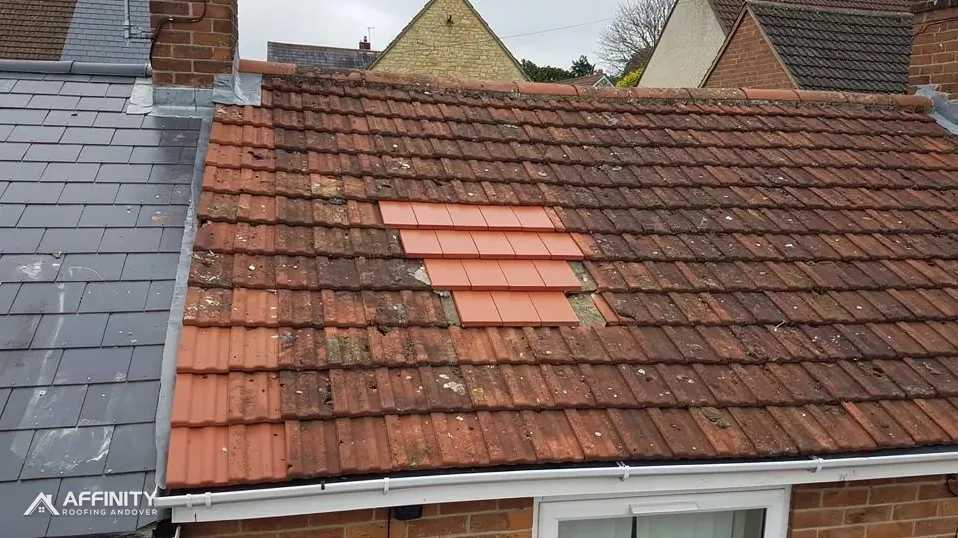
A job usually has two kinds of day. On a scaffold day a crew builds or takes down the working platform, and the house is mostly left alone, with some noise and a lot of poles. On a roof day tiles come off, battens and underlay go on, and noise, vibration and dust are more noticeable indoors.
Ask the firm to say which is which. A simple order of events belongs in the survey notes: when the scaffold goes up, which days the roof is open, when it is made watertight again, and when the scaffold comes down. Allow for weather gaps too, because rain can stop a strip.
Your presence matters most on two days: the first, so you can agree where things go, and the last, so you can walk round and look at the result. In between, being indoors is optional. Working from home is fine, though the noise tires some people.
If the scaffold stands on a pavement or road, a scaffold licence under the Highways Act is needed from the highway authority. That is Hampshire County Council for an Andover address, and it expects the scaffold firm to apply for the householder. You do not apply, but you may be asked to confirm the address and dates.
Our answer on who applies for a scaffold licence goes through the process.
Staying safe around the scaffold
A scaffold is a work area and not an extension of your home. Keep clear of the foot of it while work goes on, particularly where waste is lowered or tiles are passed down. If the front door sits under the working zone, use another one, and ask the crew where the safe route is.
Do not climb the scaffold to look at the work or fetch something. Ask for the progress photographs instead. Photographing the roof as it opens is a normal part of how we work, and the images show you what is going on without any risk.
Keep your own ladders away from the scaffold, and keep the gate shut and the path clear for deliveries. If a conservatory, car port or greenhouse stands near the working area, mention it, because fragile structures are the ones that suffer when debris falls.
Under CDM the contractor takes over the homeowner's duties, so site safety rests with the firm. Our answer on CDM and roof work explains what that means for you.
If anything on site worries you, tell the person in charge at once, in plain words.
If you are out, working or away
You can leave the house during the day. What the crew needs from you is a way to ask questions: a mobile number that is answered, a message app they can send pictures to, and the name of a neighbour or relative who can open a gate or settle a small decision.
If your loft is needed, say so before the first day and not on the morning. A hatch blocked by boxes costs time. Moving fragile things in advance and covering furniture under the eaves helps, because a roof job shakes the building and dust finds its way in.
Being away for several days is possible with planning. Leave a key arrangement that you and the firm both understand, ask for daily photographs of progress, and keep the final inspection for when you are back. Do not leave a roof opened up with nobody reachable.
Photographs at each stage reach you by message, so you know the roof was left weathertight at the end of each working day.
For the wider checklist, see our guide to preparing your home for roof work, and for the whole process, the homepage.