
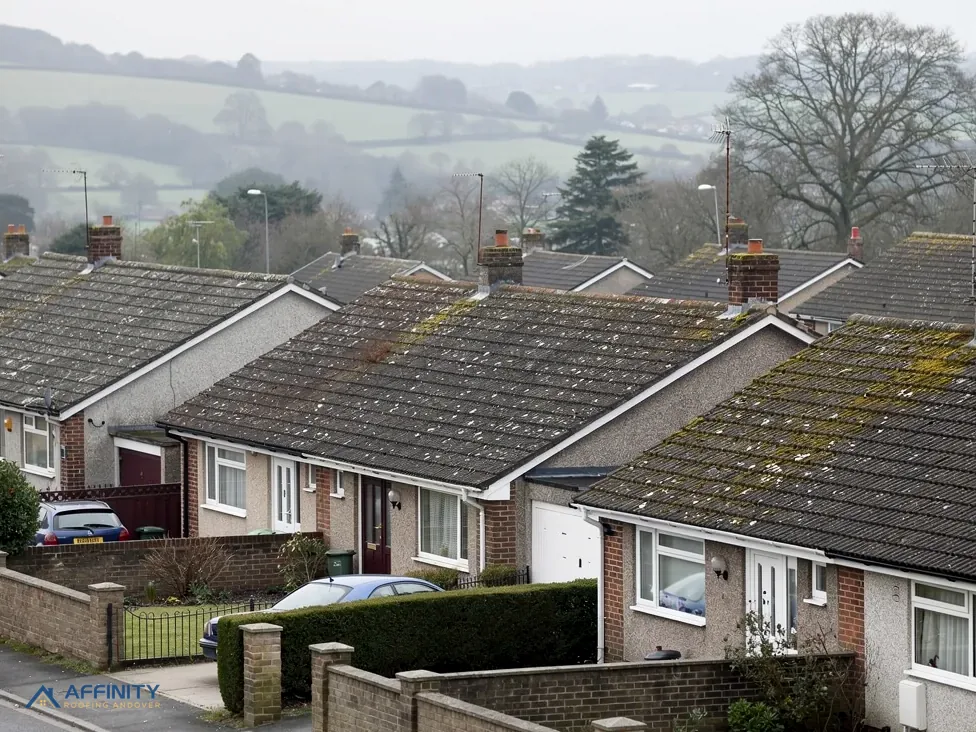
Roofers in Sutton Scotney
Roof work on the old road into Sutton Scotney, under Winchester rules
Sutton Scotney sits in Winchester district, not Test Valley, with the Sutton Scotney conservation area close to its centre. We survey each roof first and photograph what is there before any quote.
Sutton Scotney roofs, from the old road to the inn
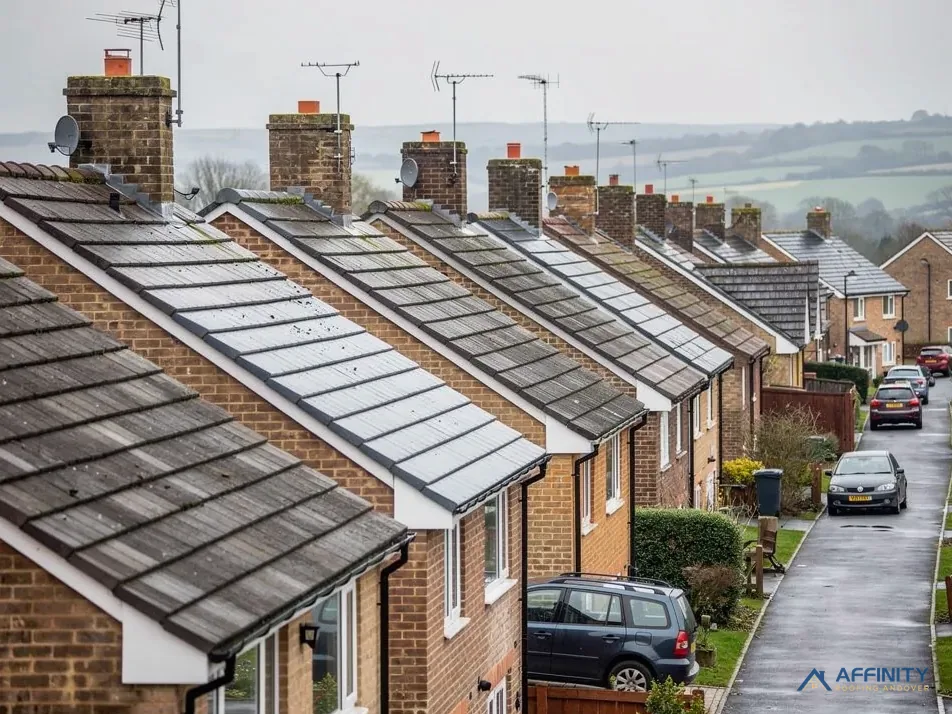
Coach and Horses
A Grade II listed building, first listed on 5 December 1955, standing among 10 listed buildings near the centre.
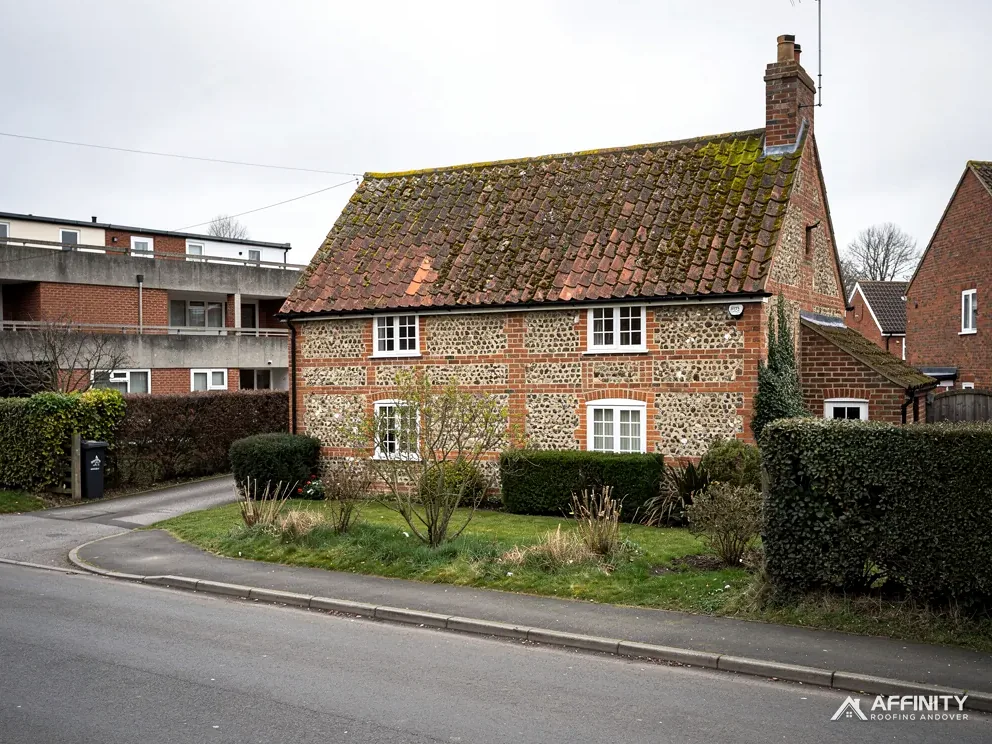
Witts Cottage and neighbours
Witts Cottage, behind Victoria Hall, and Ivy Cottage with Rosehaye, each listed Grade II in 1983.
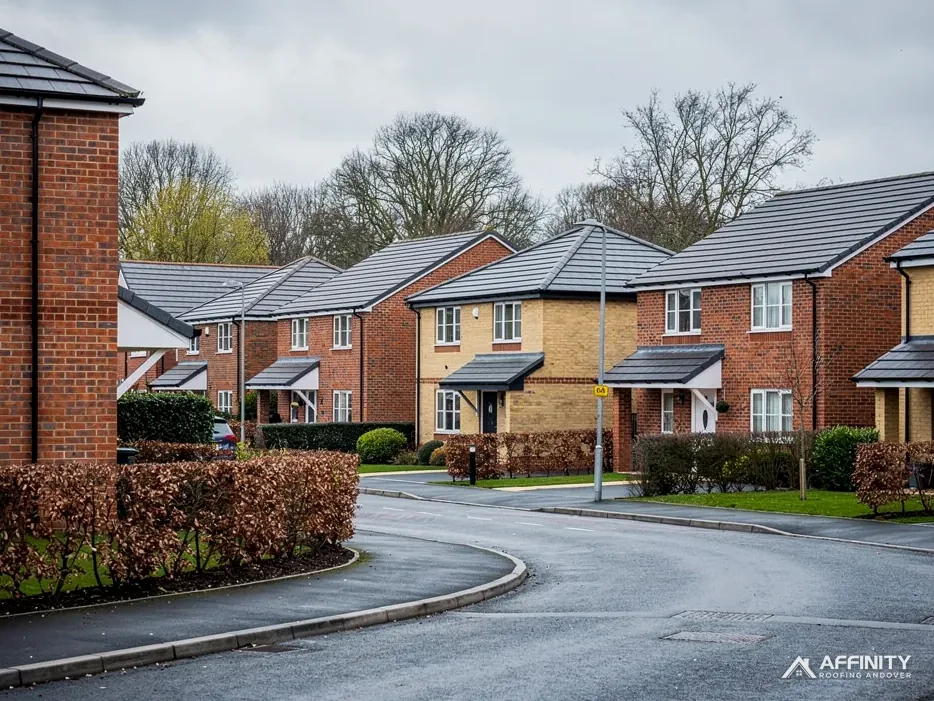
Houses in the conservation area
Homes inside the Sutton Scotney conservation area, where a roof change that shows from outside goes to Winchester City Council first.
Sutton Scotney between Barton Stacey and South Wonston
Barton Stacey and Longparish lie north-west of Sutton Scotney, South Wonston and Littleton south, Micheldever east and Chilbolton west. Roof work in each of them is part of our patch.
- Distance
- 9.3 road miles south-east of Andover
- Planning
- Winchester City Council
- Council
- Winchester City Council and Hampshire County Council
The Sutton Scotney roof report
Local editionSutton Scotney, HampshireThatch history, Winchester rules and a flood map
Sutton Scotney roofs: from thatched cottages in 1908 to Winchester City Council today
Sutton Scotney sits 9.3 road miles south-east of Andover, within a different district. Here is what the village's record shows, who decides on roof work, and what the Environment Agency's flood map has to do with a roof.
A road past thatched cottages, then and now
In 1908 the Victoria County History described the road into Sutton Scotney as curving sharply downhill past outlying thatched cottages and farm buildings. That is a century-old description of the village, and we offer it as history, not as a statement about any roof standing today. Owners of a thatched roof should speak to a specialist thatcher; our own work is tile, slate, lead and flat roofs.
What the national heritage list shows today is a village with 10 listed buildings within about 500 metres of its centre. The Coach and Horses is listed Grade II (list entry 1350829, first listed 5 December 1955). Witts Cottage, behind Victoria Hall, is Grade II (1095155, listed 16 November 1983), and Ivy Cottage and Rosehaye share a Grade II entry (1095156).
Listed building consent is required for work touching a listed building's character, and it sits alongside the ordinary planning rules. In Sutton Scotney that application goes to Winchester City Council. What goes to the officer is a set of slope photographs, a plain description of the roof as it was found and a brief statement of the repair, enough to follow the case from the desk.
On boundaries drawn by Winchester City Council, the Sutton Scotney conservation area lies within about 0.75 km of the village centre, and the separate Wonston conservation area lies close by. A change to the shape or visible material of a roof there is something we raise with the council before pricing.
Winchester City Council is the authority to ask whether an Article 4 direction touches your house. We put that question in writing, with your address, so you hold the answer. We do not guess it from a neighbour's experience, because a direction can cover one street and skip the next.
On a survey we photograph each slope from the ridge down, the verge, valleys, chimney flashings and the gutter line. The pictures go to you with a note saying what each shows. Anything that needs matching material, such as old plain tiles, is flagged so the search for reclaimed stock can start early.
For a cottage by the road, we also trace how water reaches the roof edge and where it goes next. A sound covering above a failed gutter still wets the wall.
The loft comes next where it can be reached, to check for daylight at the eaves, staining on timbers and the look of the underlay from below. A roof can look fine outside and be failing within, and the loft is where we find out.
Buyers should keep the listing entries with that record.
Winchester, not Test Valley, signs this off
Sutton Scotney is in Winchester City Council's area, which makes that council the local planning authority. Hampshire County Council sits above it as county council and highway authority. A short drive from Andover has taken you out of Test Valley, so a neighbour's experience in Andover does not carry over, and we check every Winchester address afresh.
Winchester City Council runs its own Building Control service. Winchester's service also deals with fire safety, early advice before an application and dangerous structures; the council's number is 01962 840 222. Private approval comes from a registered building control approver, a role regulated from 6 April 2024. The route is agreed before the scaffold goes up.
For re-roofing we use the Planning Portal's national test. The Planning Portal's line sits at under 25 per cent of the building envelope and under 50 per cent of the roof; a small job below both lines seldom brings a building control application. During the visit every slope is set against both limits, and a job near either line is explained on paper.
If a replacement covering adds 15% or more to the weight, Building Regulations approval is triggered and a structural check on the frame comes too. The test is national, so it holds in Sutton Scotney as everywhere. It catches owners who swap light natural slate for heavy concrete tile, and we look for it on every old roof.
Our planning permission for roof work guide maps the national picture, though it cannot predict how Winchester City Council will read your particular roof. That is why the question goes to the council before any alteration to the look of the roof is priced.
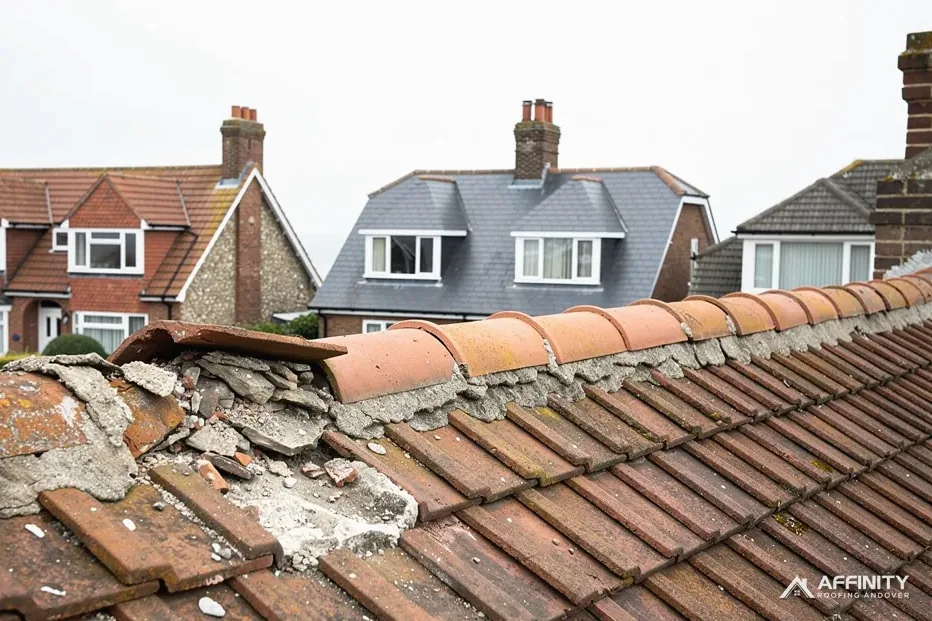
A repair is simpler. A cracked ridge tile, a lifted flashing or a handful of slipped tiles leaves the thresholds untouched, and we deal with it as such. Our roof repairs page describes the usual jobs and how each is priced.
The survey notes record the date, the council contact and the answer, and they go into the file you keep. If a buyer asks about the work years later, the paper trail answers the question.
What reaches you is simple: a set of photographs, a short note for each slope, the council's reply where one was needed, and the price. Keep them together. If you sell the house, the bundle shows a buyer's surveyor that the roof has been looked at properly and that the right authority was consulted.
“A short drive from Andover takes you out of Test Valley: Sutton Scotney roofs answer to Winchester.”
Flood Zone 3 on the map, scaffold on the road
The village centre is mapped in Flood Zone 3 by the Environment Agency's Flood Map for Planning. That label is a planning classification, not one for any named street or house, and it does not decide whether a roof can be repaired. We mention it because rainwater from a roof ends up in gutters, downpipes and the ground, and those get a look on every survey.
Section 169 of the Highways Act 1980 requires a licence for scaffold that obstructs the highway. In Sutton Scotney the licensing body is Hampshire County Council, not Winchester City Council. Hampshire County Council expects the scaffolder to submit the application, so no form reaches you.
Hampshire County Council wants a ten-working-day lead between application and start, with no extensions on offer. The fee Hampshire County Council sets is £211.90 on application for the first 2 weeks, with £72 charged for each further 2-week period. Scaffold on private roads needs no licence. For a house reached from a drive or a yard, the highway never comes into it.
When listed building consent is still waiting, we hold the licence application back. An unextendable licence would otherwise start its clock while the paperwork was still in progress. The start date follows once both permissions are in hand, and the licence cost is already part of the single figure quoted.
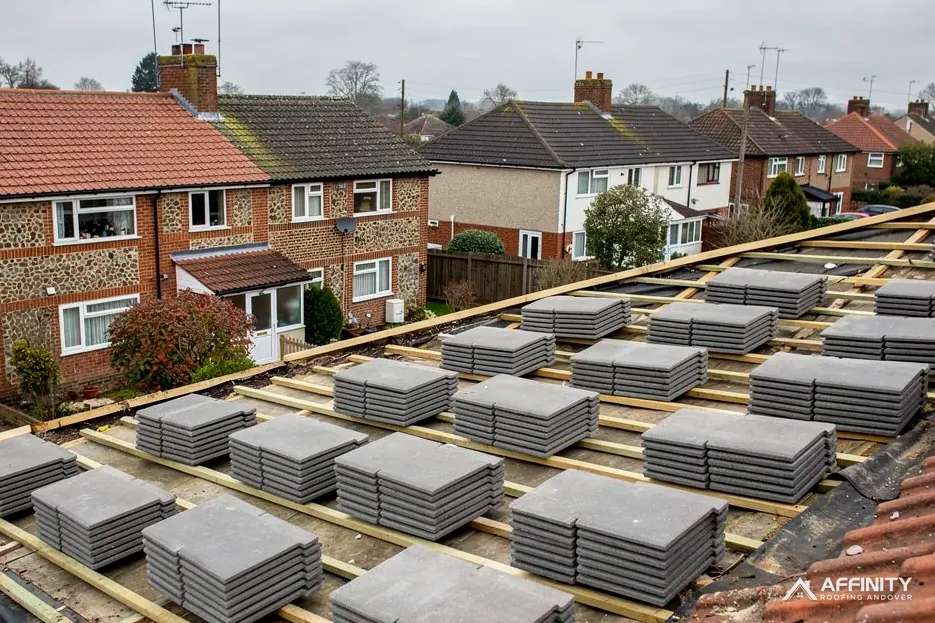
Sutton Scotney roofs call for everyday services. Pitched roofing covers slopes where the battens, the underlay and the tiles all need attention. Stacks, flashings and the mortar cap are covered on our chimney repairs page. Smaller extensions and porches often have flat roofs, which are surveyed for ponding, split seams and blocked outlets, and for tired edge trims.
The close of each job leaves a clear site. Scaffold boards are swept, waste is taken away, and final photographs show the finished roof beside the first ones. You hold both sets, and the written price you agreed.
Access in a village on a through road needs thought. Tiles, battens and a skip all arrive by lorry, so we decide beforehand where each will stand and how pedestrians are kept clear. Deliveries are timed around the school run where the road is narrow, and neighbours are told the dates.
Weather decides the order of work more than anything else. Only as much roof is stripped as can be made watertight by evening, with a sheet over anything left open, so a slope never stands bare overnight.
What we fix on Sutton Scotney roofs

Sutton Scotney roofs: Winchester, the listings and the licence
Does Winchester City Council or Test Valley decide on a Sutton Scotney roof?
Winchester City Council, because the village is in its area. It plans, and it runs its own Building Control service; the council's number is 01962 840 222. Scaffold licences on roads are Hampshire County Council's. Test Valley plays no part, so a precedent set on an Andover job does not carry across to a Sutton Scotney one.
Can the Coach and Horses roof be repaired in the same tile?
The Coach and Horses is listed Grade II, so listed building consent from Winchester City Council comes before anything touches its character. We would aim first for repair in matching material. We photograph the covering and look for reclaimed stock in the same size, so any application shows exactly what would be retained and what would change.
What does the Flood Zone 3 classification mean for my roof?
Very little for the roof itself. The Environment Agency's Flood Map for Planning maps the village centre in Zone 3. That is a planning label for land, and it names no particular street. At survey, gutters, downpipes and the ground by the walls are checked and photographed, since rainwater has to go somewhere.
Who applies for scaffold on a Sutton Scotney road?
Under Hampshire County Council's rules the scaffolder submits the application, allowing ten working days of notice. For the licence Hampshire County Council charges £211.90 for the first 2 weeks and £72 for each further 2 weeks. Scaffold kept off the highway, on your own land, is outside the scheme, and whatever licence cost arises sits in one written price.
Request a survey for your Sutton Scotney roof
Send the address and one photograph of the problem. We survey the roof and return a single written price in plain words.
10-year workmanship guarantee, in writing.