
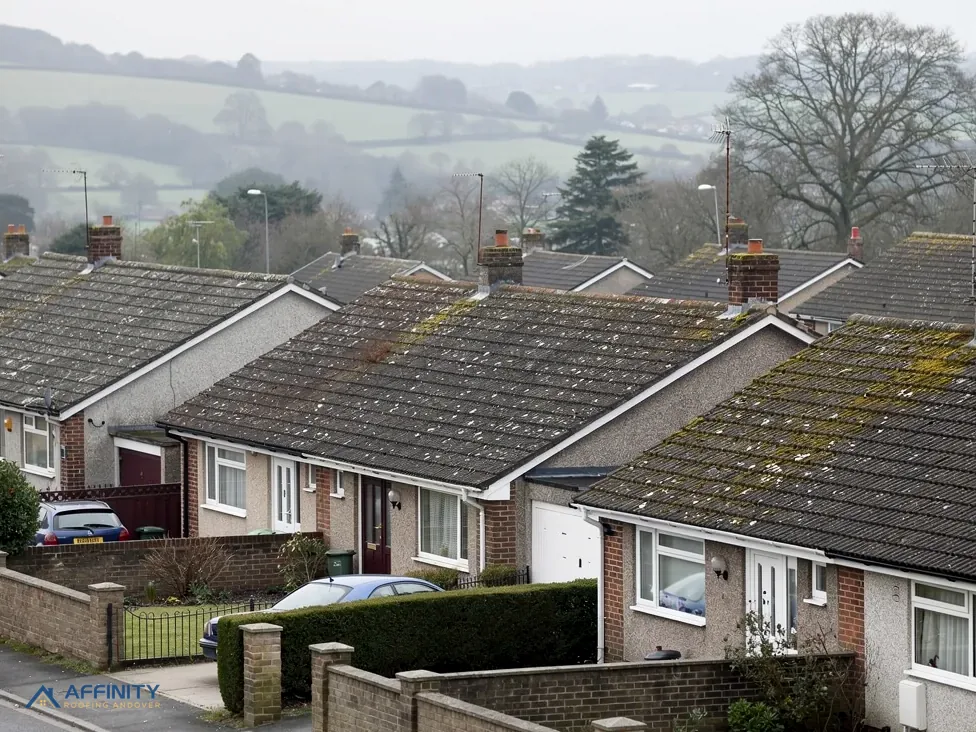
Roofers in Great Bedwyn
A Grade I church, a twice-protected cross and the downs beyond
Great Bedwyn lies inside the North Wessex Downs, and its Grade I church stands beside a cross that is both listed and scheduled. Every roof is surveyed first.
Great Bedwyn roofs, from the church to the downs
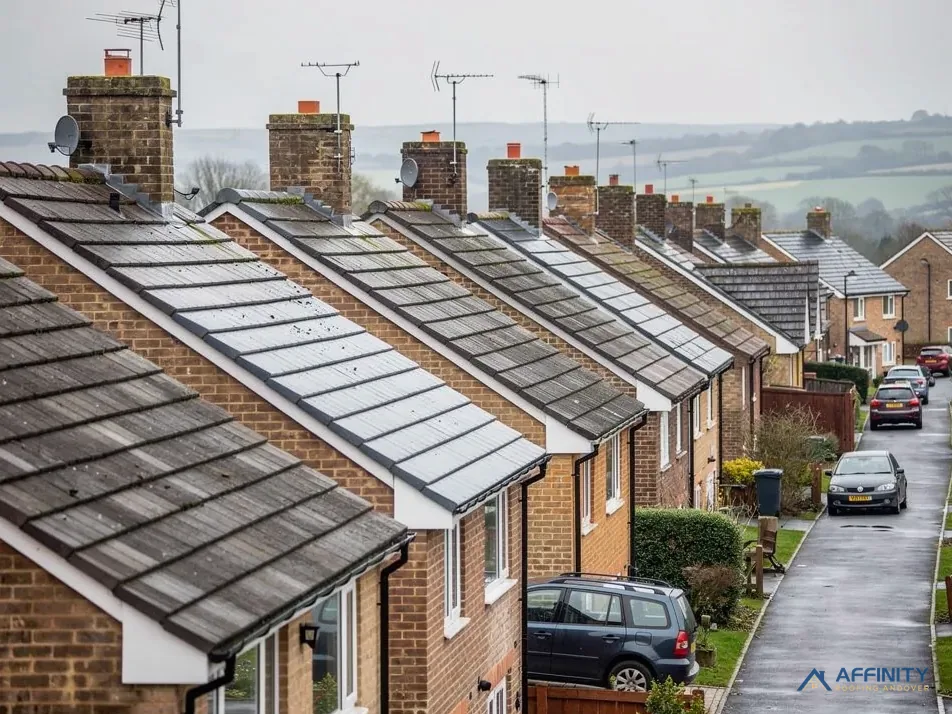
Church of St Mary
Grade I listed (1365492), first listed on 22 August 1966; a Church of England parish church, so its roof work needs a faculty.
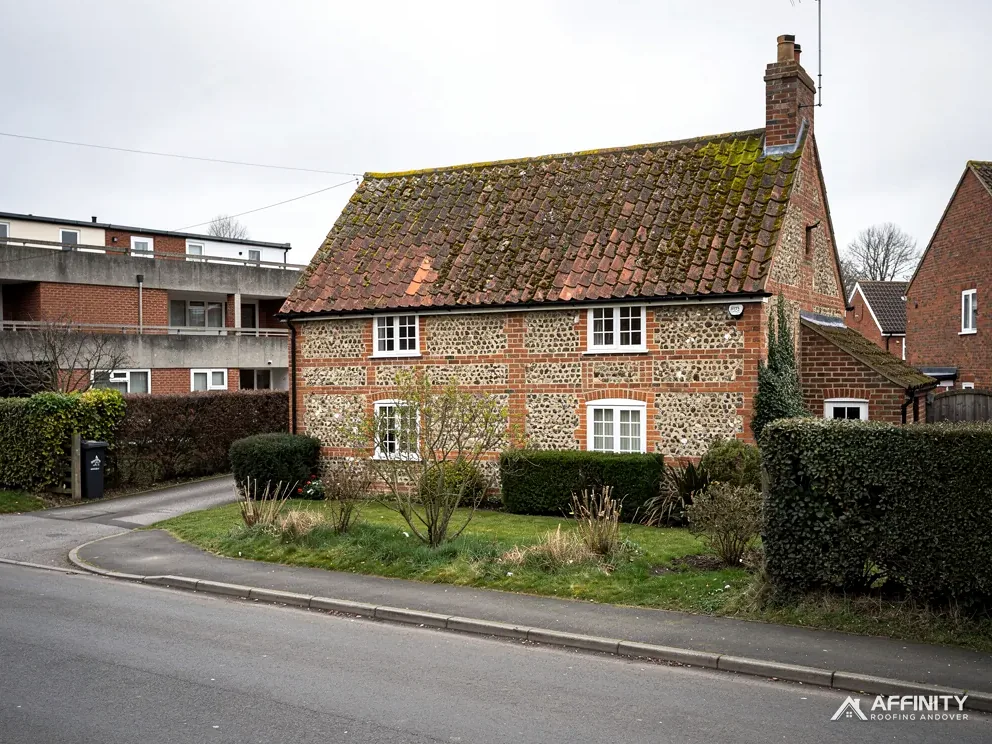
The Churchyard Cross
Listed Grade II* and also a scheduled monument, so any work to it needs scheduled monument consent first.
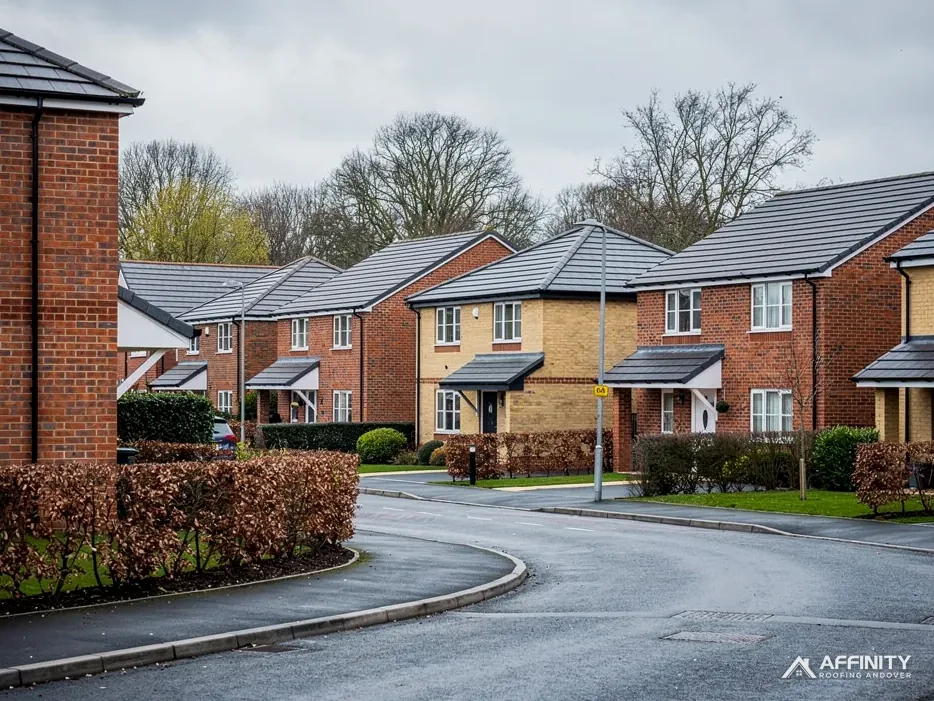
Homes in the downs
Houses inside the North Wessex Downs National Landscape, with Wiltshire Council as planning authority and advice from the downs.
Great Bedwyn among the downs villages
Hungerford is the nearest town, to the north-east, with Ramsbury north, Marlborough north-west, Burbage south-west, Upper Chute south, and Inkpen and Kintbury east.
- Distance
- 15.4 road miles north-west of Andover
- Planning
- Wiltshire Council
The Great Bedwyn roof report
Local editionGreat Bedwyn, WiltshireThe downs, a Grade I church and moss
Great Bedwyn roofs: inside the downs, under Wiltshire's rules, and what lies beneath the moss
Great Bedwyn stands 15.4 road miles to the north-west of Andover, a village within the downs and under Wiltshire's rules. Next: who has the final word on a roof, what the church and cross ask of a repair, and how moss is cleared away.
The downs advise, Wiltshire decides
Great Bedwyn, a Wiltshire village 15.4 road miles to the north-west of Andover, recorded 1,361 usual residents for its parish in the 2021 Census. The village sits inside the North Wessex Downs National Landscape. That designation can sound like a second layer of control. In planning terms it is not: advice is all the body that looks after the downs gives, and Wiltshire Council remains the local planning authority for every address in the village.
The downs partnership's planning page names the council as the decision-maker, with Natural England consulted. So a Great Bedwyn homeowner telephones Wiltshire, not the downs office. Wiltshire's planning team, its own Building Control service on 0300 456 0113, and its highways section are the three doors for a house roof, while the church and the cross have their own routes.
The designation still matters for one kind of job: building a dormer or reshaping a roof is something to raise with Wiltshire's planning team, and the conservation area works the same way. That team can also confirm where the conservation area boundary runs. Repairing a roof, or re-tiling a house to match, is a different matter, though Wiltshire's Article 4 area here means we ask first. Our guide to planning permission for roof work sets out the full picture.
For Building Regulations, the Planning Portal draws two lines: 25 per cent of the building envelope and 50 per cent of the roof. Staying inside both, an application is not normally required. No roof-covering figure beyond the national ones comes from Wiltshire. A heavier covering is a separate trigger: 15 per cent or more extra weight needs approval, and the Planning Portal suggests a structural opinion first.
Before a job is booked, we put the question to Wiltshire Building Control and note the answer on the survey. Our first look is from the ground, at the full roof against the sky, for dips in the ridge and sagging slopes, before we move in. Where the council asks for more detail, we supply it from the survey photographs, and the job waits for its reply, so no covering is ordered on a guess. A private inspector is the alternative, if registered as a building control approver, a requirement since April 2024.
The designation is a planning matter, not a tile specification. A like-for-like repair changes nothing outside, but a change of covering from clay to something different can, so we say early if a proposal falls into that category and ask Wiltshire before ordering. Where a new covering would differ significantly from the old one in a fire, Building Regulations approval is needed as well.
St Mary's, a twice-protected cross and an Article 4 name
Historic England's list holds 28 listed buildings within about 500 metres of the centre of Great Bedwyn. St Mary the Virgin, the parish church, is listed at Grade I (entry number 1365492, first listed on 22 August 1966). Castle Cottage is Grade II (1300302). Each of these listed roofs is surveyed on its own, never priced from a neighbour's. The Churchyard Cross is listed Grade II* (1034045) and is also a scheduled monument (1004750), so it is protected under two systems at once.
St Mary's belongs to the Church of England: its A Church Near You page gives service times and says it opens daily for private prayer. Roof work there therefore needs a faculty rather than listed building consent. The diocese's consistory court grants the faculty, and a roofer works within whatever it permits.
Works to a scheduled monument need their own consent, and unauthorised works are an offence under section 2 of the 1979 legislation on ancient monuments. The cross is in the churchyard, away from house roofs, but any scaffold footing or access near it would have its scheduled monument consent position checked first.
Great Bedwyn also has a conservation area, with its boundary published on planning.data.gov.uk within about 0.75 km of the centre. Wiltshire Council has an Article 4 area named Great Bedwyn, reference 07/0001 in the council's Article 4 series. What it removes from permitted development, and whether it touches your address, is for the council to say. We raise it before any change to material, shape or windows.
Work that bears on a listed house's special character needs consent, and our practice is to repair in kind, logging the covering before the council sees any description.
A listed building consent application wants pictures of the roof, a note of its present covering and a short account of the proposed change. We assemble these during the survey, so the council is not kept waiting for a second visit from us, and its reply is filed with the report. For houses beside the churchyard, boards and sheeting are planned so that nothing rests on or is fixed to the churchyard wall or the scheduled cross.
If your house is in the conservation area or next to the church, give us the address, a ground-level photograph and copies of any earlier consent letters. Reclaimed tiles and slates are the normal answer where matching matters, since they arrive weathered, and we tell you how long finding them is likely to take.
“In Great Bedwyn the downs give advice, and Wiltshire Council gives the decision on every roof.”
Moss, hand clearing and a Wiltshire scaffold
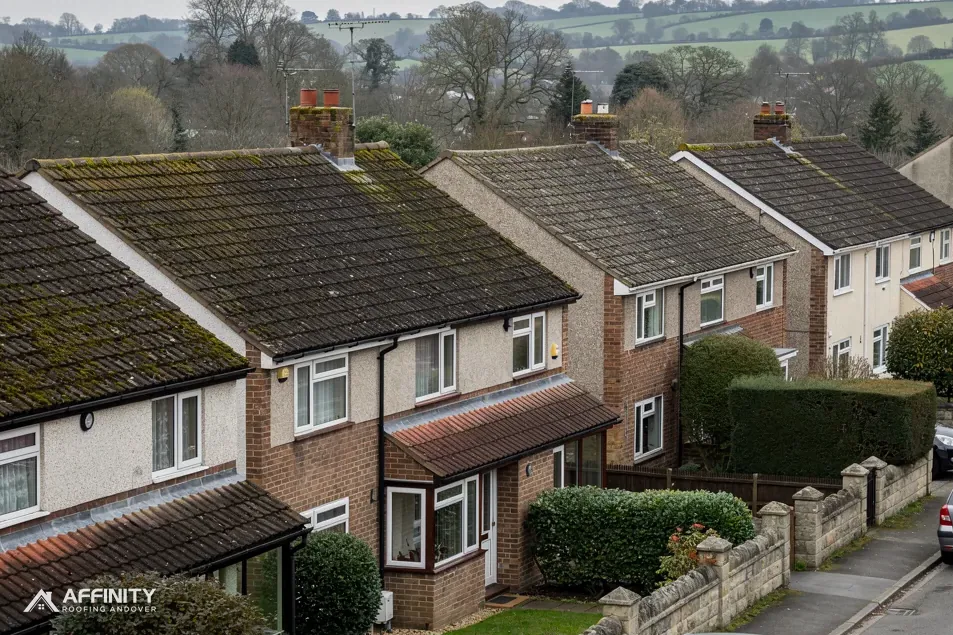
Moss on a roof looks like a surface problem. It holds water against the tile, lifts the edges of slates and tiles as it grows and chokes gutters when it falls. Clearing it is part of looking after a roof, but the method matters. Marley does not recommend using a powerful jet wash, which it says can scour slate or tile surfaces and cut a covering's expected life considerably. We therefore clear moss by hand and brush, and report what lies beneath. Moss grows fastest where a roof stays damp and shaded, so the survey notes overhanging trees and north-facing slopes as well. The depth of growth also changes how long the clearing takes.
Biocides, the chemicals used to kill moss and algae, are regulated. On biocides, HSE guidance is that professional-only products are not for householders, and that an unapproved product must not be used. A homeowner who buys something from a hardware shelf should read the label for the approval and follow it exactly. Our roof cleaning and moss removal work is priced after a survey, because the area and the access decide the figure.
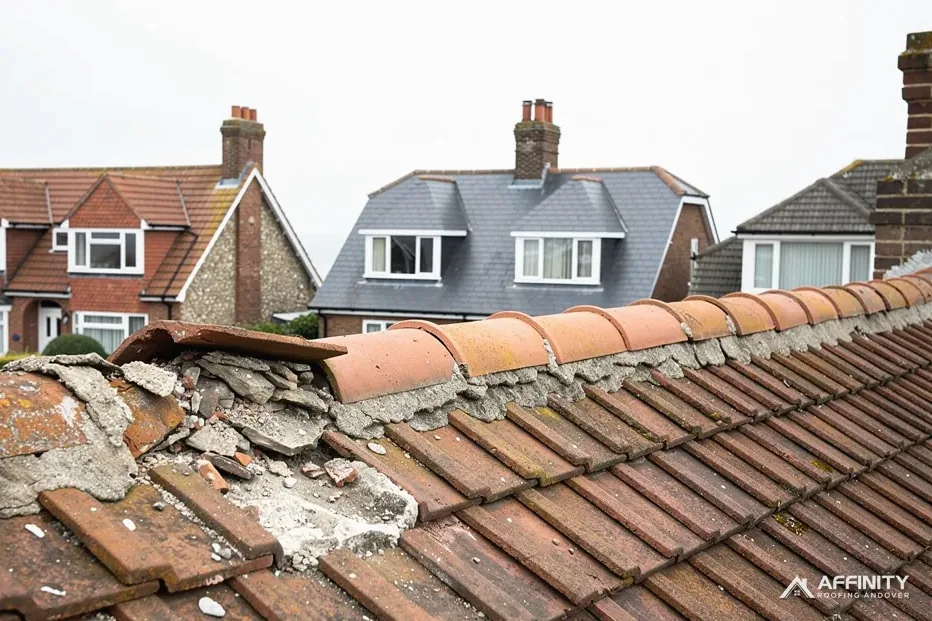
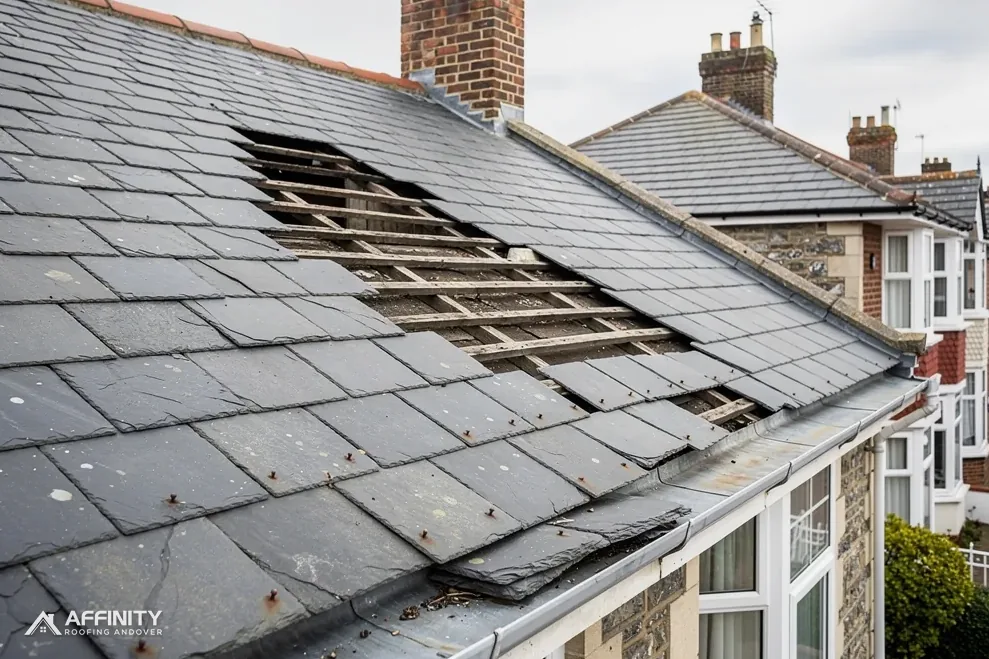
Under the moss the real fault can show: cracked tiles, slipped slates, corroded clips or a failed ridge bed. The report photographs each one, and the repair is matched to the covering. Roof repairs follow cleaning in the same visit when the scaffold is already up.
Scaffolding over a road or pavement needs a section 169 licence under the Highways Act 1980, and in Great Bedwyn the body that licenses it is Wiltshire Council. Wiltshire Council's two fee levels are £143.80 and £164.70, the lower one where the application gives more than three working days of warning; each licence lasts 28 days. Applications go through MiPermit, made by the firm supplying the scaffold, and arranging that falls to us.
Parts of the land within about 250 metres of the centre lie in Flood Zone 3. We follow the downpipes on every survey and report where they end, and the gutters are cleared and tested at the end. Moss that has fallen into a gutter blocks the outlet and sends water over the edge, so the gutters are cleared as part of the same visit, and slate roofing is checked for lifted edges where it meets the moss line.
If a leak appears while the roof waits for work, tell your insurer first, take photographs, keep receipts and read your policy's own wording on storms. A temporary cover from us stops the water while any claim is sorted out.
What we fix on Great Bedwyn roofs
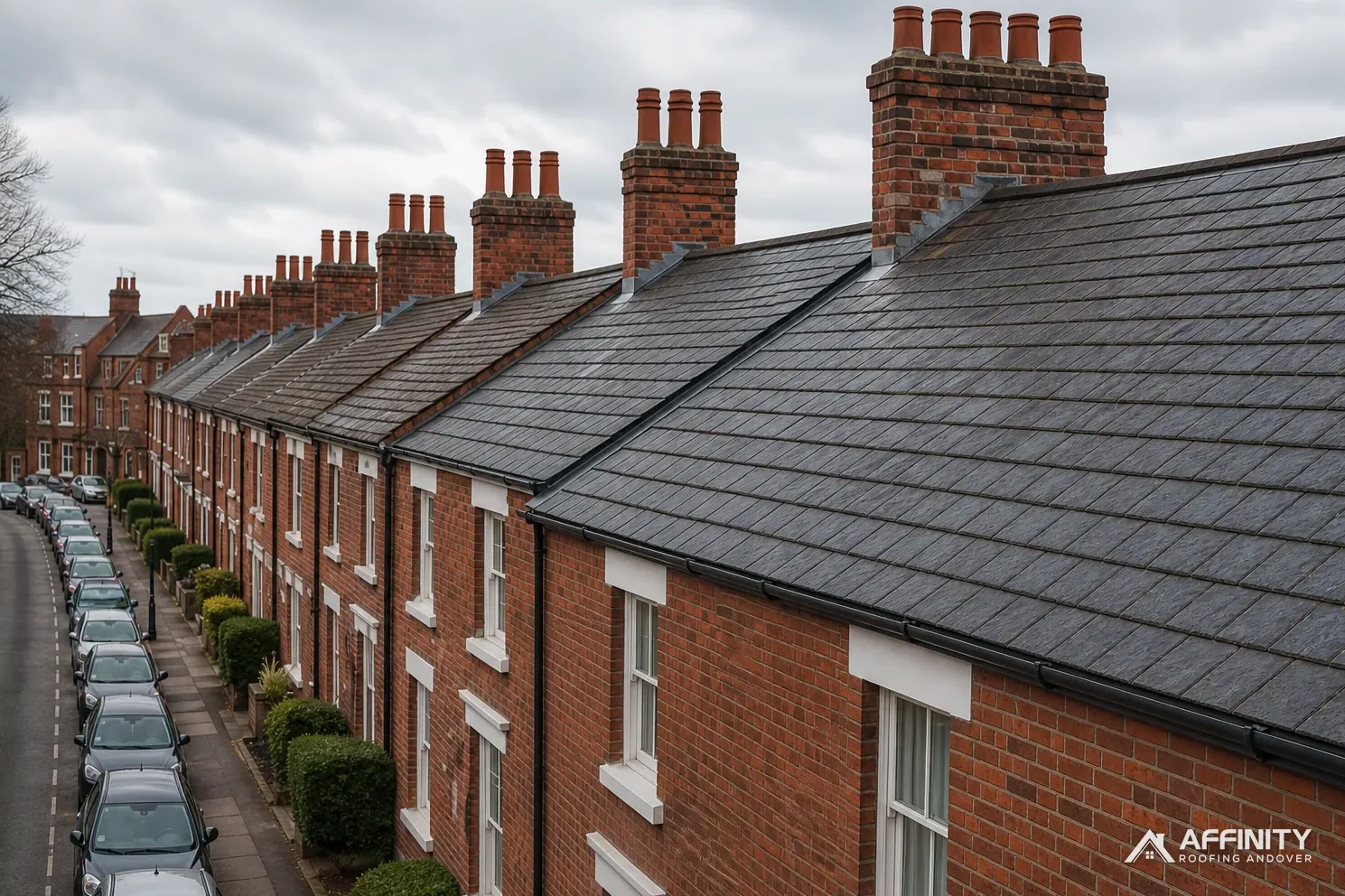
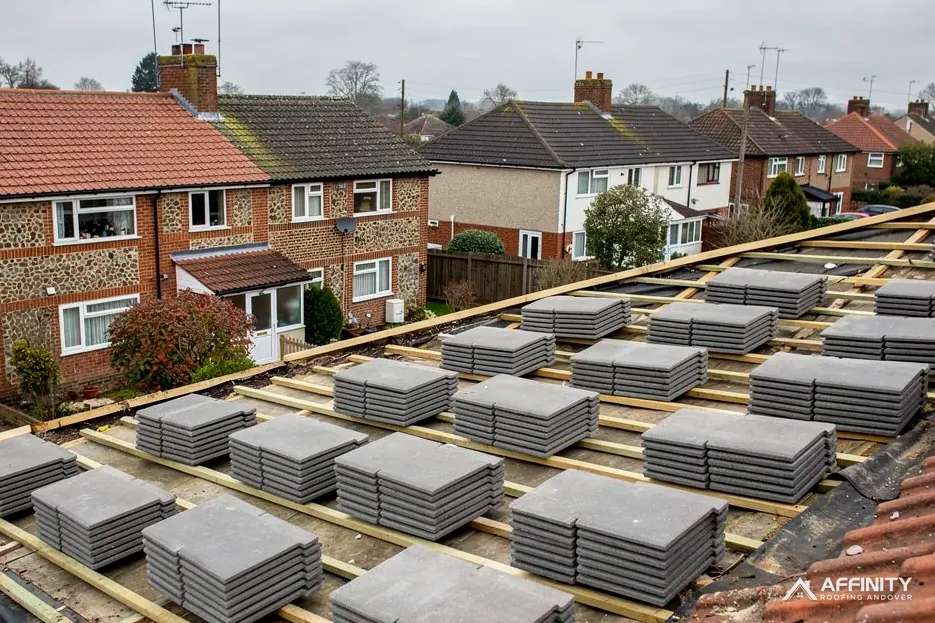
Great Bedwyn roofs: the downs, the cross and the moss
What is the right way to clear moss from a Great Bedwyn roof?
Marley does not recommend a high-power jet wash, since it can scour slate and tile surfaces and cut a covering's life. We clear moss by hand and brush instead. Biocides meant for professionals are not for the public, so read any product's label for its approval before buying, follow it exactly, and keep the packaging.
Does living in the North Wessex Downs change which council I ask?
No. The body that looks after the downs only advises, and Wiltshire Council remains the planning authority. In the designated area, plans for a dormer or a reshaped roof are put to the council's planners first. Mending or re-covering in kind is normally simpler, but the village's Article 4 area means we still check. Keep the reply with your records.
Is the Great Bedwyn Article 4 area something I need to check?
Wiltshire Council has an Article 4 area named Great Bedwyn, reference 07/0001 in the council's Article 4 series, near the village. What it removes from permitted development is for the council to say, so put your address to Wiltshire's planning team before changing a roof's material, shape or windows, and keep the reply.
Does the scheduled Churchyard Cross affect scaffolding on nearby houses?
Only if a scaffold footing or access would touch the monument or its ground. Works to a scheduled monument need scheduled monument consent. We check the position on the survey and settle any scheduled monument consent question before the scaffold is planned, so a house a street away is unaffected.
Great Bedwyn and the downs villages
Ask for a Great Bedwyn survey
Give the address and a photo and we will survey the roof, check with the council and write one price.
10-year workmanship guarantee, in writing.