
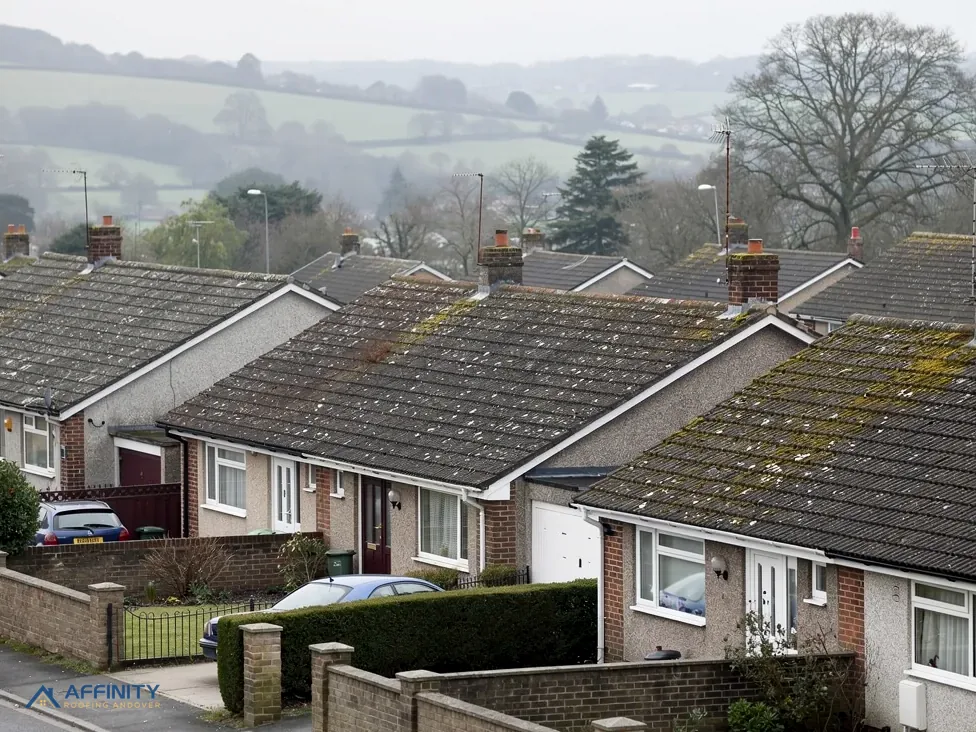
Roofers in Fovant
Two listed hotels and a Grade II cottage in Cranborne Chase
Fovant is a Wiltshire village of 716 people with two listed hotels and a conservation area, inside Cranborne Chase. Every roof is surveyed before any price is written.
Fovant roofs, from the Pembroke Arms to The Cottage
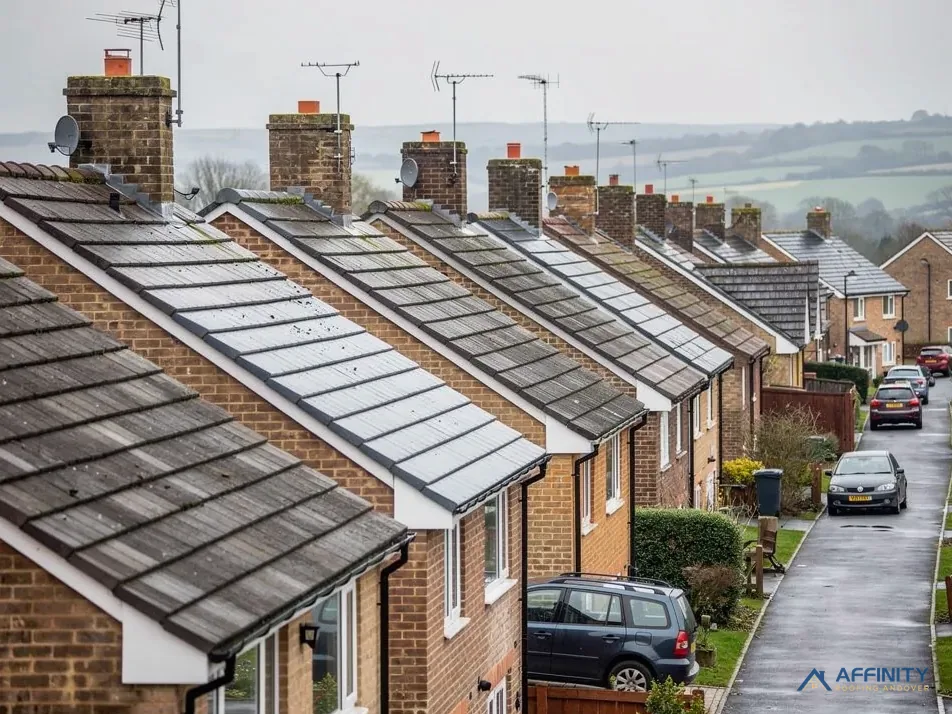
Pembroke Arms Hotel
The Pembroke Arms is a Grade II hotel, so its roof and its neighbours are repaired to match.
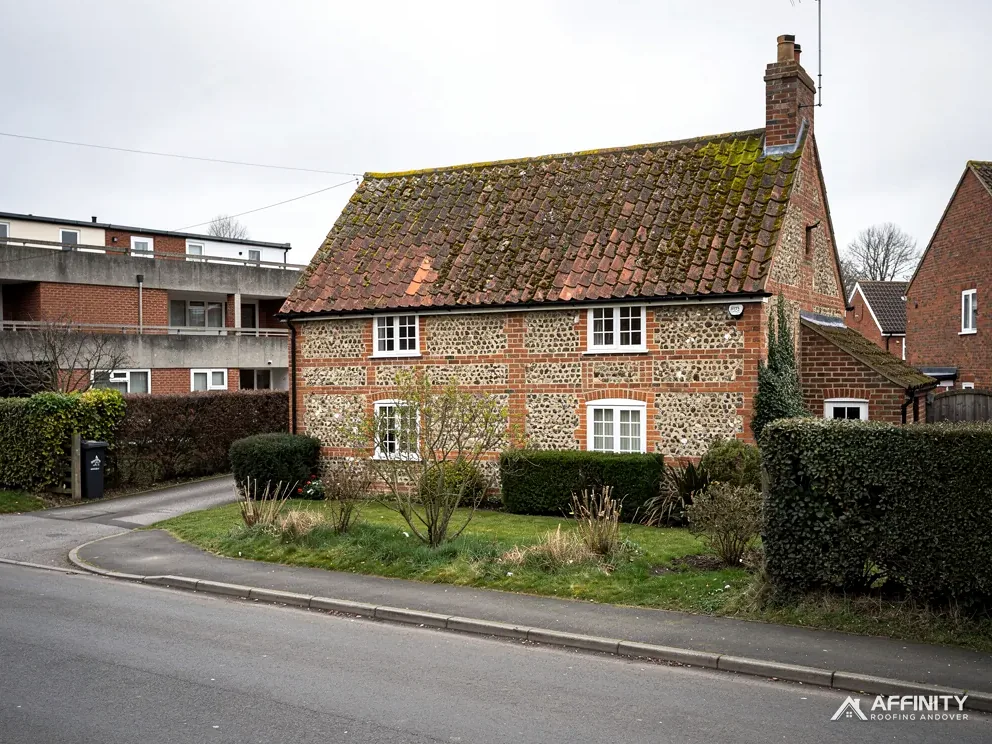
Cross Keys Hotel
The Cross Keys Hotel is also Grade II, which makes two trading roofs of heritage interest in one village.
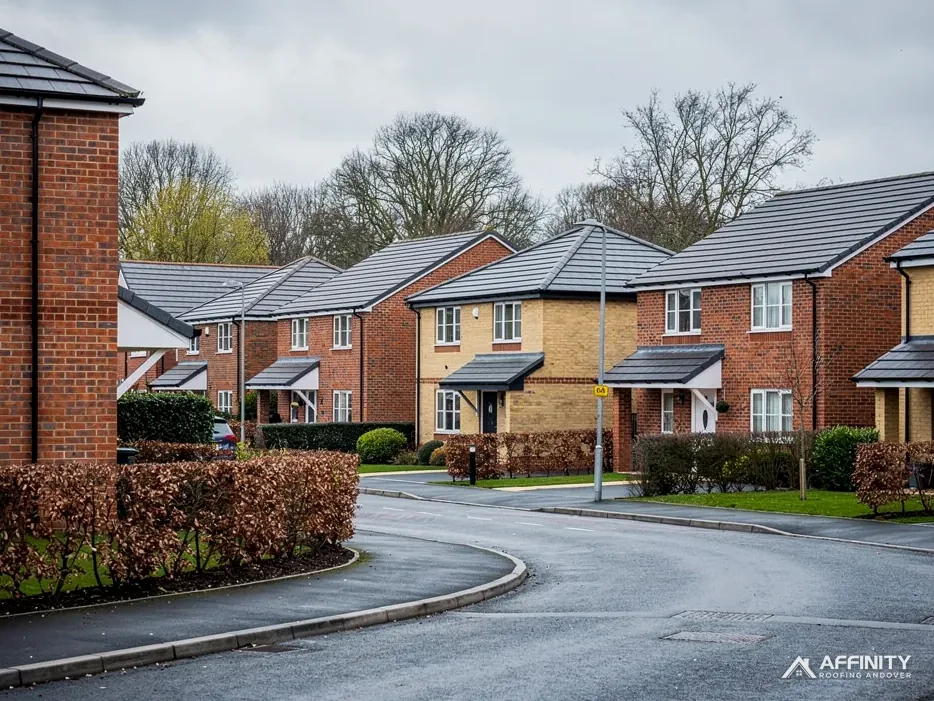
The Cottage and village houses
The Cottage is Grade II, and the houses around it sit in the Fovant conservation area.
Fovant between Dinton and Wilton
Dinton lies to the north-east, Codford to the north, Wilton to the east and Salisbury further east. Work in each place is within our reach.
- Distance
- 28.8 road miles south-west of Andover
- Planning
- Wiltshire Council
The Fovant roof report
Local editionFovant, WiltshireHotels, a cottage and the Chase
Two listed hotels and one council: how a Fovant roof is decided
Fovant is a small village with a surprising amount of protection: two listed hotels, a Grade II cottage, a conservation area and a National Landscape. This report explains how Wiltshire Council handles each, what Building Regulations expect of a roof, and how scaffold is licensed.
The Pembroke Arms, the Cross Keys and The Cottage
Fovant parish had 716 usual residents at the 2021 Census, and yet Historic England's list shows 10 listed buildings within 500 metres of the middle of the village. Two are hotels: the Pembroke Arms Hotel (list entry 1261348) and the Cross Keys Hotel (1318764), both listed Grade II on 23 March 1960. The Cottage (1146129) is Grade II as well. A hotel roof is a working asset as much as a heritage one, and that shapes how a job on it is planned.
Altering a listed building's character is a matter for Wiltshire Council, through listed building consent. It applies to a licensed hotel just as it does to a private house, and it runs alongside any planning permission. Our starting point on a listed roof is the covering already there: we measure the tile or slate, note its thickness and the nail holes, and search salvaged stock for a twin. The council then receives a short description and photographs, and the work waits for its decision.
Fovant's conservation area reaches within about 750 metres of the village centre, taken from Wiltshire Council's own mapping. It is wise to give the council early notice of anything that alters a roof's look from the road in a conservation area, and its planning team can say whether an Article 4 direction reaches your plot.
A trading building brings extra points. Guests come and go, deliveries arrive, and certain hours are noise-sensitive. At survey we agree access, working times and the scaffold layout with the owner, and we write them into the terms alongside the price. Where several contractors will share the site, reg 5(1) of CDM 2015 brings in a principal designer plus a principal contractor, so we ask who else is coming.
Put four questions to any roofer before a hotel or house job: who talks to the council, who applies for the scaffold licence, whether VAT and the scaffold are in the figure, and how long the frame stays up. Standard-rate VAT is 20 per cent, and a homeowner is never billed under the domestic reverse charge. Citizens Advice advises collecting written quotes from at least 3 traders, and the clearest comparison is between quotes that name the same covering.
The survey itself records the roof as it stands. Photographs of the covering, ridge, verge and stacks go on file for you, for the council and, should it be needed, for your insurer. The two hotels were first listed on 23 March 1960 and The Cottage on 17 December 1986, so their protection is long settled, and nothing about their roofs is changed casually.
Wiltshire Council, the Chase and what a roof must achieve
Wiltshire Council wears three hats in Fovant. It is the planning authority, it is the inspector through its Building Control service at Monkton Park, Chippenham (0300 456 0113), and it is the licensor of scaffold on the road. The village lies wholly inside the Cranborne Chase National Landscape, formerly the Cranborne Chase and West Wiltshire Downs AONB, which advises and does not decide. Its main effect is on roof shape: a new dormer meets closer limits here than in an ordinary street.
For a re-roof, the Planning Portal gives the yardstick: under 25 per cent of the building envelope and under 50 per cent of the roof, and building control need not normally be told. Wiltshire has not published a rival figure. Weight is the second yardstick, and a replacement 15 per cent or more heavier requires Building Regulations approval and a structural check. A registered building control approver may do the inspecting if you prefer one.
What must a roof achieve? Approved Document C (2013) asks for a roof that keeps precipitation out, and one whose strength and insulation are not undermined by interstitial condensation, the moisture that can form inside the roof construction itself. Paragraph 6.8 expects every sheet, tile and section to be properly fixed. Paragraph 6.11 expects cold deck roofs to be ventilated, with some leeway for a small porch or bay roof.
Ventilation has numbers behind it. BS 5250:2021 is the current code. Marley gives 25 mm of ventilation along the eaves where HR underlay is used, a type that does not breathe, where the pitch is 15 degrees or less, and 10 mm on steeper pitches. Breather membranes over a well-sealed ceiling work on a different basis. From inside the loft we look for stained rafters near the wall plate, since that is where moist air tends to collect. Any sign of condensation is photographed and explained, with a plain recommendation on whether ventilation needs adding or only unblocking.
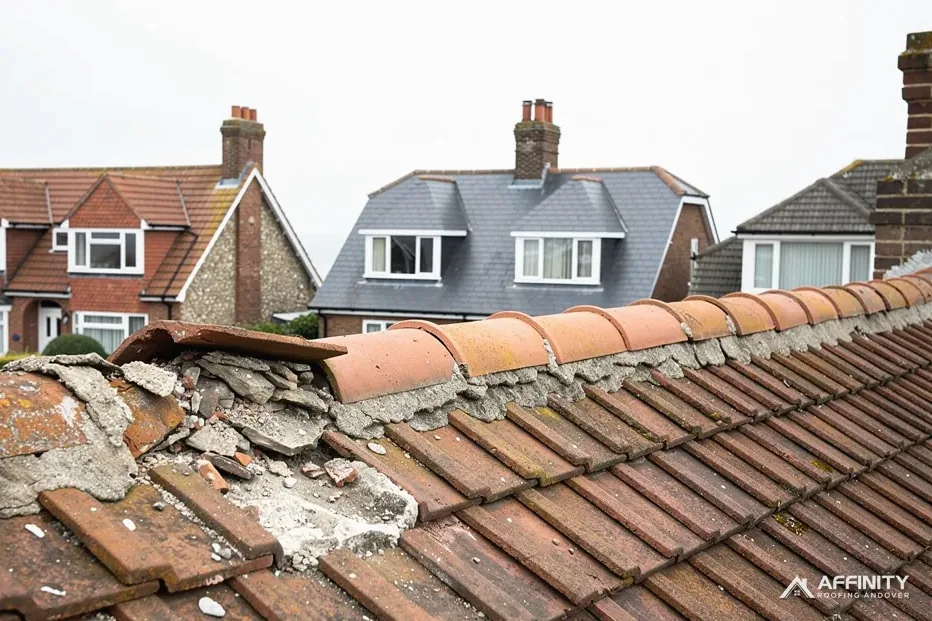
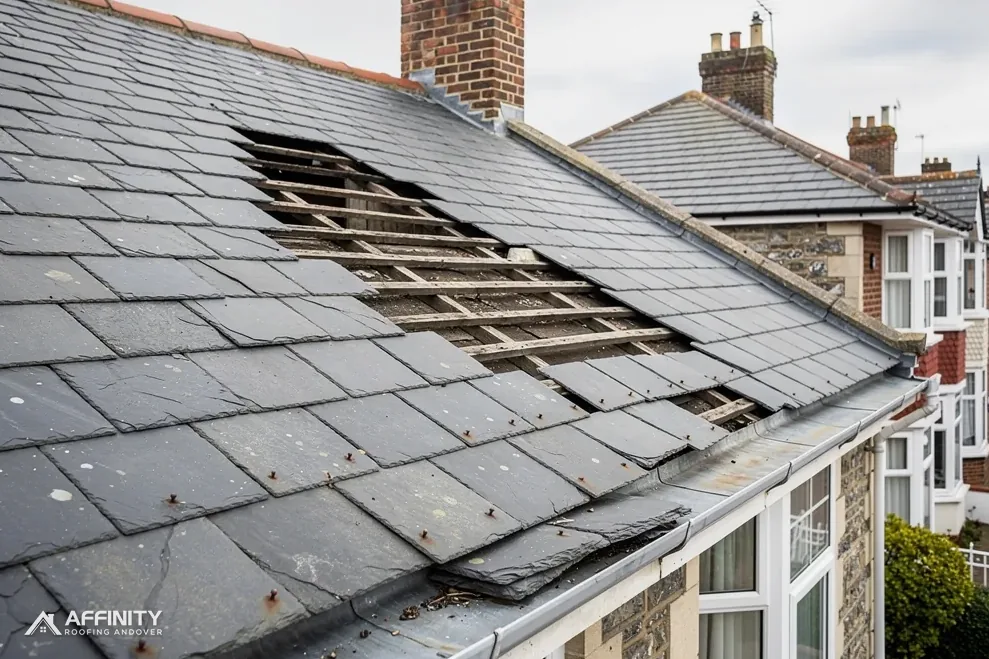
That is why a survey looks beyond the surface. A slipped tile is a visible fault, while damp timber at the eaves, a torn underlay or a blocked vent is not, and those are the usual reasons a covering fails early. Safety permitting, we raise some tiles, photograph the battens and underlay beneath, and study the eaves from inside the loft.
Older cottages sometimes have no underlay at all. If that is the case here, the survey says so, and the recommendation weighs a patch repair against a full re-roof with the evidence beside it, so the decision is yours and rests on what is actually there.
“Fovant has two listed hotels and a Grade II cottage within 500 metres of its centre.”
Source: Historic England list entries within 500 metres of Fovant
One licence per site: scaffold and hotel roofs in Fovant
Where a Fovant building stands on the road, the frame may need the public highway, and section 169 of the Highways Act 1980 requires a licence. Wiltshire Council grants it, and its page asks for one licence per site, applied for by the scaffold supplier on the MiPermit portal. Wiltshire Council's fee is £143.80 when more than three working days' notice is given and £164.70 when it is not, and each licence runs for 28 days.
On a hotel or inn, timing matters because a frame can hide a sign or block an entrance. A Wiltshire licence runs for 28 days from its start, so the programme is planned to fit inside that window, and we apply only once consent for a listed roof has arrived. A frame on ground the owner controls, such as a car park, needs no licence, which is often the easiest arrangement for a village hotel.
Our commercial roofing work is organised around trading premises. The survey asks about opening hours and deliveries, the price is one written total, and the clean-up leaves the entrance and the car park clear. Roof repairs cover the slipped tiles and failed ridges that every older building collects, and chimney repairs deal with pointing, pots and flashings, including a stack that serves a working fire.
The Environment Agency flood map used in planning puts Flood Zone 3 within roughly 250 metres of Fovant's centre. It says nothing about any single building, though it does justify a close look at gutters, hoppers and downpipes on a hotel or cottage every time.
Slate deserves a mention for the older cottages. HomeBuilding's published lives are 100 years or more for Welsh slate, 75 to 100 years for Spanish natural slate and 50 to 80 years for reclaimed Welsh slate. These are typical figures, not promises, and a slate roof that is tiring may still be patched with matching reclaimed pieces for some time before a full re-cover becomes the sensible answer. Our slate roofing work begins with a survey of which slates are sound.
A last word on money. Nothing is priced before the survey. National guides such as MyJobQuote put the average roof repair at around £650 in 2026, but they are guides and not our prices. What we write down is a single total for your own roof, with the frame, labour, materials and clear-up named inside it. If you are weighing a repair against a re-roof, the survey sets both out with the evidence, and the choice is yours.
Getting a Fovant roof sorted
Fovant roofs: hotels, the Chase and the one-licence rule
Can a Fovant hotel roof be re-covered while the hotel stays open?
Often yes, with planning. At survey we agree working hours, deliveries and the scaffold layout with the owner, and write them into the terms. A listed hotel needs listed building consent for any change to its character, so the work waits until Wiltshire Council has decided. A frame on the owner's own car park needs no licence at all.
What does Cranborne Chase change for a Fovant roof repair?
Very little for a repair. The National Landscape is advisory, and Wiltshire Council settles planning questions. A new dormer or other change of shape faces closer limits, so check with the council's planning team before drawings are made or material is ordered. We note the answer on your file and quote only once it is clear.
What does Approved Document C expect of a pitched roof in Fovant?
It expects a roof to keep precipitation out and not to suffer from interstitial condensation, which is moisture forming inside the construction. Every sheet, tile and section should be properly fixed, and cold deck roofs should be ventilated, with some leeway for small porch or bay roofs. We check each point at survey and photograph what we find for your records.
How many scaffold licences does one Fovant site need?
Wiltshire Council expects one licence for each site, with the scaffold supplier applying on MiPermit. Wiltshire Council charges £143.80 for notice of over three working days and £164.70 for less, and each licence lasts 28 days. A frame on ground you own needs none, and a hotel car park is often the simplest place for a frame to stand, provided guests can still reach the door.
Nearby areas
Book a Fovant roof survey before any plans
Give the address first, then a photo of the roof. Survey, consent check and single price come after.
10-year workmanship guarantee, in writing.