
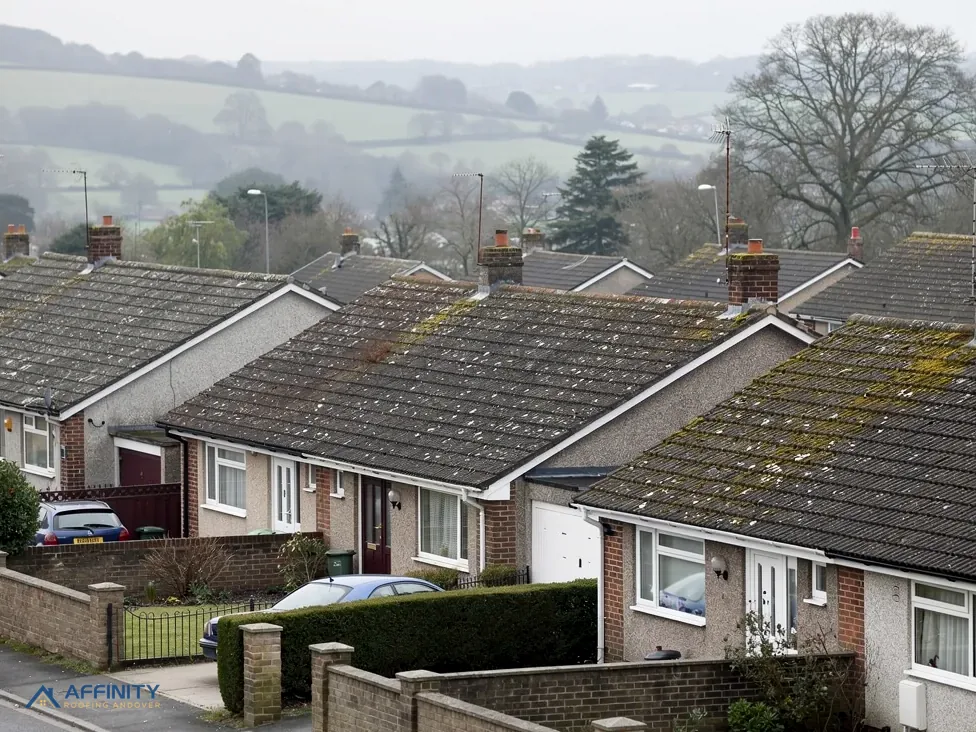
Roofers in Downton
A Wiltshire village with two Grade II* landmarks and a scheduled cross
Downton has 50 listed buildings within 500 metres of its centre. Our advice starts with a survey and photographs, and the repair we propose suits the roof you have.
Downton roofs, from Courthouse to Borough
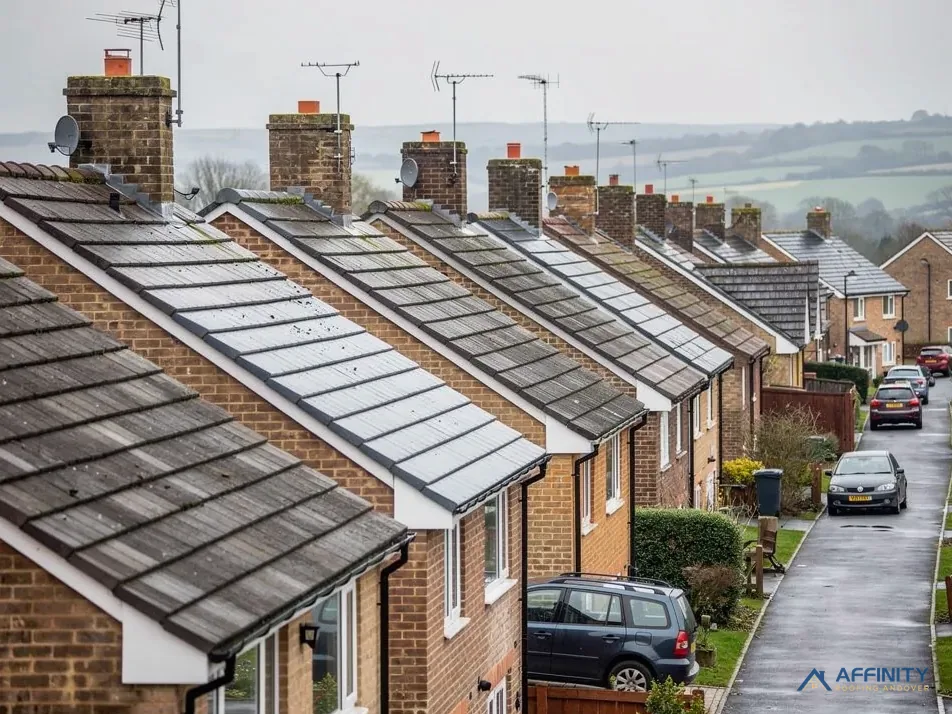
Grade II* landmarks
The Courthouse and The Downton Press the White Horse are both Grade II*, first listed on 23 March 1960.
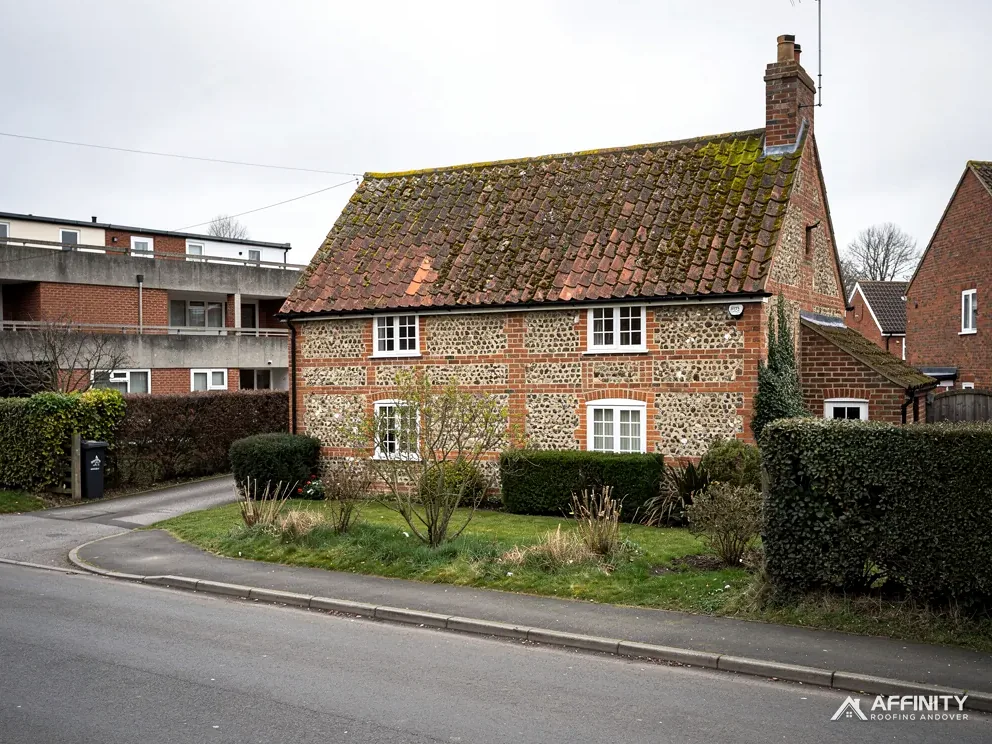
The Borough frontage
8 and 10, the Borough is listed Grade II, one of 50 listed buildings within 500 metres of the centre.
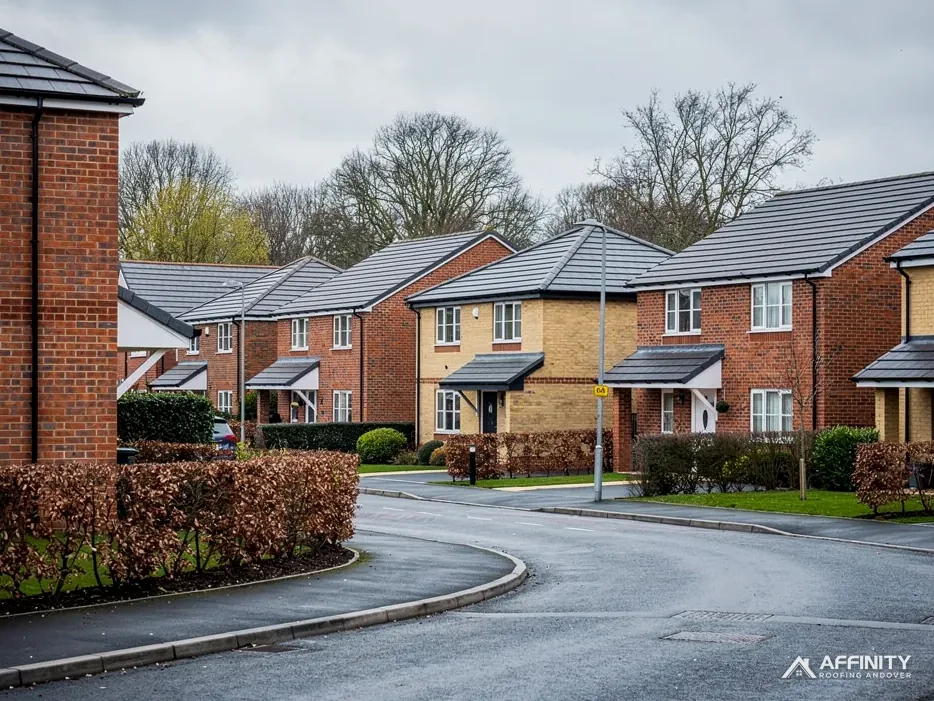
Around the Village Cross
The Village Cross is a scheduled monument within about 500 m of the centre, with the conservation area close by.
Downton between Redlynch and Alderbury
Redlynch lies to the east, Alderbury to the north, Whiteparish and Landford to the east, and Fordingbridge to the south. Salisbury is a little further north.
- Distance
- 24.9 road miles south-west of Andover
- Planning
- Wiltshire Council
The Downton roof report
Local editionDownton, WiltshireListings, a scheduled cross and the flood map
Fifty listed neighbours and one council: how roof work is settled in Downton
Downton lies south-west of Andover by 24.9 road miles and answers entirely to Wiltshire Council. This report covers its two Grade II* landmarks, the scheduled monument at the Village Cross, the flood-zone map and the MiPermit scaffold licence.
Downton's roofs belong to Wiltshire, not Test Valley
Downton lies in Wiltshire, so although Andover is the nearest large town for many of our customers, Test Valley has no part in a Downton roof job. Wiltshire Council is a unitary authority: one body is the planning authority, the highway authority and the owner of the Building Control service. At the 2021 Census the parish had 3,299 usual residents. For the householder a single council keeps the paperwork brief, and it makes our first question easy to state: which of Wiltshire's pages applies to this address?
Wiltshire Council runs its own Building Control service from Monkton Park, Chippenham. Its booking line is 0300 456 0113, open Monday to Friday, 9am to 4:30pm. The private route is a registered building control approver. Neither is needed for every roof job, and the survey is how we tell which of your jobs, if any, needs one.
The national yardstick is the Planning Portal's pair of limits. Keep the work below 25 per cent of the building envelope and below 50 per cent of the roof, and building control does not normally need to be asked. A handful of cracked tiles sits far inside both. A full slope may not. Weight and fire behaviour can override the percentages. Under Planning Portal guidance, a covering at least 15 per cent heavier than the old one, or one that would react differently to fire, needs Building Regulations approval. For the heavier case it points to a structural engineer or surveyor.
No percentage threshold appears in Wiltshire Council's published wording, so the Planning Portal's pair of limits is what a Downton job is measured against. If a job lands near a limit we take the matter straight to the Building Control team and give you the reply in writing, with the photographs, before a scaffold is ordered.
The photographs themselves come as a numbered set: the whole elevation, the ridge, the valleys and flashings, a close view of the fault, and the layers beneath, shown wherever a tile can safely be lifted. Each carries a one-line note. When the set is read in order it explains the repair without needing a roofing glossary, and it is what the council sees as well if a question goes to Chippenham.
Flat sections get one further test, and it is a numerical one. BS 6229:2025, the current code for flexible-membrane flat roofs, keeps a minimum finished fall of 1:80, and IKO advises designing for 1:40 so that the finished roof still drains once the work settles. A garage or extension roof in Downton is therefore measured as well as photographed, and the fall goes into the written report.
The Courthouse, the White Horse and the Village Cross
Downton's centre is crowded with listings. Historic England's list holds 50 listed buildings within 500 metres of the village point. Two are Grade II*: The Courthouse (list entry 1023905) and The Downton Press the White Horse (1300702), both first listed on 23 March 1960. Another is 8 and 10, the Borough, listed Grade II (1023865). With that many listed neighbours, a scaffold can end up tied to or standing against a building whose owner has a say in how it is done.
Listed buildings keep the permitted development rights that houses have, but any work that affects their character also needs listed building consent from Wiltshire Council. On a roof we start with repair in like materials, photographed close up before and after, with a written note of the covering as it is, so the council sees what would stay and what would change. Consent comes first and the scaffolding second, and we sequence a job that way round so no crew is booked against a decision that has not been made.
The Village Cross is a different case. It is a scheduled monument within about 500 metres of the centre (list entry 1005651), and works to it need consent of their own, given by the Secretary of State. A house roof in the village is not the Cross, but we keep scaffold, materials and skips clear of it and say so at the survey if a job is near enough to matter. Our guide to listed building roof repairs covers the consent routes in more detail.
The Downton conservation area lies within about 0.75 km of the centre, and Wiltshire Council is where the mapped boundary comes from. A dormer there is a planning question for the council. Before the survey we read the list entry for your address, since the entry covers the whole building and not only the face you see from the street, and its description can mention roof features worth protecting. Wiltshire Council also keeps Article 4 areas, so we ask the council whether one covers your road and do not assume the answer either way.
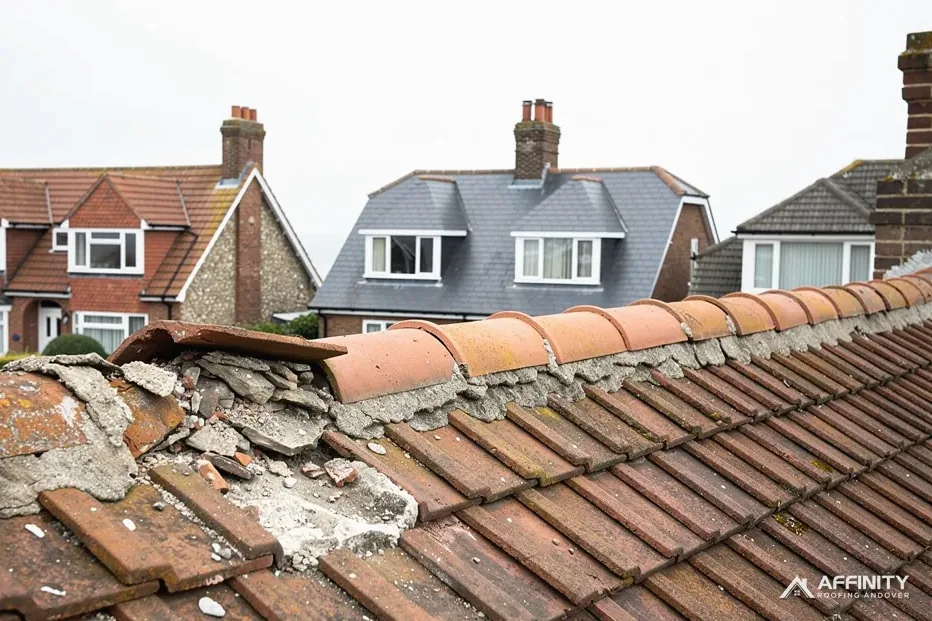
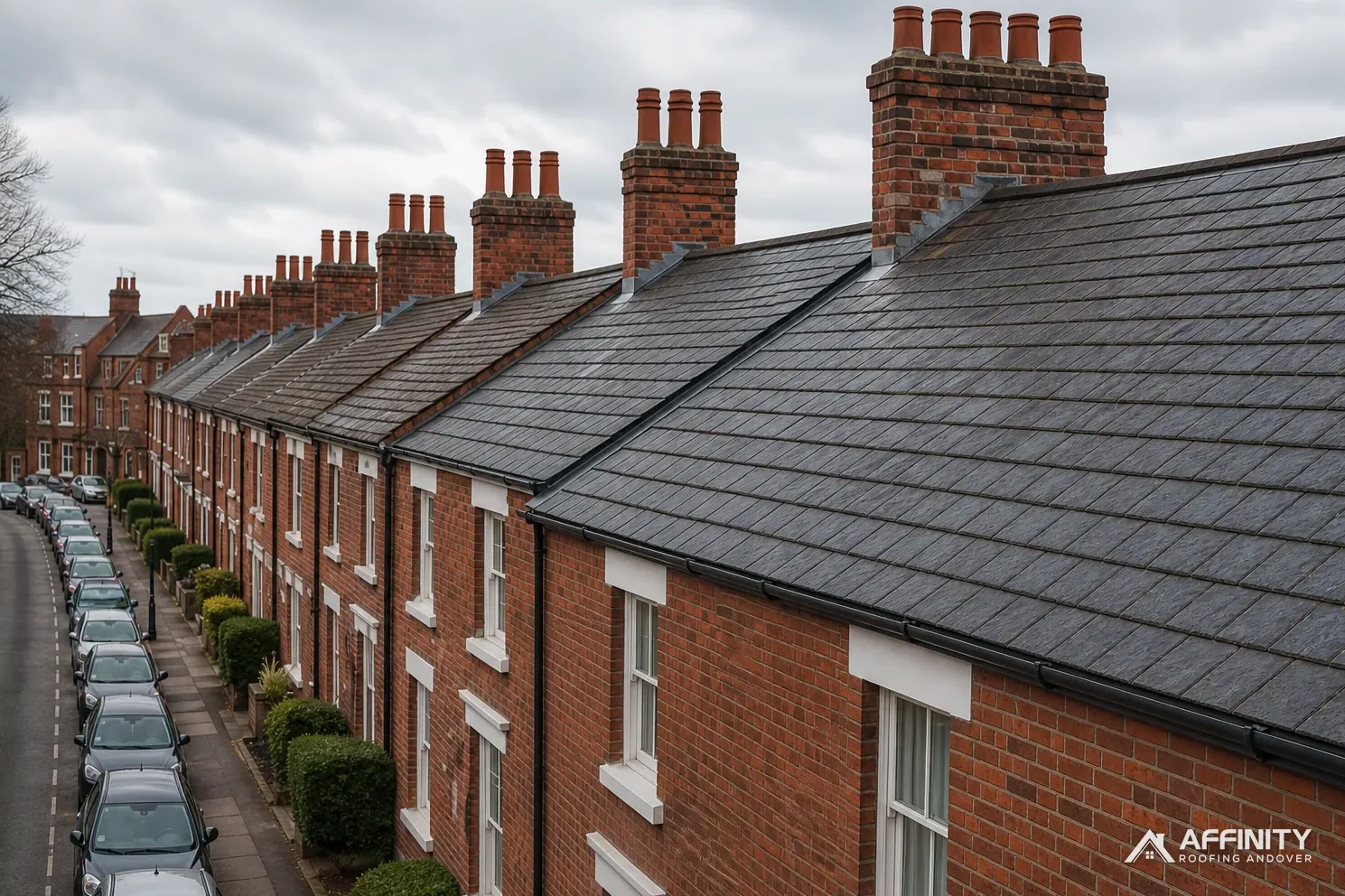
None of this stops routine repair. With fifty listings so close together, a repair in matching material is the normal starting point here. A slipped tile, a split ridge or a failed flashing is dealt with under roof repairs, and a survey with photographs comes first on every street in the village.
“In Downton one council, Wiltshire, decides the planning, licenses the road and inspects the work.”
Flood Zone 3 at the centre, and the MiPermit portal
On the Environment Agency's Flood Map for Planning, Downton's centre sits in Flood Zone 3. The zone describes ground rather than one house, and tiles are fixed the same way whatever it says, so only the drainage gets extra attention. What the map does tell a roofer is that rainwater deserves attention. On a Downton survey we follow each downpipe to where it discharges and look at the gutters and outlets as well as the slope, and our guttering, soffits and fascias page sets out what a thorough check includes.
When a house fronts a public road, the poles and boards occupy the highway, and Wiltshire Council licenses that under section 169 of the Highways Act 1980. Wiltshire Council's page is specific: one licence is required per site, and the company supplying the scaffolding or installing the hoarding must apply through the MiPermit portal. The fee depends on notice. Wiltshire Council charges £143.80 where notice is longer than three working days and £164.70 where it is shorter, and every licence is valid for 28 days.
More conditions follow. Wiltshire wants proof of £5 million public liability insurance for the scaffold. Hoarding is licensed separately from scaffold, and a marked parking bay needs its own suspension besides. Unlicensed scaffolding attracts a late fee of £292.50. A parking bay suspension simply means the bay is cleared of vehicles for the days the scaffold or a skip occupies it, and it is requested separately. We therefore agree dates with you before the scaffolder lodges anything, and Wiltshire Council's licence fee is part of the single total you are quoted, alongside the hire and the waste carted away.
A 28-day licence suits most re-roofs, but a job that may run over deserves a conversation at the survey, because the licence is for a fixed period. We ask the scaffolder how long they expect to need and set that against the tile and labour programme. On a village street a short note to neighbours about the dates is usually welcome, and we are glad to draft one. Where a delivery lorry needs the same kerb as the scaffold, the two bookings are made to suit each other, and you hear which day is which.
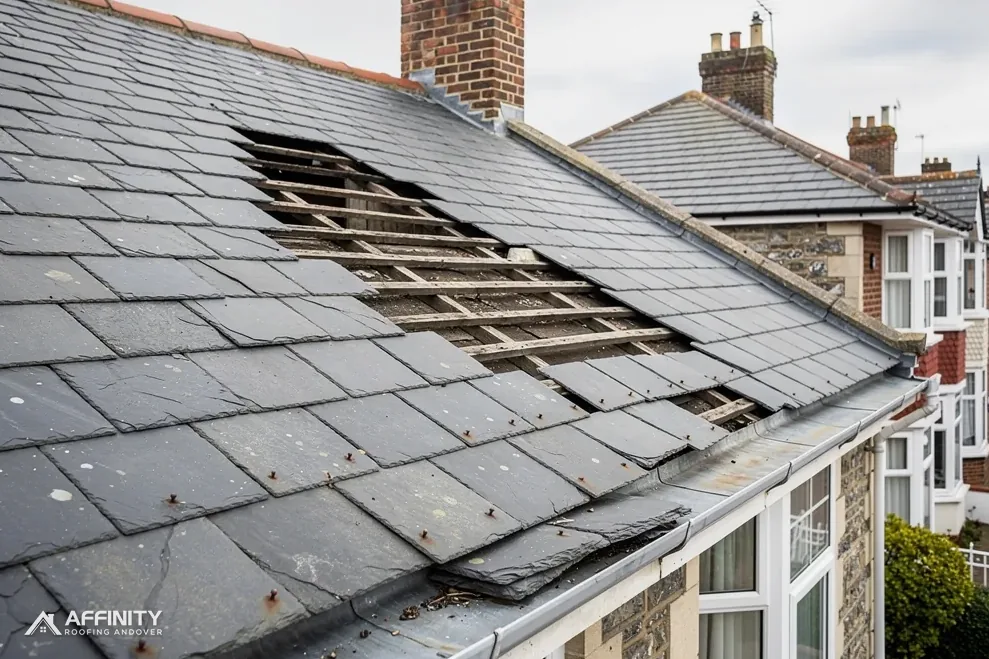
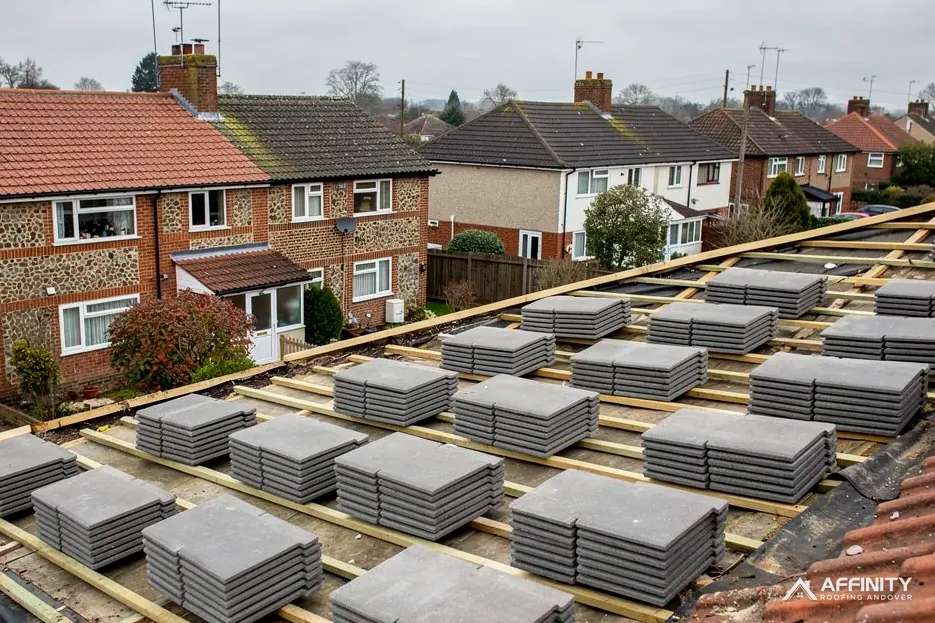
For the pitched work itself, the survey decides the sequence, whether it is slate roofing on an older house or a plain tile slope on a newer one. The first visit never changes: photographs, an explanation in plain words, and one written price after it, with the Wiltshire consent route named beside it.
Which service does your Downton roof need?
What to settle before a Downton roof job starts
Does the Village Cross scheduled monument affect a roof job nearby in Downton?
Consent for a scheduled monument covers works to the monument itself, not a house nearby. We keep scaffold, materials and skips clear of the Cross and tell you if a job is close enough to matter. Where a house is also listed or in the conservation area, Wiltshire Council's planning team answers the consent question and we pass its reply on.
What decides the MiPermit fee for a Downton scaffold?
Notice decides it. Wiltshire Council charges £143.80 where notice exceeds three working days and £164.70 where it is shorter, and a licence stays valid for 28 days. Wiltshire expects the scaffolding company to apply through the MiPermit portal, with £5 million public liability cover for the scaffold. We agree your dates first, so that nobody pays for notice against the wrong week.
The centre of Downton is in Flood Zone 3: does that change a re-roof?
The Environment Agency's Flood Map for Planning describes land and not a particular house, so a covering is repaired or replaced as it would be anywhere. It is a reason to be thorough with gutters, hoppers and outlets, and we photograph anything blocked or leaking on every Downton survey so you can see it for yourself.
Do I need building control approval to re-tile a Downton roof?
Sometimes. On the Planning Portal's limits, work below 25 per cent of the building envelope and below 50 per cent of the roof is not normally in need of an application, whereas a covering 15 per cent or more heavier is. Wiltshire Council's own Building Control service takes it, or a registered approver does, and the route is confirmed at the survey.
Around Downton, from Redlynch to Alderbury
Get your Downton roof surveyed
Send your address and a clear picture. We survey, check the consent route and give one written price.
10-year workmanship guarantee, in writing.