The short answer
Often partly. The opening sash, and sometimes the glazing, can be taken out and replaced from inside the room. The frame is fixed to the rafters and tied into the roof covering by flashing, and that metal surround can only be reached from the outside. So a full swap of the whole window usually needs someone on the roof, even if most of the work is done below.
What can be changed from the room
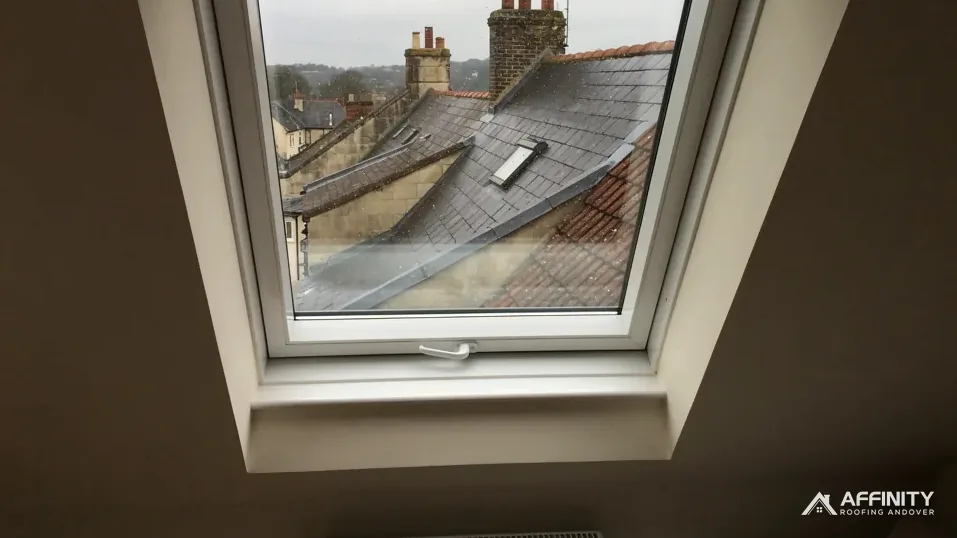
A roof window is built in layers. The sash is the part that opens, carrying the glass. It hangs on hinges fixed to the frame, and in many designs it can be lifted off its hinges from inside. A sash swap, or a glass swap on a sash, is the sort of job that can happen from the room with the roof left undisturbed.
Fittings are also reachable. Handles, opening bars, the inner lining and the blinds all sit on the room side, and so do hinges and balances in some designs. Replacing a worn handle or a tired balance does not mean touching the roof at all.
That is the good news for anyone who dreads scaffolding. When the problem is a clouded glazing unit or a stiff opening mechanism, the repair is often an indoor job done with dust sheets and care, and the roof stays as it is. Our answer on replacing glass in a roof window explains how a sash or unit swap is judged.
Whether it is possible for your window depends on the model and age, so the first step is to find the label on the frame.
The flashing is still on the outside
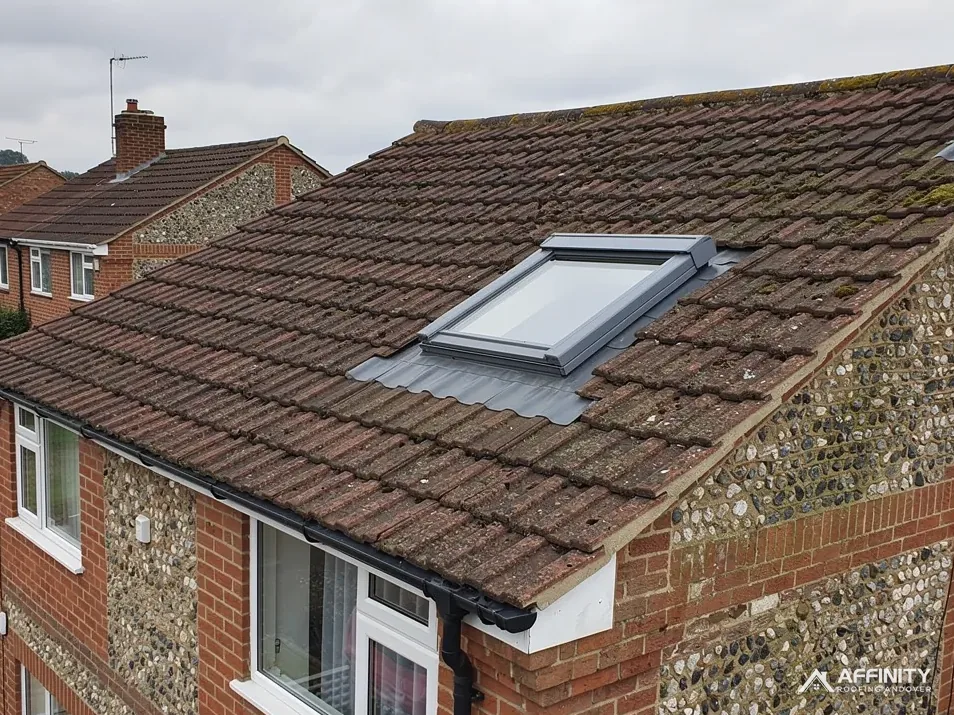
The flashing is a set of metal pieces, usually lead, aluminium or a coated alloy, that wrap around the frame and lap over the tiles or slates. Its job is to carry water around the window and onto the roof covering. It is fixed on the slope itself, so any work on it means getting onto the roof or reaching it from a tower or a ladder.
This is where interior-only claims can mislead. A window whose frame is sound and whose flashing is sound can be re-sashed from inside. A window with a leak at the head, a lifted apron or perished lead cannot, because the cause sits outside the room. The surround matters a great deal, and it is the first thing we check.
If the whole window is coming out, the frame is released from the rafters, and the flashing and surrounding covering have to be lifted to let it go. A new frame then needs a new flashing set, and the covering is relaid around it. That is outside work, however carefully the rest is planned.
Access, and why the plan matters
Even a partly indoor job has a few things to settle first. The ceiling opening must be big enough to bring the old sash out and the new one in, and the room needs protecting. A window above a staircase or a bath is harder to reach from inside than one above an empty floor, and may call for a platform or a tower.
The roof side needs its own access plan. A window low on a gentle slope can be worked using a ladder plus a roof ladder across the slates, while a high one points to scaffold, as our answer on fitting a roof window without scaffolding sets out. A pavement or road below is a further question, because scaffold there must be licensed under the Highways Act.
Weather matters as well. With a sash lifted off, only the frame stands between the room and the sky, so an indoor swap is planned for a dry spell and the opening is closed up before work stops. That is the same principle we apply to any open roof: the opening stays small, and it is sealed each time we leave. If the weather turns, the sash goes back on and the job waits.
Is it worth doing from inside?
The case for an inside-out swap is simple: less outside work, less disruption to the roof covering, and often a smaller bill. The case against it is that it can hide a problem. If the window has leaked at the edges before, a new sash in an old frame and old flashing only moves the fault along.
For that reason we begin with the outside as well. Our survey covers the flashing, the tiles or slates around the window, and the sealant lines, and we check the timber around the lining from the loft for dampness. You see photos of what we find, and a plan that sets out the inside job and the outside work separately in practice, though you receive one total price.
A window that is being fully replaced also needs its new glazing to meet the Part L value for roof windows, which is 1.4 or Window Energy Rating Band B. Our like-for-like roof window replacement page covers that route. For the whole range of work, see roof windows and skylights.