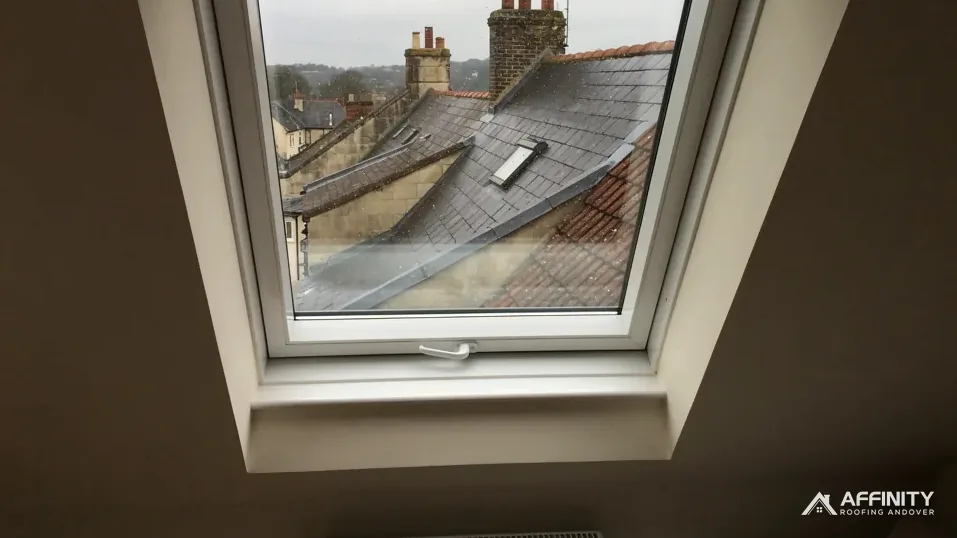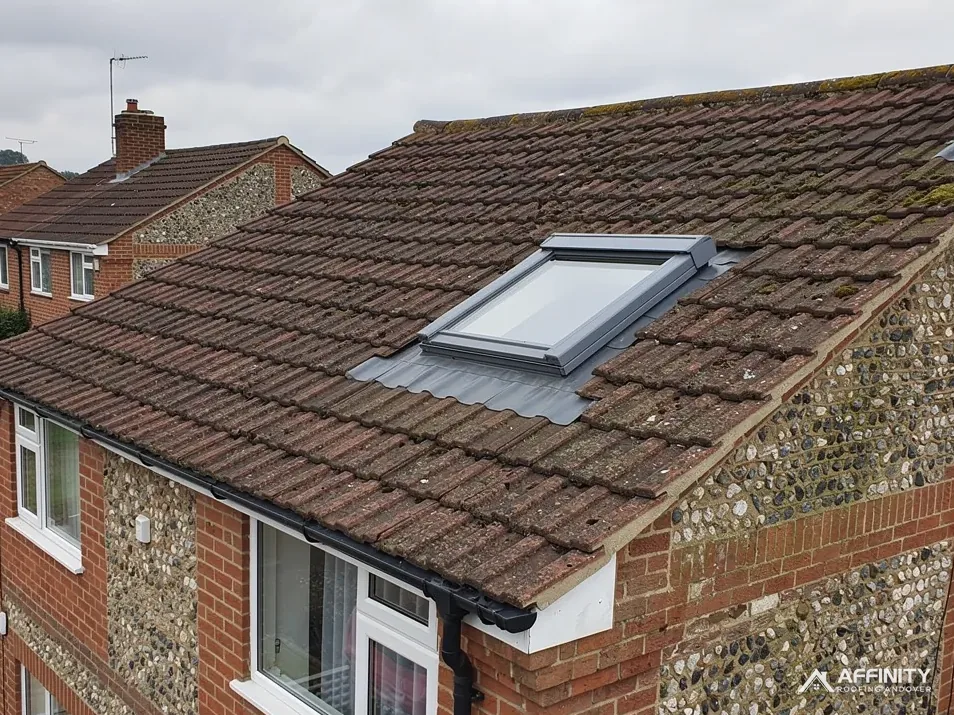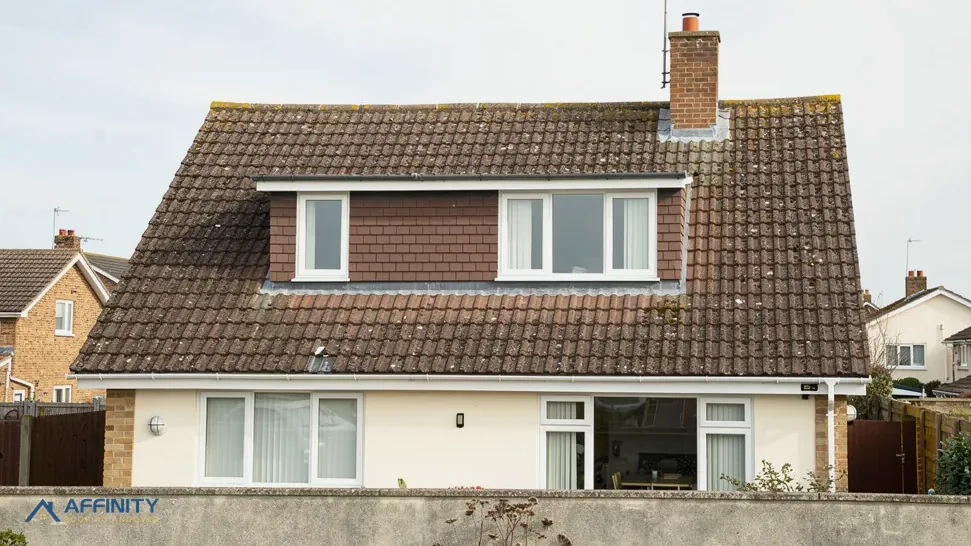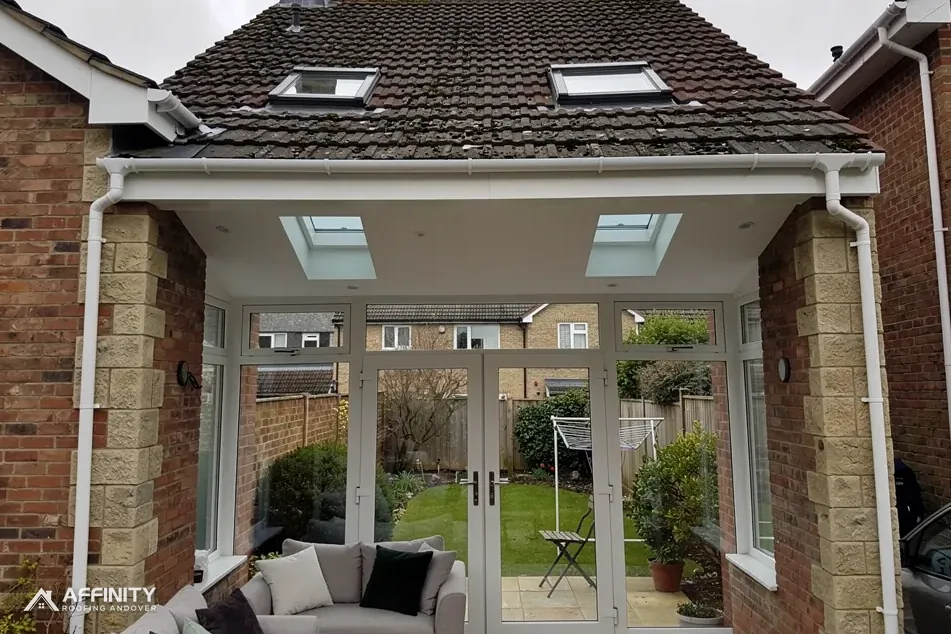
The short answer
Mist or droplets between the panes mean the seal of the double-glazed unit has failed and moist air has got into the gap. Wiping will not clear it, because the moisture is sealed inside. The usual fix is a new glazing unit, or a new window if the frame is also tired. Part L asks 1.4, or Window Energy Rating Band B, of replacement roof windows.
How a sealed unit fails
A double-glazed roof window has two panes held a small distance apart by a spacer bar, with a seal running right round the edge. The gap holds dry air or gas, and it stays clear because the seal keeps the outside world out. Over the years sun, frost and the pull of temperature changes work on that seal, and eventually it lets go at one point.
Once it has, damp air moves in and out of the gap as the weather changes. When the glass cools, the moisture condenses on the inner faces of the panes, so you see a cloud or a line of droplets that comes and goes with the day. The marks are between the layers of glass, so no cloth can reach them.
It is a gradual fault. The window still keeps the rain out, and it still opens, but the view clouds and the insulating gap has stopped doing its job. Some staining or a salt-like film can build up on the inside of the panes over time, which is why it is better not to wait for it to worsen.
Misting between the panes, or condensation on the room side
Before ordering anything, check which surface is wet. Run a finger over the glass. If the moisture is on the room face, it is ordinary condensation: warm indoor air meeting a cold surface. That points to humidity, ventilation or a cold bridge at the frame, and our answer on condensation on roof windows covers the causes and fixes.
If the moisture is trapped between the panes, wiping does nothing, and the fault is the seal. If you see water on the outer face, that is weather and not a fault.
It also helps to know whether the mist is in every pane or only one window in a row. A single window failing suggests an old or faulty unit, and several failing in step suggest they were fitted or made at the same time. In both cases the cure is replacement. Drilling the glass and fitting vents, or adding anti-mist treatments sold online, rarely lasts and does not restore the sealed gap.
Replacing the glazing unit
The sealed unit is a separate part that can be made to size and swapped, so a misted window does not always mean a whole new window. The sash is opened or removed, the old unit is taken out of its frame, and a new one is fitted with its seals and fixings. That keeps the existing frame, the flashing and the lining, and avoids disturbing the roof covering.
A reglaze pays off only where the frame is sound. A rotten sill or a leaking surround makes a new unit a poor investment, since the next fault is already waiting. Our answer on replacing the glass in a roof window explains how a reglaze compares with a new frame and what to ask for.
Check that the new unit is the right type. Roof windows are glazed with units made for the angle and the weight of the sash, and a glass supplier needs the make and model, or the stamped details on the old unit. Measure, photograph the label on the frame, and send both to us before any glass is ordered.
Part L and the figure to ask for
Replacement glazing is a thermal question as well as a clear-glass one. Approved Document L (Table 4.2) gives the value for new or replacement windows in existing dwellings: roof windows get 1.4, or alternatively a Window Energy Rating of Band B. Rooflights, which are different products, have 2.2. Do not let anyone mix up the two.
Under the Building Regulations 2010, roof windows are not themselves classed as thermal elements, which is one reason the rules for them sit in the window row of the table. Whether a unit swap alone triggers the rule for a replacement window is for your building control body to say, so ask them before work starts. Written details of the new glazing, with its stated performance, are the thing to keep.
We look at the misted window from inside the loft and from outside, check the frame and the flashing, and show you what we find. If glass alone is the right answer, that is what we recommend; if the frame is the real problem, we explain why. Our roof windows and skylights page covers the full service.