You are about to spend a large sum on a house, and the roof is the part you can least easily judge. It is high, hard to see, and often hidden behind a loft hatch full of the seller's belongings. Yet a failing roof can cost more to put right than a new kitchen, and it tends to come to light in the first wet winter after completion.
This guide is for buyers and sellers around Andover and the Test Valley villages. It sets out what you can check at a viewing, what a general survey will and will not tell you, when a separate roofer's inspection is worth having, and which documents to ask for. It also covers the extra points that apply to new builds, converted lofts and homes with spray foam insulation.
Costs quoted are typical UK figures from national guides, not prices from us. For how we inspect a roof, see our Andover roofing page; for the owner's side of upkeep, read the roof maintenance checklist.
Why a house survey is not a roof inspection
A RICS survey looks at the whole property: walls, floors, damp, services, drainage and the roof among them. The surveyor is not there to climb onto the roof or lift tiles, and a survey covers a great deal in a short visit. The result is that the roof is often reported from the ground and from the loft hatch, with a line of caution where something looks doubtful.
What that means for you
If the report says the roof covering is ageing, has been patched or shows signs of movement, treat that as a request for a closer look, not a verdict. The survey is not a roof inspection, and a remark such as "recommend further investigation by a roofer" is the surveyor telling you where their own visit ended.
The mortgage valuation
A mortgage valuation is different again. It is for the lender, not for you, and it asks whether the property is adequate security for the loan. It does not tell you what the roof needs.
When to commission more
Ask a roofer to inspect if the survey flags the roof, if the house has an old covering, if there are signs of past leaks, or if the seller cannot say when it was last done. Doing so before exchange keeps all your options open, including asking for a price reduction.
A roofer can also split the repairs into those that are urgent and those that can wait, which helps you plan the budget for the first year of ownership, and sets the roof in proportion to the rest of the purchase.
What a roofer inspects and what it costs
A roofer's inspection is narrower and deeper than a house survey. It checks the tiles or slates, then the ridge and hips, the valleys, the flashings and the chimneys, then the gutters and fascias. From inside, it looks at the underside of the roof: battens, rafters, underlay, ventilation, insulation and any sign of water.
What you should get back
The useful result is a short written report with photographs, a clear statement of what is wrong, and one total price for any repair. Photographs let you show the seller or the solicitor what was found, and let a second roofer check the findings.
Typical cost
MyJobQuote (October 2026) gives an average roof survey cost of around £300 as a typical UK range, with its table showing bands from £100 to £200 and £200 to £350. Those are national figures and a survey for a particular house depends on its size and access.
Doing it before exchange
Booking the inspection while the sale is in progress means that anything found can be priced and discussed with the seller. Booking after completion means you pay for it yourself. A good roofer will give an honest view if the roof is fine, and that is also useful to know.
You can ask for a written summary of the repairs that are urgent and those that can wait, so that you and the seller can agree what is fair. Our guide to choosing a roofer covers how to compare firms and quotes.
What to look at on the viewing
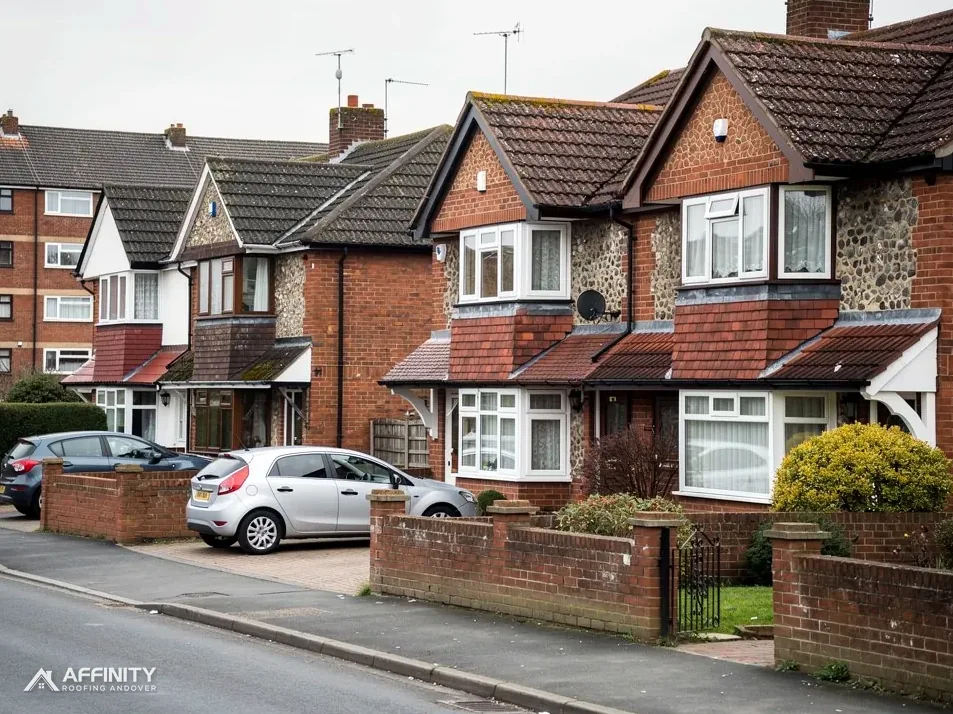
You do not need to climb anything. A few minutes outside, ideally in daylight and after rain, tell you a good deal. Stand back on the pavement or in the garden and look along each slope.
From the outside
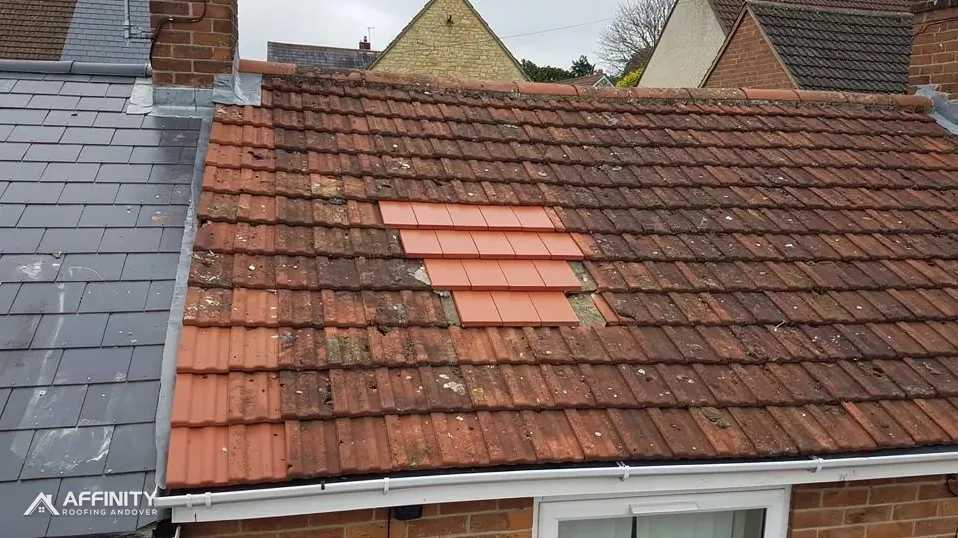
Look for a ridge line that sags, slipped or missing tiles, patches of different tile colour, and heavy moss. Check the chimney for cracked mortar or leaning, and the lead or cement fillets at the junction of roof and wall. A chimney with a plastic sheet or a bucket in the loft beneath it tells its own story. Look at the gutters: stains down the wall below show where water has been overflowing.
From inside
On the top floor, look at the ceilings for brown rings, and in the corners of the room for patches of mould. In the loft, if the seller allows, look for daylight through the covering, dark or wet timber, and any smell of damp. Check what insulation is there and whether it blocks the eaves. Look at the rafters and battens for dark patches or a fine powder of wood dust, and the inner face of the roof covering for drips and rust on nail heads.
How long coverings last
Age helps you judge what to expect, with typical ranges, never promises. HomeBuilding (September 2025) gives clay tiles as 60 to 80 years and plain concrete tiles as 40 to 50. Welsh slate is put at 100 or more years. Lead flashing, according to MyJobQuote, can last for over 80 years. Felt flat roofs are far shorter, at 10 to 15 years in HomeBuilding and 10 to 20 in Less.
The point of these ranges is to judge how much life might be left, which a roofer can then confirm with a closer look. A roof that is old but sound is a better buy than one that is younger but badly detailed, and only an inspection tells the two apart.
Questions for the seller and paperwork to ask for
The seller will know things a survey never sees. Ask in writing through the solicitors, so the answers are on record.
Re-roof dates and who did them
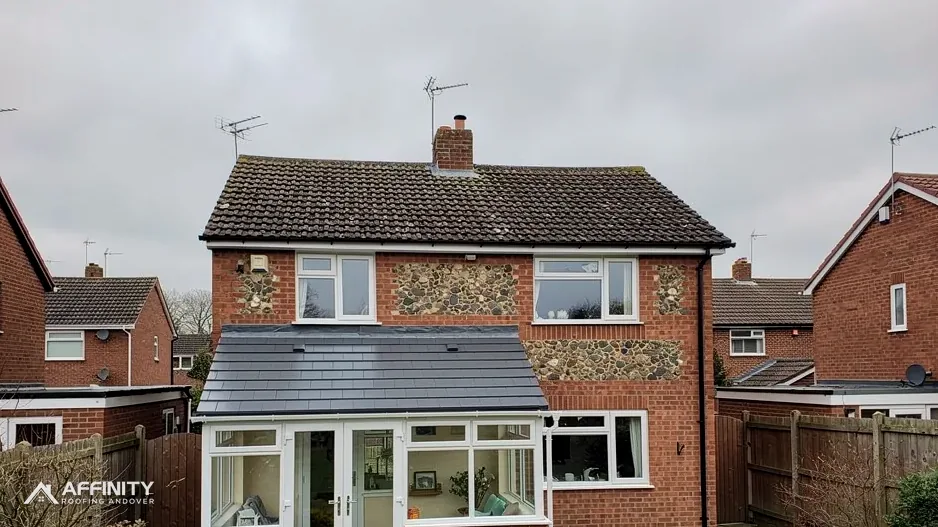
When was the roof last re-covered or repaired, and by whom? Ask for invoices, the written price, photographs and any guarantee papers. A re-roof can fall under the Building Regulations, depending on how much was done, so ask whether approval was needed and whether a completion certificate was issued.
Loft, chimney and extension work
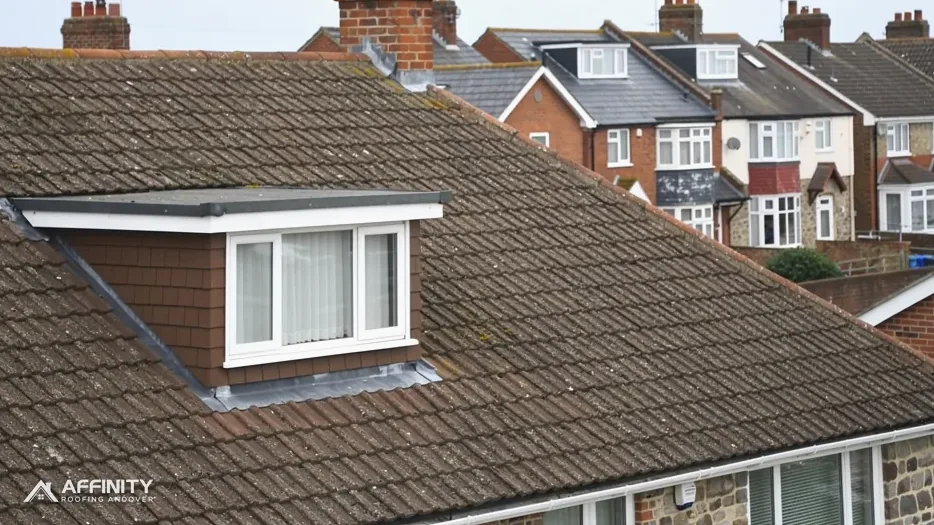
If the loft has been converted, ask for the approval papers. On a two-storey house, a converted loft will generally have needed a protected stair for fire escape, so ask to see how that was dealt with. If a chimney breast has been removed, approval always applies, so ask for the paperwork and whether a party wall surveyor was involved.
Spray foam and insulation
If spray foam has been applied to the underside of the roof, say so to your surveyor and lender. In March 2023 RICS reported concern among lenders in certain sectors, equity release among them, and its consumer guide tells owners to check with their mortgage provider. Foam over the timbers also hides them from view and from inspection, according to RICS.
Asbestos
HSE says a building constructed or refurbished before 2000 should be treated as one that may contain asbestos. Ask whether sheeting, soffits or garage roofs have been tested or removed, and who did the work.
Keep every reply, because a gap or a vague answer is itself information. Also ask whether there have been any leaks, claims on the buildings insurance, or disputes with neighbours about the roof, a boundary or a shared chimney.
New builds and warranties
A new house has a new roof, and that is reassuring, but it is not a reason to skip the checks. Roof defects in new homes are real, and the question becomes who is responsible for putting them right.
NHBC Buildmark cover
NHBC's Buildmark cover has two stages. NHBC describes a builder warranty and NHBC cover through the first two years from completion, then eight years of insurance against defects in specified parts of the house. Ask which warranty the house has, when it started and what it excludes, then read the policy.
Snagging the roof
Before you move in, walk the outside with a note pad. Look for ridge tiles that are not bedded evenly, gutters that fall the wrong way, exposed fixings and gaps at flashings. A roofer can do a snagging inspection with photographs if you want evidence to send the builder.
Other cover
Not every new home is under NHBC cover; some have a warranty from another provider. The seller's solicitor should supply the papers, and the title documents should show what is in place. If there is no cover at all on a recent build, ask why. A missing certificate is a question for your solicitor before exchange, not after.
Extensions on older houses
An extension added to an older house is not a new build for warranty purposes. Ask what paperwork exists, whether Building Regulations approval was given, and whether the roof structure was inspected by building control during the work.
Turning findings into a fair deal
Once you have the survey, the roofer's report and the seller's answers, you can decide what to do. There are usually three routes: go ahead, renegotiate the price, or walk away. The roofer's report gives you the evidence to choose.
What repairs may cost
For scale, Which? (November 2025) gives £7,000 to £21,000, excluding VAT, for a complete re-roof of a three-bedroom house of average size. HomeBuilding (September 2025) puts a three-bedroom semi with plain concrete tiles at £10,000 to £15,000 including labour, scaffolding and insulation. The two sources differ widely, which shows how much depends on the house. A smaller repair is a very different figure, with MyJobQuote giving an average of around £650 for a roof repair.
Asking for a reduction
If the roof needs work, send the seller the roofer's report and a request for a price reduction or for the work to be done before completion. Written evidence and one total price are far more persuasive than a general complaint.
Planning the first year
If the roof is sound but old, use the report to plan. A roofer can say what will need attention in the next year or two and what is fine for longer. That turns a worry into a budget line. Keep the report with the deeds, because it will be useful again when you sell.
Once you own the house, use the maintenance checklist to keep it that way, and tell us when you are ready for a survey.