A roof does not ask for much. It sheds water, and as long as the covering, the flashings and the gutters stay sound, it carries on doing so for decades. The trouble is that it fails quietly. A slipped tile lets in a little water, the water soaks a batten, the batten softens, and a year later there is a stain on the bedroom ceiling and a bill that could have been a lot smaller.
A short look twice a year, plus a check after any storm, catches almost all of it early. This guide gives you that routine: what to look at from the ground, what a loft inspection should find, and the jobs that need a roofer and a scaffold rather than a ladder and a brave afternoon.
The advice suits homes around Andover and across the Test Valley, whatever the roof is made of. If you would like a professional check, our Andover roofing page explains how a survey works, and the guide on roof checks when buying a house covers the same ground for buyers.
A walk round the house, twice a year
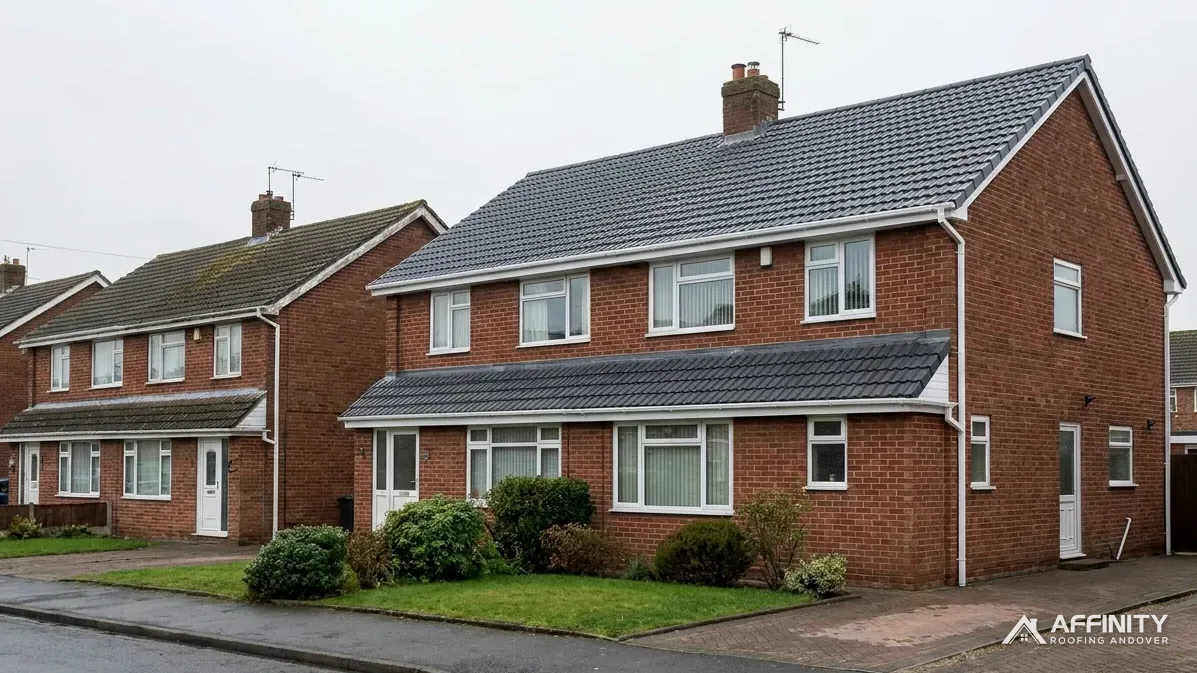
Pick two dry days, one in spring and one in autumn, and walk all the way round the house. Take binoculars or a phone with a zoom, because most of what you want to see is a long way up. Stand back until a full slope fits in view, and sight along each row of tiles instead of studying single tiles.
What to look for
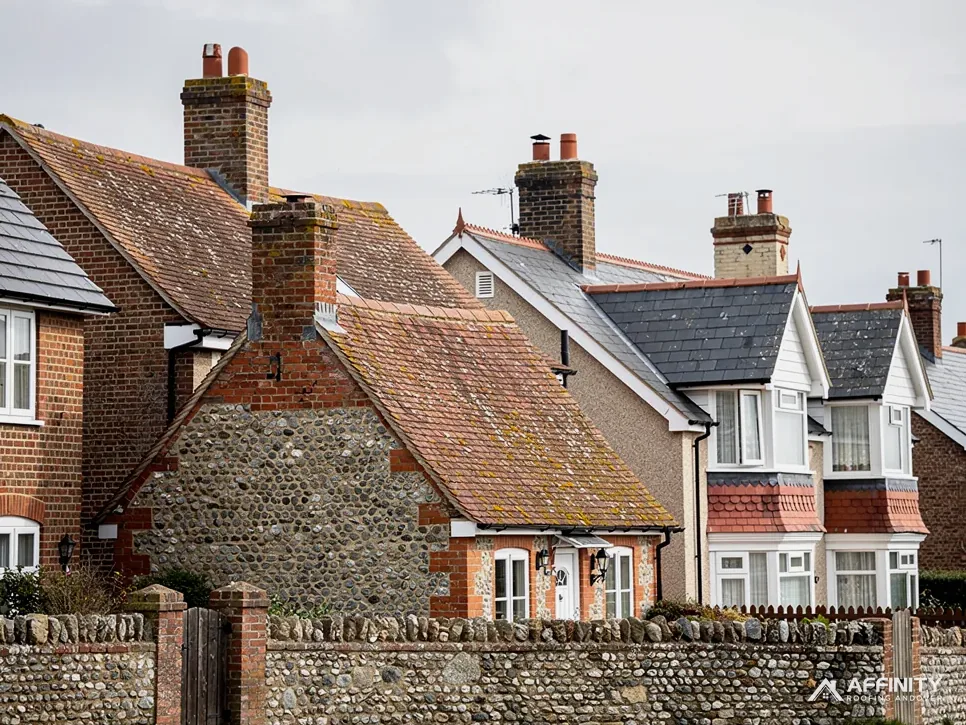
You are looking for anything that has changed. A tile that has slipped or cracked, a gap in a course, a ridge tile that sits at an angle, a dark patch where moss has taken hold, or a dip in the line of the roof. Look at the verge, the sloping edge at the gable end, for loose mortar or a tile that has moved.
Chimneys and flashings
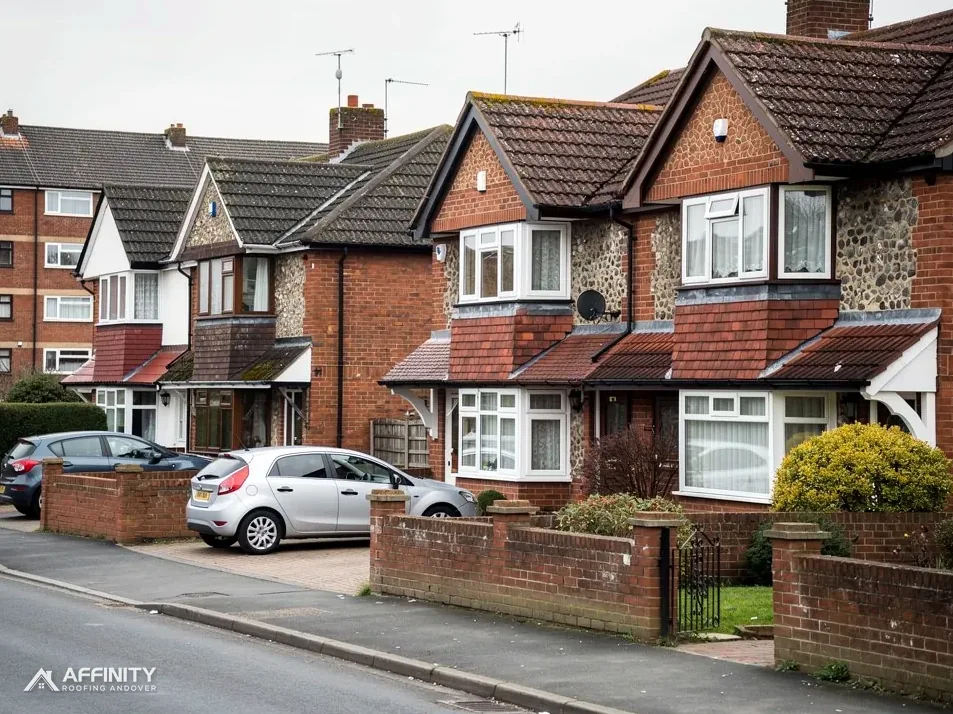
Check the chimney stack for cracked or crumbling mortar, a leaning pot and loose flaunching, the mortar cap on top. Look at the metal or cement strips along the junction of roof, wall and chimney. These are the flashings, and they are common places for water to get in.
Take a photograph
Take a dated photo of each slope from the same spot every time. When you compare two years of pictures, small changes show up that the eye misses.
Keep the photographs in one folder with the date in the file name. If you ever need a survey, or a claim, the sequence shows how the roof looked before the problem began.
Stay off the roof itself, and never lean a ladder against the gutters. A loose tile or a weak batten gives way under a foot, and the fall is the part that does the damage.
Spring: gutters, flashings and ridge lines
Spring is the time to see what winter did. Rain, frost and wind work on the weak points of the roof, and the evidence is usually at the edges: the gutters, the ridge and the flashings.
Gutters and downpipes
Look for sagging, sections that have pulled apart at the joints, and stains on the wall beneath. During heavy rain, watch where the water goes: it should run into the gutter and down the pipe, not over the front. An overflowing gutter soaks the timber behind it, starting with the fascia board. Which? (November 2025) prices clearing the gutters of a whole house at £75 to £350, excluding VAT.
Ridge and hip tiles
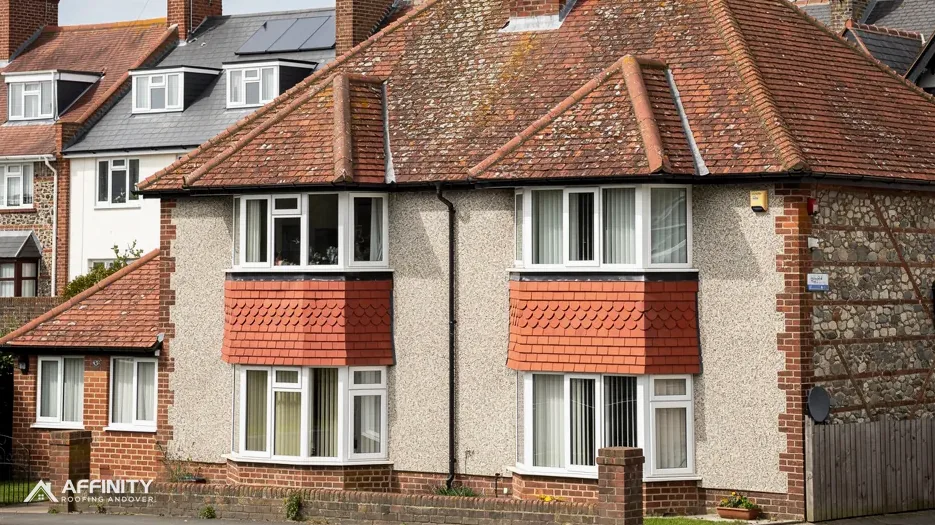
The ridge is the top edge where two slopes meet, and hips are the sloping edges at a corner. Look for gaps in the mortar bedding and for tiles that have shifted. Mortar bedding is not relied on alone to hold them, and modern dry-fix systems use clips and fixings that meet the BS 8612 test specification.
Lead and flashings
Lead flashings can last for over 80 years, according to MyJobQuote, but they can lift, split or be pulled by movement. Look for gaps and for lines of sealant used as a quick fix, which tend to fail.
Moss and lichen
A little moss is common on shaded slopes. Thick moss holds water against the covering, and can block valleys and gutters. Leave removal to a roofer, as the next section explains. Moss that is allowed to build up also hides the tiles beneath, so a slipped one can go unseen for a season.
Autumn: leaves, valleys and the loft
Autumn is for getting ready for the wet months. Leaves block gutters, valleys and downpipes, and the first heavy rain of the winter will get in at any weakness left unfixed in the dry.
Valleys and drains
Where two slopes join in an inward fold, the channel between them is called a valley. Look for leaves, moss and debris. If you can see water backing up in a valley, it needs clearing and checking by a roofer. Look at the ground gullies too, because a blocked drain can send water back up against the walls.
The loft
On a dry day, go into the loft, if it is safe to do so, with a good torch. Spread your weight across the joists or fixed boards, and keep clear of the plasterboard between them. Look for chinks of light in the covering, dark or damp timber, droplets on the underside of the roof and a musty smell. Look for insulation packed tight into the eaves, since it can block the air path there. For a cold roof under non-breathable underlay, Marley specifies 25 mm of eaves ventilation at pitches of 15 degrees or less and 10 mm above that.
Condensation or a leak?
Wet at the ridge on a cold morning, but dry in the afternoon, usually points to condensation. A stain that spreads after a downpour suggests a leak. If you are not sure which you have, take photographs and ask a roofer.
Fix what you find before the clocks change, while the days are still long enough for a roofer to work safely. Make a note of anything you cannot reach, so the roofer can look at it on the same visit.
Jobs that need a roofer, not a ladder
Some jobs look easy from the ground and turn out to be dangerous. Anything that means leaving the ground to work on the roof, or reaching over a gutter at height, belongs to someone with the right equipment.
Cleaning and moss removal
Marley advises against high-powered jet washing, because it can damage the surface of tiles and slates and shorten their life. Homeowners should never use biocides that are intended only for professional use, according to the HSE. A roofer can brush moss off by hand and treat the roof with an approved product.
Repairs and replacements
Re-bedding ridges, replacing slipped tiles, dressing lead, renewing a valley or repairing a chimney needs a ladder tower or a scaffold, tools and training. Our roof repairs hub explains the range of repairs.
Anything that might be asbestos
Older sheeting, soffit boards and garage roofs may contain asbestos. HSE guidance A14 says asbestos cement roofs are always fragile. Never drill, scrub or break them yourself. Call a specialist.
What you can safely do
From the ground: clear leaves from a low gutter using a long-handled scoop while standing on firm ground, check downpipe joints, and keep trees cut back from the roof. Anything that involves a ladder against the gutter, or working beyond arm's reach, is a job for a roofer.
If in doubt, take a photograph and ask. It costs less than a fall. Roofers are used to answering a photograph, and a clear one often tells them whether the job is a quick repair or something larger.
Nesting birds and bats: work around them
Roofs are homes for wildlife, and the law protects it. This does not stop maintenance, but it shapes how and when work is done.
Birds
An active nest is protected by section 1 of the Wildlife and Countryside Act 1981, which bites on anyone who intentionally removes, damages or destroys it while birds are building or using it. The word "intentionally" matters. If you find a nest in a gutter, an eaves gap or a chimney, wait until the birds have finished and flown before clearing it. Nesting varies from bird to bird and year to year, so there is no fixed date to rely on; look, and wait if anything is using the nest.
Bats
The law fully protects bats and their roosts, and GOV.UK includes re-roofing and repair among the jobs that may disturb bats. Disturbing a bat, or blocking its way into a building it uses, is an offence under section 9(4) of the same Act when done intentionally or recklessly. Under regulation 43 of the Habitats and Species Regulations 2017, damaging a roost counts as an offence even where nobody meant to do it.
What to do if you find signs
Droppings under the eaves, scratching in the loft or a bird flying in and out of a gap are all signs of occupation. Do not seal the gap, and do not start work. Take photographs, note what you saw and ask a roofer to advise on the right step.
If a bat is found during work, stop and take specialist advice. A short delay is better than an offence.
What the age of each covering tells you
Age is a useful guide to how closely to look. Lifespans are typical ranges from published guides, never promises, and a warranty is not a lifespan. Real roofs vary with the quality of the original fit, the exposure and the upkeep.
Pitched coverings
HomeBuilding (September 2025) gives Welsh slate as 100 years or more, Spanish slate as 75 to 100, clay tiles as 60 to 80, plain and Double Roman concrete tiles as 40 to 50, and fibre cement tiles as 30 to 40. The BRE minimum of 60 years applies to clay tiles only, according to Marley.
Flat roofs
On flat roofs the sources differ, so both are given. HomeBuilding puts EPDM at 25 to 30 years and Less at 30 to 50. GRP is 25 to 30 in one and 25 to 40 in the other. Felt is 10 to 15 years in HomeBuilding and 10 to 20 in Less. Lead on a flat roof is put at 60 to 100 years by HomeBuilding.
Fascias
One retailer of uPVC boards gives 20 to 40 years for fascias, and because it sells them, the figure is a rough guide only.
What to do with the numbers
When a covering is approaching the lower end of its range, look more often. When it passes the upper end, ask a roofer for a survey with photographs, so you can plan rather than react.
See our guide to choosing a roofer when the time comes.