
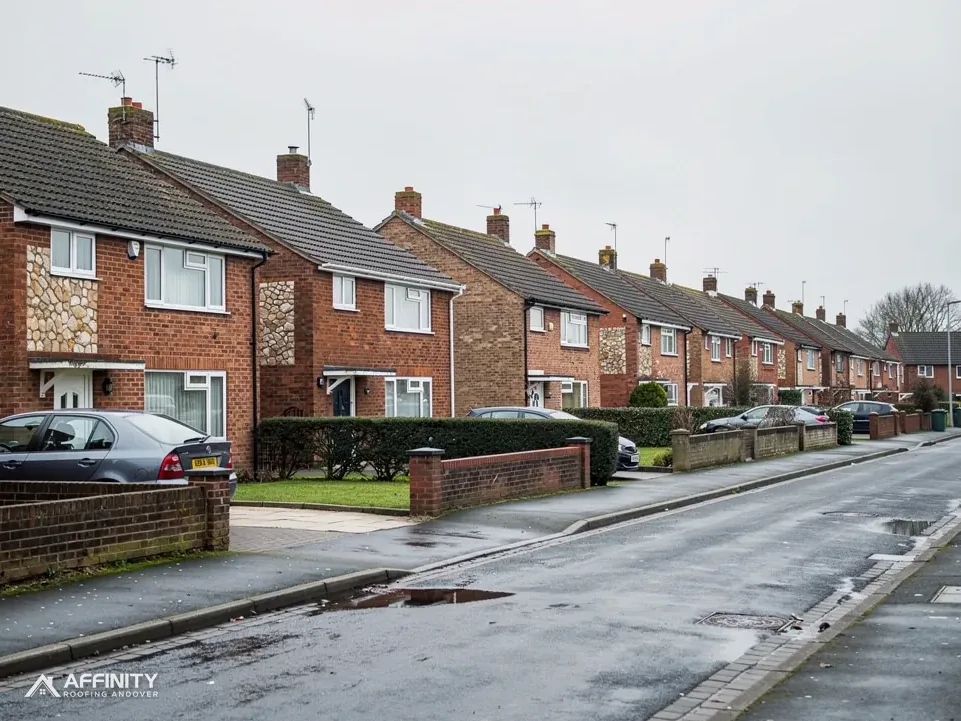
Roofers in Woolhampton
Brick and timber houses beside the Kennet, below the Downs
Woolhampton has a conservation area, Grade II houses such as Bow Cottage and land beside the Kennet in Flood Zone 3. We survey every roof properly before pricing it.
Woolhampton roofs, from the A4 to the abbey
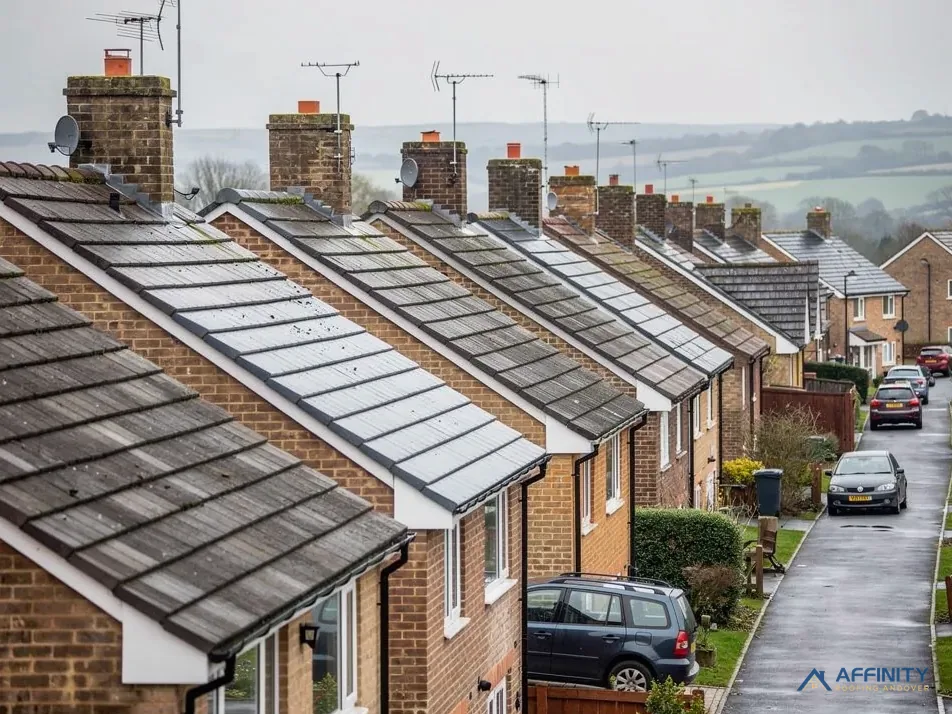
Old brick and timber houses
The 1923 Victoria County History described old brick and timber houses along the Newbury to Reading road beside the Kennet.
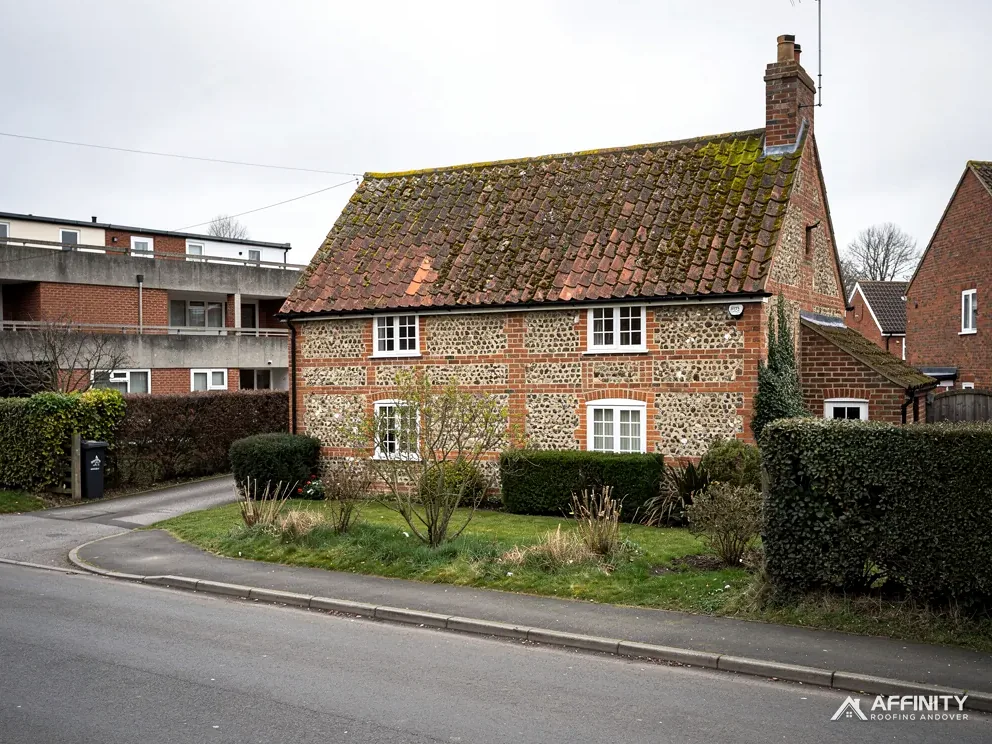
Grade II listed homes
Bow Cottage, Brook House and Brook Lawn, each listed Grade II, where any change to the roof needs consent.
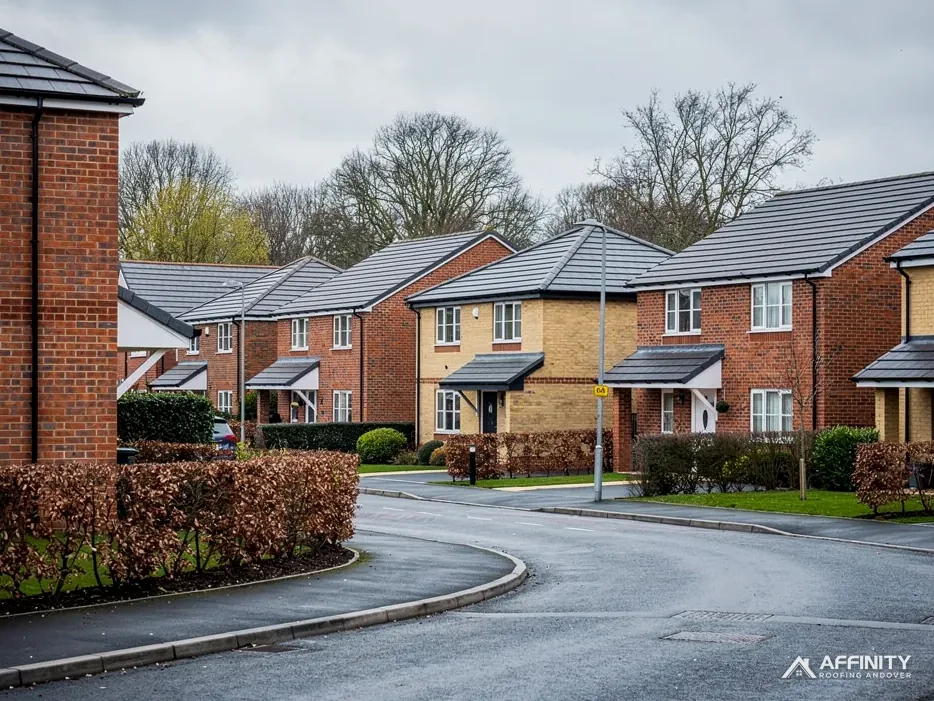
Houses near Douai Abbey
Homes around the Benedictine abbey that grew from St Mary's College, founded in 1833 as a Roman Catholic school.
Woolhampton and the Kennet valley villages
Aldermaston lies to the south-east and Beenham to the north-east. Thatcham is to the west, Bucklebury to the north-west, and Baughurst and Tadley are further south.
- Distance
- 20.8 road miles north-east of Andover
- Planning
- West Berkshire Council
- Council
- West Berkshire Council (unitary)
The Woolhampton roof report
Local editionWoolhampton, BerkshireA Kennet-side village under West Berkshire
Beside the Kennet, under West Berkshire: who signs off a Woolhampton roof and what its old houses ask
Woolhampton lies 20.8 road miles from Andover, in Berkshire. Read on for who signs off roof work, how the listed houses and the conservation area alter a repair, and why the weekly scaffold fee shapes the programme.
A West Berkshire village with the Downs at its edge
A drive of 20.8 road miles from Andover, heading north-east, brings you to Woolhampton in Berkshire. West Berkshire Council, a unitary authority, takes the planning decisions and also runs the highway, so a new covering and a scaffold on the verge go to the same offices. No county council sits above it, which makes the chain of approval short. At the 2021 Census the parish had 918 usual residents.
Building control is handled by BCS, which West Berkshire Council and Wokingham Borough Council run together as Building Control Solutions. Its website calls itself your local authority building control service in Berkshire, and enquiries go to 0300 790 0580. We ask BCS about your roof once a re-roof is under discussion, and you receive the reply on paper, beside the survey photographs.
The edge of the North Wessex Downs National Landscape, once known as an AONB, brushes land near the village. Mapping puts only 2 per cent of the ground measured around the centre inside it. The Downs partnership gives advice and nothing more. West Berkshire Council grants or refuses the applications, so a Woolhampton homeowner deals with the council whichever side of the line the house stands.
Two numbers from the Planning Portal sort re-roofs from repairs: 25 per cent of the whole building envelope, counting walls, floor, roof, windows and doors, and 50 per cent of the roof itself. Stay under both and building control approval is not normally needed. Weight is judged apart from area. Approval is needed where the new covering weighs 15 per cent more than the old, with someone qualified checking the structure beforehand.
Planning questions belong with West Berkshire Council. It is the council's place to say whether an Article 4 direction applies to a Woolhampton address, and with a conservation area in the village the question deserves an early answer. We put it before pricing, so the total you receive already allows for the reply.
The survey then sorts the job. A cracked tile beside a chimney is a repair, and none of these numbers matter. Lead at that chimney may be the real cause, so the flashing is lifted and checked before the tile is blamed. A slope that has given up right across is a re-roof, and the route is set out in writing, with the new covering's weight compared with the old. A registered building control approver is the alternative to BCS if you prefer one, a private route regulated since 6 April 2024.
Bow Cottage, Douai Abbey and a hill-top church
In 1923 the Victoria County History described Woolhampton as a village on the Newbury to Reading road beside the Kennet, with some old brick and timber houses and St Peter's church on a hill to the north. Douai Abbey began as St Mary's College, a Roman Catholic school founded in 1833, and Benedictines expelled from Douai in 1903 took it over and re-established their abbey and school there.
That mix of old houses, a school turned abbey and a hill-top church has left a village where history sits close to everyday roofs. The National Heritage List records 12 listed buildings within about 500 metres of the centre. Bow Cottage is listed Grade II (list entry 1117262, first listed on 9 September 1969), and Brook House (1117261) and Brook Lawn (1117260) are Grade II as well.
Works that change a listed building's special character need listed building consent first, whether a new material, a changed roof shape or an added opening. Our guide to listed building roof repairs sets out the steps. We photograph and measure what is on the roof, then talk to West Berkshire Council's planning team about a like-for-like repair, so the application shows the roof clearly.
Churches follow their own rules. A Church of England parish church that holds services goes through the faculty system, and a Roman Catholic church in worship follows its own denomination's consent system. Neither is a listed building consent matter while it serves as a place of worship. Anyone who looks after a church or an abbey building should say so when booking the survey, so the right route is built into the plan.
The Woolhampton conservation area lies within about 0.75 km of the village centre. Inside that area a roof's visible appearance is controlled more tightly, and an unlisted house there still deserves a call to the council before any change of material or colour. Whether your house is inside is shown on the council's map, which is checked on the first visit.
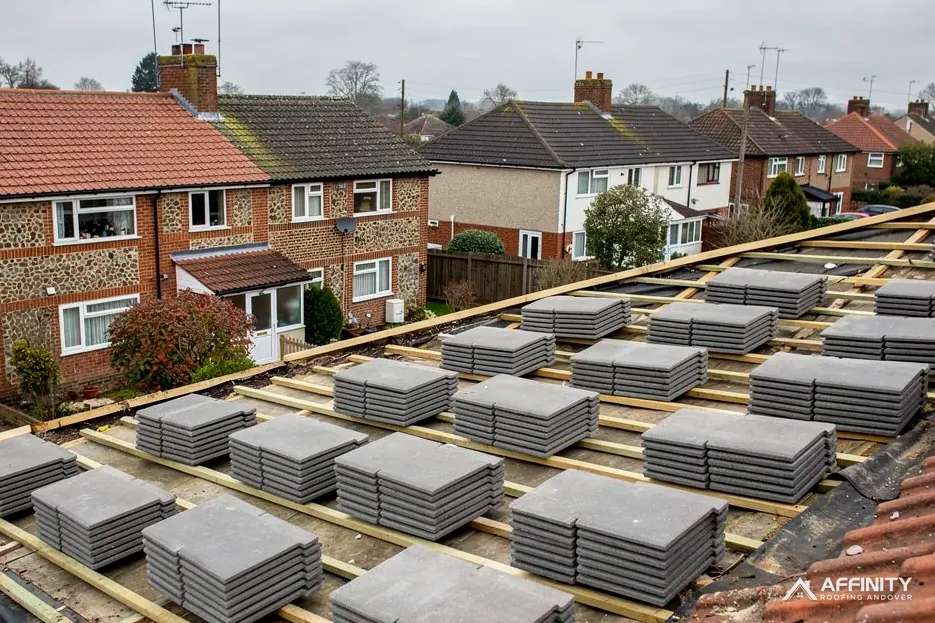
Old brick and timber houses can carry roof slopes that have moved over the years. Rafters bow, battens sag and ridges dip. We measure the slope before tiles are ordered, because a covering laid on a crooked frame will show every wave, and where timbers need packing or replacing the photographs make that plain before the work starts.
The abbey gives the village a few large roofs among the small ones. Large roofs mean long gutters, tall access and more weeks on scaffold, so any such job is priced after a proper look at the roof and the lanes around it.
“In Woolhampton the Downs advise, but West Berkshire Council decides.”
Kennet flood land and the weekly scaffold fee
Parts of the land within about 250 metres of the centre of Woolhampton lie in Environment Agency Flood Zone 3 (the Flood Map for Planning). Roofs cannot alter that, but they can add to a wet problem if the rainwater from them has nowhere sensible to go. Downpipes should discharge away from the foundations into a sound drain or soakaway, so we trace the route water takes from the eaves to the ground, and photograph any gully that is blocked.
A licence from West Berkshire Council, under section 169 of the Highways Act 1980, covers any scaffolding that occupies the highway. The application comes from the scaffolding provider and not the homeowner, and the council expects a lead time of 10 working days. West Berkshire Council charges £125 for the licence, with £71 added for every week it runs.
That weekly charge shapes the programme. Six weeks on the highway attract more licence fees than two, so the work is timed for the scaffold to come down as soon as the roof allows, and materials are ordered before the application goes in. Half back is generally the most the council offers on a licence, and only before it is granted.
Private roads need no licence, which matters for a house down a lane of its own. When another quote arrives, look for scaffolding, its licence and VAT, because each can move the total you are weighing against our price.
Services for Woolhampton roofs start with roof repairs for slipped tiles and failed flashings. Pitched roofing covers the full re-cover of a slope, and guttering, soffits and fascias deal with the roofline where water has been getting behind a board. Each one starts on the roof with a camera, so you see the fault before anything is decided.
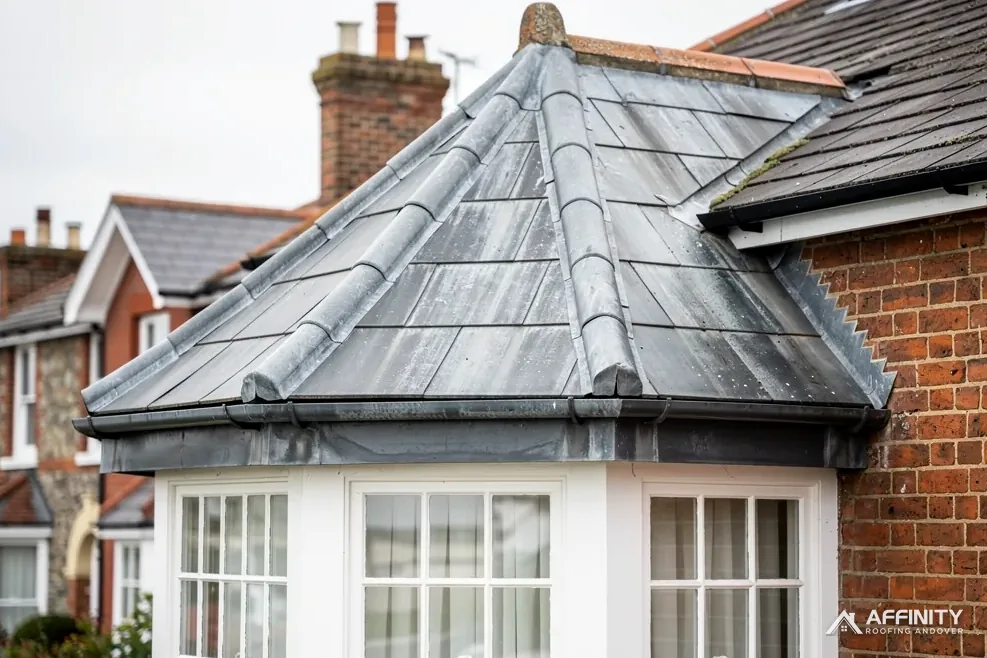
With a leak under way, safety comes first, and the lasting repair follows once the cause is clear. A tarpaulin keeps the rain out for a few days but mends nothing, and what the photographs show underneath decides the fix. Lead flashings at chimneys and abutments are a common way in for water on older brick houses, and they are checked before anything else is touched. The photographs show the state of each fold and each fixing, so you can judge whether lead needs renewing or only re-dressing.
One last practical point on the programme. A scaffold that stays up through a spell of bad weather still costs the weekly fee, so we leave slack in the dates for rain, and warn you early if a delay would add a week to the licence.
Woolhampton roofs: the Downs, the river and the licence
Does the North Wessex Downs designation limit roof work in Woolhampton?
It adds care, not a ban. The Downs partnership advises only, and West Berkshire Council remains the planning authority. A small part of the ground around the village touches the National Landscape. Altering a roof's shape faces tighter rules there, while repairs and plain re-covering proceed without extra hurdles. Ask the council about your address.
Can a listed house near Douai Abbey have its roof repaired?
Yes, with care. Changes to a listed building's special character need listed building consent, and repair in matching materials is where talks begin. Bow Cottage, Brook House and Brook Lawn are all listed Grade II. A Roman Catholic church in use follows its own denomination's consent route instead. Tell us which applies when you book.
Does the Flood Zone 3 land by the Kennet affect my Woolhampton roof?
Not the covering, but it raises the stakes on drainage. Parts of the land within about 250 metres of the centre are in Environment Agency Flood Zone 3. Gutters and downpipes should take roof water clear of the foundations into a sound drain or soakaway. We check the whole run at the survey and photograph any failing joint.
How is the scaffold licence charged for a Woolhampton roof job?
West Berkshire Council charges £125, plus £71 per week, so the longer the scaffold stands the more the licence costs. The scaffolding provider applies, allowing 10 working days before it goes up. A private road needs no licence. The sequence of work is planned to keep the scaffold up for the minimum time.
Kennet valley neighbours
Ask for a Woolhampton roof survey
Send your address with a photo. The West Berkshire route is confirmed first, then you get a single written total.
10-year workmanship guarantee, in writing.