
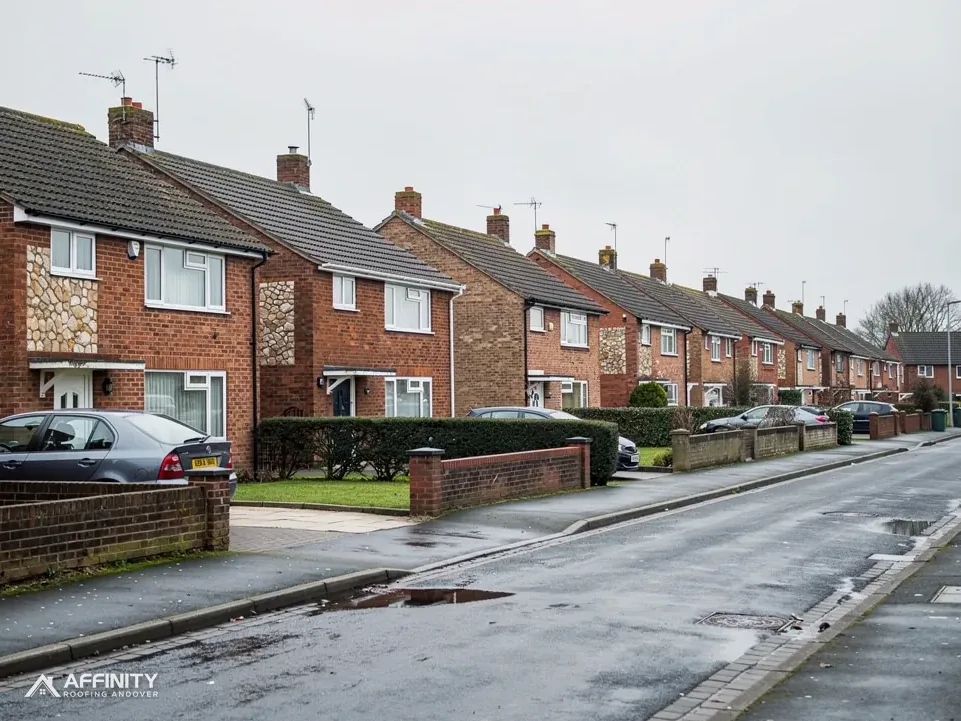
Roofers in Pitton
Farmhouses, a Grade II* church and one council for every permission
Seventeen listed buildings lie within about 500 metres of Pitton's centre, alongside a conservation area. Each roof is looked over, its faults are photographed, and a single price follows.
Pitton roofs, from the farmyards to the church
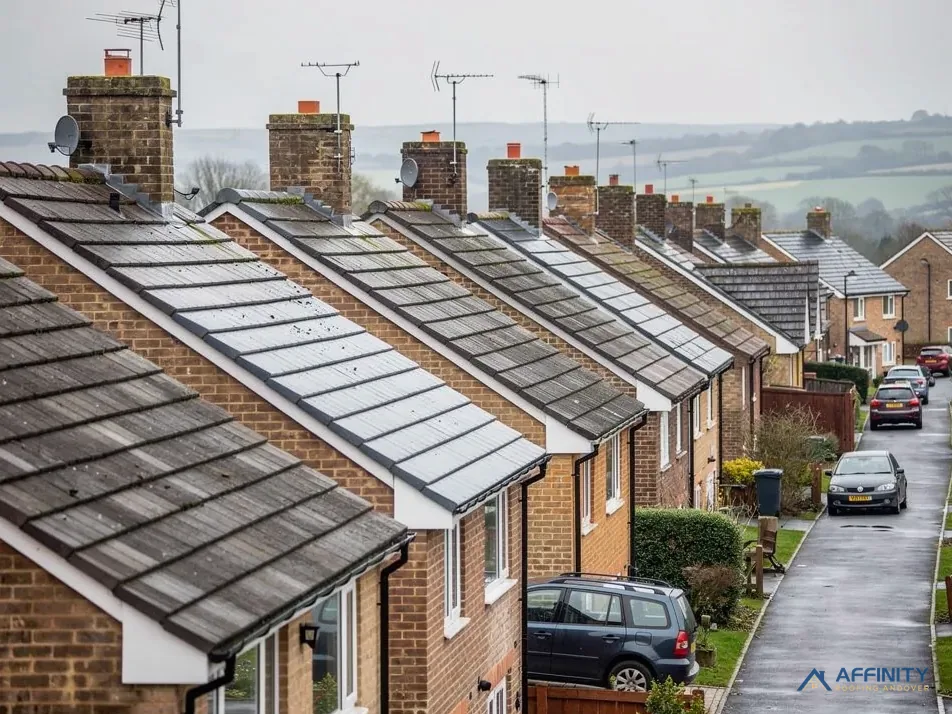
Pitton village core
Houses within about 0.75 km of the centre, inside the reach of the Pitton conservation area and its planning rules.
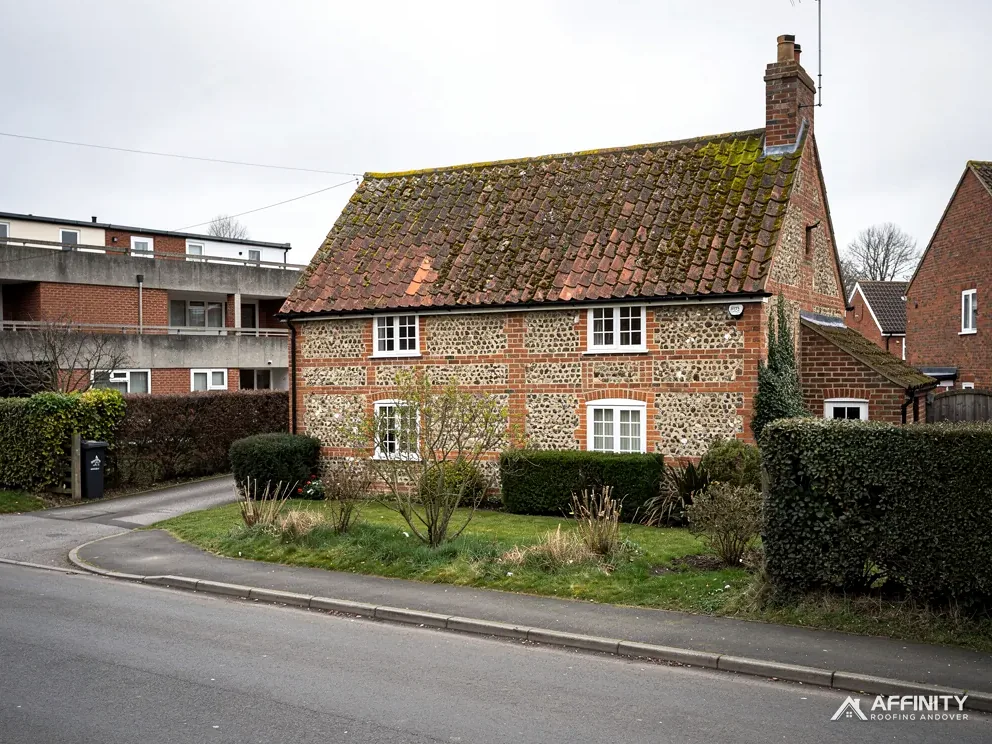
Farmhouses and outbuildings
Webb's Farmhouse, Coldharbour Farmhouse and an outbuilding at Coldharbour Farm are all listed Grade II, each with its own entry.
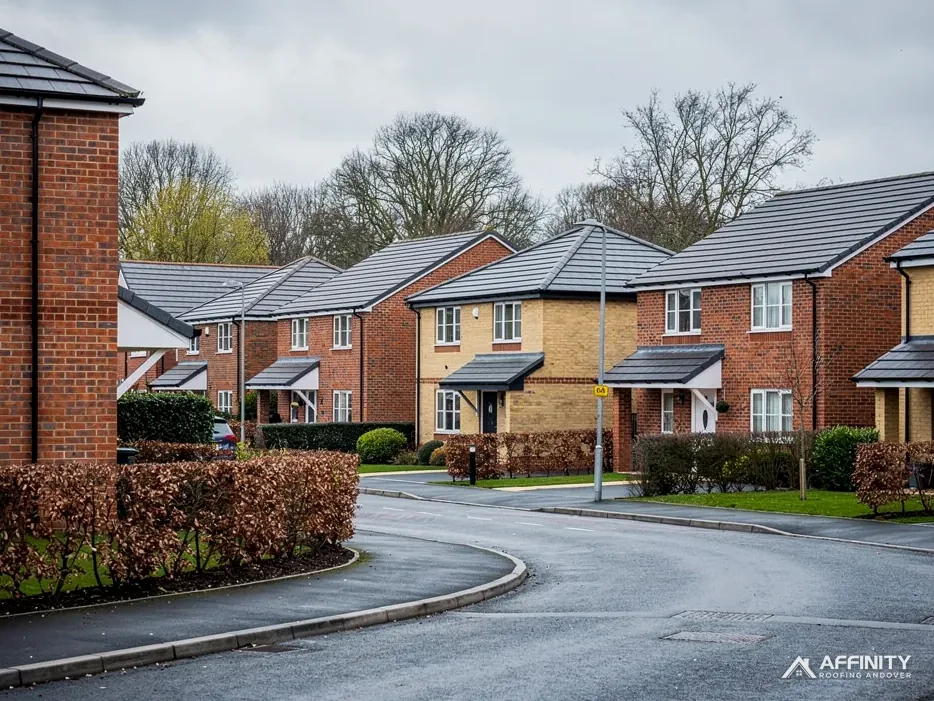
The Church of St Peter
Grade II* since 23 March 1960, still used for worship, so roof repairs take the faculty route, not the council's.
Pitton, with Salisbury to the west
Winterslow lies to the north-east, Porton to the north-west, Laverstock and Salisbury to the west, Alderbury to the south-west and Whiteparish and Lockerley to the south-east.
- Distance
- 14.7 road miles south-west of Andover
- Planning
- Wiltshire Council
The Pitton roof report
Local editionPitton, WiltshireOne council, many listings
Pitton roofs: one council for every permission, and a long list of listings to respect
Pitton is 14.7 road miles south-west of Andover, across the county boundary in Wiltshire. This report covers the single council that decides here, how the farm and church listings shape a repair, and how the scaffold licence works.
Wiltshire Council does it all
Pitton is 14.7 road miles to the south-west of Andover, where the road crosses from Hampshire into Wiltshire. The civil parish, Pitton and Farley, had 742 usual residents at the 2021 Census. Wiltshire Council is a unitary authority, which means one council does the jobs that Hampshire splits in two. Planning decisions, Building Regulations (handled from Monkton Park, Chippenham, by its own Building Control service) and the public highway all fall to that one council. The council's pages are written for the whole county, so some of what they say will not apply to a village house, and the survey notes pick out the parts that do.
For a homeowner that is simpler in one way and unfamiliar in another. There is one set of web pages to learn, not two, but they are not the pages you would use in Andover, and the telephone numbers differ. Which pages apply is settled before a Pitton job is booked, and the finding is written down beside the price, so nobody is left holding a form meant for somewhere else. The council's number is noted on the report as well, in case you would like to ring it yourself.
Any re-roof is measured first against the Planning Portal's national yardstick: under 25 per cent of the whole building envelope and under 50 per cent of the roof, the Planning Portal says no application is normally needed. Wiltshire Council names no percentage for roof coverings of its own. Anything larger than a patch of one slope is put to Wiltshire Building Control, whose line for booking inspections and getting support is 0300 456 0113.
Weight is the second trigger. Where a covering is at least 15 per cent heavier, approval under the Building Regulations is required, and the Planning Portal recommends asking a structural engineer or surveyor first. Plain clay tiles swapped for concrete ones are the case we watch for most closely. You may instead hire a registered building control approver, the private route.
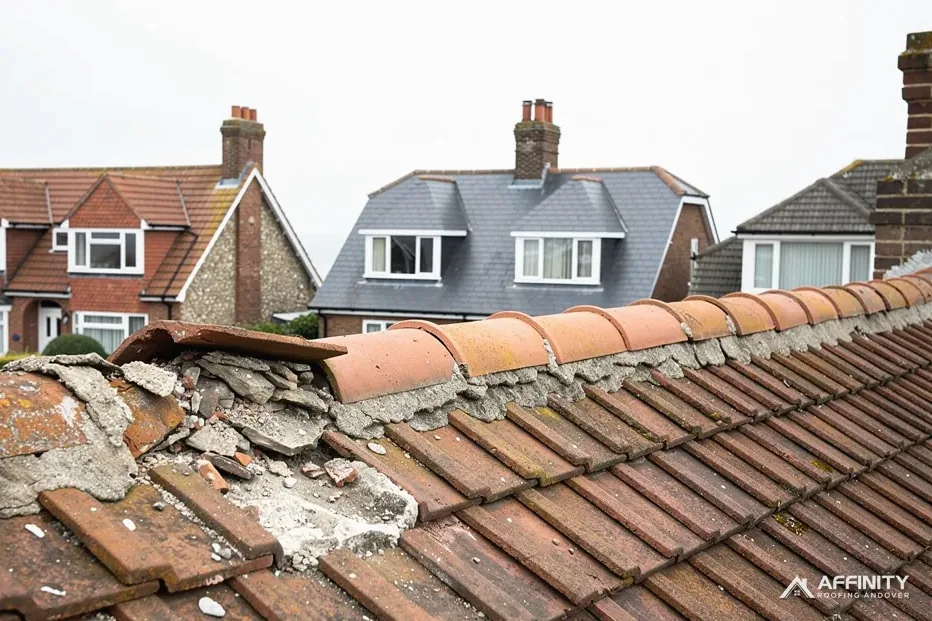
The survey comes before all of that. We go over the crest, the gable-end edges, the folds between slopes and the flashings (metal strips sealing each junction), raise what can safely be raised, and photograph each fault so the pictures are ready for anyone who needs them.
A repair needs none of this. Slipped tiles, a cracked ridge tile or a failed flashing are repairs, not re-roofs, and the survey says which one you have. Some Pitton houses will want a repair only and others a larger job, and the recommendation follows what the roof needs, nothing more.
Listed farm roofs, St Peter's and the village core
Pitton is a small parish with a long list. Historic England's register holds 17 listed buildings within about 500 metres of the village centre. Webb's Farmhouse is listed Grade II (list entry 1184328, first listed on 2 March 1973). Coldharbour Farmhouse is Grade II (1135707) and so is an outbuilding at Coldharbour Farm (1135708).
That last detail matters. A listed outbuilding ranks with a listed house, so the roof of a barn or store on the list needs consent where its character would change. We treat a farm outbuilding with the same care as a house, and we ask Wiltshire Council's planning team before a covering changes. The first step is a repair in matching material, and our guide to listed building roof repairs covers the route in more detail.
The Church of St Peter is listed Grade II* (list entry 1135702, first listed on 23 March 1960). OpenStreetMap shows it as an active Anglican church, which sends roof works through the Church of England's faculty system instead of listed building consent. Our survey report and its photographs can support a faculty application, and a faculty from the diocese's consistory court, Pitton's route for St Peter's, decides what is allowed.
Pitton has a conservation area of its own, with a boundary published on planning.data.gov.uk within about 0.75 km of the centre. Any dormer, or other change to how the roof appears from the lane, deserves an early conversation with Wiltshire Council before anything is drawn or ordered. For a Pitton address the council is also asked whether an Article 4 direction applies; we never presume the answer.
Old roofs are decided by detail, and in a village of listed farm and cottage roofs that is especially so: tile size, shade, how the ridge sits in its bedding, how the verge finishes. All four are recorded in the survey and photographed, so a repair can be matched by eye as well as on paper.
A farm roof can be a long, plain slope with few details, so one failed ridge or a patch of slipped tiles shows up clearly in the photographs and the repair can be limited to that stretch. Where a slope has failed throughout, the survey says so and the larger job is explained before any date is set.
For a listed building, please send the address, a photograph of the slope taken from the ground, a note on whether the building is listed, and any earlier consent letters. Armed with those, the survey can target the questions a planning officer is likely to raise. Little then needs chasing later.
“In Pitton one council issues every permission, from planning consent to the scaffold licence and beyond.”
The MiPermit scaffold licence, and roof water
A scaffold standing on the highway, road or pavement alike, needs a licence under section 169 of the Highways Act 1980, and the licensing body for Pitton is Wiltshire Council. Wiltshire Council's page says one licence is required per site, with applications made through the MiPermit portal by whichever firm is supplying the scaffold. The householder files nothing: the scaffolder is ours to manage, and the fee is folded into the one price quoted.
Wiltshire's fee turns on notice: £143.80 for applications lodged over three working days ahead, £164.70 for less warning. Every Wiltshire licence is valid for 28 days. We plan a job to fit inside the 28 days and raise it with you ahead of applying if the programme looks tight.
On Wiltshire's page the licence applies to the public highway and nothing beyond it. A scaffold set up wholly on your own land, away from the road and the pavement, does not need one, and the survey notes which you have. On a lane with a farm gateway or a narrow verge we walk the frontage at the survey and mark the run on a plan, so the application describes the real scaffold and not a guess.
The Environment Agency's Flood Map for Planning shows parts of the land within about 250 metres of the centre of Pitton in Flood Zone 3. The map shows river flood risk for land and says nothing about a roof, but roof water has to leave the plot, so each gutter and downpipe is traced at the survey and its outlet noted.
A leaking Pitton roof is made safe at the very first visit, using a temporary cover and by securing loose tiles; the permanent repair is planned after that. Phone your insurer before anything else, and keep every photograph and receipt. Your policy has its own definition of a storm, so read it. The Financial Ombudsman Service (0800 023 4567) publishes how it treats storm cases.
Chimneys on older houses have weak spots of their own: the flashing at the point where the stack leaves the slope, and the pointing between bricks. Both are checked from the scaffold while it is up, which saves a second visit.
Wiltshire treats the suspension of a marked parking bay as its own matter, separate from the scaffold licence, so we raise it at the survey if a bay stands beside the house.
Ways we look after Pitton roofs

Pitton roofs: farm listings, the church and the licence
Does a listed farm outbuilding in Pitton need consent to re-roof?
Yes, if it is on the list in its own right. An outbuilding at Coldharbour Farm is listed Grade II, and a listed outbuilding is treated like a listed house. Listed building consent covers work that touches its character, so put the question to Wiltshire Council's planning team before deciding, and file its answer alongside the survey pictures.
What is the Wiltshire scaffold licence fee for a house in Pitton?
Wiltshire Council charges £143.80 when the application gives over three working days of notice or £164.70 with less. Each licence lasts 28 days for a single site. Wiltshire Council's rule is that the firm supplying the scaffolding files the application on the MiPermit portal. Arranging that falls to us, and the fee sits in your total.
Who do I contact about building control for a Pitton re-roof?
Wiltshire Council's own Building Control service, which you can reach on 0300 456 0113 for inspections and support. The Planning Portal's yardsticks are 25 per cent of the envelope and 50 per cent of the roof; inside both limits building control would not normally expect an application, and the service gets the question from us.
Is Flood Zone 3 a reason to worry about my Pitton roof?
No. The Environment Agency's Flood Map for Planning covers river flooding on land, and parts of the land within about 250 metres of the centre lie in Zone 3. It does not describe a roof. We still trace each gutter and downpipe on the survey, so you know where the roof water goes.
Pitton's neighbours towards Salisbury
Have your Pitton roof surveyed
Pass us the address and one picture. We survey, check consent with Wiltshire, then write one price for the job.
10-year workmanship guarantee, in writing.